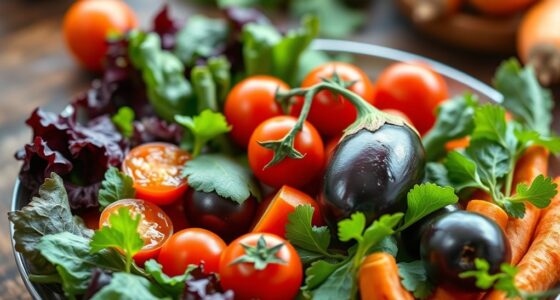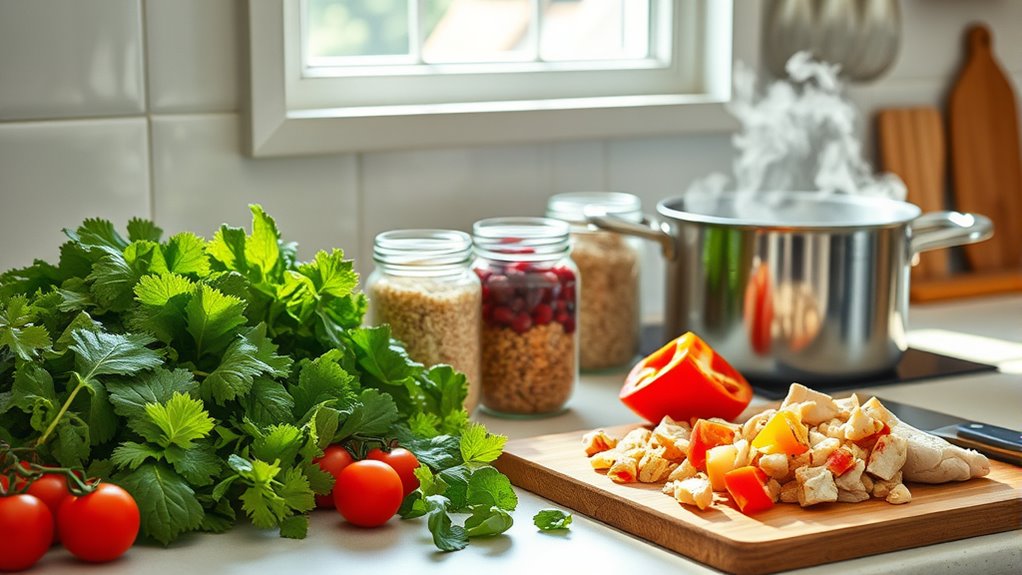

To plan healthy meals on a budget, focus on strategic shopping, like buying in bulk, choosing seasonal produce, and looking for sales. Dedicate time weekly to prep ingredients—cook grains, chop veggies, and portion proteins in advance—to save time and money. Use affordable superfoods like oats, beans, and frozen berries to boost nutrition without breaking the bank. Sticking to these tips can make healthy eating both simple and budget-friendly—discover more ways to save and eat well.
Key Takeaways
- Plan weekly menus around affordable, versatile ingredients like grains, beans, frozen produce, and leafy greens.
- Cook in bulk and prepare ingredients in advance to save time and money on busy days.
- Shop during sales, buy in bulk, and choose seasonal produce to maximize savings.
- Incorporate inexpensive superfoods like oats and lentils for nutritious, budget-friendly meals.
- Use reusable containers and organized prep to maintain freshness, reduce waste, and streamline healthy eating.
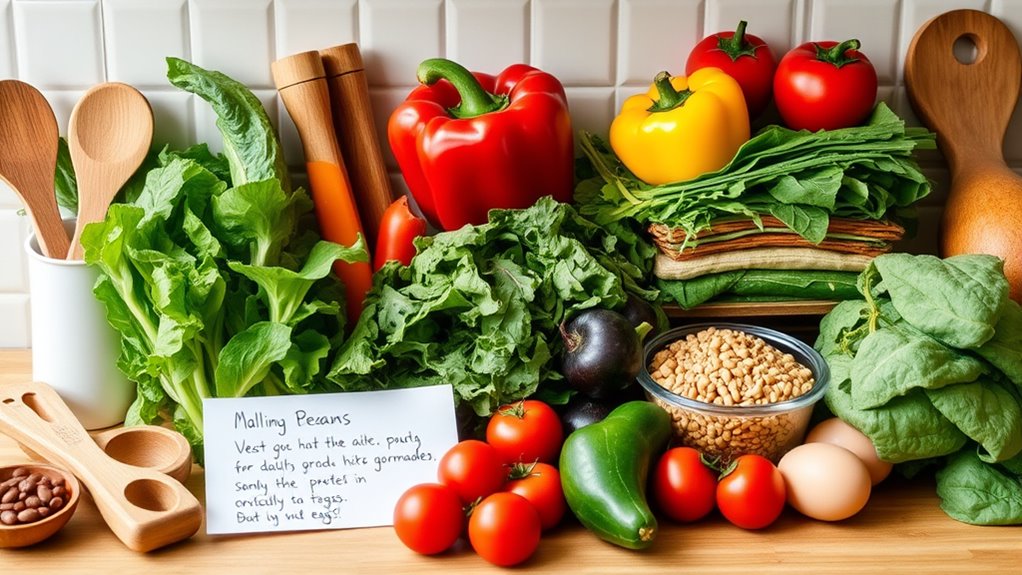
Eating healthy doesn’t have to break the bank. One of the best ways to save money while maintaining nutritious eating habits is by adopting effective meal prep strategies. By dedicating a couple of hours each week to plan and prepare your meals, you reduce the temptation to order takeout or buy convenience foods, which tend to be more expensive and less healthy. Start by creating a simple weekly menu, focusing on versatile ingredients that can be used in multiple dishes. Cooking in bulk not only saves time but also cuts down on grocery costs, as buying ingredients in larger quantities often lowers the price per serving. When you chop vegetables, cook grains, or prepare proteins in advance, you’ll find it easier to assemble meals quickly during busy weekdays. Additionally, investing in reusable containers helps keep your prepped food fresh and organized, making it more convenient to grab a healthy meal on the go.
Incorporating affordable superfoods into your meal prep routine can boost your nutrition without stretching your budget. Superfoods like oats, beans, frozen berries, and leafy greens are often inexpensive and packed with nutrients. Oats, for example, make a cost-effective breakfast option that provides fiber and energy for hours. Beans and lentils are not only budget-friendly but also rich in protein and fiber, making them perfect for hearty salads, stews, or grain bowls. Frozen berries are often cheaper than fresh and retain most of their antioxidants, offering a sweet addition to smoothies, oatmeal, or yogurt. Leafy greens like spinach and kale are often available at lower prices when bought frozen or in bulk, and they add essential vitamins and minerals to your meals.
Furthermore, understanding the importance of contrast ratio can help you choose better projectors for your home cinema setup, ensuring vivid images even in dark scenes. To maximize your savings, take advantage of sales and discounts on these superfoods and buy in bulk when possible. Shop at local farmers’ markets near closing time, as vendors often discount produce to clear out stock, giving you fresh, affordable options. Planning your meals around sales and seasonal produce helps keep costs down and ensures variety in your diet. Remember, simple ingredients prepared thoughtfully can be just as satisfying and nutritious as more expensive options. By combining strategic meal prep techniques with affordable superfoods, you’ll be able to enjoy wholesome, delicious meals every day without overspending. Staying consistent with these habits not only supports your health but also keeps your grocery bills manageable, making healthy living accessible and sustainable.
Frequently Asked Questions
How Can I Incorporate More Plant-Based Proteins Affordably?
You can incorporate more plant-based proteins affordably by adding affordable legumes like lentils, chickpeas, and black beans into your meals. These sources are inexpensive, versatile, and packed with protein. Incorporate them into salads, soups, or stir-fries for variety. You might also try tofu or tempeh, which are cost-effective and easy to prepare. Using these plant-based sources regularly helps you boost your protein intake without breaking the bank.
What Are Some Quick Budget-Friendly Healthy Snack Ideas?
You can try healthy snack swaps like air-popped popcorn or veggie sticks with hummus for quick, budget-friendly options. Make your own energy bites using oats, peanut butter, honey, and add-ins like chocolate chips or dried fruit for an easy, nutritious snack. These budget-friendly energy bites are perfect for on-the-go, satisfying your hunger without breaking the bank, and they’re simple to prepare in advance.
How Do I Meal Prep Efficiently for the Week?
To meal prep efficiently, start by planning your meals with portion control in mind to avoid waste. Use storage solutions like airtight containers to keep your prepped foods fresh and organized. Batch cook versatile ingredients and divide them into portions for quick grab-and-go meals. Label containers with dates, so you consume everything in time. This approach saves time, minimizes waste, and keeps your meals healthy and budget-friendly throughout the week.
Are Frozen Vegetables as Nutritious as Fresh Ones?
Did you know frozen vegetables can be just as nutritious as fresh ones? They’re often picked and frozen at peak ripeness, locking in nutrients. Frozen vegetables undergo minimal processing, so their nutrient comparison to fresh is quite favorable. So, yes, you can confidently include frozen vegetables in your meals—they’re convenient, budget-friendly, and retain most of their vitamins and minerals, making them a smart choice for healthy eating.
How Can I Reduce Food Waste While Meal Planning?
To reduce food waste while meal planning, focus on smart food storage tips like using airtight containers and proper refrigeration to extend freshness. Plan meals with leftovers in mind, and get creative with composting techniques for scraps. You’ll minimize waste and save money. Regularly check your pantry and fridge, and repurpose ingredients before they spoil. This approach helps you stay organized, eco-friendly, and budget-conscious.
Conclusion
Now that you know these budget-friendly tips and tasty recipes, imagine the meals you’ll create—nutritious, affordable, and bursting with flavor. But the real surprise awaits as you discover how simple tweaks can turn everyday ingredients into culinary masterpieces. Keep experimenting, stay curious, and watch your confidence grow. The best part? Your next healthy, budget-friendly meal could be just around the corner, waiting to transform your eating habits in ways you never expected.