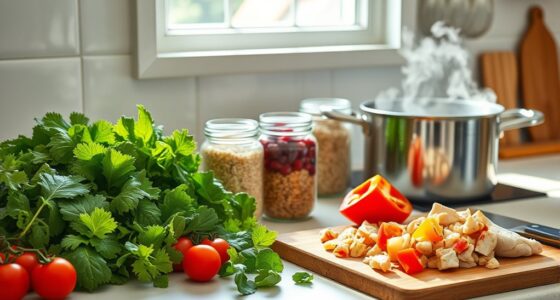
Incorporating Mediterranean herbs like basil, oregano, rosemary, and mint into your meals boosts flavor and promotes wellness. You can grow these fresh herbs easily at home, even in small spaces, ensuring always having aromatics on hand. Use them in marinades, salads, or roasted dishes to add vibrant taste and health benefits such as antioxidants and anti-inflammatory properties. Keep exploring to discover simple tips and ideas on how herbs can transform your everyday cooking and promote a healthier lifestyle.
Key Takeaways
- Fresh Mediterranean herbs like basil, oregano, and rosemary enhance both flavor and nutritional value in meals.
- Growing herbs at home offers customizable seasoning options, promoting healthier, additive-free cooking.
- Incorporating herbs into dishes boosts aroma, taste, and wellness benefits with antioxidants and anti-inflammatory properties.
- Easy cultivation methods, such as pots on balconies, enable continuous access to fresh herbs year-round.
- Using herbs creatively in marinades, dressings, and garnishes elevates everyday meals and supports a vibrant, health-conscious diet.
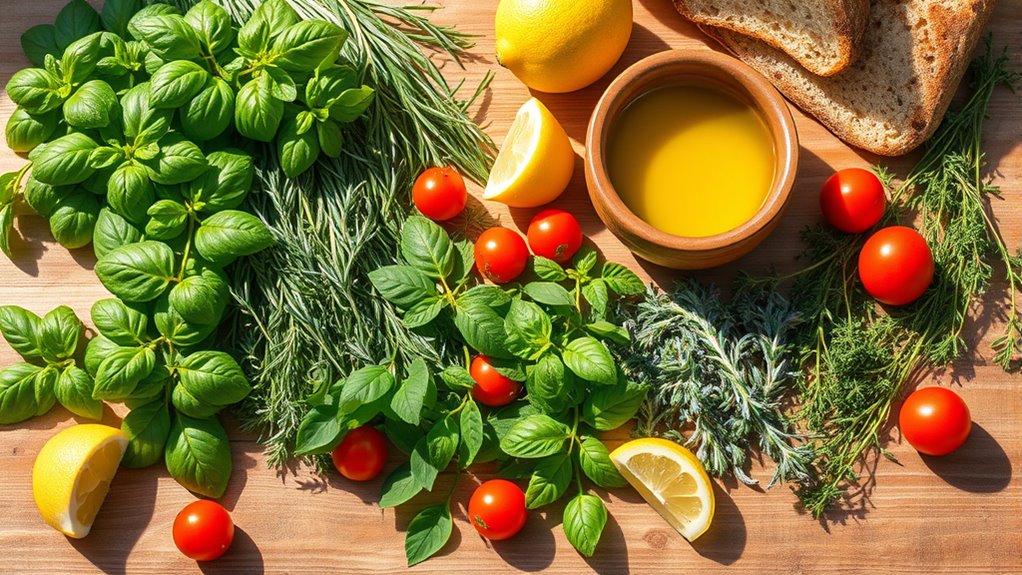
Have you ever wondered what makes Mediterranean cuisine so vibrant and flavorful? It all comes down to the herbs that infuse dishes with fresh, aromatic qualities. These herbs are the backbone of many Mediterranean recipes, bringing brightness and depth to everything from grilled meats to salads. Cultivating your own herbs can elevate your cooking and connect you more deeply with the flavors of the region. Herb cultivation is surprisingly simple, even if you don’t have a large garden. Many Mediterranean herbs thrive in pots on a balcony or windowsill, making fresh herbs accessible year-round. Basil, oregano, rosemary, thyme, and mint are some of the most popular choices, each offering unique culinary uses. For example, basil adds a sweet, peppery note to tomato-based dishes and pesto, while rosemary lends a woody, pine-like aroma to roasted vegetables and meats. Thyme and oregano are versatile staples, perfect for seasoning grilled chicken, lamb, or even vegetable stews. Mint, with its cool, invigorating flavor, is often used in salads, teas, or garnishes. When you focus on herb cultivation, you gain a steady supply of fresh herbs that outshine dried versions, enhancing the flavor and aroma of your dishes. Plus, growing your own herbs is a rewarding experience that encourages experimenting with new recipes and flavors.
Culinary uses of Mediterranean herbs are extensive and adaptable, making them essential in your kitchen. You can incorporate fresh herbs into marinades, dressings, and sauces, or sprinkle them over finished dishes for an added burst of flavor. For example, a drizzle of extra virgin olive oil topped with chopped oregano and basil can turn a simple tomato salad into a Mediterranean-inspired masterpiece. Herbs like thyme and rosemary are perfect for roasting vegetables or meats, imparting an earthy aroma that fills your home with appetizing scents. Mint can brighten up beverages or be used as a garnish for desserts, adding both flavor and visual appeal. You’ll find that these herbs not only enhance taste but also provide health benefits, thanks to their antioxidants and anti-inflammatory properties. Their culinary uses are versatile enough to suit any meal, whether you’re preparing a quick weeknight dinner or a festive gathering. Growing herbs at home also allows you to experiment with combinations, creating your own signature dishes that reflect the lively spirit of Mediterranean cuisine. Plus, fresh herbs are more fragrant and potent than dried ones, so a little goes a long way. As you start herb cultivation, you’ll notice how these herbs can become an essential part of your cooking routine, inspiring you to try new recipes and enjoy more flavorful, wellness-oriented meals. Incorporating Mediterranean herbs into your culinary repertoire is a simple step toward healthier eating and a more lively, flavorful kitchen experience.
Frequently Asked Questions
How Can I Grow Mediterranean Herbs Indoors?
You can grow Mediterranean herbs indoors by choosing the right container gardening setup and ensuring proper indoor herb care. Use well-draining pots with quality potting soil, and place them where they get plenty of sunlight—ideally 6 hours a day. Water the herbs when the topsoil feels dry, and avoid overwatering. Regular pruning encourages healthy growth, making your indoor herb garden flavorful and thriving.
Are There Any Herbs That Should Be Avoided During Pregnancy?
Did you know some herbs can pose risks during pregnancy? To stay safe, avoid herbs like basil, parsley, and sage in large amounts, as they may cause complications. Always consider herb safety and pregnancy precautions before adding herbs to your meals. While many Mediterranean herbs are healthy, it’s best to consult your healthcare provider about specific herbs you plan to use, ensuring both your safety and your baby’s well-being.
Which Herbs Pair Best With Seafood Dishes?
You’ll want to focus on herbs that enhance seafood’s delicate flavor. Try herb pairing suggestions like dill, parsley, thyme, or basil, which complement fish and shellfish beautifully. For seafood seasoning tips, add lemon zest, garlic, and a touch of oregano or rosemary for extra depth. These herbs bring out the natural sweetness of seafood without overpowering it, making your dishes flavorful and balanced.
How Do I Preserve the Flavor of Fresh Herbs?
Imagine the vibrant scent of herbs lingering long after harvest. To preserve their flavor, you can use herb drying techniques like hanging bunches in a dark, airy space or freezing fresh herbs in ice cube trays with a little water or olive oil. These methods lock in aroma and taste, ensuring your herbs stay fresh and flavorful for future dishes. Keep them stored away from light and moisture for the best results.
Can Mediterranean Herbs Help Improve Digestion?
Mediterranean herbs can definitely help improve your digestion. They offer digestive health benefits and are often used as herbal digestion remedies. For example, oregano, thyme, and rosemary stimulate bile flow and reduce bloating. Incorporate these herbs into your meals or teas to support your gut health naturally. By doing so, you’ll enjoy better digestion and overall wellness, making your meals both flavorful and beneficial for your health.
Conclusion
Incorporating Mediterranean herbs into your meals gently nurtures both your palate and well-being, like a warm breeze softly guiding you toward healthier choices. These fragrant leaves and sprigs subtly transform ordinary dishes into vibrant, nourishing experiences, turning every bite into a moment of comfort and essentiality. Embrace their delicate charm, and you’ll find your culinary journey blossoming into a serene escape where flavor and wellness naturally intertwine.