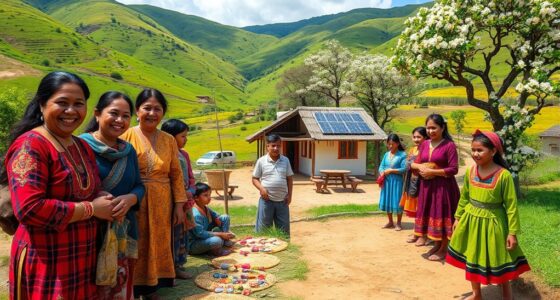
To support local wildlife in urban parks, focus on planting native species that suit your area’s climate and soil. Create bird corridors with native shrubs and trees to connect habitats and allow safe movement for animals. Encourage community involvement through workshops and planting days to boost biodiversity. Maintaining diverse habitats helps improve ecosystem services like cleaner air and stormwater management. Keep exploring to discover more simple ways to make your park a thriving refuge for wildlife.
Key Takeaways
- Incorporate native plants to provide essential food and habitat for local wildlife.
- Create and maintain bird corridors to connect green spaces and facilitate safe wildlife movement.
- Involve the community through education, planting events, and stewardship activities.
- Design diverse habitats within parks, such as shrubs, trees, and water features, to support various species.
- Reduce pesticide use and promote natural pest control to maintain healthy, biodiverse ecosystems.

Have you ever wondered how urban parks contribute to preserving biodiversity amid bustling city life? These green spaces are more than just places to relax; they serve as essential refuges for local wildlife. One effective way to support this is by incorporating native plantings into your park’s landscape. Native plants are adapted to the local climate and soil, making them resilient and easy to maintain. They provide essential food sources such as nectar, seeds, and insects for birds, butterflies, and other pollinators. When you choose native species, you help sustain the natural food web, encouraging a diverse range of animals to thrive. Additionally, native plantings often require fewer pesticides and fertilizers, reducing pollution and helping preserve the park’s ecological balance. native plantings are also more likely to attract beneficial insects that can naturally control pests, further supporting the health of the park ecosystem.
Another critical aspect of fostering urban biodiversity is establishing bird corridors within parks. Bird corridors are stretches of habitat that connect isolated green spaces, allowing birds and other wildlife to move safely between areas. By creating these corridors, you enable species to find food, breed, and migrate without the dangers of urban hazards like traffic or habitat fragmentation. These corridors can be simple features like vegetated pathways, tree-lined paths, or strips of native shrubs that run through or alongside the park. They work as lifelines, supporting the natural behaviors of birds and other animals and helping maintain genetic diversity within populations. When designing or enhancing urban parks, consider how these corridors can connect different habitats, making the space more resilient and welcoming to wildlife.
Implementing native plantings and bird corridors is straightforward when you involve the community. Educating park visitors about the importance of native plants and how corridors benefit wildlife can inspire greater participation. You might organize planting days or workshops to encourage local residents to contribute native species to the park. These efforts not only enhance biodiversity but also foster a sense of shared responsibility for urban environmental health. Moreover, designing parks with these features can improve the overall ecosystem services they provide, such as air purification, temperature regulation, and stormwater management. It’s a practical approach that benefits both wildlife and the people who visit these green oases.

Osprey Ultralight Collapsible Stuff Pack - Lightweight, Packable Travel Backpack — Extra Bag For Travel and Every Day — 18 L Capacity Daypack to Expand Luggage, Black
Expand your luggage for day trips at your destination, or have an extra travel bag for souvenirs on...
As an affiliate, we earn on qualifying purchases.
Frequently Asked Questions
How Can Residents Identify Local Endangered Species in Urban Parks?
You can identify local endangered species in urban parks by engaging in species observation and wildlife tracking. Look for distinctive features like unique markings or behaviors, and use binoculars for close-up views. Keep a journal of your sightings, noting location and time. Consult local conservation groups or online databases to verify if species are endangered. Participating in guided walks or workshops can also enhance your skills in spotting and identifying rare wildlife.
What Are the Best Native Plants to Attract Urban Wildlife?
Think of your garden as a busy city street for wildlife. Choosing native plants like milkweed, coneflowers, and goldenrod creates a pollinator-friendly haven that attracts bees, butterflies, and birds. Native plant selection guarantees these creatures find familiar food and shelter, boosting urban biodiversity. By planting these species, you turn your space into a lively refuge, supporting local wildlife and making your park a vibrant, thriving ecosystem.
How Does Pollution Affect Biodiversity in City Parks?
Pollution harms biodiversity in city parks by contaminating soil, water, and air, which stresses wildlife and reduces plant health. You can help by supporting pollution mitigation efforts, such as reducing runoff and emissions, and promoting habitat restoration to create cleaner, healthier environments. These actions help protect native species, encourage biodiversity, and make certain that urban parks remain vibrant ecosystems for both wildlife and visitors alike.
Can Urban Parks Support Migratory Bird Populations Effectively?
Yes, urban parks can support migratory bird populations effectively if you prioritize native park landscaping and encourage urban foraging. By planting native trees and shrubs, you provide essential food and nesting sites. Promoting responsible foraging helps maintain natural food sources and reduces invasive species. Your efforts in creating diverse habitats and reducing pollution make parks more attractive stopovers, helping migratory birds thrive during their journeys.
What Policies Encourage Biodiversity Conservation in Urban Planning?
Think of urban planning policies as the roots of a thriving ecosystem. By implementing policy incentives and zoning regulations, you encourage developers to preserve natural habitats and create green corridors. For example, cities that reward eco-friendly projects see a 30% increase in local biodiversity. These policies foster biodiversity conservation by integrating native plants, green spaces, and wildlife corridors into city design, making urban areas healthier for both people and wildlife.

Eddie Bauer Stowaway Packable Backpack | Travel | Outdoor | Lightweight | Foldable | Durable | Ripstop Polyester | 20L - Maroon
Comfortable Support: Extended shoulder straps and a hip belt provide excellent comfort and support, making this backpack ideal...
As an affiliate, we earn on qualifying purchases.
Conclusion
As you explore your local park, remember that every small change you make can protect its hidden wildlife. But the real question is—are you willing to go further? By choosing to preserve and enhance these green spaces, you hold the power to uncover a future where urban wildlife thrives, quietly waiting for us to notice. The next step is yours—will you be the one to make that difference before it’s too late?

WATERFLY Crossbody Sling Backpack Sling Bag Travel Hiking Chest Bag Daypack (Black)
Keep Everything in Order: Size: 7 x 3.5 x 15 inches /18 x 9 x 38 cm. The...
As an affiliate, we earn on qualifying purchases.

MIYCOO Backpack - Ultra Lightweight Packable Backpack for Travel Camping, Hiking Back Pack Waterproof Foldable Daypack for Men Women Black
Lightweight: The lightweight packable backpack is about half the weight of a mobile phone, being folded into its...
As an affiliate, we earn on qualifying purchases.