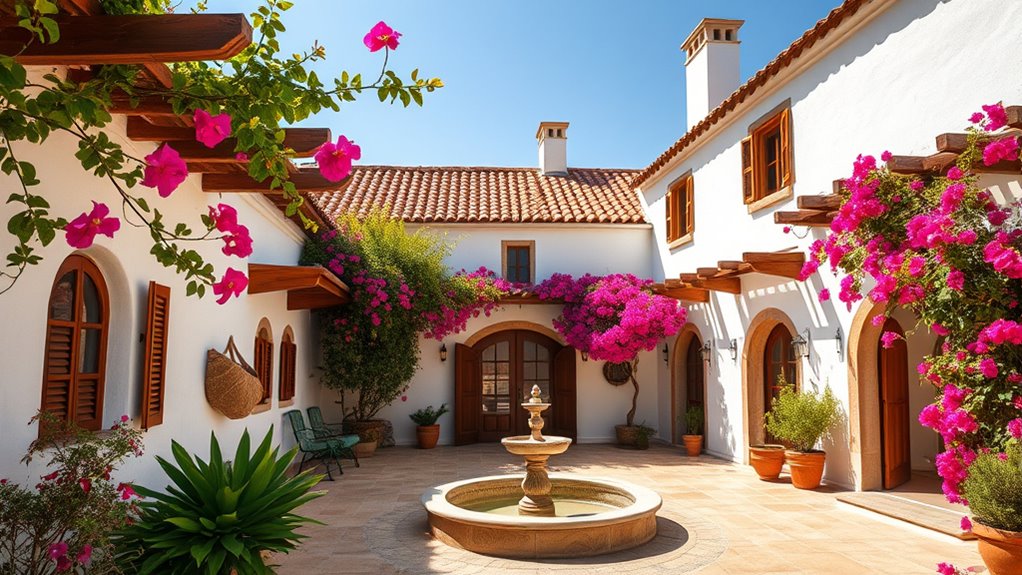

To design an energy-efficient home with Mediterranean passive cooling, you can use strategies like shading with awnings or overhangs to block summer sun and thermal mass materials such as stone or concrete to absorb and release heat gradually. Combining these approaches helps keep indoor temperatures comfortable naturally, reducing reliance on air conditioning. Incorporate sustainable features and simple techniques to optimize cooling year-round—continue exploring to discover how these methods can transform your home into an eco-friendly retreat.

Get home appliances delivered free — and shop member deals
- Fast, free delivery on millions of items
- Access to Prime Big Deal Days deals on October 6–7
- Prime Video, Amazon Music and more included
Key Takeaways
- Implement solar shading devices like awnings and pergolas to block summer sun and reduce indoor heat gain.
- Use thermal mass materials such as stone or concrete to absorb and slowly release heat, maintaining stable indoor temperatures.
- Combine overhangs with thermal mass for effective seasonal shading and temperature regulation.
- Design homes with natural ventilation and cross-breezes to enhance passive cooling.
- Incorporate sustainable features like low-maintenance plants and eco-friendly materials to support long-term energy efficiency.
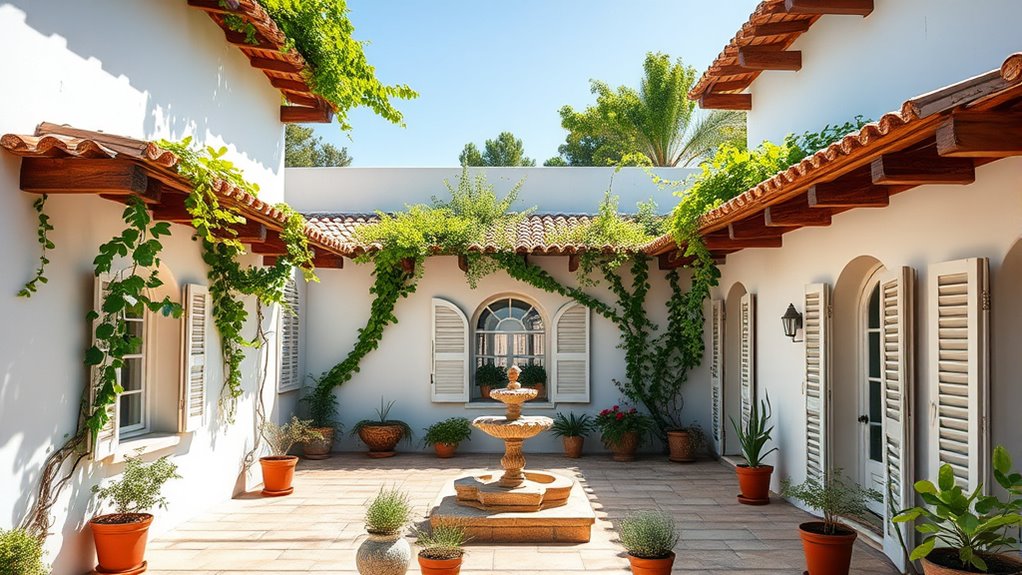
Creating an energy-efficient home isn’t just good for the environment; it also saves you money in the long run. One of the most effective ways to achieve this is by integrating Mediterranean passive cooling techniques into your design. These methods focus on reducing indoor temperatures naturally, minimizing reliance on air conditioning, and enhancing overall comfort. A key component of this approach involves strategic solar shading. By installing awnings, overhangs, or pergolas, you can block harsh summer sun from entering your home’s windows during peak hours. This prevents heat buildup and maintains cooler indoor temperatures without using extra energy. Proper solar shading is especially important because it allows you to control sunlight exposure, keeping your space comfortable and reducing cooling costs.
Strategic solar shading reduces heat, cuts cooling costs, and enhances indoor comfort naturally.
Another vital element is the use of thermal mass. Thermal mass refers to materials that absorb, store, and gradually release heat, helping to regulate indoor temperatures throughout the day. In a Mediterranean passive cooling design, you’d incorporate heavy materials like stone, concrete, or adobe within walls or floors. During the day, these materials soak up excess heat, preventing it from raising the indoor temperature. As the outside heat diminishes in the evening, the stored warmth slowly radiates out, maintaining a comfortable environment without active cooling. This process not only helps keep your home cool during hot months but also retains warmth during cooler seasons, making your home more energy-efficient year-round.
Combining solar shading with thermal mass creates a balanced approach that leverages natural forces to regulate temperature. For example, you might design your home’s windows with overhangs that shade the interior during midsummer, while the thermal mass in floors or walls absorbs heat during the day and releases it at night. This synergy reduces the need for mechanical cooling or heating, which can considerably cut down your energy bills. Additionally, these passive techniques are sustainable and low-maintenance, allowing your home to perform efficiently over time without constant upgrades or repairs.
Incorporating Mediterranean passive cooling techniques into your home design isn’t just about aesthetics; it’s about creating a comfortable, eco-friendly living space that respects natural energy flows. With thoughtful use of solar shading and thermal mass, you’ll enjoy a cooler home in summer, warmer in winter, and lower energy costs all year round. Understanding self watering plant pots can also contribute to sustainable living by reducing water use and maintaining healthy indoor plants, which further improves indoor climate quality. This approach not only contributes to a healthier planet but also offers you long-term savings and increased comfort.
Frequently Asked Questions
How Do Passive Cooling Techniques Impact Indoor Air Quality?
Passive cooling techniques improve your indoor air quality by enhancing airflow and reducing reliance on mechanical systems. By promoting natural ventilation, you get fresher air and better indoor comfort. These methods help remove pollutants and humidity, creating a healthier environment. You’ll notice a more comfortable space with better air circulation, supporting your well-being and reducing energy costs. Overall, passive cooling positively impacts indoor air quality by encouraging natural, continuous air exchange.
Are Mediterranean Passive Cooling Methods Suitable for All Climates?
You might think Mediterranean passive cooling methods are perfect everywhere, but they aren’t! These techniques excel in warm, dry climates, offering incredible climate adaptability, yet face construction challenges in humid or cold regions. Trying to use them in unsuitable climates could lead to energy waste or discomfort. So, before adopting, assess your climate carefully—these methods shine brightest where the sun and heat dominate.
What Are the Initial Costs of Implementing Passive Cooling Features?
The initial costs of implementing passive cooling features can vary widely, but a thorough cost analysis helps you stay within your budget considerations. You might spend on specialized materials, shading devices, or architectural adjustments, but these investments often pay off through lower energy bills later. While some features are affordable, others may require a larger upfront investment, so weigh the long-term savings against your current budget to make informed choices.
How Long Do Passive Cooling Solutions Typically Last?
Passive cooling solutions usually last around 20 to 50 years, depending on your climate and maintenance. Did you know that properly maintained, these features can have a lifespan of up to 30 years or more? To guarantee longevity, you should keep an eye on maintenance requirements like sealing vents and cleaning shading devices. Regular upkeep extends their lifespan, making them a cost-effective, sustainable choice for your home.
Can Passive Cooling Techniques Be Combined With Renewable Energy Systems?
Yes, you can combine passive cooling techniques with renewable energy systems to maximize efficiency. Hybrid systems, like solar-powered ventilation or solar cooling, work well together, reducing your energy costs. Keep in mind, though, that integrating these systems involves cost considerations. While the initial investment might be higher, the long-term savings and environmental benefits make it a worthwhile choice for an energy-efficient home.
Conclusion
By embracing Mediterranean passive cooling techniques, you gently guide your home toward a more sustainable future. These strategies, subtle yet effective, help you reduce energy use while maintaining comfort. With thoughtful design, you create a welcoming space that’s kind to both the environment and your wallet. In adopting these methods, you softly foster harmony between your home and nature, enjoying a cool, peaceful sanctuary that’s as nurturing as it is efficient.
NFL season / tailgating Picks
team gear
As an affiliate, we earn on qualifying purchases.