
TL;DR
Apartment Therapy published a first-person report on a homemade all-purpose cleaner shared with writer Stephanie Ganz by a professional house cleaner. The recipe combines equal parts distilled water and white vinegar, but the article warns against using it on wood or natural stone because vinegar can damage those surfaces.
Apartment Therapy has published a recipe for a DIY cleaning spray made with equal parts distilled water and distilled white vinegar. Writer Stephanie Ganz says a professional house cleaner shared the mixture with her and that she has used it for years. The report warns readers not to use the acidic solution on wood or natural stone.

Get home appliances delivered free with Prime
- Fast, free delivery on millions of items
- Prime Video, Amazon Music and more included
- Member-only deals all year
Ganz writes that her household includes two adults and two children, and that three of the four have eczema or sensitivities to artificial fragrances and dyes. She says she had been trying store-bought cleaners, some of which she found expensive and others ineffective for her family’s needs. The cleaner’s recipe offered a simpler option, she reports, and she has not returned to the store-bought version.
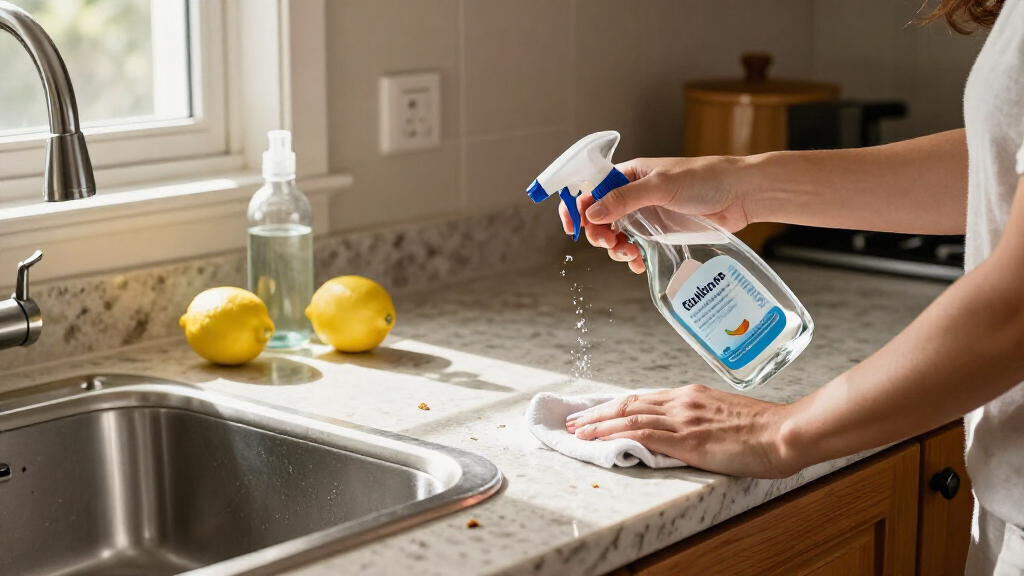
To make the spray, the article instructs readers to fill a clean spray bottle with equal amounts of distilled water and distilled white vinegar, then gently shake it. Boiled water is offered as an alternative if distilled water is unavailable. The recipe also suggests adding about 10 drops of essential oil or other scent ingredients, such as citrus peels or sturdy herbs, as an option—not a requirement.
The report says the mixture can be sprayed and wiped with a microfiber cloth on many household surfaces, including windows, appliances and faucets. It also mentions minor carpet stains. But it cautions against using vinegar on wood and natural stone, which can be etched or eroded by the liquid’s acidity. The article says an unscented water-and-vinegar mixture can last indefinitely, while a batch containing natural scent ingredients should be discarded after about a month.
A Simple Recipe With Surface Limits
The recipe may appeal to readers seeking a low-cost, fragrance-free cleaning option or hoping to reuse a spray bottle instead of buying another packaged product. Ganz frames those motivations through her family’s reported sensitivities and her experience looking for cleaners that worked for them. The article does not establish that the mixture is suitable for every household or that it treats eczema; it is a personal account, not a medical assessment.
The surface warning matters because “all-purpose” can sound broader than the recipe’s safe uses. Vinegar’s acidity makes it unsuitable for some materials, according to the report. Readers should check the surface manufacturer’s instructions and test cleaning products in an inconspicuous area when appropriate, rather than assuming that a homemade mixture can be used throughout the home.
The article also distinguishes between the basic recipe and scented versions. Adding essential oils or plant material changes what is in the bottle and, according to the report, means the cleaner should be replaced after about a month. That distinction gives readers practical storage guidance without presenting the spray as a tested commercial product.
Products Worth Considering

Philips Hue Smart Light Starter Kit with Bridge and 4 White and Color A19 Bulbs

Sonos Roam (Gen 1) Portable Smart Speaker, White

Philips Hue Festavia Permanent Outdoor String Lights, 80 Lights, 150 ft
As an affiliate, we earn on qualifying purchases.
How the Cleaner’s Recipe Emerged
The account is a first-person report by Stephanie Ganz, a food writer and recipe developer whose work has appeared in publications including Bon Appetit, Eater and The Kitchn, according to the supplied source. She says a professional house cleaner shared the recipe a few years ago. The source does not name the cleaner or describe independent testing of the formula.
Ganz’s stated reason for trying the mixture was to find a cleaner that met her household’s needs around fragrance and dye sensitivities. She also describes cost and cleaning performance as issues with some store-bought products. The article notes other possible reasons people may prefer homemade cleaners, including wanting to know the ingredients or reduce packaging, but those are presented as general motivations rather than measured outcomes for this recipe.
The directions use distilled water to avoid trace minerals that can leave residue. If distilled water is not available, the article suggests boiling water and capturing the steam to make distilled water at home. It recommends storing a labeled bottle in a dry place, away from direct sunlight and extreme temperatures, and says a reusable glass bottle or a reused plastic one can reduce the need for a new container.
“A kind professional house cleaner divulged her “recipe” for a DIY all-purpose cleaner to me.”
— Stephanie Ganz, in Apartment Therapy
Limits of the Published Evidence
The supplied material describes Ganz’s experience and reproduces a recipe attributed to an unnamed professional cleaner. It does not provide laboratory testing, independent performance comparisons with commercial products, or evidence that the spray disinfects surfaces or kills specific germs. The article’s cleaning-use suggestions should not be read as a claim that the mixture is a disinfectant.
The report also does not specify how the mixture performs on every surface it lists, or set out detailed guidance for carpet materials and stains. Readers with eczema or fragrance sensitivities should not assume that a homemade cleaner will be suitable for them; the source does not assess individual reactions or offer medical advice. Essential oils and other scent additions are optional, and may not suit people seeking an unscented product.
It is also unclear whether the original house cleaner uses the same proportions today or recommends the mixture for particular types of cleaning. The story does not identify that cleaner, describe a formal safety review, or quantify savings and packaging reductions.
Check Surfaces Before Spraying
The source material does not announce further testing or a follow-up report. Readers considering the recipe can follow the article’s stated limits: use a clean bottle, label it, keep it away from direct sun and temperature extremes, and avoid wood and natural stone. They should also check care guidance for the item or surface they plan to clean.
For a basic batch, the published directions call for equal parts distilled water and white vinegar, with optional scent ingredients. The report says to make a fresh batch after about a month if natural ingredients have been added. Its longer storage claim applies to the water-and-vinegar mixture without those additions; it does not come with independent testing in the supplied material.
Key Questions
What is in the DIY cleaning spray?
The recipe uses equal parts distilled water and distilled white vinegar. The article says boiled water can be used as an alternative and lists essential oils, citrus peels or hearty herbs as optional scent additions.
Which surfaces should not be cleaned with the mixture?
The report warns against using the acidic spray on wood and natural stone, which it says may be etched or eroded. Check the care instructions for any surface before using a homemade cleaner.
Does Apartment Therapy say the spray disinfects?
The supplied report presents the mixture as a household cleaner but provides no test results or claim that it disinfects or kills specific germs. It should not be treated as a substitute for a product labeled for disinfection.
How long does a batch keep?
Apartment Therapy says the water-and-vinegar mixture without added natural ingredients can last indefinitely. For a scented batch with natural ingredients, it recommends discarding it after about a month.
Is the recipe proven safe for people with eczema?
No such finding is reported. Ganz says she chose the recipe while looking for a cleaner for a household with sensitivities, but that is personal experience, not medical evidence. Reactions can vary, and the optional scent ingredients may not be suitable for everyone.
Source: rss