Inflatable hot tubs make backyard wellness more affordable by offering a portable and budget-friendly option compared to permanent spas. They’re easy to set up, move, and store, making relaxation accessible without breaking the bank. However, they’re less durable and may be affected by harsh weather, requiring careful handling and seasonal care. Want to explore how to maximize benefits while managing these tradeoffs? Keep going for essential tips and insights.
Listen free for 30 days with Audible
Thousands of audiobooks and originals — cancel anytime.
As an affiliate, we earn on qualifying purchases.
Key Takeaways
- Inflatable hot tubs are more affordable than permanent spas, making backyard wellness accessible for more people.
- They offer quick setup and portability, reducing installation costs and effort.
- Lower upfront costs come with tradeoffs like reduced durability and potential weather damage.
- They typically lack advanced features, providing a more casual relaxation experience.
- Proper handling and seasonal storage are necessary to extend lifespan and maintain performance.
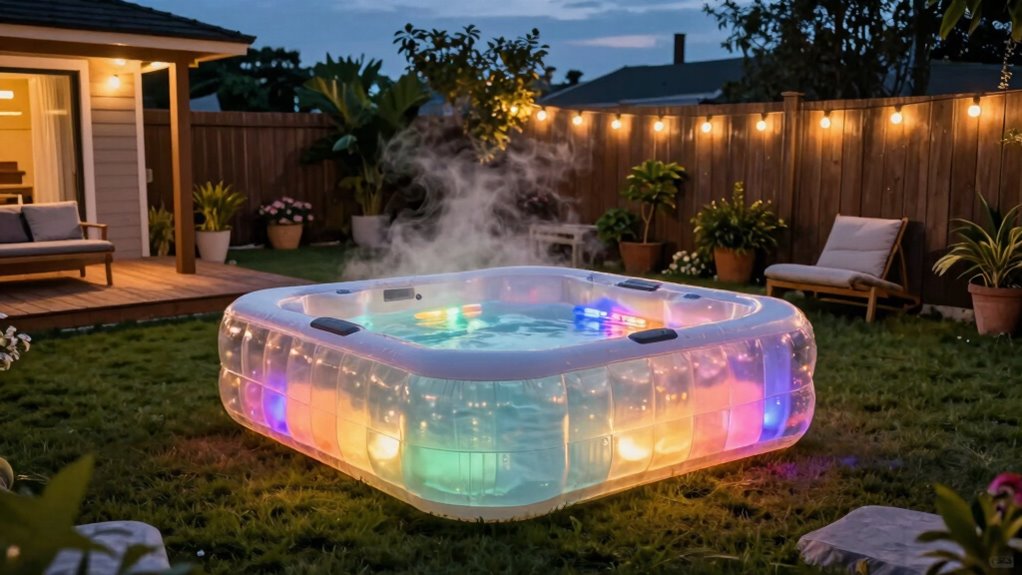
Imagine transforming your backyard into a personal oasis with minimal effort—inflatable hot tubs make that possible. They offer a level of luxury portability that traditional hot tubs simply can’t match. With inflatable models, you can enjoy the soothing warmth and bubbling jets without the hefty installation costs or permanent construction. This makes them a smart choice if you’re seeking seasonal relaxation without the ongoing expenses or commitment of a built-in spa. You can set up your inflatable hot tub whenever you crave a moment of calm and pack it away when you’re done, giving you flexibility that’s perfect for changing seasons or fluctuating schedules.
Inflatable hot tubs offer easy, portable luxury for seasonal backyard relaxation and flexible, hassle-free enjoyment.
The appeal of inflatable hot tubs lies in their affordability. They lower the overall cost of backyard wellness, making relaxation accessible for more people. Instead of investing thousands into a fixed, permanent spa, you can purchase a portable model for a fraction of the price. Plus, most inflatable hot tubs are easy to install—just inflate, fill with water, and you’re ready to relax. This convenience appeals to homeowners who want quick results without the hassle of extensive renovations. However, while they deliver on luxury portability and seasonal relaxation, there are tradeoffs to contemplate.
One of the main compromises is durability. Inflatable hot tubs are made from softer materials, which, although resistant to punctures, don’t quite match the sturdiness of permanent models. They may require more careful handling and storage, especially during off-seasons or harsh weather conditions. When the weather turns cold or if you’re not planning to use it for a while, you’ll need to deflate and store it properly to prevent damage. This extra step can be inconvenient if you’re used to the permanence of traditional hot tubs. Additionally, inflatable hot tubs are generally less resistant to extreme weather conditions, which can impact their longevity and performance. Incorporating weather-resistant materials and advanced construction techniques could extend their lifespan and usefulness in various climates. Moreover, advancements in durable construction are making newer models more resilient, but it’s still important to consider the environment in which you’ll use your hot tub. Proper maintenance and regular cleaning can also help prolong their lifespan, ensuring you get the most value out of your investment.
Another tradeoff is performance. While inflatable hot tubs deliver warm, bubbling water, they often lack the advanced features of more expensive, built-in models—such as powerful jets, precise temperature controls, or integrated lighting. The experience might feel more casual and less luxurious compared to a permanent spa. Still, if your main goal is occasional relaxation and easy portability, these minor limitations might not bother you.
Ultimately, inflatable hot tubs do lower the entry barrier to backyard wellness, making it feasible for more people to enjoy the benefits of soaking and stress relief. They’re ideal if you want seasonal relaxation, flexibility, and a taste of luxury without the steep costs. Just remember, their ease of use comes with tradeoffs in durability and features, so weigh your priorities carefully before making your choice.
As an affiliate, we earn on qualifying purchases.
Frequently Asked Questions
How Long Do Inflatable Hot Tubs Typically Last?
Inflatable hot tubs typically last around 3 to 5 years, but durability concerns and material quality play big roles. If you choose a model with high-quality, puncture-resistant material, it can last longer. Proper maintenance and careful handling also extend its lifespan. However, cheaper materials may wear out faster, leading to leaks or tears. So, investing in a well-made inflatable hot tub guarantees you get the most out of your backyard wellness experience.
Are Inflatable Hot Tubs Energy-Efficient Compared to Traditional Models?
Inflatable hot tubs are generally less energy-efficient than traditional models because their insulation quality isn’t as high. You’ll notice better energy savings with well-insulated inflatable tubs, but they still tend to use more power overall. To cut costs, look for models with thicker walls and good insulation, which help retain heat better. Keep in mind, their portability and lower price make them a convenient option despite slightly higher energy consumption.
Can Inflatable Hot Tubs Handle Extreme Weather Conditions?
You might wonder if inflatable hot tubs can survive extreme weather, and the answer’s a bit of a gamble. Their durability in harsh conditions depends on insulation effectiveness and build quality. While some models are designed with reinforced materials and insulation to withstand cold snaps or heat waves, others might struggle. So, if you face unpredictable weather, choose one with proven extreme weather durability to keep your relaxing oasis safe.
What Are the Best Maintenance Practices for Inflatable Hot Tubs?
You should regularly check and adjust the chemical balancing to keep your inflatable hot tub safe and clean. Test the water weekly and add appropriate chemicals to maintain pH and sanitizer levels. Cover maintenance is also essential—keep the cover clean and dry, and replace it if damaged. Proper chemical balancing and cover upkeep prevent algae and bacteria growth, ensuring your hot tub stays inviting and in good condition for longer.
Do Inflatable Hot Tubs Require Professional Installation?
No, inflatable hot tubs generally don’t require professional installation. You can set them up yourself, but watch out for installation challenges like ensuring a flat, level surface to maintain structural stability. Proper placement is key to avoid leaks or damage. While DIY is manageable, taking extra care during setup helps keep your hot tub stable, safe, and enjoyable without the need for professional help.
Conclusion
Inflatable hot tubs bring backyard wellness within your reach like a cozy island in a sea of stress. They’re affordable, portable, and easy to set up, making relaxation accessible anytime. However, keep in mind the tradeoffs—less durability and fewer features than permanent spas. If you’re okay with occasional compromises, these tubs can transform your outdoor space into a personal retreat. It’s like having a spa in your backyard, ready to soothe you whenever you need.
Flea & tick season Picks
flea and tick prevention
As an affiliate, we earn on qualifying purchases.