
TL;DR

Get home appliances delivered free with Prime
- Fast, free delivery on millions of items
- Prime Video, Amazon Music and more included
- Member-only deals all year
Lavazza’s Tablì and Keurig’s Alta are new single-serve coffee systems that brew from solid coffee rounds rather than conventional capsules. The products could reduce packaging associated with traditional pods, but their wider environmental effect and consumer uptake are not established in the source material.
Lavazza Tablì and Keurig Alta are introducing a different format for single-serve coffee: compressed coffee rounds brewed without conventional capsules. The development offers an alternative to pod-based machines, whose packaging has raised waste concerns, though the available reporting does not establish how much either system will reduce environmental impact at scale.
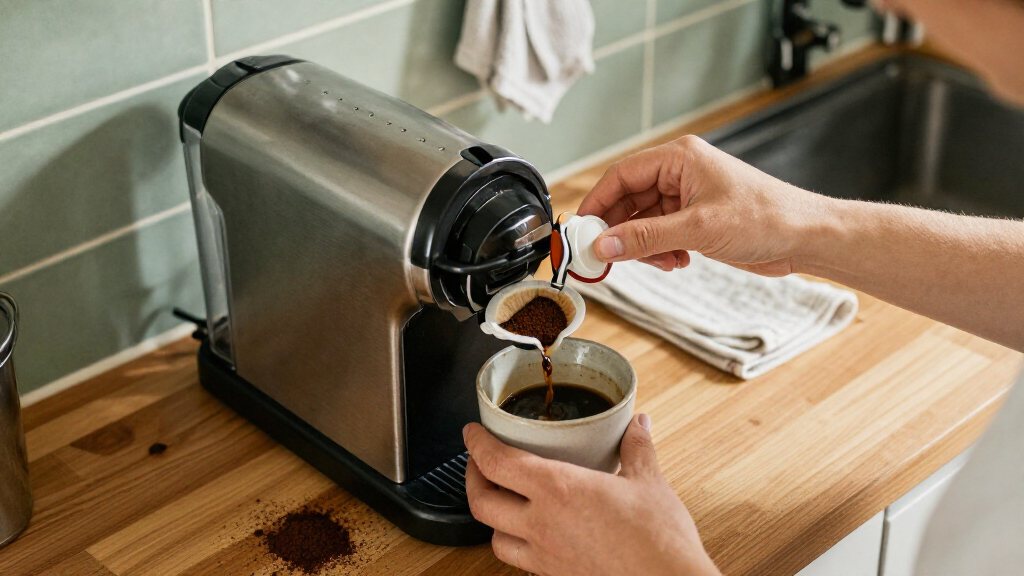
Livingetc’s report describes Tablì as a capsule-free, single-serve system that brews from a tab made of what Lavazza says is 100% coffee, without coatings or binders. The machine is used much like a pod brewer: users place a tab inside, close the lid and press a button. The report’s writer tested the machine and described the resulting espresso as having a crema layer and a taste comparable to espresso from other machines. That is a firsthand assessment, not an independent product-performance study.
Lavazza coffee expert David Cutler told Livingetc the company had spent five years researching Tablì’s technology. The report says the company did not disclose the details of how it compresses the coffee into a round that remains intact during production, shipping and use. Lavazza says the system’s packaging can go in standard home recycling, while the used coffee grounds can be handled like grounds from other brewing methods.
Keurig has also launched Alta in the United States, using coffee rounds called AltaRounds. The source describes Keurig’s material as “plastic-free, plant-based protection” designed to keep the rounds intact. It does not provide comparative testing, sales figures, or evidence that either new system has replaced conventional coffee pods in the market.
A Different Route for Single-Serve Coffee
Single-serve machines are popular partly because they make coffee quickly and with little preparation. Their convenience has also come with questions about the waste created by individually packaged servings. Systems that dispense coffee from a solid round rather than a conventional capsule may change the packaging involved, while keeping the familiar one-button routine.
The environmental case, however, depends on more than the shape of the coffee portion. The source reports that Tablì packaging is recyclable in household recycling and that used grounds can go into food-waste collections or home composting where appropriate. It does not give a full life-cycle comparison of the machines, rounds, packaging, transport or disposal. Consumers therefore cannot infer from the capsule-free design alone that either system has a lower total environmental footprint.
For people who value the speed of pod machines but are concerned about discarding capsules, the launches signal a potential new option. Whether that option makes a meaningful difference will depend on availability, cost, consumer habits, local waste services and evidence about the products’ complete material and energy use.
Products Worth Considering

Philips Hue White and Color Ambiance A19 Smart Bulb Starter Kit, 2-Pack

Sonos Era 100 SL Compact Microphone-Free Speaker, Black

Philips Hue Bridge Pro Smart Lighting Hub
As an affiliate, we earn on qualifying purchases.
From Capsules to Coffee Rounds
Livingetc cites an estimate from Knowledge Sourcing Intelligence that 12.6 million UK households owned a coffee pod machine in 2024, equal to 46% of UK households. The report also references a 2021 figure reported by The Independent: about 29,000 coffee pods went to landfill each minute. It says that estimate corresponded to roughly 75% to 90% of capsules, but the source material does not provide enough detail to independently assess the calculation or its scope.
Conventional capsules can be difficult to recycle because coffee grounds must be separated from the packaging. The Livingetc report says some recycling schemes exist, but their effectiveness depends on collection and processing. It also notes that compostable pods have been developed, while shifting attention to a different question: whether single-serve brewing can avoid a conventional pod altogether.
Tablì and Alta take that approach through coffee rounds. They retain single-serve preparation but change the portion format. The source presents the products as recent developments; it does not supply a detailed launch schedule, pricing comparison, or independent assessment of how the rounds perform over time.
“We’ve been researching the technology behind Tablì for the past five years, developing a new approach to single-serve coffee that opens up an entirely new market segment.”
— David Cutler, Lavazza coffee expert, speaking to Livingetc
Environmental Impact Still Unmeasured
The report does not provide a life-cycle assessment comparing Tablì or Alta with conventional capsules, reusable systems or other brewing methods. It is therefore unclear whether the new formats reduce total waste or emissions once production, shipping, packaging and disposal are counted. The source also does not give prices, sales data, household adoption figures, or details about product availability in different markets.
For Tablì, the method used to compress and protect the coffee round remains undisclosed in the report. Lavazza’s claim that the tab is entirely coffee and its statement about recyclable packaging are attributed company information, not independently verified findings in the source. The long-term durability of the rounds and how consistently local recycling and food-waste services can handle the materials are also not established.
Market Uptake and Impact Evidence
The next indicators will be whether Lavazza and Keurig expand availability, how consumers respond to the new systems and whether the companies publish more detail on materials and waste. A meaningful comparison would need transparent information about production, packaging, transport, brewing performance and disposal, alongside evidence about how often the rounds are actually recycled or composted.
Until that information is available, the confirmed development is a change in product format: two companies are offering single-serve brewing with coffee rounds instead of conventional capsules. Whether that becomes a lasting shift in the coffee-machine market, or a measurable sustainability improvement, remains open.
Key Questions
Are Lavazza Tablì and Keurig Alta conventional coffee-pod machines?
They are single-serve systems, but the report says they use solid coffee rounds rather than conventional capsules. Tablì’s tab is described by Lavazza as made of 100% coffee; Keurig’s AltaRounds are described as having plastic-free, plant-based protection.
Does a coffee round mean there is no packaging waste?
No. Livingetc reports that Tablì still has packaging, which Lavazza says can go in standard home recycling. The source does not establish that the system creates no waste or quantify its total packaging footprint.
Can used coffee grounds go in food-waste collections?
John Verity of Divert told Livingetc that coffee grounds are accepted in most UK council food-waste collections. He said home composting is another option, though local collection rules vary.
Has either system been shown to be better for the environment overall?
The source does not include a full environmental comparison. The capsule-free design may change the materials used, but evidence about the full life-cycle impact and disposal outcomes is not provided.
Source: livingetc.com