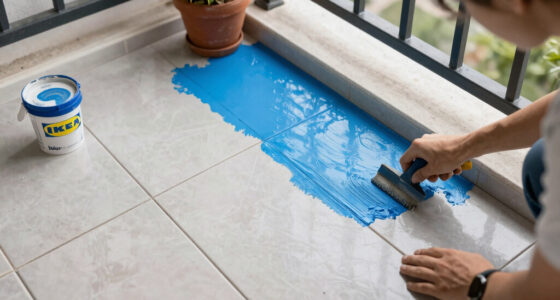
To naturally cool your home in warm weather, start by using cross-ventilation and opening windows on opposite sides for airflow. Install shades, blackout curtains, or reflective films to block out heat from the sun. Use ceiling and portable fans wisely, turning them off when rooms are empty. Improve insulation and seal gaps to prevent hot air from entering. Combining these strategies can boost comfort and save energy—keep exploring for more effective tips and tricks.

Get home appliances delivered free — and shop member deals
- Fast, free delivery on millions of items
- Access to Prime Big Deal Days deals on October 6–7
- Prime Video, Amazon Music and more included
Key Takeaways
- Utilize cross-ventilation by opening windows on opposite sides to promote natural airflow and reduce indoor temperatures.
- Install reflective window films, shades, or blackout curtains to block solar heat gain during peak sunlight hours.
- Plant shade trees or add awnings to block direct sunlight and minimize heat absorption on building exteriors.
- Use ceiling and portable fans strategically to enhance airflow and evaporate sweat for personal cooling.
- Seal gaps around windows and doors, improve insulation, and incorporate shading devices to prevent heat infiltration.
When the heat rises outside, finding ways to cool your home naturally becomes essential for comfort and energy savings. One effective method is to optimize your home’s cooling systems with smart thermostats. These devices learn your schedule and adjust temperatures accordingly, ensuring your home stays comfortable without wasting energy. By programming your smart thermostat to raise the temperature during the day when you’re at work and lowering it before you return, you reduce unnecessary cooling costs. Many smart thermostats also allow remote control via smartphone, so you can tweak settings even when you’re away, preventing your home from overheating and saving electricity.
Smart thermostats optimize cooling schedules, saving energy and maintaining comfort effortlessly.
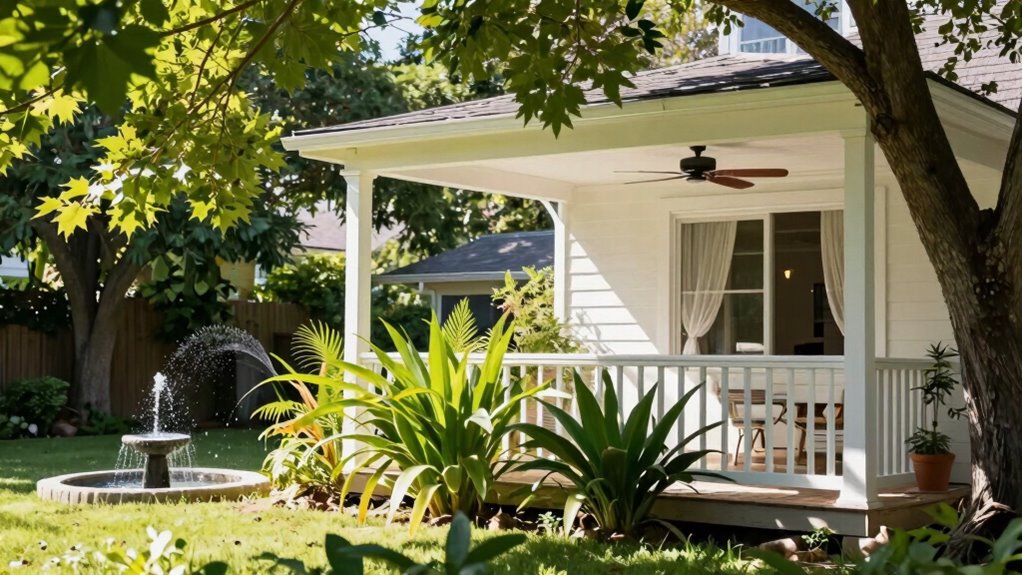
In addition to smart thermostats, energy-efficient fans play a vital role in creating a cooler indoor environment. Ceiling fans are particularly effective when used correctly. Set them to rotate counterclockwise during warm months to produce a wind-chill effect that cools you directly. Remember, fans don’t cool the air; they cool people by evaporating sweat, so switch them off when you leave a room. Portable fans are also handy for directing airflow where needed most, especially in spaces that tend to heat up more quickly. Combining these fans with natural ventilation—such as opening windows during the cooler parts of the day—can considerably reduce indoor temperatures without turning on the air conditioner. Additionally, natural ventilation can be enhanced by understanding how airflow moves through your space, helping you design better cross-ventilation strategies. Incorporating airflow management techniques can further improve the effectiveness of these methods. Understanding passive cooling principles can help you optimize your home’s design for better temperature regulation. To further improve natural cooling, consider planting shade trees or installing awnings to block direct sunlight and minimize solar heat gain.
To maximize natural cooling, harness the power of cross-ventilation. Open windows on opposite sides of your home to create a breeze that pushes hot air out and pulls cooler air in. This method works best when outdoor temperatures drop in the evening and early morning. If your home faces the sun during peak heat hours, consider installing reflective window films or shades to block out solar heat gain. Using blackout curtains during the day can also keep indoor temperatures lower, especially in bedrooms and living rooms. These simple measures help maintain a cooler indoor environment without relying on energy-intensive cooling systems.
Finally, paying attention to your home’s insulation and sealing any gaps around windows and doors can prevent hot air from seeping in and cool air from escaping. Proper insulation keeps cool air in and hot air out, making your natural cooling efforts more effective. Incorporating energy efficiency measures such as sealing leaks and enhancing insulation can significantly improve your home’s ability to stay cool naturally. Additionally, choosing light-colored roofing or exterior paint can reflect more sunlight, reducing heat absorption and further lowering indoor temperatures. By integrating smart thermostats, energy-efficient fans, natural ventilation, and preventative measures like shading and sealing, you create a more comfortable home that minimizes energy use. These strategies work together to keep your indoor space pleasantly cool even during the hottest days, all while reducing your carbon footprint and lowering utility bills.
As an affiliate, we earn on qualifying purchases.
Frequently Asked Questions
How Can Indoor Plants Help Cool My Home Naturally?
Indoor plants help cool your home naturally by improving air circulation and humidity control. As they transpire, plants release moisture that increases humidity, which can make the air feel cooler and more comfortable. Their leafy growth also promotes better air flow, reducing stagnant air and lowering indoor temperatures. By placing plants strategically, you create a fresher, cooler environment without relying on air conditioning, making your space more pleasant during warm weather.
What Are the Best Materials for Natural Home Insulation?
You should prioritize natural insulation materials like straw bales, sheep’s wool, or cellulose, which combine passive cooling with high thermal mass. These materials absorb heat during the day and release it at night, helping regulate indoor temperatures. Their breathability promotes airflow, reducing the need for mechanical cooling. Using these eco-friendly options enhances your home’s energy efficiency while maintaining comfort, all grounded in the balance of passive cooling and thermal mass.
How Does Building Orientation Affect Indoor Temperature?
You should orient your building to maximize shade and minimize sun exposure during hottest parts of the day, which helps keep indoor temperatures down. Using strategic building materials like reflective or insulating options can enhance this effect. Incorporate ventilation strategies such as cross-ventilation and operable windows to promote airflow, naturally cooling your home. Proper building orientation combined with these materials and ventilation strategies creates a cooler, more comfortable indoor environment without relying heavily on mechanical cooling.
Can Reflective Roof Coatings Reduce Heat Absorption Effectively?
Yes, reflective roof coatings can effectively reduce heat absorption. These coatings work by reflecting sunlight rather than absorbing it, which helps lower your home’s indoor temperature. When you apply reflective coatings, you’ll notice less heat transfer through your roof, leading to improved heat reduction and increased comfort. They’re an eco-friendly, energy-saving way to keep your home cooler naturally during warm weather, reducing reliance on air conditioning.
Are There Natural Methods to Prevent Heat Gain Through Windows?
Yes, you can prevent heat gain through windows naturally. Drape window curtains or hang solar screens to block sunlight before it heats your home. Curtains with reflective linings deflect daylight, while solar screens serve as shields against harsh rays. Both methods help keep your space cooler, creating a comfortable, cost-effective, and community-conscious climate control, all without relying on energy-intensive air conditioning.
Conclusion
Imagine your home as a cozy, shaded garden on a hot summer day, where cool breezes gently sway through. By embracing natural cooling methods, you’re not just saving energy—you’re creating a sanctuary that breathes with the rhythm of the season. When I first tried opening windows at dawn, I felt an instant breeze that cooled my space without a single air conditioner. Small steps like these turn your home into a revitalizing refuge, even on the hottest days.
Fall yard work Picks
leaf blowers
As an affiliate, we earn on qualifying purchases.