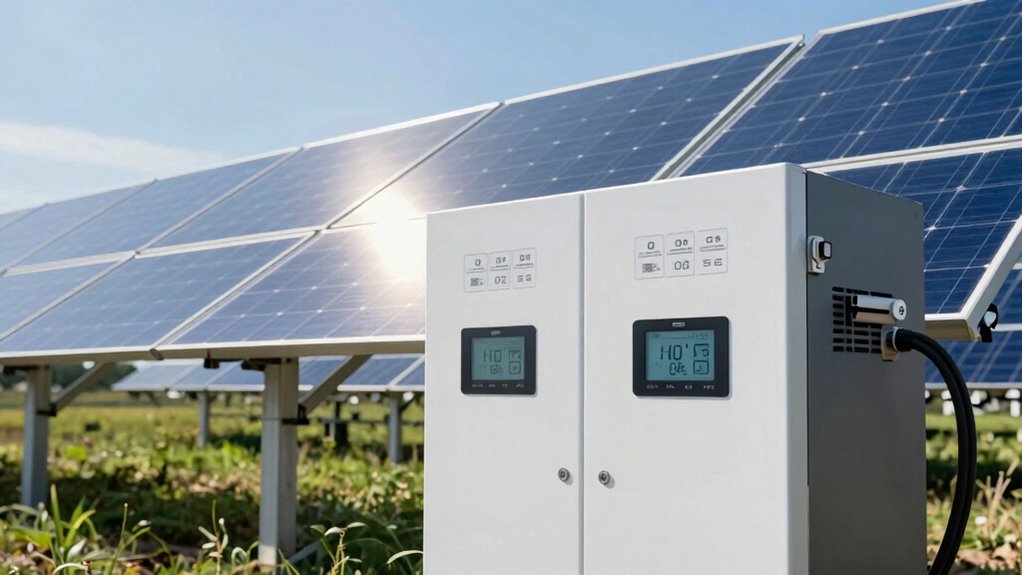

Solar generators often take longer to charge than marketing claims suggest because real-world factors like weather, sunlight intensity, panel quality, and shading slow down the process. Portable units may charge slower than stationary ones, and cloudy days or short winter daylight hours can extend recharge times markedly. Despite these limitations, understanding what affects charging speed helps you plan better. If you want to uncover how to get the most out of your solar generator, keep exploring this topic.

Get home appliances delivered free — and shop member deals
- Fast, free delivery on millions of items
- Access to Prime Big Deal Days deals on October 6–7
- Prime Video, Amazon Music and more included
Key Takeaways
- Actual charging times for solar generators typically range from 4 to 8 hours under ideal sunlight, longer in cloudy conditions.
- Marketing claims often exaggerate charging speeds, not accounting for weather, shading, and seasonal variations.
- Frequent charging accelerates battery degradation, reducing overall lifespan and long-term performance.
- Larger, stationary solar generators generally charge faster than portable units due to bigger panels and higher capacity.
- Real-world conditions like weather, dirt, and shading significantly impact charging efficiency, contradicting idealized marketing promises.
As an affiliate, we earn on qualifying purchases.
How Do Solar Generators Charge Compared to Marketing Claims?
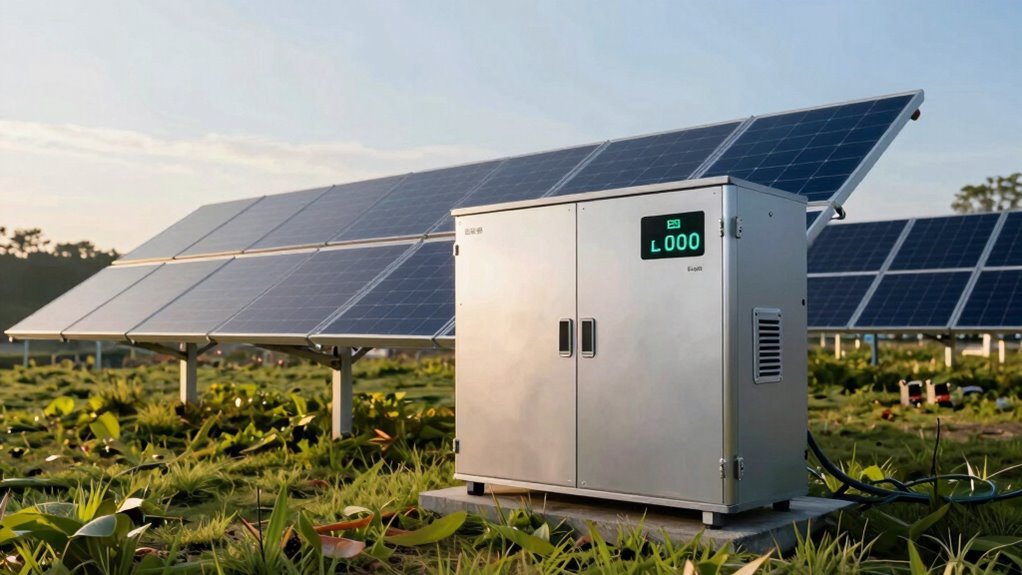
Many marketing claims about solar generators promise fast and efficient charging, but in reality, the charging process often takes longer than advertised. Over time, frequent charging can lead to battery degradation, reducing the generator’s overall performance and lifespan. This degradation affects long-term performance and can diminish the overall value of your investment. Additionally, if you’re focused on cost efficiency, you might find that prolonged charging times increase your energy costs and decrease value. Manufacturers tend to highlight ideal conditions in their marketing, but actual charging speeds depend on factors like sunlight availability and battery health. Understanding the technological limitations of solar generators helps you set realistic expectations and make smarter choices when investing in a solar generator. Recognizing these performance constraints is essential for managing expectations and ensuring the longevity of your solar power system. Being aware of real-world conditions can help prevent disappointment and optimize your system’s usage over time. Moreover, understanding the energy transfer efficiency can help you better plan your energy consumption and storage needs.
What Factors Affect How Quickly a Solar Generator Charges?
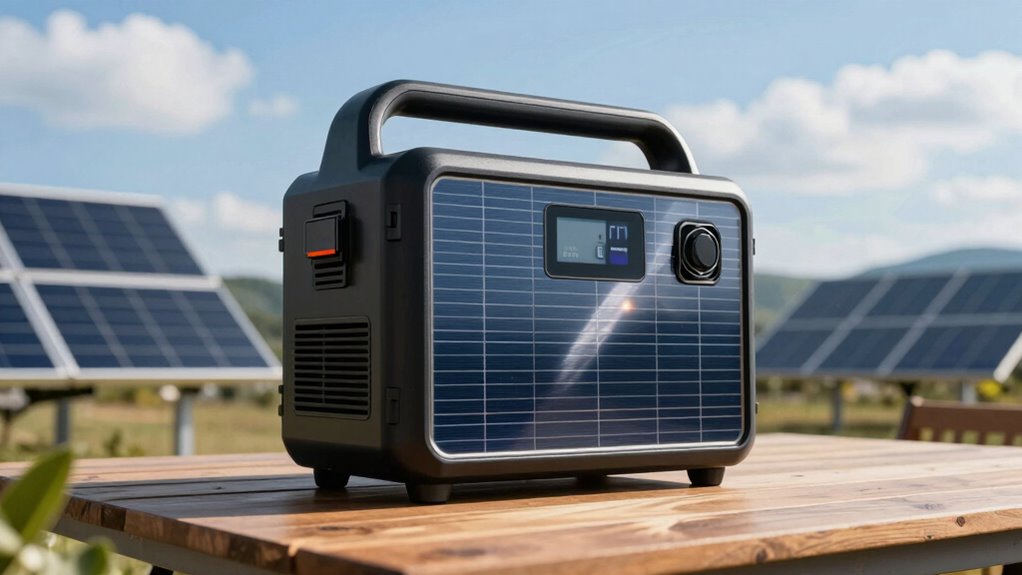
The speed at which your solar generator charges depends largely on sunlight intensity and how efficient your solar panels are. Bright, direct sunlight boosts charging times, while cloudy days slow them down. Choosing high-quality panels can make a noticeable difference in how quickly your generator recharges. Additionally, the contrast ratio of your setup can influence how well you perceive the efficiency and clarity of the charging process. Moreover, understanding the weight of your solar generator is crucial for portability and installation considerations, especially if you plan to move it frequently or set it up in different locations. Factors like solar panel efficiency and system design also play significant roles in charging speed. Properly managing system configuration can optimize overall charging performance and meet your energy needs more effectively, much like how client satisfaction is prioritized in professional services to ensure optimal outcomes.
Sunlight Intensity Levels
Sunlight intensity levels directly influence how quickly your solar generator charges, as brighter sunlight delivers more energy to the panels. Factors like weather, time of day, and geographical location cause sunlight variability, impacting charging speed. Over time, solar panel degradation can also reduce the amount of energy your panels produce, even in ideal conditions. To maximize efficiency, aim for clear, direct sunlight during peak hours. Keep in mind that shading or clouds diminish sunlight intensity, slowing your charge. Here’s a quick comparison:
| Factor | Effect |
|---|---|
| Sunlight variability | Causes fluctuations in charging speed |
| Cloud cover | Reduces sunlight, slows charging |
| Solar panel degradation | Lowers overall energy output over time |
| Time of day | Peak midday sun offers fastest charging |
Solar Panel Efficiency
Ever wonder what determines how fast your solar generator charges? Solar panel efficiency plays a key role. Several factors influence this, including:
- The quality of manufacturing standards, ensuring better conversion of sunlight into energy
- The age of the solar panels, with solar panel degradation reducing efficiency over time
- The angle and orientation of the panels, optimizing sunlight exposure
- The presence of dirt or debris, which can block sunlight
- The type of solar cells used, affecting overall performance
- The use of trusted market providers that offer high-quality panels with reliable performance.
Choosing panels with advanced manufacturing techniques can also improve efficiency and longevity. Higher-quality panels with minimal degradation perform better, charging your generator faster. Additionally, solar panel durability impacts long-term efficiency, as panels built to high standards tend to maintain their performance longer. Keep in mind that even the best panels decline in efficiency with age, so regular maintenance and choosing panels built to high manufacturing standards can make a significant difference in charging times.
Do Portable and Large Solar Generators Charge Differently?

You might wonder if portable and large solar generators charge at different rates. Their efficiency, charging speeds, and size all influence how quickly they recharge. Understanding these differences helps you choose the right generator for your needs. Additionally, considering reliability and safety factors ensures your backup power remains dependable when needed most. Variations in design and capacity can also impact the overall charging process and performance longevity. It’s also important to recognize that charging technology varies between models, affecting overall efficiency and user experience. Advances in solar panel efficiency continue to shape how quickly these generators can be recharged under various conditions. Recognizing how power management systems function can further influence charging performance and longevity.
Portable vs. Stationary Efficiency
While both portable and stationary solar generators harness sunlight to produce energy, they often differ in how efficiently they charge. Portable units typically prioritize mobility benefits, which can sometimes limit their battery longevity and charging efficiency. Larger, stationary generators usually have bigger panels and batteries, allowing for more consistent and faster charging. Additionally, the selection of lifestyle products can influence the overall efficiency and usability of solar generators in daily routines. Portable models often have smaller panels, leading to slower charge rates. Stationary units benefit from larger panels that maximize sunlight exposure. Battery longevity tends to be longer in stationary generators due to better cooling and larger capacity. Moreover, stationary solar generators are often integrated into home energy systems, enhancing their overall charging performance and sustainability. Portability benefits include easy setup and mobility, but may sacrifice some charging efficiency. In fact, stationary models are often equipped with advanced cooling systems that further improve battery health and longevity. In contrast, stationary models are often designed to optimize solar energy capture, resulting in more efficient charging over extended periods. The size of the solar panels also plays a crucial role in determining charging speed and efficiency, with larger panels capturing more sunlight for faster energy accumulation. Overall, stationary generators generally charge more efficiently, especially over extended periods.
Charging Speed Differences
The charging speeds of portable and large stationary solar generators differ primarily due to their panel sizes and design. Larger panels on stationary units capture more sunlight, enabling faster battery storage recharge rates. Portable generators, with smaller panels, take longer to reach full charge. Additionally, inverter performance influences charging efficiency; high-quality inverters manage power transfer better, reducing energy loss during charging. This means that even if two generators have similar battery capacities, the stationaries often charge quicker because their larger panels and optimized inverters facilitate faster energy flow. Conversely, portable units prioritize mobility over rapid charging, which naturally impacts their charging speed. Understanding these differences helps you set realistic expectations based on your needs and the generator’s design features.
Size and Power Capacity
Size and power capacity play a pivotal role in determining whether portable or large stationary solar generators charge differently. Generally, larger units have higher battery capacity, which means they take longer to charge despite more powerful solar input. Portable models are smaller, with compact physical size, allowing quicker recharging but often with lower battery capacity. In contrast, larger generators feature:
- Bigger physical size for increased battery capacity
- Longer charging times due to higher battery capacity
- Faster charging with higher wattage input
- More complex internal components affecting charge cycles
- Variations in charge management systems impacting efficiency
Additionally, the charging system design of a generator influences how efficiently it can convert solar energy into stored power, affecting overall charging times. The ethnicity of the manufacturer’s components can also impact quality and performance. Your choice depends on your needs: portability and quick recharge versus higher capacity and longer operation. Understanding these differences helps set realistic expectations for charging times and performance.
How Long Does It Usually Take to Fully Charge a Solar Generator?
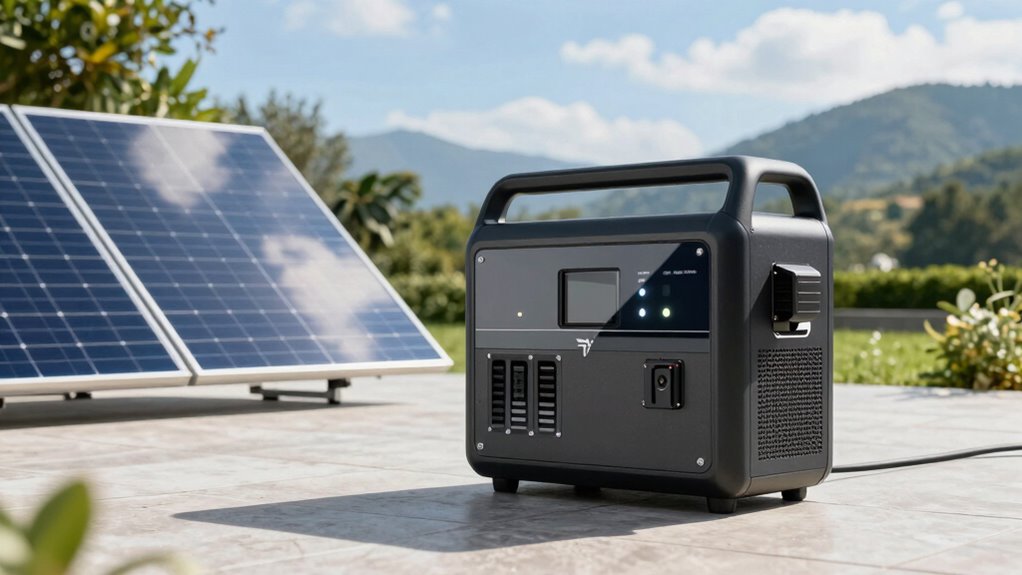
Charging a solar generator typically depends on several factors, including the capacity of the unit and the intensity of sunlight. The time it takes to fully charge varies widely, but most portable models need anywhere from 4 to 8 hours under ideal conditions. Your charging station’s power output plays a vital role; higher output means faster charging. If your solar panels deliver more watts, you’ll reduce charging time considerably. However, cloud cover, shading, and the angle of sunlight can slow this process. For larger capacity generators, expect longer charging times, even with perfect sunlight. Keep in mind that real-world conditions rarely match marketing claims, so it’s wise to plan for extended charging periods. Monitoring your generator’s input and adjusting sunlight exposure can help maximize charging efficiency. Understanding solar panel efficiency can further improve your charging experience and optimize performance. Additionally, being aware of solar panel degradation over time can help set realistic expectations for long-term use and efficiency.
How Much Do Weather and Sunlight Conditions Impact Charging Times?
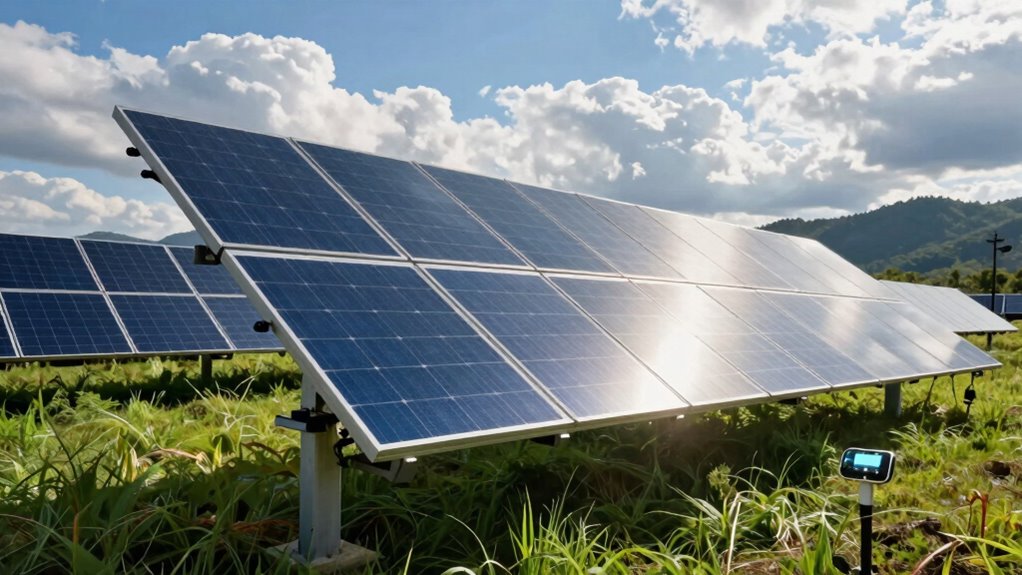
Weather and sunlight conditions play a crucial role in how quickly your solar generator charges. Variations in weather conditions and sunlight variability can considerably affect charging times. Cloudy days, rain, or snow reduce the amount of sunlight reaching your panels, slowing down the process. Conversely, clear, direct sunlight maximizes efficiency. Keep in mind:
- Overcast skies decrease solar panel output
- Shorter days in winter limit sunlight exposure
- High temperatures can reduce panel efficiency
- Dust or dirt on panels blocks sunlight
- Shade from trees or buildings hampers charging
These factors mean your generator may take longer to fully charge during bad weather or in less sunny seasons. Planning for weather variability ensures you’re not caught off guard when charging times extend unexpectedly.
What Are Common Myths About Solar Generator Charging Speeds?

Many people believe that solar generator charging speeds are always fast and consistent, but this isn’t true. Marketing exaggerations often lead you to think you’ll get rapid, steady power, regardless of conditions. In reality, battery technology and sunlight levels heavily influence charging times. Here’s a typical scenario:
| Weather Condition | Charging Rate | Expectation vs Reality |
|---|---|---|
| Bright Sunlight | Fast | Usually slower than ads claim |
| Cloudy Days | Moderate | Significantly reduced |
| Night/Overcast | Very Slow | Almost negligible |
This table shows that charging speed varies based on conditions, and marketing hype can oversimplify or overstate actual performance. Understanding these myths helps you set realistic expectations.
How Can You Maximize Charging Speed and Efficiency?
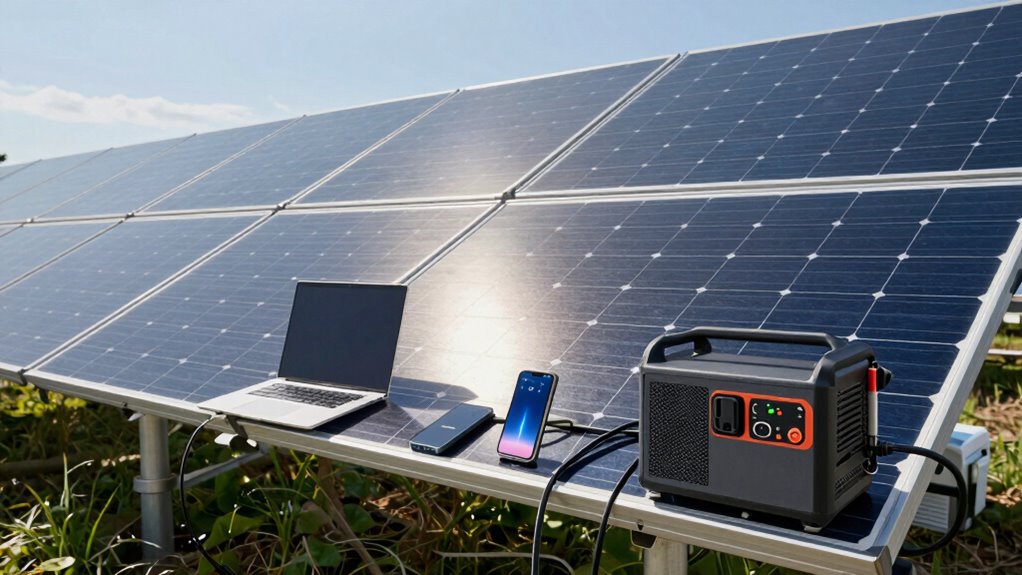
To maximize your solar generator’s charging speed and efficiency, focus on enhancing sunlight exposure and system setup. Proper positioning ensures your panels capture the most sunlight, reducing charging time and extending battery lifespan. Use adjustable mounts to follow the sun’s path and avoid shading from trees or structures. Additionally, keep your panels clean and free of debris to maintain peak performance. Consider the quality of your solar panels and wiring, as high-efficiency components boost overall charging rates. Remember, efficient use of renewable sources not only speeds up charging but also preserves your battery’s health over time. To enhance performance, you should:
- Position panels at ideal angles toward the sun
- Avoid shading during peak sunlight hours
- Regularly clean panels for maximum absorption
- Upgrade to high-efficiency solar panels
- Use proper wiring and connectors for minimal energy loss
Are Solar Generators Still Worth It Despite Longer Charging Times?
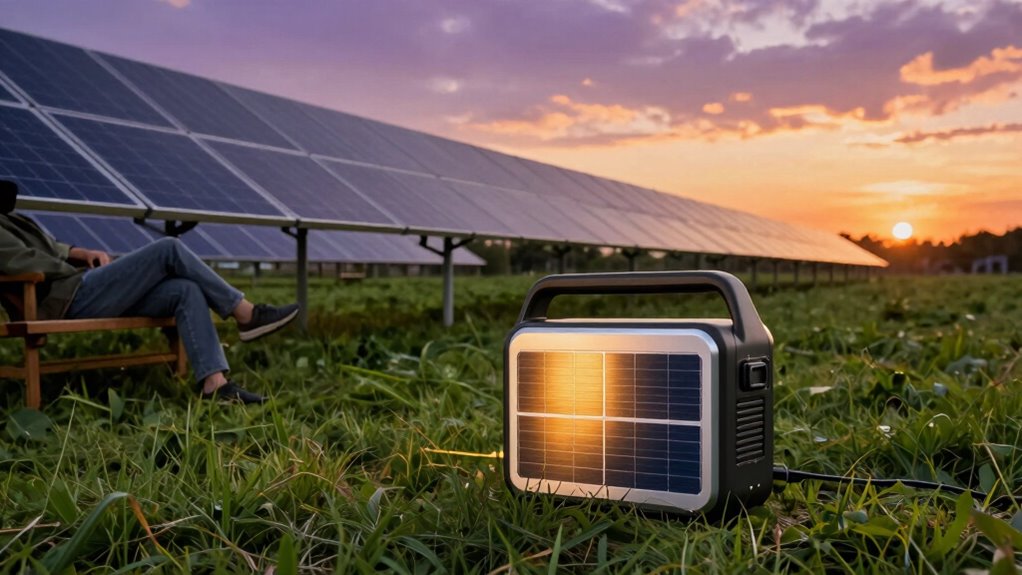
Despite longer charging times, solar generators remain a worthwhile investment because they offer clean, renewable energy that can reduce your reliance on traditional power sources. While slower charging might raise concerns about battery lifespan, modern solar generators are designed to optimize battery health, extending their longevity despite repeated use. Portability concerns are valid, but many models are lightweight and compact, making them easy to carry during camping trips or emergencies. The ability to generate power off-grid ensures you stay connected without depending on the grid, even if it takes longer to fully recharge. Overall, the environmental benefits and versatility of solar generators outweigh the inconvenience of longer charging times, especially when you consider the continuous advancements in technology that are improving their efficiency and durability.
Frequently Asked Questions
Can Solar Generators Be Used While Charging?
Yes, you can use a solar generator while it charges, thanks to its portable power design. This allows you to access energy storage for your devices while the solar panels continue collecting sunlight. Keep in mind, however, that using the generator during charging might slightly slow down the overall process. Still, it’s a practical way to maintain power for your essential devices without interruption.
How Do Different Battery Chemistries Affect Charging Times?
Different battery chemistries critically impact your solar generator’s charge rate. Lithium-ion batteries, for example, typically charge faster and handle more cycles than lead-acid types, meaning quicker replenishing times. You’ll find that lithium-based batteries offer efficient charging, while others like nickel-metal hydride or flow batteries may have slower charge rates. Understanding your battery chemistry helps you optimize charging times and guarantees your solar generator performs reliably when you need it most.
Are There Accessories to Speed up Solar Generator Charging?
Imagine transforming your solar generator into a lightning-fast power station! Yes, there are accessories like solar panel upgrades and portable charging options that can dramatically speed up charging times. These enhancements tap into more sunlight or add extra power sources, making your setup almost instantaneous. So, if you crave quick recharges, investing in these accessories will turn your solar generator into the ultimate, unstoppable energy machine.
How Do Seasonal Changes Influence Charging Efficiency?
Seasonal variability and temperature effects substantially influence your solar generator’s charging efficiency. During colder months, low temperatures can reduce battery performance, leading to slower charging times. Conversely, in warmer seasons, ideal temperatures help batteries charge more efficiently. Keep in mind that intense sunlight boosts solar input, but extreme heat can also harm batteries. To maximize charging, monitor seasonal changes and adjust your setup accordingly, ensuring your solar generator performs reliably year-round.
What Are the Best Practices for Maintaining Optimal Charge Speed?
To maintain ideal charge speed, you should regularly calibrate your battery to guarantee accurate readings and efficiency. Keep your solar generator’s firmware updated, as manufacturers often release improvements that enhance charging performance. Avoid deep discharges and store the unit in a cool, dry place to prevent battery degradation. These practices help maximize charging efficiency, ensuring your solar generator performs reliably when you need it most.
Conclusion
While solar generators promise swift, seamless charging, the reality often falls short of marketing myths. By understanding factors like sunlight, size, and weather, you can better maximize your generator’s potential. Don’t be discouraged by longer charging times—embrace the benefits of sustainable, silent power. With patience and proper planning, you’ll harness the true tenacity of solar energy, turning potential pitfalls into powerful, practical solutions. Solar success depends on savvy, steady strategies—so stay smart, stay powered!
Fall yard work Picks
leaf blowers
As an affiliate, we earn on qualifying purchases.