

To balance preservation and access in world heritage sites, you should support responsible tourism practices and community involvement. Respect local customs, stick to designated paths, and choose eco-friendly options to minimize your environmental impact. Engaging with local communities and infrastructure helps protect these sites for future visitors. If you want to discover how sustainable tourism can safeguard these treasures while allowing everyone to enjoy them, keep exploring these essential strategies.
Key Takeaways
- Engaging local communities ensures their needs are integrated into tourism planning, promoting sustainable preservation and equitable access.
- Implementing eco-friendly infrastructure minimizes environmental impact while enhancing visitor experience at heritage sites.
- Promoting responsible visitor behavior and education helps protect site integrity and reduces over-tourism risks.
- Balancing access with conservation requires policies that limit visitor numbers and manage seasonal flows effectively.
- Supporting responsible tour operators and community-led initiatives fosters sustainable tourism practices aligned with preservation goals.
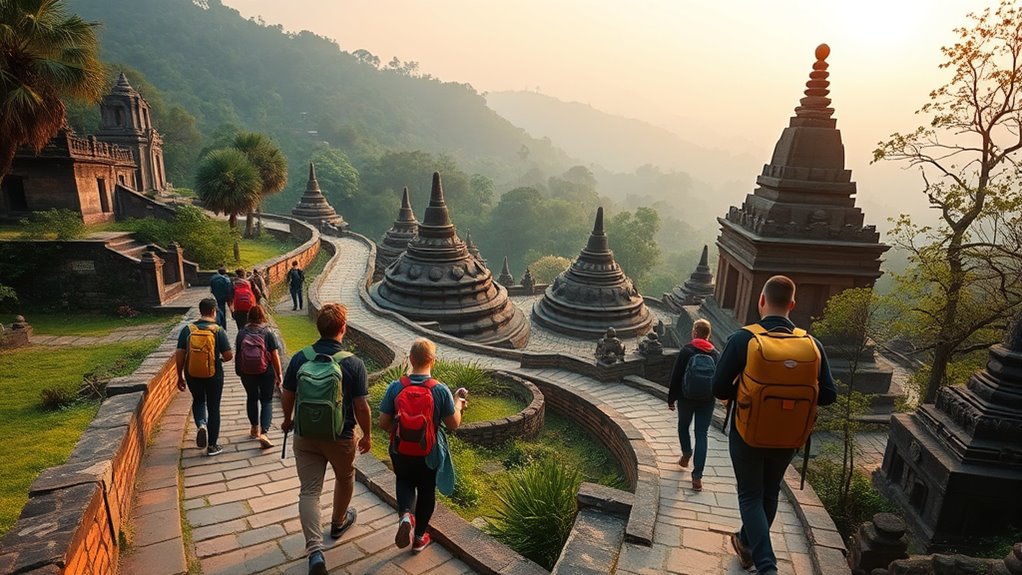
Have you ever wondered how to visit some of the world’s most incredible sites without damaging them? The secret lies in embracing sustainable tourism practices that prioritize preservation while allowing everyone to experience these wonders. One essential approach is fostering community engagement. When local communities are actively involved in tourism planning, they become stewards of their heritage rather than just bystanders. Your participation can support local businesses, encourage cultural exchange, and ensure that tourism benefits those who live nearby. Community engagement also helps prevent over-tourism, which can strain resources and diminish the site’s authenticity. By listening to local voices and respecting their needs, you contribute to a balanced approach that safeguards the site for future generations. Developing cultural intelligence among visitors and stakeholders can enhance understanding and respect for local customs and traditions, further supporting sustainable practices.
Supporting local communities and promoting responsible tourism helps preserve our world’s most treasured sites for future generations
Another critical component is developing eco-friendly infrastructure. Traditional infrastructure often harms the environment, but sustainable alternatives minimize ecological footprints. For example, eco-friendly transportation options like solar-powered shuttles or bike-sharing systems reduce pollution and congestion. When visiting heritage sites, look for facilities designed with sustainability in mind—such as waste reduction systems, rainwater harvesting, and energy-efficient buildings. These initiatives help preserve the site’s natural surroundings and historical integrity. Incorporating green infrastructure not only benefits the environment but also enhances the visitor experience, making it more meaningful and respectful of the site’s importance.
Balancing access with preservation requires thoughtful planning and community involvement. Tour operators and visitors play a vital role in this process by choosing responsible options and respecting guidelines designed to protect the site. For instance, sticking to designated paths prevents erosion and habitat destruction, while avoiding touching or removing artifacts helps maintain their integrity. Education is crucial; when you understand the significance of the site and the efforts to protect it, you’re more likely to act responsibly. Supporting policies that promote sustainable tourism ensures that these sites remain vibrant and accessible without compromising their cultural or natural values.
Ultimately, your role as a visitor extends beyond mere sightseeing. By engaging with local communities and supporting eco-friendly infrastructure, you’re helping create a tourism model that honors the past while securing the future. This approach ensures that everyone can enjoy the beauty and history of world heritage sites without causing harm. Sustainable tourism isn’t just a trend—it’s a necessity. When you make conscious choices, you become part of a global effort to preserve these treasures for generations to come, ensuring they continue to inspire awe and wonder for many years ahead.

BILAL Brass Water Container/Rain Barrel Spigot, 3/4" GHT Male Threaded Quarter Turn Ball Valve with Bulkhead Fitting, Rain Barrel Kit for Garden Hose Thread Connection, 5 55 Gallon Bucket
【Size】3/4" Male GHT threaded outlet, it fits the most garden hose perfect, we provide thread seal tape.
As an affiliate, we earn on qualifying purchases.
Frequently Asked Questions
How Can Local Communities Benefit From Sustainable Tourism?
You can benefit from sustainable tourism through community empowerment, which provides opportunities for local people to participate in decision-making and benefit economically. It also promotes cultural preservation by sharing your traditions and heritage responsibly. By supporting eco-friendly practices and local businesses, you help safeguard your environment and culture while gaining employment and improved infrastructure. This balanced approach guarantees your community thrives while maintaining the site’s authenticity for future generations.
What Are the Main Challenges in Implementing Sustainable Practices?
Imagine a fragile heritage site overwhelmed by crowds, where managing overtourism feels like balancing on a tightrope. You face challenges like implementing effective overtourism management and developing eco-friendly infrastructure that minimizes environmental impact. Resistance from local stakeholders, high costs, and balancing visitor access with preservation also complicate efforts. To succeed, you must innovate, collaborate, and prioritize sustainable practices that protect these treasures for future generations.
How Is Climate Change Impacting World Heritage Sites?
Climate change substantially impacts world heritage sites through climate adaptation challenges and coastal erosion. You might notice rising sea levels threatening coastal sites, making climate adaptation essential for their preservation. Increased storm frequency and weather extremes accelerate coastal erosion, risking valuable landmarks. To protect these sites, you need proactive measures like reinforced barriers and sustainable management, ensuring both preservation and access for future generations while addressing climate change’s urgent effects.
What Role Do Tourists Play in Preservation Efforts?
As a tourist, your behavior considerably impacts preservation efforts. By practicing responsible tourism, you help conserve heritage sites and reduce environmental damage. Your actions, like respecting guidelines and minimizing waste, demonstrate conservation awareness. When you choose eco-friendly options and support local communities, you contribute to sustainable tourism. Your mindful behavior encourages others to follow suit, helping balance access with preservation and ensuring these sites remain protected for future generations.
Are There Successful Case Studies of Sustainable Tourism?
Imagine a vibrant tapestry woven with eco-friendly initiatives and genuine cultural engagement—this is the success story of sustainable tourism. Places like Machu Picchu and Venice have embraced these practices, blending preservation with visitor access. By promoting eco-friendly initiatives and encouraging authentic cultural interactions, these sites thrive without losing their soul. Such case studies show that balancing preservation and access is possible, creating a sustainable future for world heritage treasures.

VEVOR Collapsible Rain Barrel, 53 Gallon/201 L Portable Rain Water Collection Barrel, PVC Rainwater Collection System with Spigots and Overflow Kit, Water Barrel for Garden Water Catcher
Saving Water Bills: This collapsible rain barrel holds up to 53 gallons of rainwater or daily use water,...
As an affiliate, we earn on qualifying purchases.
Conclusion
As you visit these iconic sites, you realize that balancing preservation with access isn’t just a goal—it’s a shared journey. When you respect the environment and local culture, you become part of a fortunate coincidence, helping guarantee these treasures endure for future generations. Your mindful choices turn every visit into a meaningful story of sustainability. Together, you and others create a harmonious dance of preservation and enjoyment, making every moment at these world heritage sites truly unforgettable.

Good Ideas Impressions Riverwalk Rain Water Collection Barrel, Dark Granite, 50 Gallon - Faux Slate Rock Rainwater Catcher, Plastic Storage Drum with Dual Robust Metal Spigots & Fine Mesh Screen
Holds up to 50-gallon of rainwater boosting your rain harvesting to new heights which can help you conserve...
As an affiliate, we earn on qualifying purchases.

Rihogar 100 Gallon Rain Barrel Water Tank - Portable Collapsible Rain Water Collection Barrel - Large Water Storage Tank - Stable Water Barrels Rain Catcher with Spigot Overflow Kit, Black
Large Capacity & Efficient Water Collection: The upgraded 100-gallon rain barrel offers ample water storage for gardening, cleaning,...
As an affiliate, we earn on qualifying purchases.