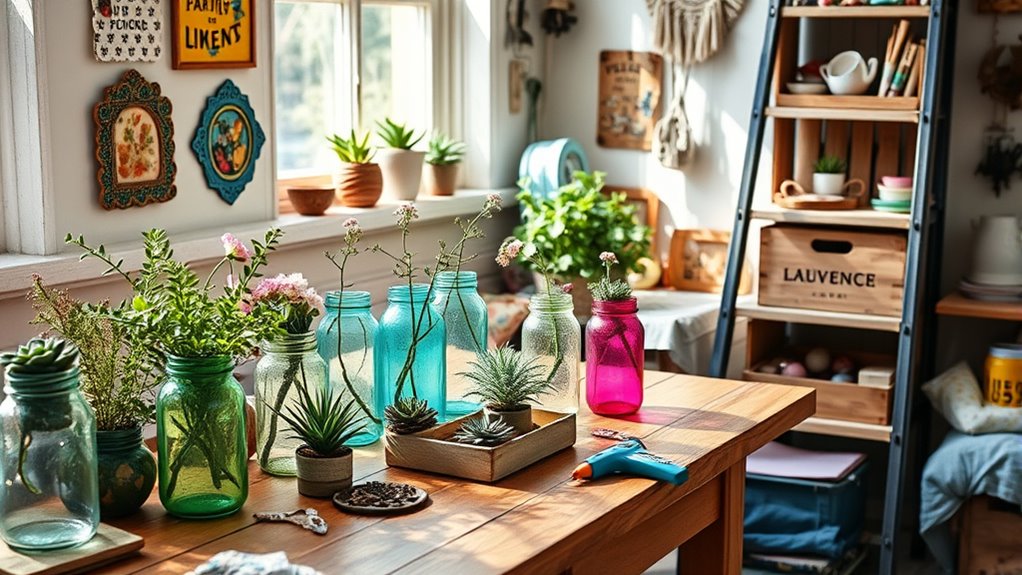

Upcycling household items is a fun and eco-friendly way to cut down on waste while adding a personal touch to your home. You can transform glass jars into lanterns, rework old wooden pallets into coffee tables, or turn worn sweaters into reusable tote bags. Small items like cans or cardboard tubes can become organizers or decorative pieces. By exploring creative reuse, you’ll save money, reduce trash, and craft unique decor. Keep going to discover more inspiring ideas for sustainable living.

Get home appliances delivered free — and shop member deals
- Fast, free delivery on millions of items
- Access to Prime Big Deal Days deals on October 6–7
- Prime Video, Amazon Music and more included
Key Takeaways
- Transform glass jars into decorative lanterns or vases with simple cleaning, paint, or fairy lights.
- Reuse old wooden pallets to create custom furniture or wall art, giving them a new functional purpose.
- Upcycle worn-out sweaters into reusable tote bags for shopping or picnics, reducing plastic waste.
- Repurpose tin cans or cardboard tubes as storage containers or craft organizers, decorated to match home décor.
- Craft personalized gifts from household items like vintage teacups or plates, promoting sustainability and sentimental value.
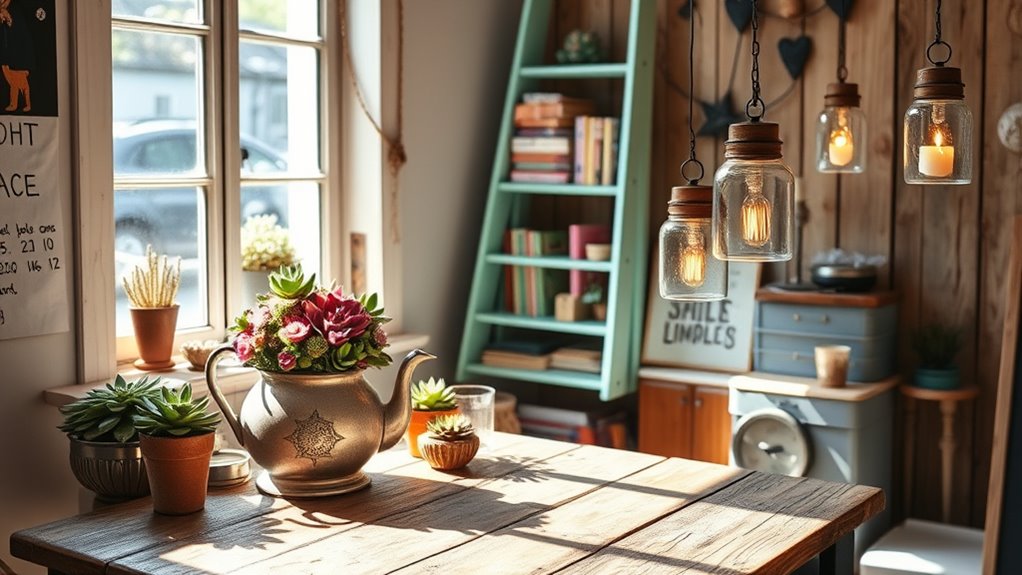
Many household items that seem useless at first glance can be transformed into something new and valuable with a little creativity. Upcycling isn’t just about reducing waste; it’s a chance to personalize your space and even craft thoughtful gifts. If you’re looking to refresh your home decor or find eco friendly gift ideas, repurposing everyday objects can be a game-changer. Instead of tossing old jars, scrap wood, or worn-out textiles, consider how they might become stylish, functional pieces that add character to your home.
For DIY home decor, you can turn glass jars into charming lanterns or vases. Simply clean them, add some fairy lights, or paint the exterior with chalkboard paint for a rustic look. Old wooden pallets can be broken down and repainted to become unique coffee tables or wall art. By giving these items a new purpose, you create personalized décor that reflects your style while keeping waste out of landfills. You don’t need special skills—just a few basic tools and a splash of imagination can turn ordinary household items into statement pieces.
When it comes to eco friendly gift ideas, upcycling offers endless possibilities. For instance, transform worn-out sweaters into cozy reusable tote bags, perfect for grocery shopping or picnics. Vintage teacups or plates can be turned into charming candle holders or planters, making thoughtful, handcrafted presents for friends and family. Repurposed items often carry a story, which adds sentimental value to your gifts, making them even more meaningful. Plus, giving a second life to objects reduces the demand for new resources, aligning with your eco-conscious values.
Another simple idea is repurposing tin cans or cardboard tubes into storage containers or craft organizers. Decorate them with paint or fabric to match your home’s aesthetic. These small touches can elevate your space while making use of what might have been discarded. The key is to see potential in everyday objects—what some may see as trash, you can turn into treasure. This approach not only saves money but also fosters a sustainable lifestyle, demonstrating how creativity can help reduce waste.
Incorporating upcycling into your routine encourages you to think differently about waste. It’s about making the most of what you already have, rather than constantly buying new. With a little effort, you can create beautiful, functional items that add personality to your home and bring joy to your loved ones—all while doing your part to protect the environment. Additionally, understanding the value of WWE Raw’s financial impact can inspire similar resourcefulness in managing and repurposing household items for maximum benefit and sustainability.
As an affiliate, we earn on qualifying purchases.
Frequently Asked Questions
How Do I Safely Clean Upcycled Items for Household Use?
To safely clean upcycled household items, start with gentle cleaning techniques like wiping with a damp cloth or using mild soap and water. Always follow safety precautions by wearing gloves and ensuring proper ventilation. For porous or delicate materials, consider using natural disinfectants like vinegar or baking soda. Avoid harsh chemicals that could damage the item or pose health risks. Regular cleaning keeps your upcycled items safe and in great condition.
What Tools Are Essential for Successful Upcycling Projects?
Think of your upcycling toolkit as a painter’s palette—essential for transforming ideas into art. You’ll need basic tools like scissors, glue, sandpaper, and a drill for recycling techniques and shaping sustainable materials. A good ruler and paintbrushes help refine your project. I once upcycled old wooden pallets into a cozy bench, showing how the right tools turn recycled materials into functional art. With these essentials, your upcycling projects thrive!
Can Upcycled Items Be Used Outdoors Without Damage?
Yes, you can definitely use upcycled items outdoors if you consider weather resistance and material durability. Choose upcycled pieces made from sturdy, weatherproof materials like metal, treated wood, or plastic. Apply protective coatings or sealants to enhance their weather resistance. Regular maintenance helps prevent damage from sun, rain, or snow. With proper care, your upcycled outdoor decor or furniture can last for years, adding charm and sustainability to your space.
How Do I Choose Which Household Items to Upcycle First?
Imagine turning everyday clutter into treasures—start with items you already use and love. To choose which household items to upcycle first, consider those made from sustainable materials and common in recycling myths. Focus on containers, jars, or old furniture that need a second life. Your goal is to reduce waste and inspire creativity, making each project both practical and eco-friendly. Plunge in with confidence—you’re making a meaningful difference!
Are There Any Eco-Friendly Paints or Finishes Recommended for Upcycled Projects?
You should look for eco-friendly paints and natural finishes like plant-based oils, beeswax, or water-based paints. These options are safer for the environment and your health, and they work well on upcycled projects. When choosing, check labels for low or zero VOCs, ensuring your finishes are sustainable. Using eco-friendly paints and natural finishes not only enhances your project’s look but also reduces harmful chemicals released into the environment.
Conclusion
Now that you’ve uncovered some clever upcycling ideas, imagine the treasures you could create from what you’d normally toss away. Every item holds the potential for transformation—what’s the next piece waiting to be reborn? As you start experimenting, you’ll realize that reducing waste isn’t just about saving the planet; it’s about discovering hidden creativity within your everyday surroundings. The real question is, are you ready to see what’s possible just around the corner?
Fall Picks
fall essentials
As an affiliate, we earn on qualifying purchases.





![[Fact Check] Lee’s Claim Blaming Oh For Seoul Home Prices? - 최보식의언론](https://tweedot.com/wp-content/uploads/2026/09/fact-check-lee-s-claim-blaming-oh-for-seoul-home-prices-featured-260x140.jpg)