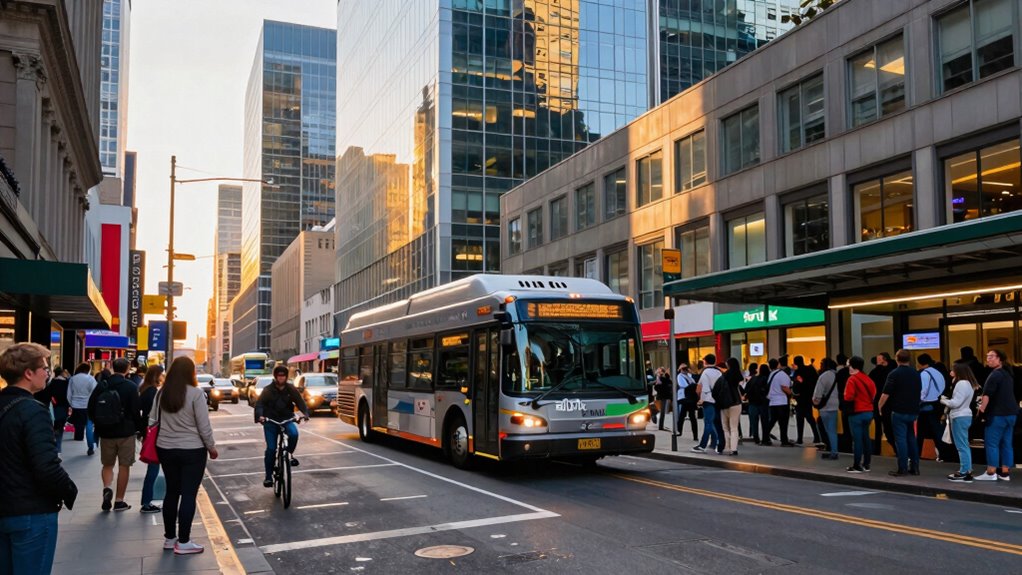

Public transport remains essential for creating cities that are fair, sustainable, and lively. It helps connect everyone to jobs, schools, and healthcare while reducing your reliance on private cars and cutting pollution. By supporting efficient land use and urban density, public transit improves your community’s environment and livability. It also fosters social connections and inclusivity, making cities better for all residents. Keep exploring to discover how you can help shape a more sustainable urban future.
Get ready for Prime Big Deal Days — try Prime free
Exclusive member deals on October 6–7, plus fast free delivery. Cancel anytime.
As an affiliate, we earn on qualifying purchases.
Key Takeaways
- Public transport promotes urban livability by providing equitable access to jobs, education, and healthcare for all residents.
- It reduces reliance on private vehicles, lowering emissions and supporting environmental sustainability.
- Public transit fosters social cohesion and helps bridge socioeconomic gaps within cities.
- Investing in transit encourages higher-density, walkable neighborhoods and sustainable land use.
- It is essential for creating inclusive, resilient cities that address social and environmental challenges effectively.
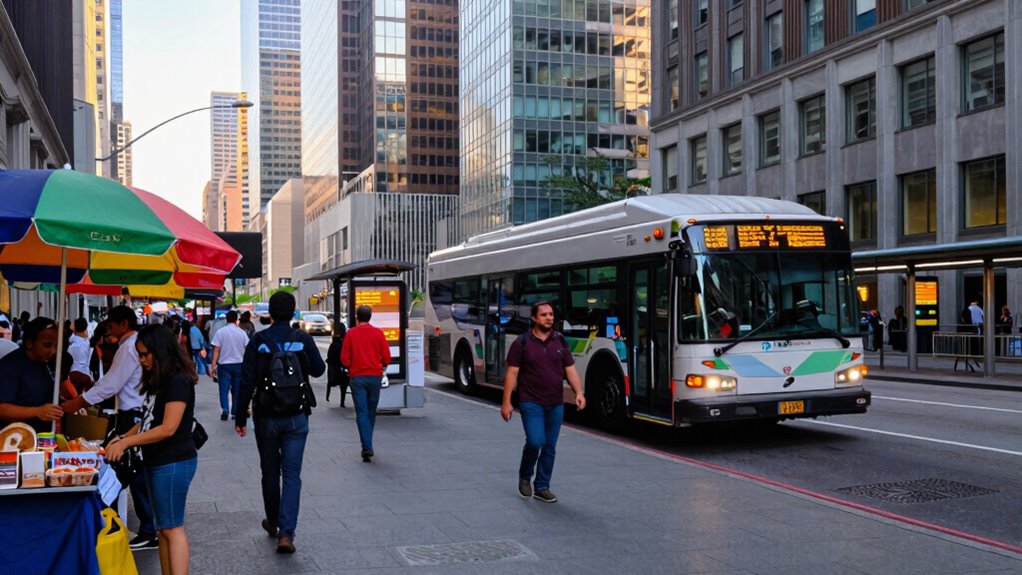
Have you ever wondered how cities become more livable and sustainable? It all comes down to effective urban planning, where the goal is to create spaces that serve everyone equally. Public transport plays a key role in this process, acting as the backbone that supports a more inclusive and efficient city. When city planners prioritize transportation equity, they guarantee that all residents, regardless of income or mobility challenges, have access to reliable transit options. This means designing transit systems that reach underserved neighborhoods, connect people to jobs, schools, and healthcare, and reduce reliance on private vehicles. By doing so, cities become more accessible and fair, allowing everyone to participate fully in urban life.
Public transport isn’t just about moving people from point A to point B; it’s about shaping the city’s social fabric. When transit services are well-planned and accessible, they help bridge socioeconomic gaps and foster community cohesion. People who rely on buses, trains, and trams aren’t just commuting—they’re gaining opportunities for education, employment, and social interaction. As a result, public transportation becomes a tool for social mobility, helping those who might otherwise be excluded from the benefits of urban prosperity. This focus on transportation equity aligns with broader goals of sustainability, reducing the number of cars on the road, cutting emissions, and decreasing traffic congestion.
Moreover, public transport encourages urban density and efficient land use, which are essential for sustainability. When cities invest in reliable transit systems, they can promote higher-density development around transit hubs. This reduces urban sprawl, preserves green spaces, and makes it easier for residents to access amenities without long commutes. These planning decisions lead to more walkable neighborhoods, lower carbon footprints, and healthier lifestyles. You can see how public transport directly influences the environmental footprint of a city, making it more resilient to climate change. Supporting biodiversity through sustainable land use and transportation planning further enhances urban resilience and ecological health.
In the end, public transport remains indispensable because it embodies the principles of inclusive urban planning and transportation equity. It’s about creating cities that work for everyone—where mobility isn’t a privilege, but a right. Cities that prioritize transportation equity are better equipped to address social and environmental challenges, fostering a more sustainable future for all residents. By focusing on accessible, efficient transit solutions, cities can transform into vibrant, sustainable places that foster economic opportunity, social fairness, and environmental stewardship. Your city’s future depends on these investments, making sure that everyone benefits from the urban environment’s full potential.
As an affiliate, we earn on qualifying purchases.
Frequently Asked Questions
How Does Public Transport Impact Local Air Quality?
Public transport directly improves air quality by reducing pollution levels. When you choose buses, trains, or trams over driving, you lower the number of vehicles on the road, which cuts down on emissions and pollution. This pollution reduction leads to cleaner air and healthier environments for everyone. By using public transit, you help decrease harmful pollutants, making your city a better place to live and breathe.
What Are Funding Sources for Public Transportation Improvements?
Did you know that over 60% of public transportation funding in many cities comes from government sources? To improve transit systems, you can explore funding innovations like grants, taxes, and fare revenue. Public-private partnerships also play an essential role, bringing in private investments to upgrade infrastructure and services. These combined efforts guarantee sustainable financing, helping cities develop efficient, accessible transit systems that benefit everyone.
How Does Public Transit Influence Urban Economic Development?
Public transit boosts urban economic development by reducing congestion, making cities more accessible and appealing. When you rely on transit, you help ease urban congestion, which attracts businesses and new residents. Transit promotes transit equity, ensuring everyone can access job opportunities and services regardless of income. This inclusivity fosters a vibrant local economy, encourages investment, and supports sustainable growth, making cities more dynamic and economically resilient.
What Role Does Technology Play in Modern Public Transit Systems?
Think of technology as the backbone of modern transit, steering your journey smoothly. You rely on smart ticketing to glide seamlessly through fare payments, and real-time tracking acts like a trusted compass, guiding you with live updates. These innovations transform your transit experience into a well-orchestrated dance, making your trips more reliable and efficient. Technology doesn’t just support transit; it breathes new life into how cities connect and thrive.
How Can Public Transport Be Made More Accessible for All?
You can make public transport more accessible by identifying and removing accessibility barriers, ensuring everyone can use the system comfortably. Incorporate inclusive design by considering diverse needs, such as providing ramps, audio announcements, and clear signage. Training staff to assist passengers with disabilities and involving community feedback helps improve accessibility. These steps create a more equitable transit experience, allowing all individuals to travel independently and confidently within the city.
Conclusion
Think of public transport as the heartbeat of a city—pulsing steady, crucial, and essential. Without it, streets grow silent, and life slows down. But with each bus, train, or tram, you add rhythm to the city’s song, keeping the melody vibrant and alive. Public transport isn’t just a way to get around; it’s the unseen thread weaving communities together, making cities healthier, happier, and more connected. Keep the pulse alive, and your city will thrive.
Fall Picks
fall essentials
As an affiliate, we earn on qualifying purchases.