Reusing items in your home usually saves more energy, reduces waste better, and costs less than recycling. When you reuse, you extend the life of products, cut down on resource extraction, and avoid energy-intensive processes involved in recycling. Recycling often requires energy for collection, sorting, and processing that can outweigh its benefits, especially if materials aren’t reused afterward. To discover more about how your everyday choices impact the environment, keep exploring the options available.
Key Takeaways
- Reuse typically requires less energy than recycling, making it more sustainable overall.
- Reusing extends item lifespan, reducing waste and resource extraction.
- Recycling involves energy-intensive processes for collection, sorting, and processing.
- Reuse minimizes environmental impact by decreasing manufacturing and waste management demands.
- Incorporating reuse into daily routines is more cost-effective and resource-efficient for most homes.
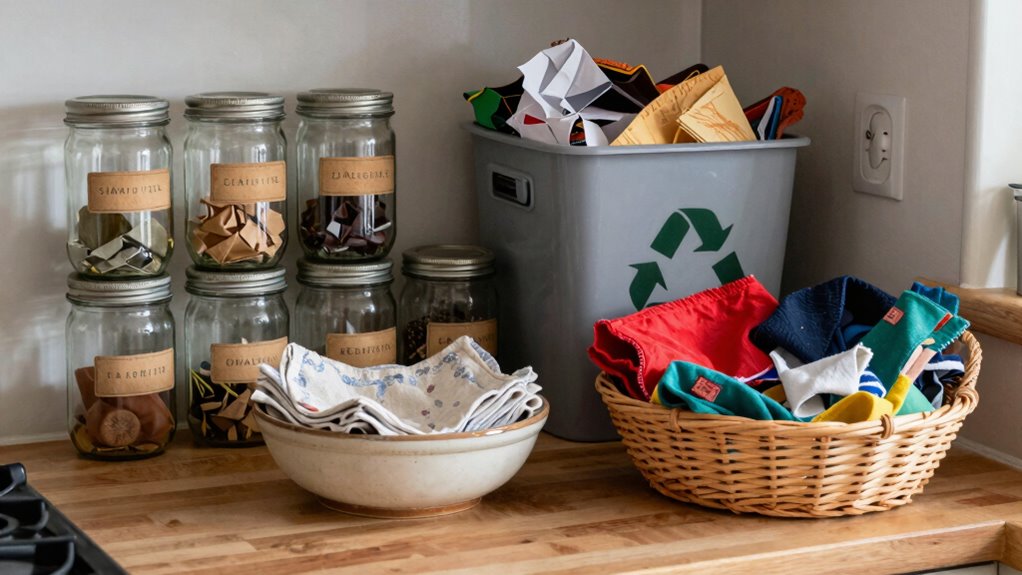
Understanding the difference between reuse and recycling is essential for making eco-friendly choices at home. Reuse involves finding new purposes for items you already own, while recycling breaks down materials to create new products. When it comes to reducing your environmental footprint, reuse generally has the advantage because it requires less energy and often leads to less waste. For example, using glass jars for storage instead of buying new containers keeps items in your home longer and cuts down on manufacturing demands. Recycling, on the other hand, consumes energy in processing materials, which can sometimes outweigh the benefits, especially if the recycled products aren’t reused again.
You might think about composting practices as an example of how reuse principles extend into waste management. Composting transforms organic waste into nutrient-rich soil, reducing the need for synthetic fertilizers and decreasing landfill waste. It’s a form of reuse because it repurposes scraps that would otherwise be discarded. By composting at home, you lower your energy consumption related to waste processing and minimize the environmental impact of your food and yard waste. It’s important to recognize that waste management practices significantly influence the overall sustainability of your household efforts. This simple act aligns with the core idea that reusing materials directly or indirectly is more sustainable than simply recycling them.
Reusing items also helps you save money and reduces the demand for new resources. When you choose to reuse, you’re extending the life of goods, which means fewer products need to be manufactured. This directly impacts energy consumption, as manufacturing processes often require large amounts of energy. Think about reusable shopping bags versus single-use plastic bags or cloth napkins instead of paper ones. These choices cut down on resource extraction and energy used in production, giving you a more sustainable way to live. Additionally, embracing resource conservation can significantly amplify your positive environmental impact. Understanding resource depletion is crucial for making informed decisions about how we use and reuse materials.
Recycling is still valuable, but it’s not always the most efficient option. It takes energy to collect, sort, clean, and process recyclable materials. Sometimes, the energy used in recycling can be higher than the energy saved by creating new products from raw materials, especially if the recycled items are not reused afterward. Reuse, however, avoids these steps altogether, making it a more direct and energy-efficient solution. Incorporating materials reuse into your routine can further reduce your overall waste footprint and lessen reliance on energy-intensive processes. By prioritizing reuse, you can lessen your overall environmental impact while simplifying your waste management.
Ultimately, your goal should be to incorporate more reuse practices into your daily routine whenever possible. Not only does this approach require less energy and produce less waste, but it also encourages a mindset of resourcefulness. When you choose to reuse, you’re actively contributing to a more sustainable home environment, making your efforts in composting practices and reducing energy consumption all the more effective. Recognizing the importance of recycling processes and their energy costs can help you make better choices. Reuse isn’t just better for the planet—it’s better for your wallet and your peace of mind.
As an affiliate, we earn on qualifying purchases.
Frequently Asked Questions
How Can I Start Reusing Items Effectively at Home?
To start reusing items effectively at home, begin with simple DIY projects that repurpose everyday objects. Use old jars and containers as storage solutions for your pantry or tools. Get creative with furniture or decor by upcycling thrifted finds. Set aside designated areas for reusable items, making it easy to find and reuse them. This proactive approach reduces waste and saves money, turning your home into a more sustainable space.
Are There Any Health Risks With Reusing Certain Household Items?
Reusing household items can pose health risks if you’re not careful. Chemical hazards may leach from plastics or treated materials, especially if they’re old or damaged. Bacterial growth can also occur if items like sponges, cutting boards, or containers aren’t cleaned properly. To stay safe, regularly disinfect reusable items, avoid using damaged plastics, and choose non-toxic, food-safe materials. This way, you minimize health risks while reusing effectively.
What Are Creative Ways to Repurpose Common Household Objects?
You can get creative by turning old jars into upcycling art or storage containers, adding paint or decorations for a personal touch. Use spare fabric for DIY projects like making cushion covers or tote bags. Repurpose tin cans as planters or candle holders, and transform wooden pallets into furniture or wall art. These ideas not only reduce waste but also let you enjoy unique DIY projects, showcasing your creativity and eco-consciousness.
How Does Reuse Impact My Household Budget Long-Term?
Reuse helps you save money in the long run by cutting down on purchasing new items, leading to significant cost savings. It also reduces waste, which means fewer disposal fees and less environmental impact. When you reuse household objects, you extend their life and avoid the costs associated with recycling or replacing items prematurely. Over time, this sustainable approach keeps your household budget healthier while supporting waste reduction efforts.
Can Reuse Reduce My Home’s Overall Environmental Footprint?
Yes, reuse can considerably reduce your home’s overall environmental footprint by promoting material durability and waste reduction. When you reuse items, you extend their lifespan, decreasing the need for new resources and energy-intensive manufacturing. This minimizes waste sent to landfills and reduces pollution. By choosing reuse, you actively lower your environmental impact, making your home more sustainable and eco-friendly over time.
Conclusion
Think of reuse as planting a seed that keeps growing, while recycling is more like trimming branches—necessary but less impactful. When you choose to reuse, you’re helping your home stay rooted in sustainability, reducing waste and conserving resources. It’s a simple act that can turn your everyday habits into a flourishing garden of eco-friendly choices. So, next time, pick reuse—you’re nurturing a greener future, one small step at a time.