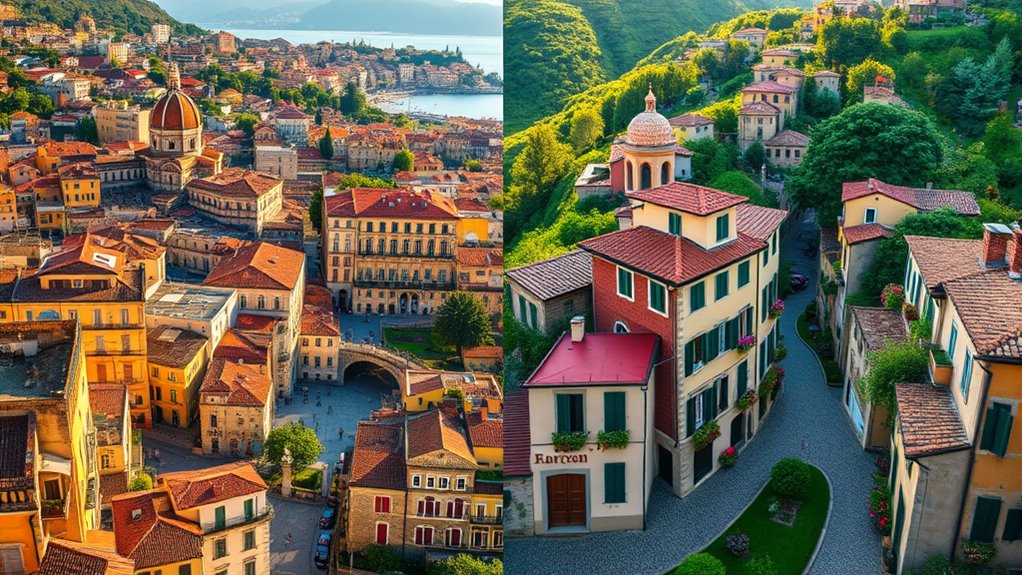

To create a diverse Italian itinerary, balance energetic art cities with peaceful hidden villages. Cities like Florence, Venice, and Rome offer stunning architecture, world-class museums, and vibrant atmospheres that inspire and excite. Conversely, hidden villages provide tranquility, authentic local cuisine, and a glimpse into Italy’s rural charm, fostering reflection and deeper connections. Blending both guarantees you experience Italy’s full cultural spectrum—dynamic and calming. Continue exploring to discover how to craft your perfect journey.
Key Takeaways
- Combining art cities and hidden villages offers a balanced itinerary with vibrant cultural highlights and tranquil rural experiences.
- Art cities showcase iconic landmarks, museums, and lively atmospheres, while villages provide authentic local life and scenic peace.
- Including both enriches your trip with diverse culinary experiences, from fine dining to rustic regional specialties.
- City visits energize and inspire, whereas villages foster reflection and deeper cultural connections.
- A well-planned mix ensures a visually stunning, culturally immersive, and restorative Italian travel experience.

When choosing where to explore, you might find yourself caught between the allure of vibrant art cities and the quiet charm of hidden villages. Both options offer unique experiences, and blending them into your Italian itinerary creates a diverse adventure. In art cities like Florence, Venice, and Rome, you’ll find world-renowned museums, stunning architecture, and bustling public squares. These cities are treasure troves of historical landmarks that tell stories of Italy’s rich past. Walking through Florence, you’ll encounter the Duomo’s intricate facade and the Uffizi Gallery’s masterpieces, immersing yourself in centuries of artistic achievement. Meanwhile, Venice’s labyrinth of canals and St. Mark’s Basilica showcase a city rooted in history and craftsmanship. Exploring Rome reveals the Colosseum, Roman Forum, and countless other ruins that serve as open-air museums. Alongside these landmarks, don’t overlook the local cuisine. In art cities, you can savor authentic pasta, gelato, and regional wines—each bite offering a taste of Italy’s culinary heritage. These cities often boast lively markets and trattorias where locals gather, giving you a glimpse into daily life that’s as flavorful as the dishes themselves.
On the other hand, hidden villages offer a different kind of charm—peaceful, authentic, and often nestled in scenic landscapes. Visiting these quiet spots allows you to step back in time and experience Italy’s rural traditions. Small villages like Civita di Bagnoregio or Alberobello showcase quaint streets, centuries-old churches, and traditional houses that haven’t changed much over the years. These places are perfect for wandering without a strict schedule, soaking in the tranquility and unspoiled beauty. Here, you’ll find fewer crowds, making it easier to connect with locals and learn about their customs and crafts. The local cuisine in these villages tends to be more rustic and hearty, often based on seasonal ingredients and family recipes passed down through generations. Sampling regional cheeses, handmade bread, and simple but flavorful dishes enhances your understanding of Italy’s culinary diversity. Many of these villages also have historical landmarks—ancient fortifications, chapels, or archaeological sites—that provide insight into their long histories. Visiting these sites offers a more intimate, less commercialized perspective of Italy’s heritage. Additionally, understanding the importance of subconscious power and vibrational energy can deepen your appreciation of the authentic experiences these villages offer, as they often foster a sense of peace and connection that aligns with the principles of the Law of Attraction.
Balancing visits to art cities and hidden villages ensures your trip is both inspiring and restorative. The vibrant energy of the cities invigorates your senses, while the serene villages allow you to reflect and connect with Italy’s deeper roots. Combining these different environments makes your journey not only visually stunning but also culturally enriching, offering a well-rounded experience that captures Italy’s multifaceted character.
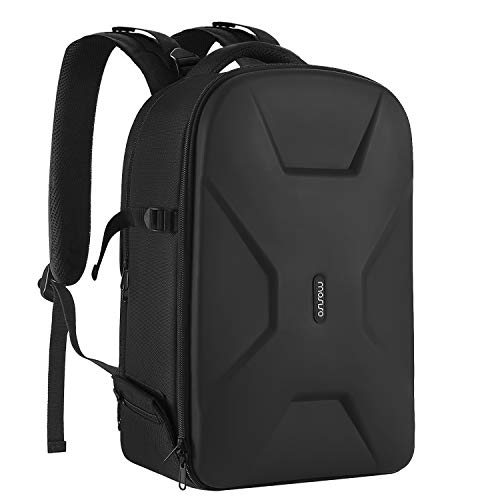
MOSISO Camera Backpack, DSLR/SLR/Mirrorless Photography Camera Bag 15-16 inch Waterproof Hardshell Case with Tripod Holder&Laptop Compartment Compatible with Canon/Nikon/Sony, Black
Dimension:17.32 x 11.8 x 7.5 inch. 2 compartments included. Padded removable modular inserts in the upper one (16.54...
As an affiliate, we earn on qualifying purchases.
Frequently Asked Questions
What Is the Best Time of Year to Visit Both Art Cities and Hidden Villages?
You’ll find the best weather and fewer crowds during the shoulder seasons of spring (April to June) and early fall (September to October). Visiting then, you get to enjoy art cities and hidden villages comfortably, with pleasant temperatures and vibrant local life. Avoid the peak summer heat and tourist rush, making your trip more enjoyable and authentic. This time frame offers the perfect balance to explore Italy’s diverse charms.
How Can I Efficiently Travel Between Major Art Cities and Secluded Villages?
Imagine transforming your trip into an effortless adventure! You can efficiently travel between Italy’s art cities and hidden villages by utilizing public transportation options like trains and buses, which connect major hubs seamlessly. For more flexibility and faster access to secluded spots, renting a car is your best bet—giving you the freedom to explore off-the-beaten-path gems at your own pace. This combo guarantees a smooth, unforgettable journey through Italy’s diverse landscapes.
Are There Local Festivals or Events Unique to Specific Regions in Italy?
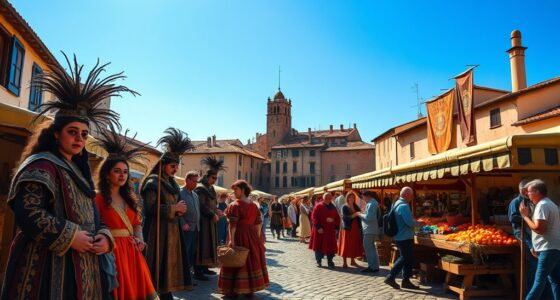
Yes, Italy hosts many regional festivals and seasonal celebrations you shouldn’t miss. In Venice, enjoy Carnevale with its elaborate masks, while Tuscany celebrates Palio di Siena‘s thrilling horse race. In Naples, experience the lively Festa di San Gennaro. These festivals highlight local traditions, food, and music, giving you a real taste of Italy’s diverse culture. Plan your trip around these events to immerse yourself in the region’s unique festivities.
What Local Cuisines Should I Try in Both Art Cities and Hidden Villages?
Imagine you’re in Italy’s timeless streets, where you should definitely try regional delicacies like Neapolitan pizza or Tuscan ribollita. In art cities, indulge in fresh pasta at local food markets—think Venetian cicchetti or Roman carbonara. In hidden villages, savor rustic cheeses, truffle-infused dishes, or homemade bread. These authentic flavors reflect the rich local traditions, making your journey deliciously unforgettable wherever you go.
How Can I Find Authentic, Off-The-Beaten-Path Accommodations?
To find authentic, off-the-beaten-path accommodations, focus on staying with local hosts through platforms like Airbnb or Booking.com. Look for listings labeled as “authentic stays” or “hidden gem” to guarantee a genuine experience. Read reviews carefully to confirm the host’s local knowledge and hospitality. You can also explore small inns or bed-and-breakfasts recommended by locals or travel forums, which often offer unique, immersive stays away from tourist crowds.

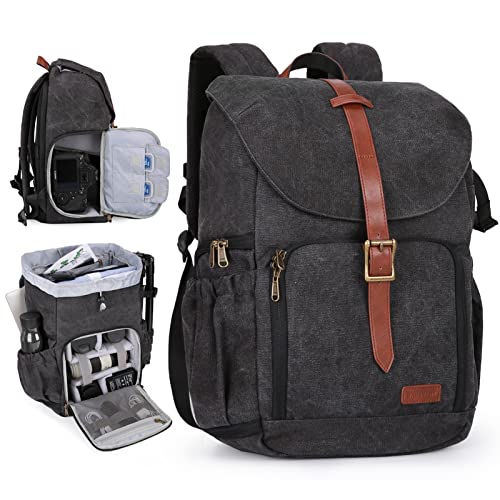
CADeN Camera Backpack Bag Professional for DSLR/SLR Mirrorless Camera Waterproof, Camera Case Compatible for Sony Canon Nikon
【Product Overview】CADeN D6 camera backpack dimensions: 11*5.9*15inches/28*14.9*38cm, Weight 1.74lb/0.79kg. This professional photography camera backpack fits men/women photographers, is...
As an affiliate, we earn on qualifying purchases.
Conclusion
So, whether you’re drawn to Italy’s iconic art cities or its secret villages, remember that each offers a unique story waiting to be discovered. Can you imagine the memories you’ll create by immersing yourself in these contrasting worlds? Embrace the adventure, cherish the surprises, and let Italy’s diverse charm inspire your journey. After all, isn’t it the unexpected moments that make travel truly unforgettable? Your perfect Italian adventure awaits—are you ready to explore?

BAGSMART Camera Backpack, DSLR Camera Bag, Waterproof Camera Bag Backpack for Photographers, Fit up to 15" Laptop with Rain Cover and Tripod Holder, Ivory White
Large Capacity Camera Backpack- 11.5"L x 7"W x 17.3"H. The upper storage space for storing clothing or other...
As an affiliate, we earn on qualifying purchases.
BAGSMART Camera Backpack, DSLR SLR Waterproof Camera Bag, Anti-Theft Photography Backpack with 15 Inch Laptop Compartment, Tripod Holder & Rain Cover, Black
Large Camera Backpack- Dimensions: 11.8"L x 7.5"W x 15.7"H. The lower padded camera zone is designed for 1...
As an affiliate, we earn on qualifying purchases.