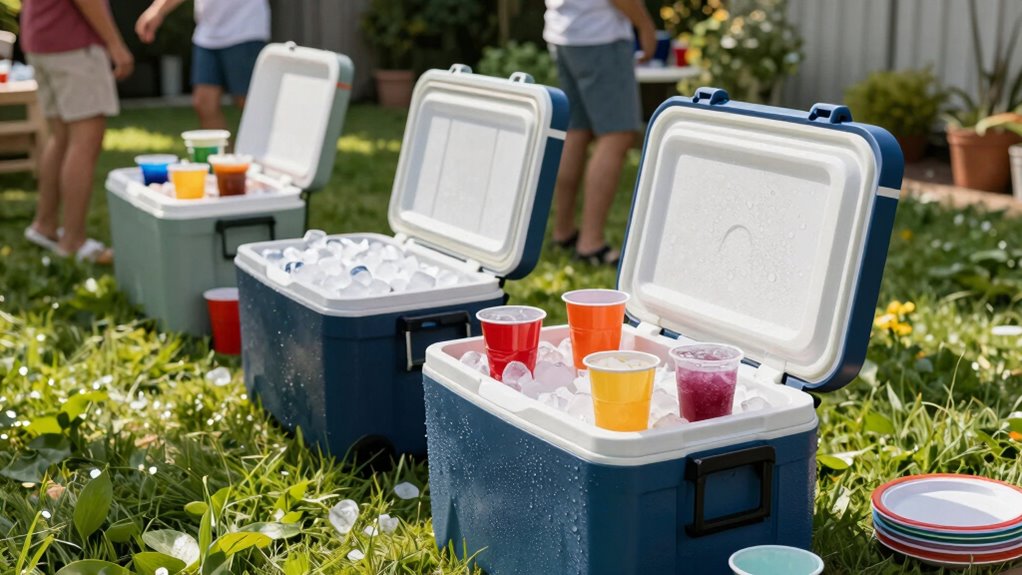
To keep food safe during long backyard parties, choose a well-insulated cooler and pack it properly with a layer of ice at the bottom, organizing foods in airtight containers, especially perishable items. Keep the cooler closed as much as possible, monitor internal temperatures with a thermometer, and add ice gradually to maintain below 40°F. Replenish ice regularly and avoid overfilling to prevent temperature fluctuations. If you want to guarantee your food stays fresh all day, there’s more to learn.
Key Takeaways
- Use a high-quality cooler with good insulation and proper seal to maintain consistent cold temperatures throughout the event.
- Pack the cooler with sufficient ice or ice packs, starting with a solid layer at the bottom, and replenish regularly to keep foods below 40°F.
- Organize foods by temperature sensitivity, keeping perishables on top and raw meats separate to prevent cross-contamination.
- Limit cooler openings and close the lid promptly to retain cold and reduce temperature fluctuations.
- Regularly monitor internal temperatures with a thermometer and clean the cooler to prevent spoilage and bacteria growth.

Coleman Classic Series Insulated Portable Cooler, Leak-Resistant Outdoor Hard Cooler Keeps Ice up to 5 Days, 52/70/120/150 Quart
FULLY INSULATED: Lid and body keeps ice up to 6 days in temperatures as high as 90°F
As an affiliate, we earn on qualifying purchases.
As an affiliate, we earn on qualifying purchases.
Why Proper Cooler and Ice Use Is Essential for Food Safety
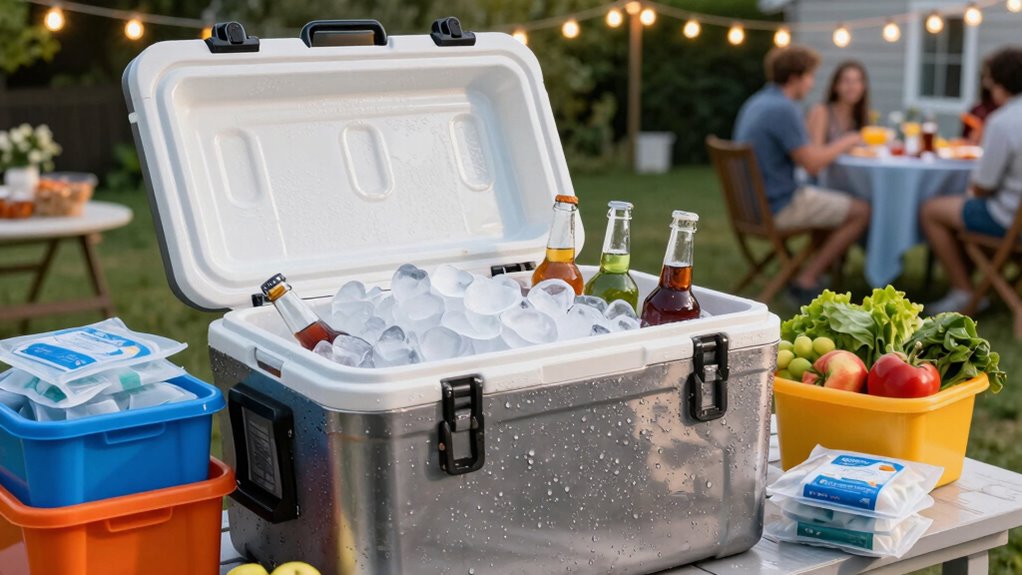
Have you ever wondered why maintaining proper cooler and ice use is essential for food safety? When you keep food at the right temperature, you prevent foodborne pathogens from thriving. Ice helps maintain a cold environment that inhibits bacteria growth, reducing the risk of contamination. If you don’t use enough ice or keep food in the wrong areas of the cooler, cross contamination can occur, spreading bacteria from raw to cooked foods or between different items. Properly organizing your cooler ensures that raw meats stay separate from other foods, and that everything remains at safe temperatures. Additionally, using temperature control devices like thermometers can help monitor the internal temperature of your cooler, ensuring optimal safety. Regularly checking the cooler insulation helps maintain consistent temperatures and prevents warm spots that could promote bacterial growth. Investing in quality cooler units can also make a significant difference in maintaining food safety during outdoor gatherings. Understanding food safety practices is crucial for preventing illness and ensuring a healthy event. By paying attention to how you use ice and coolers, you minimize the chances of foodborne illnesses and keep everyone at your backyard party safe and healthy. Proper cooler organization is an essential step in promoting good health during outdoor gatherings.
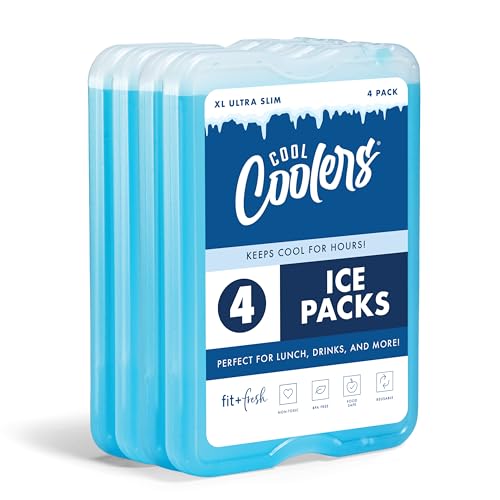
Cool Coolers by Fit & Fresh 4 Pack XL Slim Ice Packs, Quick Freeze Space Saving Reusable Ice Packs for Lunch Boxes or Coolers, Blue, 239ICE, 4 count (Pack of 1)
XL ICE PACKS: Whether you’re headed back to work, school, or just want to escape the house, these…
As an affiliate, we earn on qualifying purchases.
As an affiliate, we earn on qualifying purchases.
How to Choose the Best Cooler for Your Backyard Party
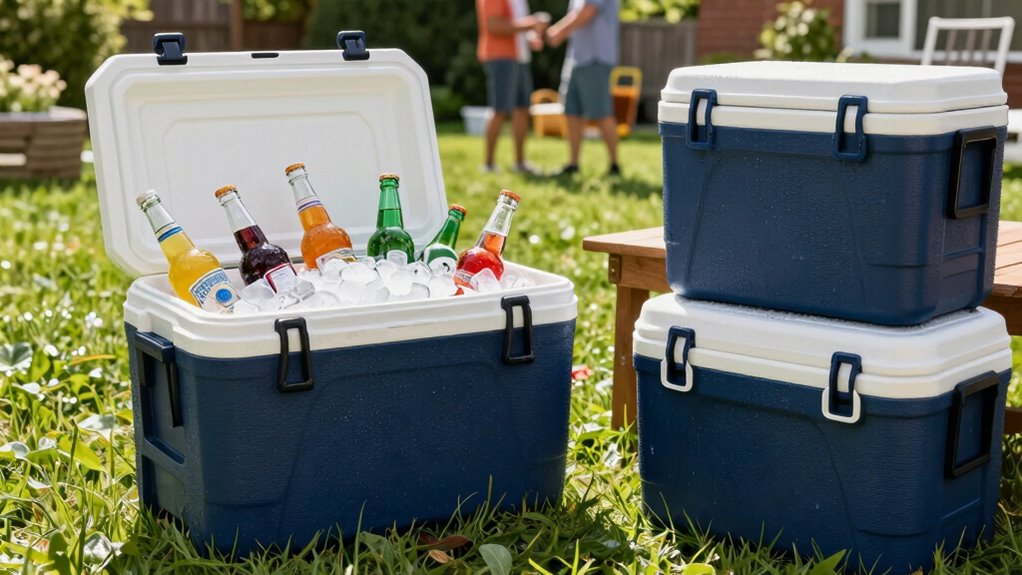
When selecting a cooler for your backyard party, consider the size and capacity to fit your guest list and food needs. You’ll also want to check its insulation performance to keep ice longer and your drinks colder. Choosing the right cooler ensures your party stays invigoratingly chilled without constant ice replacements.
Size and Capacity
Choosing the right cooler size depends on how many guests you expect and the amount of beverages and food you’ll need to keep chilled. A larger cooler offers more capacity, reducing the need for frequent ice replenishment, but can be cumbersome to transport and store. To guarantee your cooler stays effective, practice proper cooler maintenance, like cleaning it regularly and checking seals. When selecting ice, consider the size and type—chunk ice melts slower and keeps contents colder longer. If you’re hosting a big gathering, opt for a cooler with ample space that allows for proper ice coverage around your items. Additionally, using smart cooling devices or monitoring systems can help maintain optimal temperature levels throughout your event. Proper cooler insulation also plays a vital role in keeping contents cold for extended periods. Remember, a well-sized cooler combined with good ice selection will keep everything fresh and cool without overcrowding or wasting space, especially when you consider the thermal efficiency of your cooler. Ensuring your cooler has effective insulation quality can significantly extend the duration your food stays safely chilled.
Insulation Performance
How well a cooler insulates can make all the difference in keeping your drinks and food cold throughout your backyard party. Good insulation maintains temperature control, reducing the need for frequent ice replacement. To choose the best cooler, consider these factors:
- Material: Look for rotomolded plastic or polyurethane foam walls for superior insulation.
- Lid Design: Thick, secure lids minimize cold air escape and improve insulation.
- Ice Compatibility: Some coolers work better with block ice for long-lasting cold, while others suit crushed or cubed ice for quick cooling.
- Free Floating technology can enhance insulation performance by reducing heat transfer and maintaining a consistent internal temperature. Additionally, evaluating the insulation performance of different coolers through customer reviews and product specifications can help you select the most effective option. Research indicates that ultra-insulated models tend to offer better thermal retention, making them ideal for extended outdoor use. Moreover, choosing a cooler with advanced insulation materials can provide even better temperature stability and energy efficiency. When selecting a cooler, consider the overall durability to ensure it withstands outdoor conditions and frequent transport.

TempPro Refrigerator Thermometer 2 Pack with Large Backlit LCD Display, Waterproof Freezer Fridge Thermometer with Max/Min Record, Easy Battery Replacement for Room, Cooler (Previously ThermoPro)
【Backlit Display for Clear Visibility】The oversized LCD screen with bright backlight ensures easy readability, even in dark freezers…
As an affiliate, we earn on qualifying purchases.
As an affiliate, we earn on qualifying purchases.
How to Load and Organize Your Cooler for Maximum Freshness
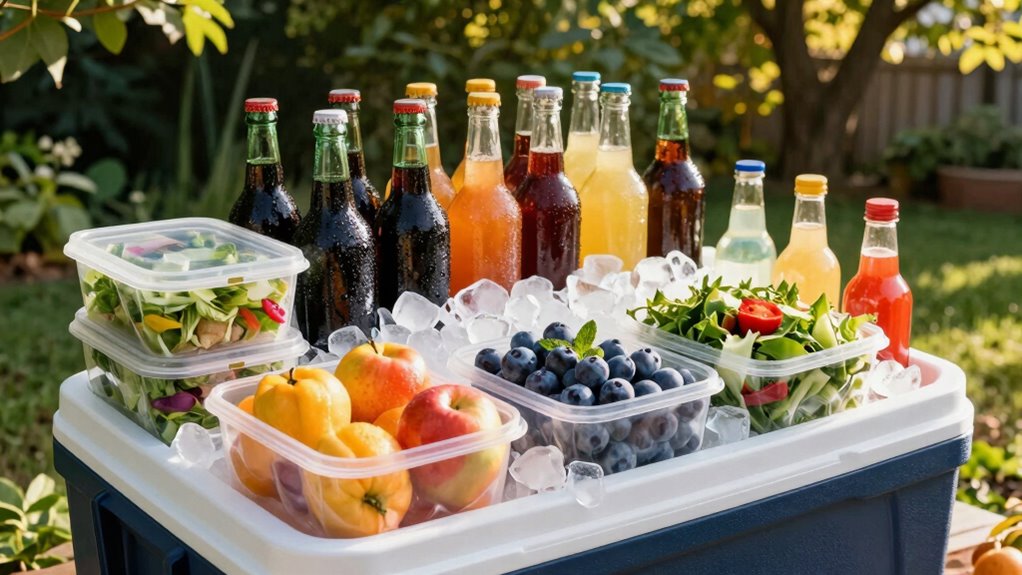
To keep your food and drinks fresh longer, start by layering your cooler efficiently. Use proper packing techniques to maximize space and cold retention, placing heavier items at the bottom. This approach guarantees everything stays cold and accessible throughout your event. Additionally, avoid damage to your gear by not overloading your cooler, which can compromise insulation and cooling performance. Properly organizing your contents can also help prevent temperature fluctuations, ensuring all items remain at safe and consistent temperatures. Being mindful of insulation quality can further enhance your cooler’s ability to maintain optimal temperatures during extended use. Understanding the importance of AI cybersecurity jobs can help you appreciate the value of protecting your digital information, especially when managing online resources or smart devices connected to your party setup. Incorporating proper insulation materials can also make a significant difference in keeping your items cold for longer periods.
Layering for Efficiency
Organizing your cooler with strategic layering can considerably extend the freshness of your food and drinks. Start by placing ice or ice packs at the bottom to create a cold base. Next, layer your items based on their temperature needs: cold-sensitive foods like salads and drinks on top, while sturdier, less perishable items go below. Think of your cooler as a mini display, where food presentation and party themes influence placement—colorful drinks or themed snacks can be showcased at eye level. For example:
- Ice at the bottom for ideal cooling.
- Perishable items grouped together, especially those with delicate presentation.
- Non-perishables or less sensitive foods on top, easily accessible.
This method keeps everything fresh, organized, and visually appealing throughout your party.
Proper Packing Techniques
Once you’ve layered your cooler effectively, the next step is to pack it properly to maintain maximum freshness. Start by placing the most perishable items, like raw meats and dairy, at the bottom where it’s coldest. Use ice or ice packs directly on top of these foods to keep them at safe temperatures, supporting food safety. Organize drinks and less perishable items in the middle and top sections for easy access. Be careful not to overpack, as proper cooler maintenance depends on good airflow and consistent cold temperatures. Keep the lid closed as much as possible to preserve chill and prevent spoilage. Regularly check the ice levels and replenish when needed. Proper packing techniques ensure your cooler stays effective, keeping food safe and fresh throughout your backyard party. Additionally, using chamber vacuum sealers can help extend the shelf life of leftovers and prevent spoilage when storing foods for longer periods. Maintaining consistent temperatures inside your cooler is essential for food safety, so avoid frequent opening to keep the cold air trapped inside. You can also consider using a cooler thermometer to ensure the internal temperature stays within safe ranges, further protecting your food.

Engel UC19 19qt Leak-Proof, Air Tight, Drybox Cooler and Small Hard Shell Lunchbox for Men and Women in Red
ENGEL HARD SHELL DRYBOX FISHING COOLER: Stainless Steel industrial strength latches and hinged lid for quick and access…
As an affiliate, we earn on qualifying purchases.
As an affiliate, we earn on qualifying purchases.
How to Use Ice Effectively to Keep Food Cold Longer
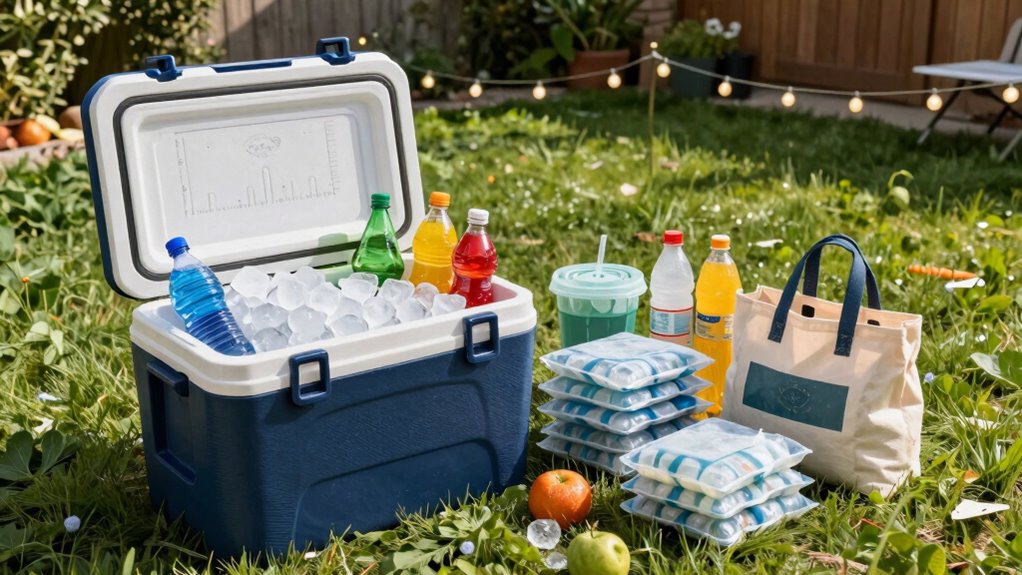
Using ice effectively is key to keeping your food cold longer, especially during outdoor activities or extended trips. To do this, avoid refrigeration myths like adding warm ice or opening the cooler frequently. Instead, focus on these tips:
- Start with a solid layer of ice at the bottom to create a cold foundation.
- Pack your food in airtight containers to prevent moisture loss and ice melt.
- Use ice alternatives like frozen bottles of water to conserve ice and maintain consistent cold temperatures.
- Properly insulating your cooler also helps maintain cold temperatures for longer periods. Additionally, understanding thermal insulation principles can help you select the best cooler for extended use. Ensuring your cooler has good insulation quality can significantly extend the duration that your food stays cold, and choosing the right cooler material can further enhance its insulating properties.
How to Monitor Temperatures and Prevent Food Spoilage
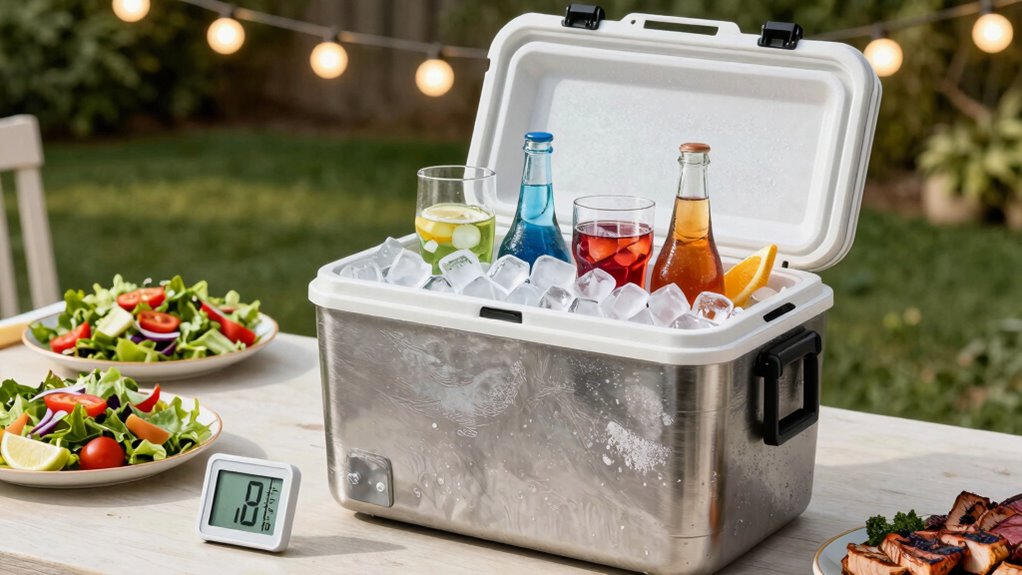
Monitoring temperatures is essential to prevent food from spoiling and guarantee safety during storage. By regularly checking your cooler’s temperature, you can ensure it stays at or below 40°F (4°C), which is vital for spoilage prevention. Use a reliable thermometer designed for coolers to get accurate readings. Place it in the middle of the cooler, away from the ice or cold packs, to avoid false readings. Consistent temperature monitoring allows you to act quickly if the temperature rises, reducing the risk of bacteria growth. Remember, food safety depends on maintaining proper temperatures, especially during long parties. Staying vigilant with temperature checks helps keep your food fresh, safe, and enjoyable for everyone. Proper spoilage prevention is key to a successful outdoor gathering. Additionally, understanding food safety and proper storage techniques can further minimize risks and ensure your food remains safe throughout your event. Regularly cleaning and sanitizing your cooler also helps prevent cross-contamination and bacterial buildup. Maintaining proper cooler organization can also aid in consistent cooling and temperature control.
When and How to Replenish Ice During Your Party
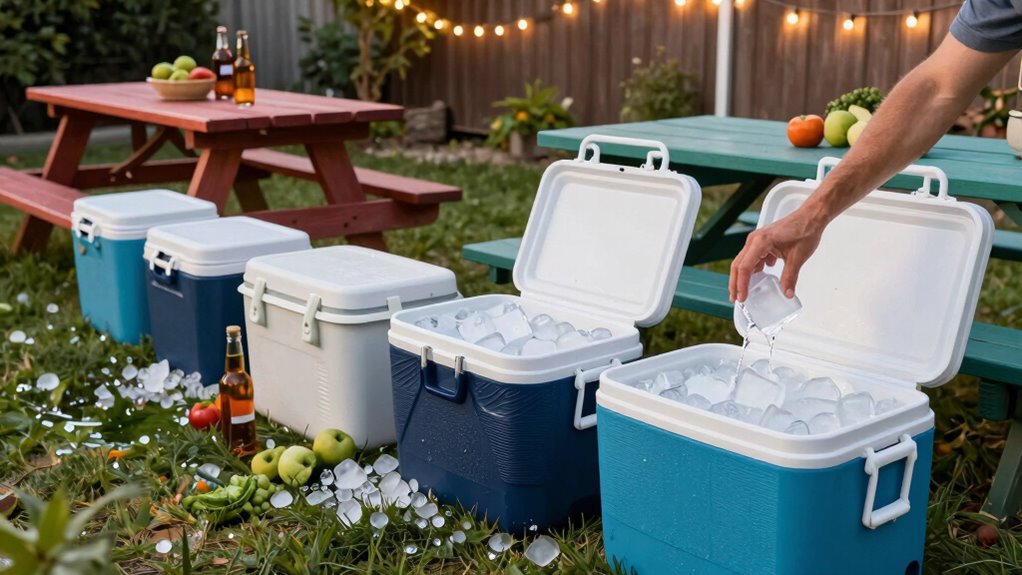
To keep your food safe and cool throughout your party, it’s important to know when and how to replenish the ice. Monitor the cooler’s temperature regularly, and when you notice ice melt reaching below 50%, it’s time to add more. Here are three key tips:
- Add fresh ice gradually to prevent sudden temperature changes and reduce ice melt.
- Distribute the new ice evenly to maintain consistent cooling and improve cooler maintenance.
- Avoid overfilling—leave some space for circulation, which helps prevent warm spots and keeps food safe.
Common Mistakes to Avoid With Coolers and Ice
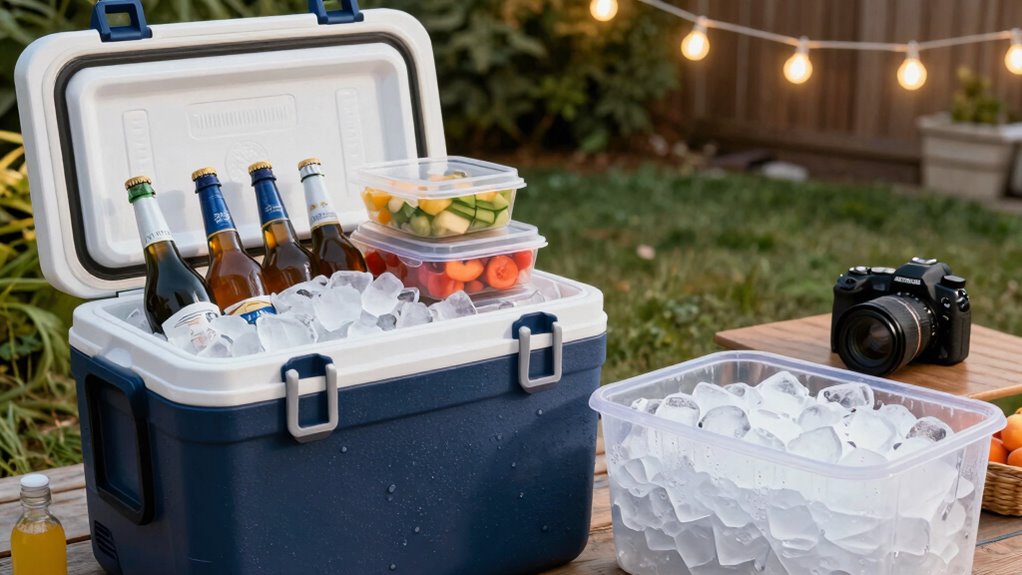
One common mistake is adding too much ice all at once, which can cause temperature fluctuations and waste space in your cooler. Using the right ice types, like crushed or block ice, helps maintain consistent cold temperatures and prolongs food safety. Avoid filling your cooler to the brim with ice, as overcrowding limits airflow and cooling efficiency. Proper cooler maintenance, such as cleaning it before use and ensuring the drain is clear, prevents contamination and bad odors. Don’t forget to insulate the cooler well and position it out of direct sunlight. These mistakes can compromise the temperature control you need for safe food storage. Being mindful of ice types and maintaining your cooler guarantees your drinks stay cold and your food stays fresh throughout the party.
Extra Tips to Keep Food Fresh and Safe All Day
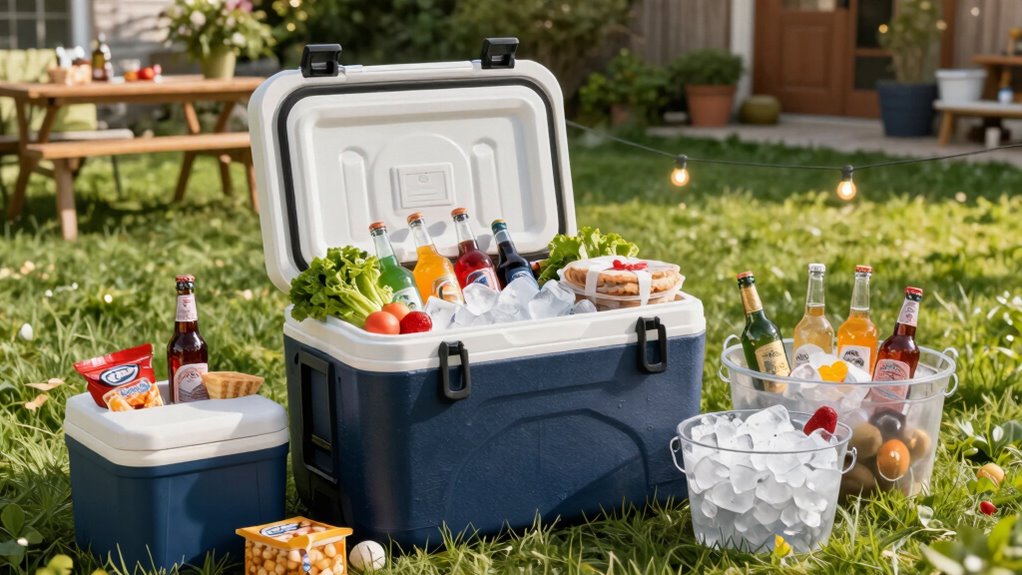
Wondering how to keep your food fresh and safe all day? Here are some extra tips to guarantee food safety through proper temperature control. First, keep perishable items at 40°F (4°C) or below by placing them in the coldest part of your cooler. Second, use ice packs or block ice to maintain consistent cold temperatures, replenishing as needed. Third, avoid opening your cooler too often, which lets warm air in and raises temperatures. Additionally, pack raw meats separately from cooked foods to prevent cross-contamination. Always check the temperature before serving, and discard any food that’s been above 40°F for more than two hours. These steps help keep your food safe and fresh throughout your backyard party.
Frequently Asked Questions
How Long Can Perishable Foods Stay Safely in a Cooler?
Perishable foods can stay safely in a cooler for up to two hours if the temperature stays above 90°F, or up to four hours in cooler conditions. To guarantee food safety, you should regularly check your cooler’s temperature and maintain proper cooler maintenance, like keeping the ice replenished and the lid closed. Always discard any perishable items that have been in the cooler too long or if the temperature rises.
Are There Eco-Friendly Options for Cooler Ice?
Think of eco-friendly cooler ice options as a refreshing change. Yes, you can use biodegradable ice and opt for reusable coolers, making your party greener. Biodegradable ice melts away naturally, reducing environmental impact, while reusable coolers cut waste and last longer. These choices help you keep food safe and the planet happy, turning your backyard gathering into a celebration of sustainability and good times.
Can Dry Ice Be Safely Used in Backyard Coolers?
Yes, you can safely use dry ice in backyard coolers if you follow proper dry ice safety precautions. Handle it with gloves, avoid direct contact, and make certain there is good ventilation to prevent carbon dioxide buildup. Dry ice enhances cooling techniques by keeping food colder longer without melting. Just remember to use it carefully and keep it away from children and pets, so your party stays safe and your food stays fresh.
What’s the Best Way to Prevent Cross-Contamination in Coolers?
Imagine your cooler as a fortress guarding food safety. To prevent bacteria, prioritize cooler organization by placing raw meats on the bottom, away from ready-to-eat items. Use separate containers or bags to prevent cross-contamination, and keep raw foods sealed tight. Regularly clean the cooler with soap and water. With this strategic setup, you’re building a barrier that keeps bacteria at bay and your party’s food safe and delicious.
How Do Outdoor Temperatures Affect Ice Melting Rates?
Outdoor temperatures, solar exposure, and ambient humidity all speed up ice melting rates. When your cooler is exposed to direct sunlight, the heat accelerates melting, so keep it shaded. High humidity adds moisture that can cause ice to melt faster as well. To prolong ice life, place your cooler in a shaded spot, insulate it if possible, and minimize opening it frequently to keep the cold inside.
Conclusion
So, next time you throw a backyard bash, remember: your cooler isn’t a magic box, and ice isn’t an endless snowbank. Fail to follow these tips, and your guests might just get a free lesson in food poisoning instead of fun. Keep things chilly, monitor those temps, and replenish ice like a pro. After all, nothing says “party” like a stomach ache. Stay smart, stay safe, and keep the food as cool as your dance moves.