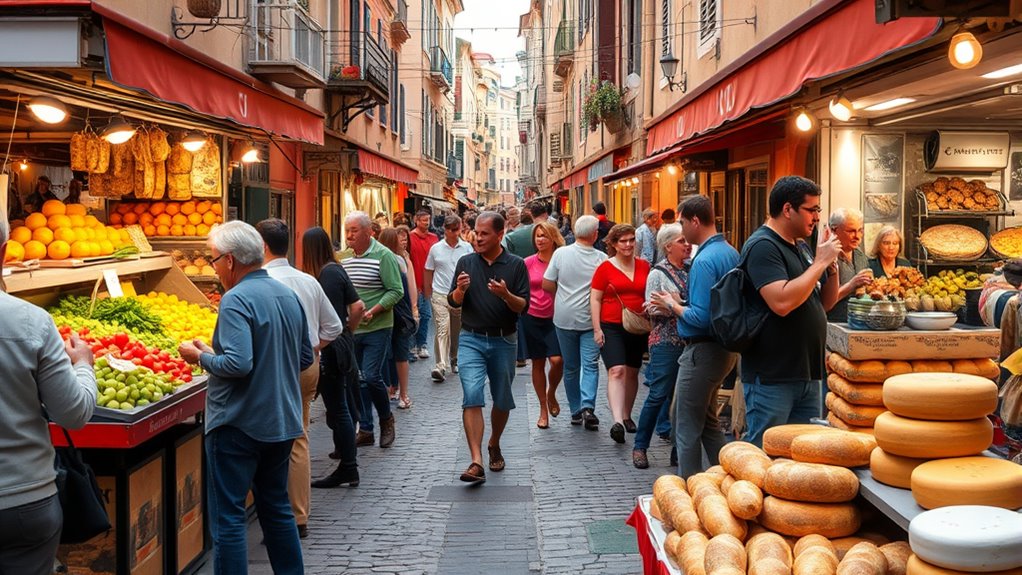

Discover Italy’s vibrant regional food festivals where you can immerse yourself in authentic flavors, lively street markets, and exclusive wine tastings. These festivals celebrate local ingredients, culinary traditions, and community spirit, giving you a genuine taste of Italy’s rich cultural heritage. From colorful stalls to guided wine tours, you’ll experience more than just food — you’ll connect with history and land behind each dish. Keep exploring to uncover more hidden culinary gems across Italy’s regions.
Key Takeaways
- Explore Italy’s diverse regional ingredients and traditional recipes through immersive food festivals and street markets.
- Experience authentic wine tastings at vineyards highlighting Italy’s varied terroirs and local winemaking techniques.
- Participate in cultural events that celebrate local flavors, music, and community spirit, fostering deeper culinary appreciation.
- Discover stories behind regional products, enhancing understanding of Italy’s culinary history and geographical influences.
- Engage with vendors and locals for authentic tasting experiences, connecting with Italy’s land, traditions, and culinary heritage.
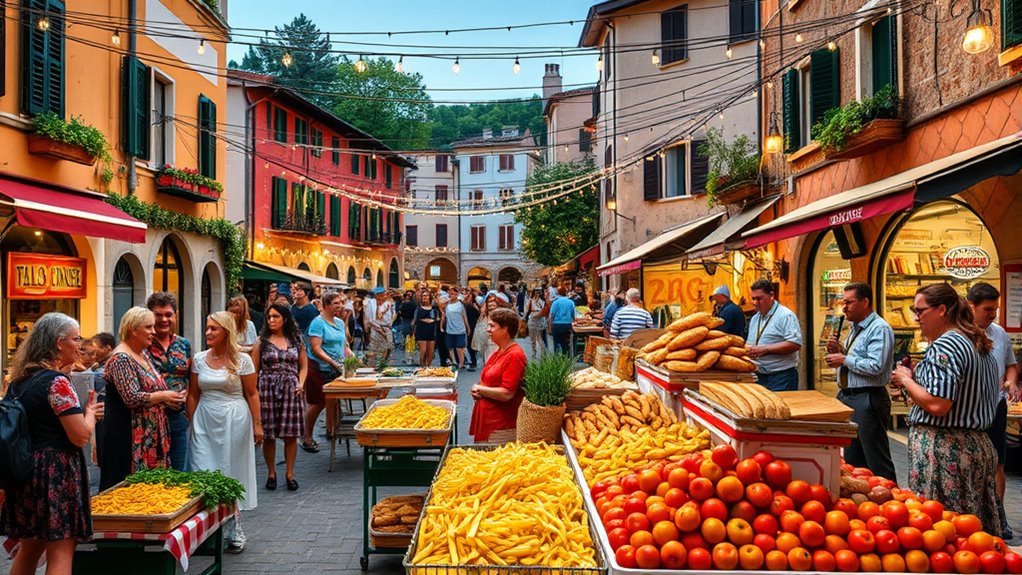
Have you ever wondered how Italy’s rich culinary traditions come to life? It’s through vibrant festivals that celebrate local flavors, fresh ingredients, and age-old recipes. When you step into Italy during these events, you’re not just a spectator—you’re an active participant in a living tapestry of taste and culture. One of the best ways to immerse yourself in this experience is by exploring the lively street markets and indulging in wine tasting sessions that are often part of these festivals. These markets burst with color and aroma, offering a treasure trove of regional specialties. As you wander through narrow alleyways lined with stalls, you’ll discover fresh produce, cured meats, cheeses, and baked goods, all representing the heart of local cuisine. Vendors are enthusiastic to share stories behind their products, giving you a glimpse into centuries-old traditions. Sampling local cheeses or trying freshly baked bread right from the oven makes the experience authentic and memorable.
Wine tasting is another highlight of many regional festivals. Italy’s diverse terroirs produce a wide array of wines, each telling its own story. During festivals, vineyards often open their doors to visitors, offering tastings of robust reds, crisp whites, and sparkling varieties. You’ll learn to appreciate the subtle differences in aroma and flavor, guided by passionate winemakers who are proud of their heritage. Engaging with safety features of wine and food pairings enhances your understanding of regional ingredients and traditions. Participating in these tastings allows you to connect more deeply with the land and the people behind each bottle. Sometimes, local festivals even feature traditional food and wine pairings, elevating the tasting experience. As you sip, you get to understand how regional ingredients influence the wines, making each glass a reflection of the local environment.
Street markets and wine tastings are more than just activities—they’re gateways into Italy’s soul. They foster a sense of community and celebration, bringing together locals and travelers alike. The festive atmosphere, combined with the aroma of freshly cooked dishes and the clinking of glasses, creates a vibrant backdrop for discovering Italy’s culinary treasures. Whether you’re browsing through colorful produce stalls or savoring a glass of Chianti at a vineyard, these experiences deepen your appreciation for Italy’s regional diversity. They remind you that food and wine are more than sustenance—they’re expressions of history, geography, and passion. So, when you travel to Italy for a regional food festival, prepare to taste, learn, and connect in ways that will stay with you long after the festival ends.

Philips 7000 Series Pasta Maker, ProExtrude Technology 150W, 8 discs, Perfect Mixing Technology, Prepare up to 8 Portions, HomeID App, White, (HR2660/03)
PASTA UNDER 10 MINUTES: Enjoy fresh homemade pasta effortlessly in under 10 minutes¹.
As an affiliate, we earn on qualifying purchases.
Frequently Asked Questions
When Is the Best Time to Visit Italy’s Food Festivals?
You should visit Italy’s food festivals during their seasonal harvests, which vary by region. The best time depends on the specific festival, but generally, late summer and early fall are ideal because of abundant harvests and vibrant celebrations. Check festival dates in advance, as they often align with local seasonal produce. Planning around these times guarantees you experience authentic regional flavors and lively festivities at their peak.
Are English-Speaking Guides Available at Regional Food Festivals?
You’ll be glad to know that many regional food festivals in Italy offer English guides, making your experience much easier. Even if festival language leans heavily on Italian, these guides help bridge the gap, ensuring you enjoy the culinary delights and cultural insights without stress. Sometimes, local volunteers or tour operators provide these services, so don’t hesitate to ask in advance. This way, you won’t miss out on any delicious detail!
Can I Participate in Cooking Classes During the Festivals?
Yes, you can participate in cooking classes during festivals. Look for opportunities labeled as cooking class opportunities, often advertised at festival entrances or on official websites. To make the most of your experience, arrive early and follow festival participation tips like signing up in advance and engaging actively with local chefs. This way, you’ll gain authentic culinary skills and enjoy a memorable cultural experience firsthand.
How Can I Find Lesser-Known, Local Food Festivals in Italy?
You can find lesser-known, local food festivals in Italy by exploring regional culinary blogs and checking local festival calendars. For example, in Tuscany, a small village hosts a chestnut festival not listed on major sites. These sources highlight hidden gems, helping you discover authentic experiences. Keep an eye on community boards and social media pages dedicated to regional traditions, ensuring you don’t miss these unique culinary celebrations.
Are There Gluten-Free or Vegetarian Options at These Festivals?
Yes, many local food festivals in Italy now offer gluten-free options and vegetarian options to cater to diverse dietary needs. When you attend, ask vendors directly about gluten-free and vegetarian choices, and look for signs indicating special dietary accommodations. It’s a good idea to communicate your preferences early, so vendors can suggest suitable dishes. Enjoy exploring Italy’s rich cuisine while staying true to your dietary preferences!
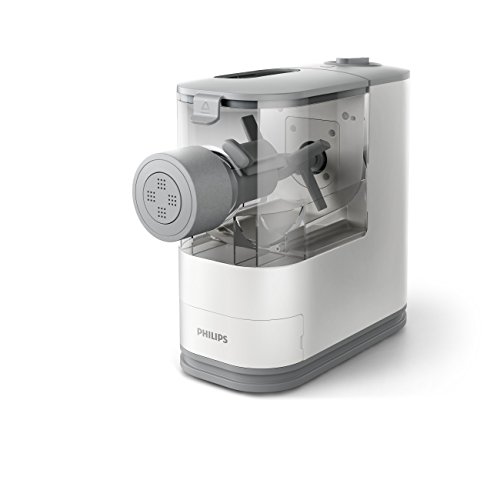
Philips Kitchen Appliances Compact Pasta and Noodle Maker, Viva Collection, Comes with 3 Default Classic Pasta Shaping Discs, Fully Automatic, Recipe Book, Small, White (HR2370/05)
Automatically kneads and extrudes 2-3 servings of fresh pasta in just 18 minutes thanks to uniquely designed stirring...
As an affiliate, we earn on qualifying purchases.
Conclusion
Don’t let the idea of crowded festivals deter you—these events are the perfect chance to immerse yourself in Italy’s authentic flavors and vibrant culture. By joining local celebrations, you’ll experience Italy’s culinary soul firsthand, creating memories that go beyond tasting. So, embrace the lively atmosphere, meet passionate food lovers, and discover hidden gems. After all, these festivals are about more than food—they’re about connecting with Italy’s rich traditions in the most delicious way possible.

VEVOR Electric Pasta Maker, 150W Automatic Noodle Maker Machine with 8 Pasta Shapes, 4 Intelligent Modes, 500g Flour Capacity Pasta Maker Machine with Measuring Cups, Cleaning Brush for Home Kitchen
User-Friendly Operation: Designed for ease of use, this pasta maker machine comes with recipes and simple ratios to...
As an affiliate, we earn on qualifying purchases.

VEVOR Electric Pasta Maker, 150W Automatic Noodle Maker Machine with 8 Pasta Shapes, 4 Intelligent Modes, 500g Flour Capacity Pasta Maker Machine with Measuring Cups, Cleaning Brush for Home Kitchen
User-Friendly Operation: Designed for ease of use, this pasta maker machine comes with recipes and simple ratios to...
As an affiliate, we earn on qualifying purchases.