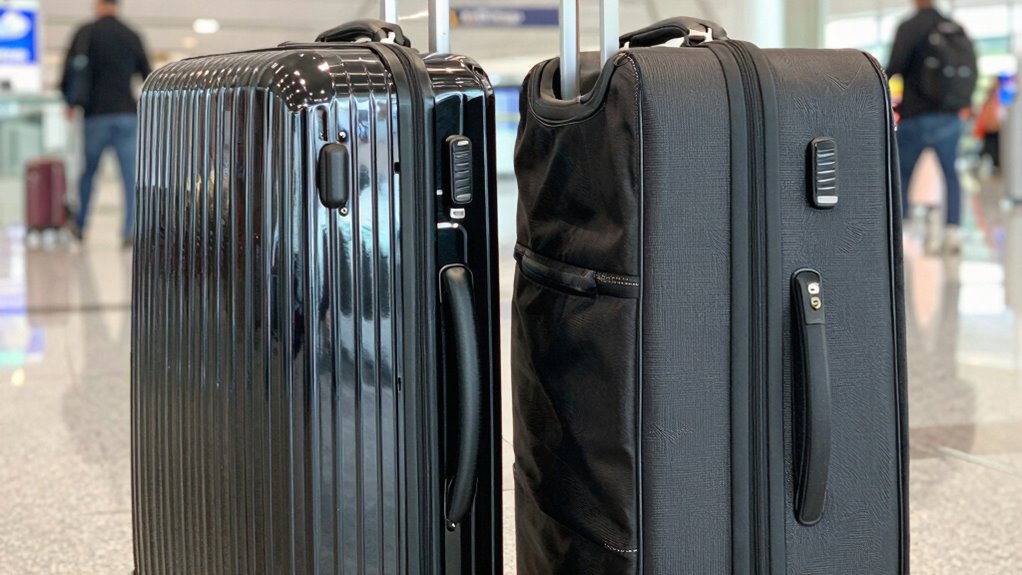

Choosing between hardshell and softside luggage depends on your travel style. If you need impact protection, security, and a sleek look, hardshell suits best, especially for rough handling or fragile items. Softside offers flexibility, lightweight convenience, and easier packing for frequent or quick trips. Consider your destination, packing habits, and priority features. To find out which fits your needs perfectly, explore the details that follow and make an informed decision.

Get home appliances delivered free — and shop member deals
- Fast, free delivery on millions of items
- Access to Prime Big Deal Days deals on October 6–7
- Prime Video, Amazon Music and more included
Key Takeaways
- Choose hardshell luggage for maximum impact protection and security, especially for international or rough handling trips.
- Opt for softside luggage if you need flexibility, expandability, lighter weight, and easier access during short or frequent trips.
- Consider hardshell cases for storing fragile items or when traveling to rugged environments requiring durable, impact-resistant material.
- Select softside luggage for better organization, versatile packing, and travel in rainy conditions due to its water-resistant fabric.
- Base your choice on your travel style, security needs, and packing preferences to ensure the luggage suits your specific journey.
As an affiliate, we earn on qualifying purchases.
What Are the Main Differences Between Hardshell and Softside Luggage?

The main differences between hardshell and softside luggage lie in their construction, durability, and flexibility. When it comes to color options, hardshell cases often come in bold, vibrant hues and glossy finishes, making them stand out. Softside luggage typically offers a wider variety of colors and patterns, allowing for more personalization. Price differences also play a role; hardshell luggage tends to be more expensive due to rigid materials like polycarbonate or aluminum, while softside options are usually more budget-friendly. You may find softer suitcases on sale or in lower price ranges, but they can also vary in quality. Additionally, material robustness influences how well each type withstands rough handling during travel, helping you select the best option for your needs. It is also important to consider weight and portability, as softside luggage is often lighter and easier to carry around. Understanding these differences helps you choose based on your style preferences and budget, making your travel gear more suited to your needs.
How Do Durability and Protection Compare?
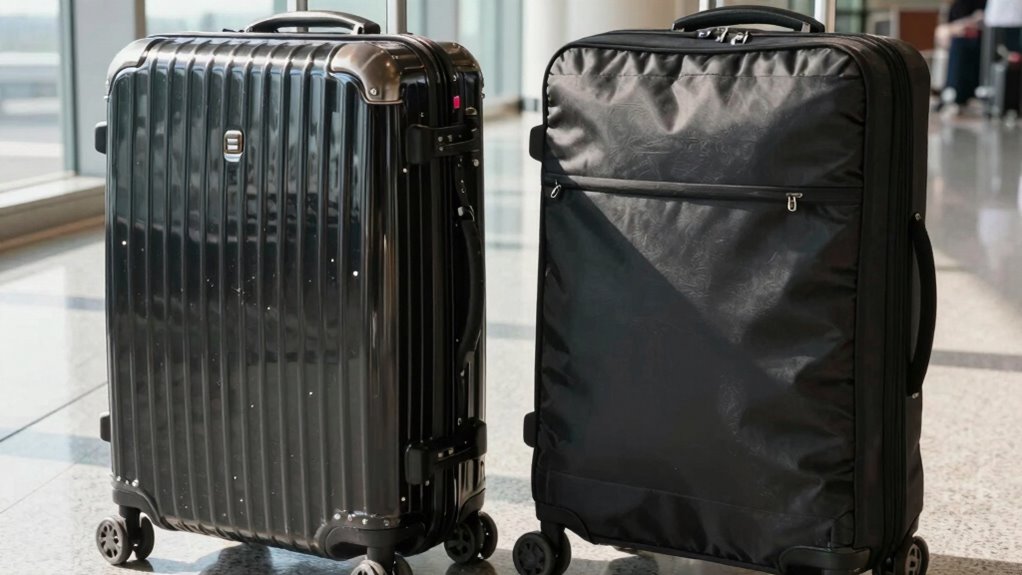
When comparing durability and protection, the construction materials of hardshell and softside luggage play a significant role. A tough exterior made of polycarbonate or aluminum in hardshell cases offers excellent resistance to impacts, providing strong protection for your belongings. This tough exterior helps absorb shocks during rough handling, reducing the risk of damage. Softside luggage, typically made from durable fabrics like ballistic nylon or polyester, is less rigid but can still offer decent protection if reinforced with padding. While softside bags may flex slightly under pressure, they tend to absorb shock better in some situations, thanks to their flexible material. Overall, hardshell luggage excels in impact resistance, but softside options can still provide reliable protection, especially with added padding and thoughtful construction. Additionally, ventilation considerations can influence how well luggage withstands environmental stresses over time. Incorporating features like ventilation panels can help prevent moisture buildup and prolong the lifespan of softside luggage. Moreover, material quality plays a crucial role in determining the longevity and protective capabilities of both types of luggage. For example, manufacturing standards can greatly affect the overall durability and resistance to wear and tear. Furthermore, selecting high-quality fabric treatments can enhance the resilience of softside luggage against water and stains, extending its usable life.
Which Luggage Is More Flexible and Has More Packing Space?
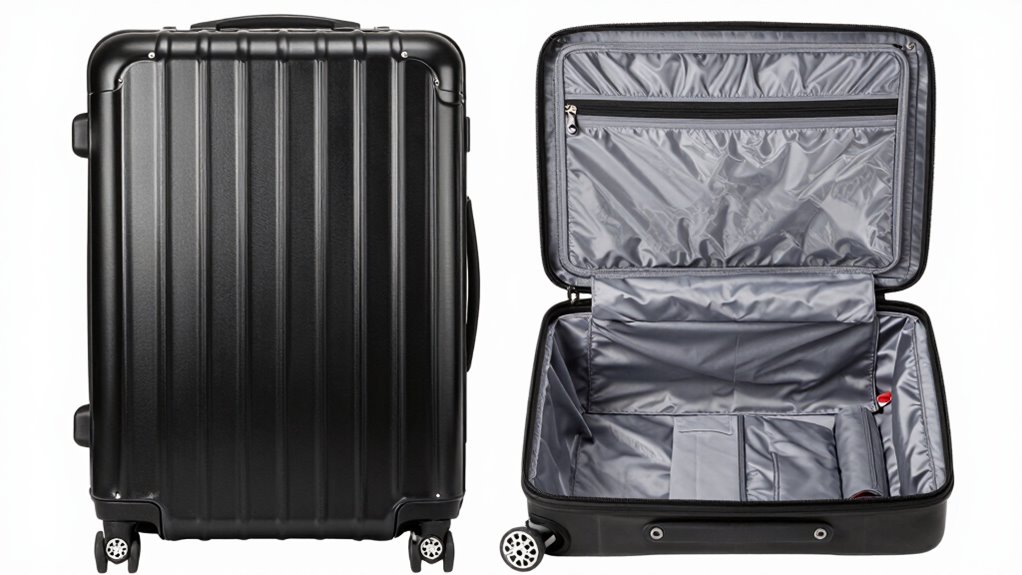
Softside luggage generally offers greater flexibility and more packing space because its fabric exterior can stretch and conform to your belongings. You can take advantage of expandable compartments to increase capacity when needed, making it ideal for travelers who tend to pack a lot or bring souvenirs home. The soft material also allows you to squeeze your bag into tight spaces or overstuff it without worrying about cracks or damage. Plus, many softside options include theft prevention features like lockable zippers and hidden compartments, giving you peace of mind. This flexibility makes softside luggage a practical choice if you prioritize maximizing packing space and adapting to different packing needs, especially during longer trips or when you want to optimize every inch of available room. Additionally, the frameworks and definitions found in practical leadership guidance can help you make informed decisions about your travel gear choices. When selecting luggage, understanding the material properties can help you choose options that best suit your travel style and durability requirements. Recognizing the flexibility benefits of softside luggage can also aid in choosing pieces that fit seamlessly into your travel routines, and knowing how sound therapy techniques improve auditory skills can be useful when traveling with children or individuals with sensory sensitivities.
Are Hardshell or Softside Luggage Lighter and Easier to Maneuver?
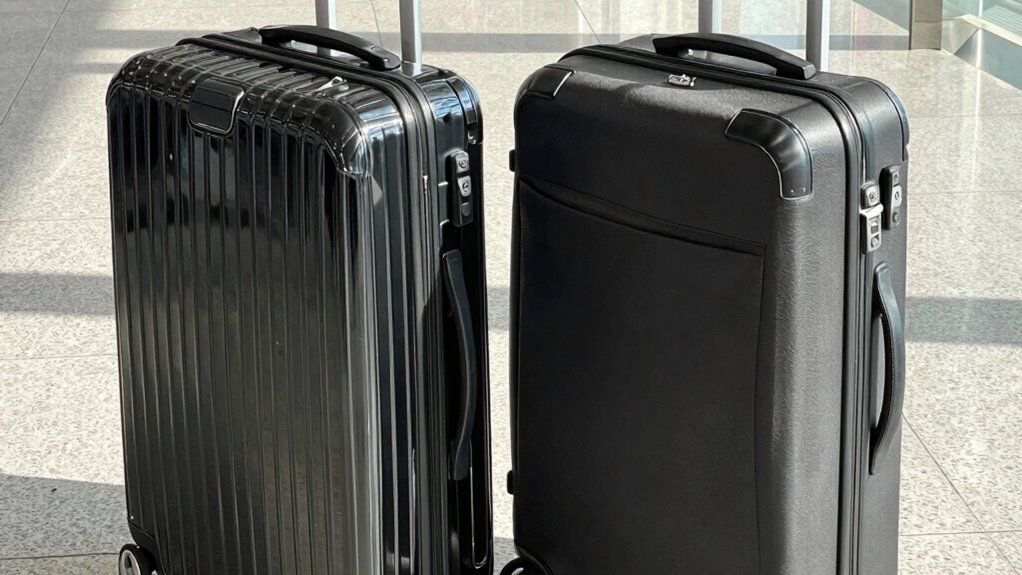
While both hardshell and softside luggage are designed for travel convenience, softside bags often feel lighter and easier to handle because their flexible fabrics and lightweight frames reduce overall weight. This makes steering through crowded airports or tight spaces less stressful. Softside luggage typically has a more versatile wheel design, allowing smooth, multidirectional movement that enhances maneuverability. Additionally, handle comfort plays a significant role; softside bags usually feature ergonomic handles that are easier to grip and extend, reducing fatigue during long walks or stair climbs. In contrast, hardshell luggage tends to be heavier with less flexible wheels and handles, which can make maneuvering more cumbersome. If ease of handling is your priority, softside luggage generally offers an advantage. Furthermore, material flexibility in softside bags allows for better absorption of impacts, helping to protect your belongings during travel. Additionally, the impact resistance of softside luggage can be superior in absorbing shocks from rough handling or accidental drops, especially when combined with shock-absorbing materials that enhance durability. Moreover, customizable compartments in softside luggage provide better organization options, making it easier to access items quickly during travel.
What Are the Security and Theft Risks of Each Luggage Style?
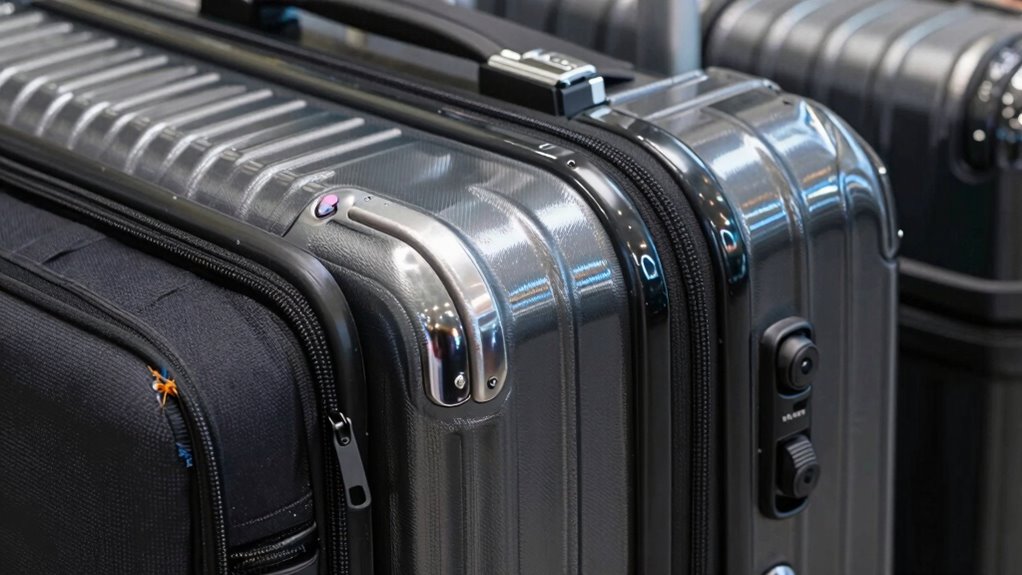
Your choice of luggage affects its resistance to forced entry and how easy it is for thieves to access your belongings. Hardshell cases are generally more resistant to break-ins, but softside bags often reveal their contents more easily. Considering these factors helps you decide which style offers better security for your travels. Additionally, security features like lockable zippers or integrated TSA locks can enhance the safety of either luggage type. For example, material strength plays a crucial role in preventing damage during attempts at forced entry. Understanding security vulnerabilities can help you select the most secure option for your needs, especially when evaluating the security measures incorporated into different luggage styles. Incorporating smart locking technology can further improve your luggage’s protection against theft and unauthorized access.
Resistance to Forced Entry
When it comes to resisting forced entry, the construction of your luggage plays an essential role in its security. Hardshell cases often provide better tamper resistance thanks to sturdy materials that are difficult to break open. Softside luggage, while flexible, may have zippers or seams more vulnerable to prying. Lock security is indispensable—hard shells typically feature built-in lock points that enhance tamper resistance. Softside models often rely on external locks, which can be easier for thieves to bypass. Consider this comparison:
| Feature | Hardshell Luggage | Softside Luggage | Comments |
|---|---|---|---|
| Material | Polycarbonate, ABS | Nylon, polyester | Hard shells resist brute force attacks. |
| Lock Security | Integrated lock points | External locks | Hard shells often have better lock security. |
| Tamper Resistance | Very high | Moderate | Hard shells are more tamper-proof. |
| Prying Vulnerability | Low | Higher | Softside zippers may be pried open more easily. |
| Overall Security | Superior | Good | Hard shells generally offer better forced entry resistance. |
| Additional Reinforcement | Some models include reinforced corners for extra durability | Usually lack reinforced corners | Reinforced areas in hard shells provide added protection against impacts. |
Additionally, reinforced corners in hard shell luggage offer extra protection against impacts and attempts at forced entry. Incorporating impact-resistant materials further enhances overall security by making the luggage more durable against physical attacks.
Visibility of Contents
The visibility of your luggage’s contents directly impacts its security and the risk of theft. Softside luggage often features fabric that’s easier to see through or manipulate, especially if it has transparent or lighter color options, making it tempting for thieves. Conversely, hardshell cases usually conceal belongings better, reducing the chance of unwanted attention. Your choice of color options can also influence security; darker, less conspicuous hues help keep contents private, while bright colors may draw unwanted eyes. Additionally, brand reputation plays a role—brands known for quality and security tend to design luggage that minimizes theft risks. Understanding content visibility and how it affects security can help you select luggage that better protects your belongings during travel. Being aware of security features such as lock mechanisms and material durability can further enhance your luggage’s protection. Moreover, material strength and construction quality are crucial factors in preventing damage or tampering, contributing to overall security. Recognizing the importance of security-conscious design can make a significant difference in safeguarding your possessions while on the move.
Which Luggage Works Best for Different Travel Types and Conditions?
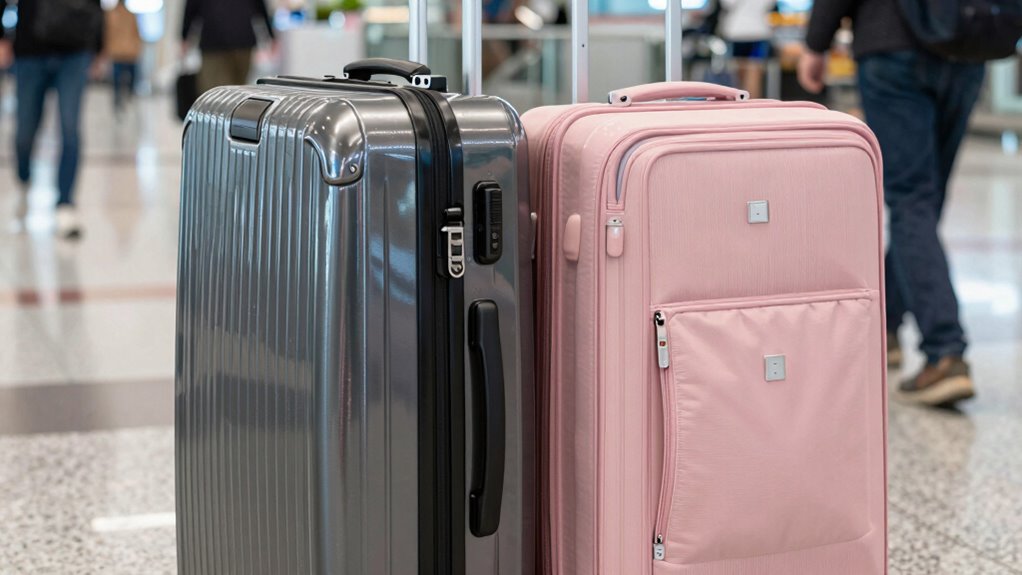
Choosing the right luggage depends heavily on your travel type and environment. For quick weekend getaways, lightweight softside bags with easy access to travel accessories work well. If you’re steering through crowded airports or uneven terrain, sturdy hardshell luggage offers protection and durability. Consider your destination’s climate—water-resistant softside bags are great for rain, while hardshell cases shield your belongings from impact. Think about your packing style and whether you need organized compartments or expandable space. Here’s a quick comparison:
| Travel Type | Suitable Luggage Type | Preferred Features |
|---|---|---|
| Business trips | Softside | Security, easy access to travel accessories |
| Adventure travel | Hardshell | Durability, protection from rough conditions |
| Family vacations | Softside | Expandability, multiple compartments |
| International travel | Both | Locking features, lightweight, luggage accessories |
Pick your luggage based on your specific travel needs.
What Factors Should You Consider When Choosing the Right Luggage?
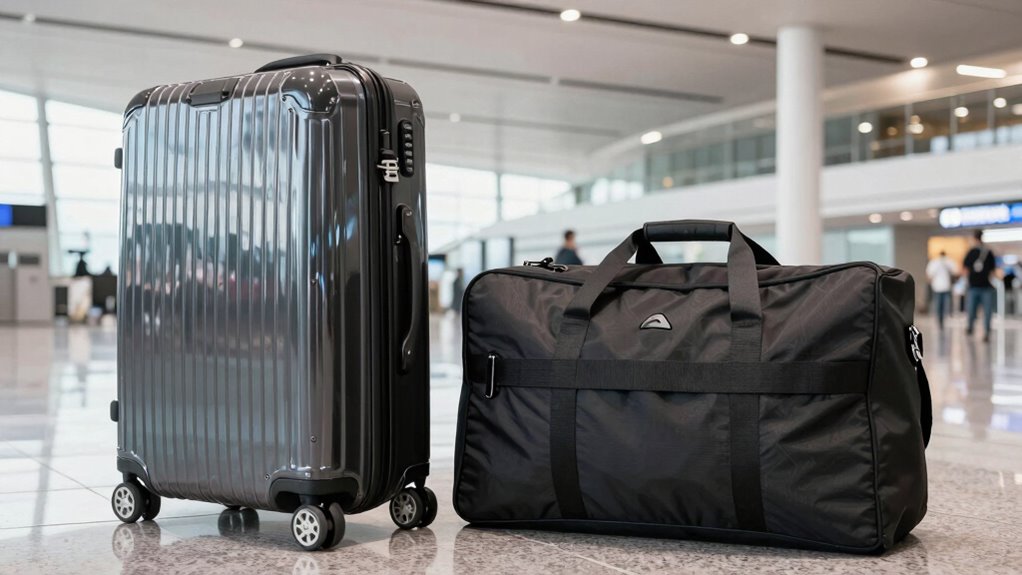
When choosing luggage, consider how durable and protective it needs to be for your trips. You’ll also want to think about its weight and how easy it is to maneuver through busy airports or crowded streets. Balancing these factors helps guarantee your luggage fits your travel style and needs.
Durability and Protection
Durability and protection are crucial factors to contemplate because your luggage needs to withstand the rigors of travel. To guarantee your belongings stay safe, consider these aspects:
- Material strength: Hardshell cases often use polycarbonate or aluminum, offering superior impact resistance, while softside bags use durable fabrics like ballistic nylon for flexibility.
- Structural integrity: Hard shells protect against crushing, making them ideal for fragile items, whereas softside luggage can absorb shocks better.
- Compatibility with carry-on restrictions: Hardshell luggage generally fits more securely into overhead compartments, but softside bags may be more adaptable for airline compatibility and tighter spaces.
Choosing the right balance depends on your travel needs and the level of protection required for your belongings.
Weight and Maneuverability
Considering the durability and protection of your luggage is important, but equally essential is how manageable it is to carry and maneuver. Weight and maneuverability directly affect your travel experience. A lighter bag with good weight distribution makes it easier to lift, lift, and carry, reducing fatigue. Softside luggage often offers better maneuverability ease due to its flexible construction, which can be easier to handle through crowded airports or tight spaces. Hardshell cases tend to be heavier, impacting overall weight and making maneuvering slightly more challenging. When choosing, consider how the weight impacts your ability to navigate busy terminals or lift your luggage into overhead compartments. Ultimately, balanced weight distribution and ease of maneuvering are key to travel comfort and efficiency.
Which Luggage Style Is the Best Fit for Your Travel Needs?
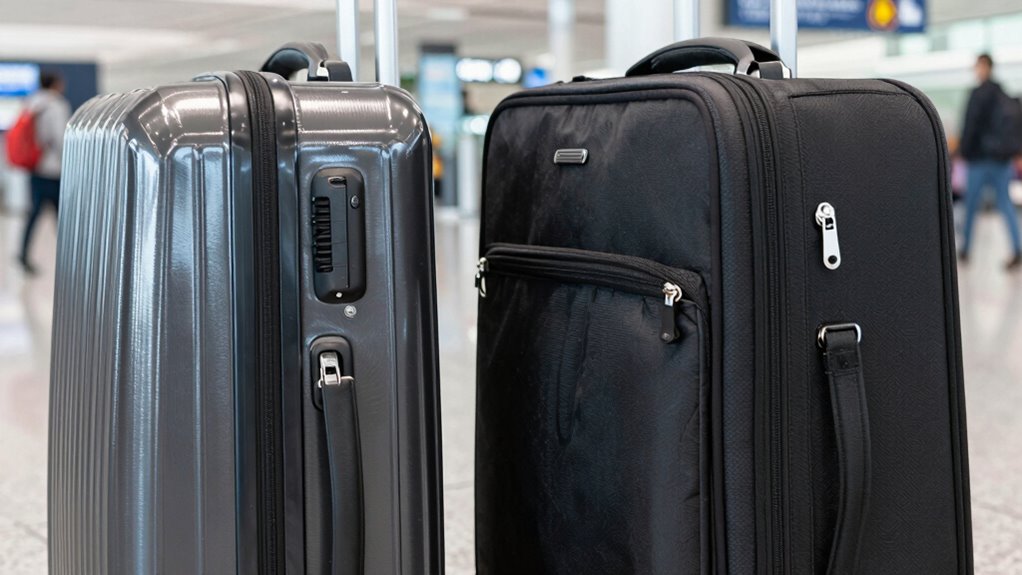
Choosing the right luggage style depends on your specific travel needs and preferences. If you prioritize lightweight, flexible options, softside luggage offers better luggage organization and easier access to travel accessories. On the other hand, if durability and protection matter most, hardshell luggage provides sturdy defense against rough handling. Consider these scenarios:
- For frequent travelers who need quick access and organized packing, softside luggage with multiple compartments is ideal.
- If you often check bags and worry about impacts, hardshell luggage safeguards your belongings better.
- When traveling internationally with strict luggage restrictions, lightweight softside options help maximize packing space without exceeding weight limits.
Assess your travel style, luggage organization needs, and accessory management to choose the style that fits best.
Frequently Asked Questions
Which Luggage Type Is Better for Carry-On Versus Checked Baggage?
For carry-on, softside luggage is often better, as it’s lightweight and flexible, making it easier to fit in overhead compartments. For checked baggage, hardshell offers superior durability considerations, protecting your belongings from rough handling. Your choice also depends on style preferences; softside tends to look more casual, while hardshell offers a sleek, modern look. Ultimately, pick based on your travel needs and personal style.
How Do Weather Conditions Affect Hardshell and Softside Luggage Choices?
Weather conditions greatly influence your luggage choice. If you face moisture or rain, a softside luggage with moisture resistance and weather durability is ideal, as it’s often more flexible and easier to pack in tight spaces. For harsh weather like snow or heavy rain, hardshell luggage offers better moisture resistance and durability, protecting your belongings from water and impact. Consider these factors to guarantee your luggage withstands the elements effectively.
Are There Any Weight Restrictions for Hardshell and Softside Luggage?
You should know that both hardshell and softside luggage have weight limits, typically around 50 pounds for checked bags, but these can vary by airline. Material restrictions aren’t usually strict, but exceeding weight limits can lead to extra fees. Softside luggage often feels lighter and more flexible, helping you stay within weight limits, while hardshell cases might be bulkier, making it easier to go over your airline’s restrictions.
Can Softside Luggage Withstand Rough Handling During Transit?
Softside luggage can often withstand rough handling during transit because of durability testing and material resilience. You’ll find that quality softside bags use reinforced fabrics and sturdy zippers, which help absorb impacts and resist tears. While softside luggage offers flexibility and easier packing, make certain you choose a well-constructed piece with reinforced seams. This way, you can confidently carry your belongings, knowing your luggage can handle the rigors of travel.
What Maintenance or Cleaning Is Recommended for Each Luggage Type?
You should regularly clean your luggage using appropriate cleaning techniques. For hardshell luggage, wipe down with a damp cloth and mild soap, then dry thoroughly. Softside luggage benefits from spot cleaning with a cloth and gentle detergent, especially around seams. Maintenance tips include checking zippers and handles for damage and storing your luggage in a cool, dry place. This keeps both types in top shape for your travels.
Conclusion
Choosing between hardshell and softside luggage is like selecting a trusty shield or a flexible backpack—each offers unique strengths. Think of your travel needs as a map, guiding you to the perfect fit. Whether you prefer durability or adaptability, your ideal luggage is out there, waiting to carry your adventures. So, weigh your options wisely and pick the companion that’ll turn every journey into a smooth, effortless voyage. Your perfect suitcase awaits—ready to roll with you!
Fall yard work Picks
leaf blowers
As an affiliate, we earn on qualifying purchases.




![[Fact Check] Lee’s Claim Blaming Oh For Seoul Home Prices? - 최보식의언론](https://tweedot.com/wp-content/uploads/2026/09/fact-check-lee-s-claim-blaming-oh-for-seoul-home-prices-featured-260x140.jpg)