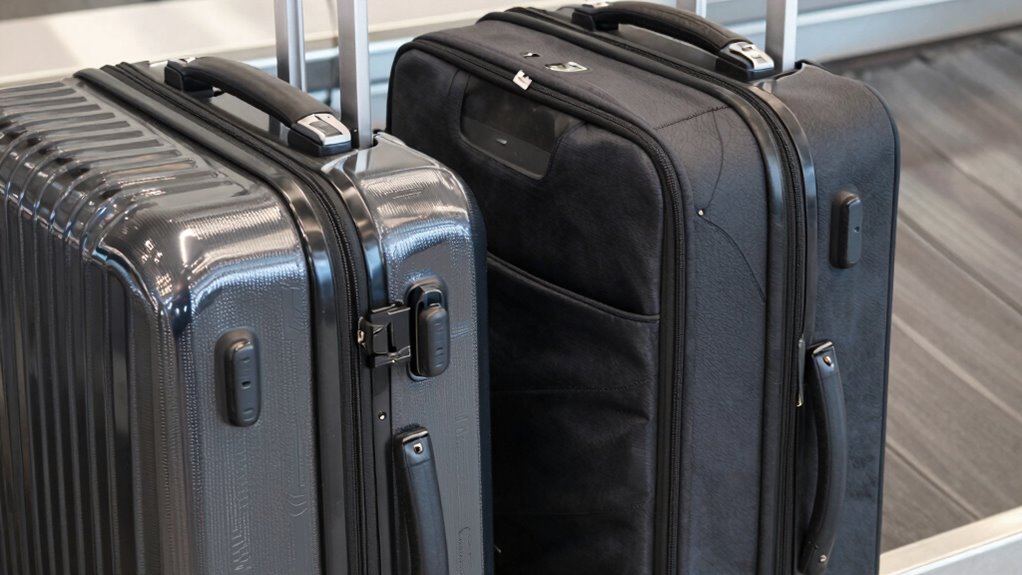

When choosing between hardshell and softside suitcases, it’s not just about durability. Hardshells offer better protection and security for fragile items but tend to be heavier and less flexible, which can limit packing space. Softside cases are lighter, more flexible, and often have external pockets for easy access. Consider your travel style, luggage weight limits, and packing needs to make the best choice. Keep exploring to discover more tips for your perfect suitcase match.

Get home appliances delivered free — and shop member deals
- Fast, free delivery on millions of items
- Access to Prime Big Deal Days deals on October 6–7
- Prime Video, Amazon Music and more included
Key Takeaways
- Consider weight and packing capacity, as hardshells are heavier and may limit how much you can pack.
- Evaluate handling needs; softside luggage is more flexible and easier to maneuver.
- External pockets in softside cases provide quick access to essentials during travel.
- For rough handling or frequent travel, hardshells offer better protection and security.
- Balance protection with airline restrictions to choose the best option for your travel style.
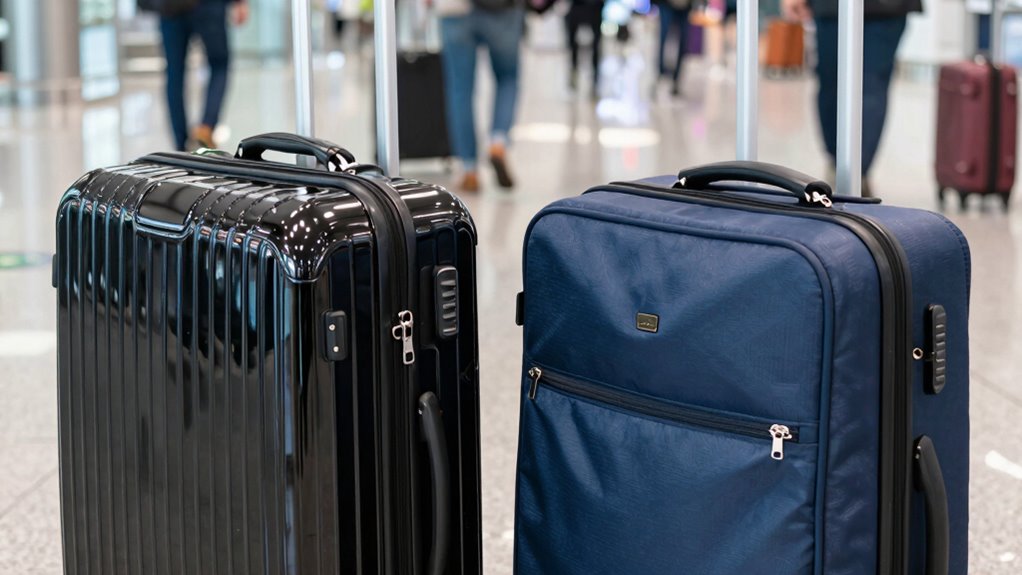
When choosing a suitcase, understanding the differences between hardshell and softside options can make your decision much easier. You’ll want to consider not just durability, but also how each type handles travel restrictions and weight considerations. Travel restrictions often limit the size and weight of your luggage, so knowing which suitcase aligns with these rules can save you headaches at the airport. Hardshell suitcases tend to be more rigid and structured, which can help protect fragile items, but they often weigh more. That extra weight can eat into your allowed baggage limit, forcing you to pack lighter or face additional fees. Softside suitcases, on the other hand, are generally lighter, making it easier to stay within weight restrictions. They also tend to be more flexible, allowing you to squish in oddly shaped items or squeeze a little extra packing space if needed, which can be a real advantage when trying to maximize your luggage allowance.
Travel restrictions are a key factor—airlines often impose strict weight limits, and with a heavier hardshell, you might find it more challenging to stay under those limits without sacrificing some essentials. Softside cases, with their lighter build, give you more room to pack without exceeding weight limits, plus they often come with external pockets that make quick access to travel documents, chargers, or snacks easier. However, hardshell cases do tend to be more water-resistant and offer better protection against rough handling, which can be crucial if your trip involves a lot of transfers or if you’re carrying delicate electronics. Keep in mind, though, that a heavy hardshell might force you to leave behind some items, especially if you’re close to the weight limit. Additionally, the material composition of hardshell suitcases influences their overall weight and durability, making this an important factor to consider.
Furthermore, choosing the right material can also impact the suitcase’s maintenance requirements, affecting how often you’ll need to clean or repair it during your travels. Weight considerations go beyond just airline restrictions. Lighter luggage means less strain when lifting or carrying, especially if you’re navigating stairs, buses, or crowded terminals. Softside suitcases often feature lightweight materials like nylon or polyester, which are easier to maneuver and less cumbersome. Conversely, hardshells are made from sturdy plastics or polycarbonate, which add weight but provide greater durability and security. So, if you’re traveling frequently or to destinations where handling might be rough, a hardshell might be worth the extra weight. But if you prefer to pack more or want to avoid extra fees, a softside suitcase could be a smarter choice. Ultimately, balancing your need for protection, weight, and compliance with travel restrictions will help you pick the best suitcase for your journeys.
As an affiliate, we earn on qualifying purchases.
Frequently Asked Questions
Which Suitcase Type Is Better for International Travel?
For international travel, softside suitcases often offer better travel convenience and packing flexibility. They are lighter, making it easier to carry through airports, and their expandable design helps maximize space. Softside bags also fit more easily into overhead compartments or tight spaces. If you prioritize easy handling and flexible packing options, a softside suitcase is typically the better choice for international trips.
Are Softside Suitcases More Prone to Theft?
Softside suitcases can be more prone to theft vulnerabilities because their fabric material may be easier to cut open. However, many models include security features like lockable zippers and hidden compartments, which help protect your belongings. You should choose a softside suitcase with reliable security features and be cautious in crowded areas. Always keep an eye on your luggage and consider using locks for added protection against theft.
How Do Weight Restrictions Affect Hardshell Vs Softside Bags?
Weight restrictions impact softside and hardshell bags differently due to material flexibility and packing capacity. Softside bags often give you more flexibility to expand, making it easier to stay within weight limits, especially when overpacking. Hardshell cases, with their rigid structure, offer less room for expansion but provide sturdy protection. So, consider your packing needs—if you tend to overpack, a softside bag might help you stay within weight restrictions.
Can Softside Suitcases Be Easily Repaired?
Yes, softside suitcases can be easily repaired because their material durability often includes fabrics like nylon or polyester, which are generally straightforward to patch or sew. Repair complexity is usually lower compared to hardshell bags, which require more specialized fixes like replacing shells or hinges. If you encounter a tear or minor damage, you can often fix a softside suitcase yourself or with minimal professional help, extending its lifespan.
Which Luggage Type Is More Environmentally Friendly?
You’ll find softside suitcases tend to be more eco-friendly because they often use eco-friendly materials like recycled fabrics and plastics. Plus, many brands participate in recycling initiatives, making them a greener choice. Hardshells might be less eco-friendly due to their plastic-heavy construction, which is harder to recycle. By choosing softside options, you support sustainable practices and reduce your environmental impact during your travels.
Conclusion
Ultimately, choosing between a hardshell and softside suitcase comes down to your travel style and needs. Think about what matters most—durability, flexibility, or convenience. Remember, the best choice is the one that suits your journey perfectly. As the saying goes, “It’s not the destination, but the journey,” so select a suitcase that makes your travels smoother and more enjoyable. Trust your instincts, and you’ll pack with confidence every time.
Fall yard work Picks
leaf blowers
As an affiliate, we earn on qualifying purchases.