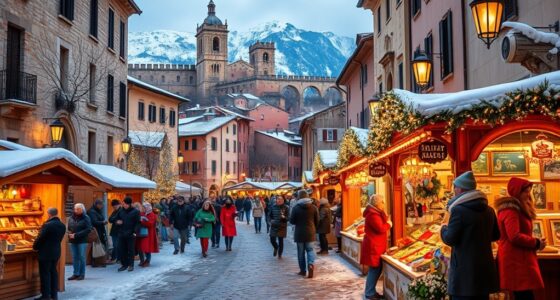
Beginning on literary tourism in Italy lets you walk the same streets as famous authors like Dante, Petrarch, and Boccaccio. You can visit ancient libraries, historic cafes, and romantic villas that inspired their works. Attending festivals and reenactments brings their stories to life and connects you to Italy’s rich cultural history. Exploring these sites transforms you into part of the country’s literary journey. If you’re curious, there’s much more to discover behind these timeless landmarks.
Key Takeaways
- Visiting historic sites like Dante’s house and ancient libraries offers immersive insights into Italy’s literary giants.
- Participating in literary festivals and reenactments deepens understanding of Italy’s rich literary heritage.
- Exploring towns with literary landmarks reveals connections to authors like Petrarch and Boccaccio.
- Engaging in literary tourism activities transforms sightseeing into active cultural experiences.
- Walking through Italy’s streets and monuments honors the legacy of renowned Italian writers.

Have you ever wondered what it’s like to step directly into the world of your favorite authors and stories? When you set out on literary tourism in Italy, that’s exactly what happens. You’ll find yourself wandering through historical landmarks that have shaped Italy’s rich literary history, places that breathe life into stories written centuries ago. These landmarks—be it ancient libraries, romantic villas, or centuries-old cafes—are more than just sights; they’re portals to the past. Visiting the house where Dante Alighieri was born, for instance, allows you to connect with the poet’s early life and understand the roots of his epic works. Similarly, touring the settings that inspired authors like Petrarch or Boccaccio gives you a tangible sense of their worlds, their struggles, and their triumphs.
Italy’s literary festivals are another essential aspect of this journey. Imagine attending a lively event where contemporary authors read from their latest works or where historic figures are celebrated through reenactments and discussions. These festivals often take place in towns with deep literary roots, allowing you to immerse yourself in local culture while celebrating Italy’s literary heritage. Participating in these gatherings makes you feel part of a living tradition, not just a visitor. You can listen to poets recite in centuries-old piazzas, meet publishers, or even engage in storytelling workshops. Such events deepen your understanding of Italy’s literary evolution and connect you with fellow enthusiasts who share your passion.
As you explore these landmarks and festivals, you get a sense of how Italy’s history and culture intertwine with its literary scene. You’ll notice that many historic sites are preserved precisely because of their literary significance, turning them into pilgrimage spots for fans and scholars alike. These places serve as reminders of Italy’s influence on world literature and culture. Walking through a town’s streets, you might stumble upon a plaque commemorating a famous author’s stay or a monument celebrating a literary milestone. Each step you take ties you closer to Italy’s storied past, making your journey more meaningful. Additionally, engaging with literary tourism activities can enhance your appreciation for Italy’s unique contribution to global literature.
Ultimately, literary tourism in Italy invites you to see the country through the eyes of its writers. It’s a chance to experience Italy’s history firsthand, to stand on the same grounds where legendary authors once walked, and to participate in vibrant festivals that keep their stories alive. By visiting historical landmarks and engaging with literary festivals, you transform from a casual visitor into an active participant in Italy’s enduring literary tradition. It’s a journey that enriches your understanding and deepens your love for Italian literature and culture.

Philips 7000 Series Pasta Maker, ProExtrude Technology 150W, 8 discs, Perfect Mixing Technology, Prepare up to 8 Portions, HomeID App, White, (HR2660/03)
PASTA UNDER 10 MINUTES: Enjoy fresh homemade pasta effortlessly in under 10 minutes¹.
As an affiliate, we earn on qualifying purchases.
Frequently Asked Questions
Which Italian Authors’ Homes Are Open to the Public?
You can visit the historic homes of famous Italian authors like Dante Alighieri’s house in Florence and Petrarch’s estate in Arquà Petrarca. These homes are open to the public, offering a glimpse into their lives and works. Exploring these historic sites lets you connect with Italy’s literary heritage and see where these celebrated authors penned their masterpieces. Don’t miss out on experiencing Italy’s rich literary history firsthand.
How Can I Access Literary Landmarks in Remote Areas?
To access literary landmarks in remote areas, you should research transportation options like local buses, trains, or guided tours that cater to these locations. Renting a car offers flexibility and direct remote access, making it easier to explore off-the-beaten-path sites. Plan your route in advance, check schedules, and consider hiring a local guide for a richer experience. This way, you won’t miss any hidden literary gems tucked away in Italy’s countryside.
Are Guided Tours Available for Italian Literary Sites?
Yes, guided tours are available for Italian literary sites. You can explore historical exhibits and visit locations where famous authors wrote, often during literary festivals that celebrate Italy’s rich literary heritage. These tours are led by knowledgeable guides who bring the sites to life, helping you understand the authors’ lives and works. Check local tourism offices or event calendars to find guided tours aligned with literary festivals for an enriching experience.
What Are Some Lesser-Known Literary Destinations in Italy?
Imagine discovering Italy’s hidden gem, a quiet village where Dante once wandered, perfect for your literary pilgrimage. Explore lesser-known destinations like the enchanting town of Sestri Levante, where authors like Eugenio Montale found inspiration, or visit the secluded island of Procida, evoking the spirit of authors who sought tranquility. These spots offer a unique, intimate experience away from the crowds, enriching your connection to Italy’s literary heritage.
How Do I Combine Literary Tourism With Other Cultural Experiences?
To combine literary tourism with other cultural experiences, you should plan visits around local culinary experiences and contemporary literary festivals. Attend regional food tours after exploring historic literary sites to savor authentic flavors. Participate in literary festivals to enjoy modern discussions and readings, then explore local markets or wine tastings. This blend enriches your trip, allowing you to immerse yourself in Italy’s vibrant culture while celebrating its rich literary heritage.

Philips Kitchen Appliances Compact Pasta and Noodle Maker, Viva Collection, Comes with 3 Default Classic Pasta Shaping Discs, Fully Automatic, Recipe Book, Small, Black (HR2371/05)
Automatically kneads and extrudes 2-3 servings of fresh pasta in just 18 minutes thanks to uniquely designed stirring...
As an affiliate, we earn on qualifying purchases.
Conclusion
As you walk these storied paths, remember each step is a key unveiling the door to imagination. The pages of Italian authors serve as quiet guides, whispering secrets of their worlds. Your journey becomes a bridge between past and present, where every monument and village is a symbol of stories waiting to be rediscovered. Embrace these echoes of literature—let them be the compass that leads your soul into timeless adventure.

Metal Gourmet Pasta Press Attachment for Kitchenaid Stand Mixer, Pasta Maker Attachment with 5 Interchangeable Plates, Spaghetti Bucatini Fusilli Large/Small Macaroni
EXCEPTIONAL METAL CONSTRUCTION: Our pasta press is built from high-grade alloy metal material, providing you with a longer-lasting,...
As an affiliate, we earn on qualifying purchases.
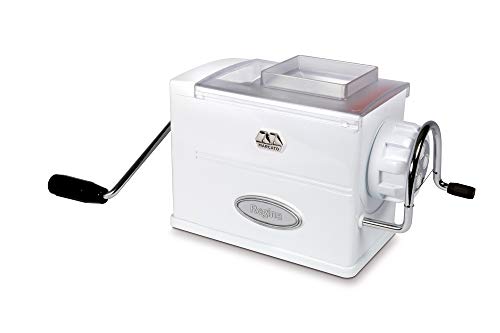
MARCATO Made in Italy Regina Extruder Pasta Machine, White. Makes bucatini, fusilli, maccheroni, maccheroncini, rigatoni.
100% made and assembled in Italy. Easily create a variety of extruded/pressed out pasta
As an affiliate, we earn on qualifying purchases.