
Italy’s ancient pilgrim paths lead you through sacred sites, monasteries, and relics that reflect its deep spiritual heritage. As you travel along these routes, you’ll experience centuries-old churches, tranquil landscapes, and local traditions that deepen your faith and reflection. These journeys offer more than just sightseeing— they’re paths of discovery and devotion. If you keep exploring, you’ll uncover even more about Italy’s rich spiritual landscape and timeless traditions.
Key Takeaways
- Italy’s pilgrimage routes connect sacred sites, monasteries, and relics, offering meaningful journeys of spiritual reflection and discovery.
- Medieval monasteries and churches along the paths serve as spiritual hubs and symbols of devotion.
- Relics housed in Italy’s religious sites hold deep spiritual significance, attracting pilgrims worldwide.
- The routes pass through historic towns, lush landscapes, and communities that preserve local spiritual traditions.
- Pilgrimages foster inner peace, cultural exchange, and deepen faith through encounters with Italy’s rich spiritual heritage.

Italy’s rich spiritual heritage offers countless pilgrim paths that invite you to set out on meaningful journeys of reflection and discovery. As you walk these ancient routes, you’ll encounter a landscape shaped by centuries of faith and devotion, each step bringing you closer to sacred sites and timeless traditions. One of the most enthralling aspects of Italy’s pilgrimage routes is their connection to medieval monasteries, which served as spiritual hubs during the Middle Ages. These monasteries aren’t just architectural marvels; they’re living symbols of devotion, often perched on hilltops or nestled in quiet valleys. As you approach them, you can imagine monks dedicating their lives to prayer, study, and the preservation of sacred relics. These relics—fragments of saints’ bones, relics of holy objects, or ancient manuscripts—are believed to hold spiritual power, drawing pilgrims from across the world. Visiting these sites gives you a tangible link to the past, allowing you to connect with the faith and hope that motivated countless travelers before you.
Walking through Italy’s pilgrim paths, you’ll pass by centuries-old churches, chapels, and cloisters that echo with the prayers of generations. The medieval monasteries often functioned as centers of hospitality for pilgrims, offering shelter and spiritual guidance along the way. Many of these sites are home to sacred relics, which are carefully preserved and displayed, inviting you to contemplate their significance. Touching or simply standing near these relics can evoke a profound sense of connection, reminding you of the enduring power of faith. The pilgrimage isn’t just about reaching a destination; it’s about the journey itself—an opportunity to reflect, seek inner peace, and witness the enduring legacy of Italy’s spiritual traditions. As you traverse these routes, you’ll notice how history and nature intertwine, creating a serene atmosphere that encourages introspection. Recognizing angel numbers during your journey—such as noticing recurring number patterns—can serve as personal spiritual messages, enhancing your reflective experience.
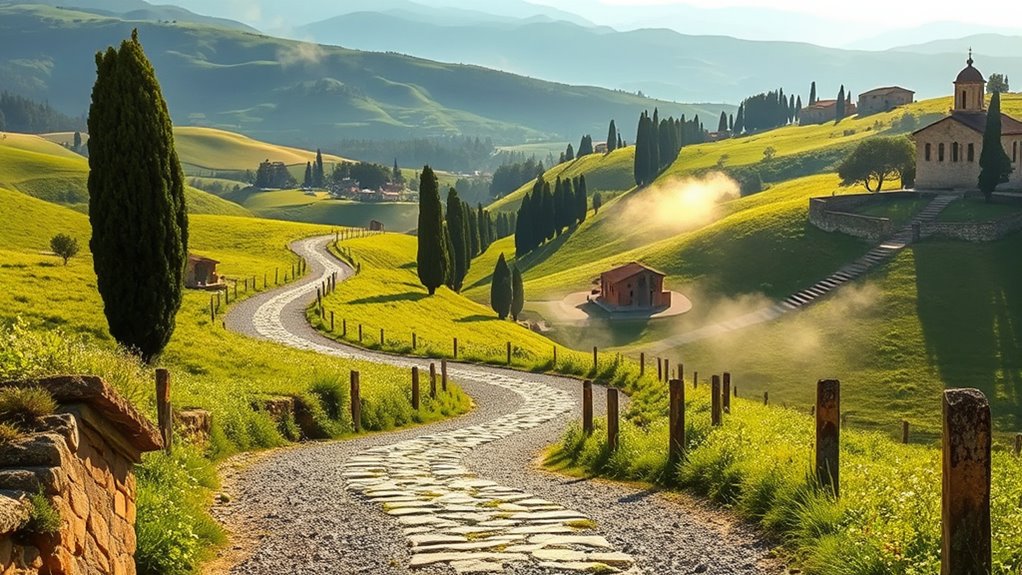
Italy’s pilgrim paths lead you through diverse landscapes—rolling hills, lush forests, and ancient towns—each adding to the sense of timelessness. Along the way, you’ll encounter local communities that keep traditions alive through festivals, prayers, and storytelling. These interactions deepen your experience, making your pilgrimage a communal act of faith and shared history. Ultimately, your journey through Italy’s sacred sites and medieval monasteries offers more than a physical trek; it’s a spiritual voyage that reconnects you with centuries of devotion, inspiring reflection and renewal at every turn.
As an affiliate, we earn on qualifying purchases.
Frequently Asked Questions
What Are the Best Times of Year to Undertake These Pilgrimages?
The best seasons for pilgrimage in Italy are spring and fall, offering ideal weather conditions. During these times, you’ll enjoy mild temperatures, less rain, and comfortable walking conditions. Summer can be hot and crowded, while winter may bring cold and unpredictable weather. Planning your journey in spring or fall ensures a more pleasant experience, allowing you to fully immerse yourself in the spiritual and scenic aspects of your pilgrimage.
Are There Accommodations Available Along the Pilgrimage Routes?
Imagine finding cozy lodging options tucked along scenic routes; yes, accommodations are plentiful. You’ll encounter diverse accommodation types, from charming inns and hostels to welcoming monasteries and guesthouses. These options guarantee you can rest comfortably after your day’s walk. As you journey, you’ll appreciate the variety and availability, making your pilgrimage more enjoyable and accessible, no matter your preference or budget.
How Physically Demanding Are These Journeys for Beginners?
These journeys can vary in physical challenge, but many routes are suitable for beginners. If you’re new to trekking, start with shorter, well-marked paths that offer manageable distances and gentle terrain. Be prepared with comfortable shoes, stay hydrated, and take breaks when needed. While some sections may be more demanding, most pilgrim paths are designed to be accessible for those with basic fitness levels, making them beginner-friendly options for spiritual seekers.
What Cultural or Historical Sites Can Pilgrims Visit Along the Way?
Along your pilgrimage, you can visit stunning medieval monasteries and explore ancient relics that tell stories of Italy’s rich history. You might stop at historic churches, where centuries-old artwork and relics await, or wander through charming towns steeped in tradition. These sites offer a glimpse into Italy’s spiritual and cultural past, enriching your journey and deepening your appreciation for the country’s sacred heritage.
Are There Guided Tours or Self-Guided Options for These Spiritual Journeys?
You can choose from guided tour options or opt for self-guided routes along Italy’s spiritual paths. Guided tours offer expert insights and a structured experience, while self-guided routes allow you to explore at your own pace. Many pilgrimage sites provide maps, audio guides, and itineraries, making it easy to customize your journey. Decide what suits your style, and immerse yourself fully in Italy’s rich cultural and spiritual heritage.
Conclusion
As you walk these sacred paths across Italy, you’ll feel your soul soaring higher than the Alps and your spirit shining brighter than the Italian sun. Every step transforms you into a legend, an unstoppable seeker of divine secrets. These journeys don’t just change your day—they’ll revolutionize your very being, leaving you forever intertwined with Italy’s spiritual heartbeat. Get ready to set out on an adventure so powerful, even the gods might envy your newfound enlightenment.