
Van life power setups seem simple at first, just some solar panels and batteries. But as soon as you add real devices like fridges, laptops, or heaters, things get complicated fast. Power needs grow quickly, and small systems struggle to keep up. Proper planning for efficient panels, larger batteries, and device consumption is essential. If you keep exploring, you’ll discover how to make your setup reliable and capable of supporting everything you want to run.
Key Takeaways
- Adding high-power devices like fridges or heaters significantly increases power requirements, complicating small solar setups.
- Solar efficiency and panel placement are critical to maximize energy collection and support multiple devices.
- Larger battery capacity is essential to buffer energy for high-demand appliances and cloudy days.
- Balancing cost, space, and scalability ensures your system can grow without unnecessary expenses.
- Proper wiring, device support, and realistic energy planning prevent power shortages and ensure reliable operation.
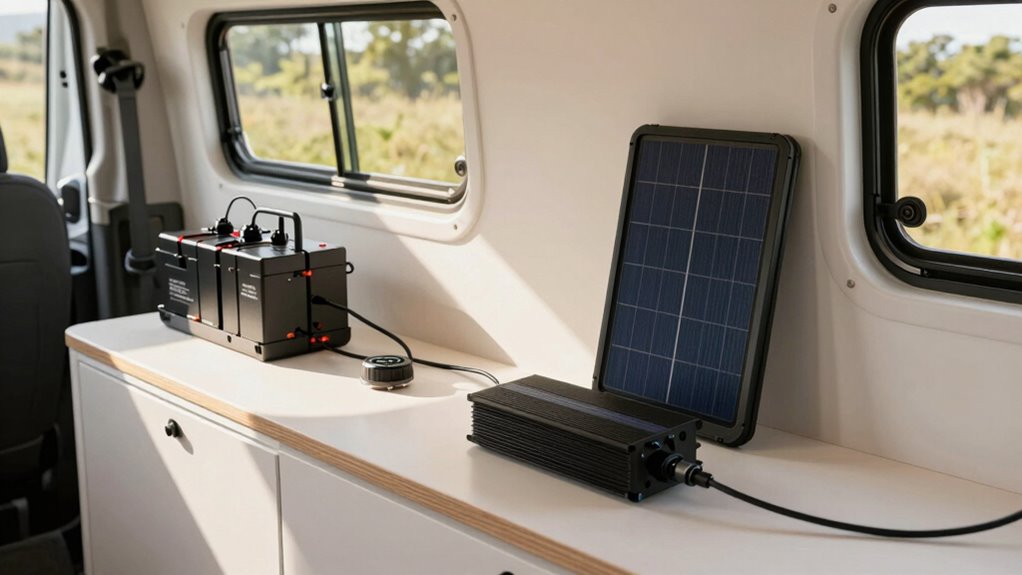
Living the van life means balancing mobility with the need for reliable power, and choosing the right setup is vital for your comfort and independence. At first, it might seem straightforward—just throw in a few batteries and a solar panel, and you’re good to go. But once you start adding real devices, the complexity quickly becomes clear. Your small setup suddenly needs to support everything from your phone charger to a mini fridge, and maybe even a laptop or a small heater. That’s when understanding solar efficiency and battery capacity becomes essential. Solar efficiency determines how well your panels convert sunlight into usable power, so even a small increase in efficiency can greatly extend your energy supply. If your panels aren’t efficient, you’ll find yourself constantly searching for shaded spots or struggling to keep up with your power demands. On the other hand, battery capacity dictates how long you can run your devices without recharging. A larger capacity means more buffer, so you don’t have to worry about power running out during cloudy days or overnight.
When you’re just starting, it’s tempting to keep things simple and stick with a small, portable battery and a basic solar panel. However, as your device list grows, the power demands can become overwhelming for minimal setups. For example, running a small fridge or a heater requires a substantial amount of power, which can drain small batteries in a matter of hours. That’s when you need to contemplate upgrading to a system with higher battery capacity, ensuring you have enough stored energy to meet your needs. Additionally, investing in high-efficiency solar panels can help maximize your power collection, especially if you’re limited on roof space or travel to areas with less sunlight. It’s also important to balance your power needs with your available space and budget, as larger batteries and more efficient panels come with higher costs. Proper planning and understanding your energy consumption are crucial to avoid over- or under-sizing your setup. Being aware of system scalability can also help you adapt your setup as your needs evolve over time. Recognizing the importance of solar panel placement can also significantly impact your overall system efficiency. Moreover, considering proper cabling and connections can prevent power loss and improve your system’s performance.
You might find that once you add real devices, the simplicity you initially enjoyed fades into complexity. But with the right understanding of solar efficiency and battery capacity, you can design a setup that keeps your devices powered without constant worry. The key is to plan for your actual energy consumption, not just your ideal scenario. By doing so, you’ll enjoy the freedom of van life without the frustration of running out of power at the worst possible moment.
As an affiliate, we earn on qualifying purchases.
Frequently Asked Questions
How Much Does a Typical Van Life Power Setup Cost?
A typical van life power setup costs between $1,500 and $5,000. You’ll need solar panels, which range from $300 to $1,500, depending on size and quality. Battery capacity is essential, with prices for deep-cycle batteries starting around $200 and going up to $1,000 or more. Your costs depend on your power needs and the devices you plan to run, so plan accordingly.
What Are the Best Portable Power Stations for Van Life?
You’ll find that portable power stations like the Jackery Explorer 1000 or Goal Zero Yeti 1500X are top picks for van life. They come with ample battery capacity to handle solar panels, making recharging easy even on cloudy days. Coincidentally, they’re lightweight and compact, fitting perfectly into your adventure. These stations power essentials like laptops and small appliances, ensuring your journey remains smooth without sacrificing comfort or convenience.
How Do I Maintain and Troubleshoot My Power System?
You maintain your power system by regularly checking battery health and ensuring terminals are clean and tight. Keep an eye on voltage levels and recharge or replace batteries as needed. For troubleshooting wiring issues, inspect connections for corrosion, loose wires, or damage. Use a multimeter to test continuity and identify faults. Staying proactive with battery maintenance and wiring checks helps prevent system failures and keeps your van’s power running smoothly.
Can I Upgrade My Van’s Electrical System Easily?
Surprisingly, upgrading your van’s electrical system is straightforward if you plan carefully. You can enhance solar efficiency by adding better panels or a MPPT charge controller, which makes a big difference. Upgrading batteries can extend battery lifespan and improve power capacity. Just make certain your wiring and components are compatible, and you might need professional help for complex changes. Overall, a well-planned upgrade boosts performance without much hassle.
What Safety Precautions Should I Follow With Power Setups?
You should prioritize battery safety by using proper protective gear and handling batteries carefully to prevent leaks or explosions. Follow wiring regulations strictly to avoid shorts or fire hazards. Always connect systems with the correct gauge wiring and secure all connections. Use fuses or circuit breakers to safeguard your setup, and double-check everything before powering on. These safety precautions ensure your van life power setup remains safe and reliable.
Conclusion
As you navigate your van life journey, remember that your power setup is like a small boat on vast waters. It may seem simple at first, but as you add real devices, the currents grow stronger. Embrace the challenge, knowing each upgrade is a ripple shaping your adventure. With patience and care, your system becomes the steady anchor in your voyage, reminding you that even the smallest boat can brave the greatest seas with right preparation.