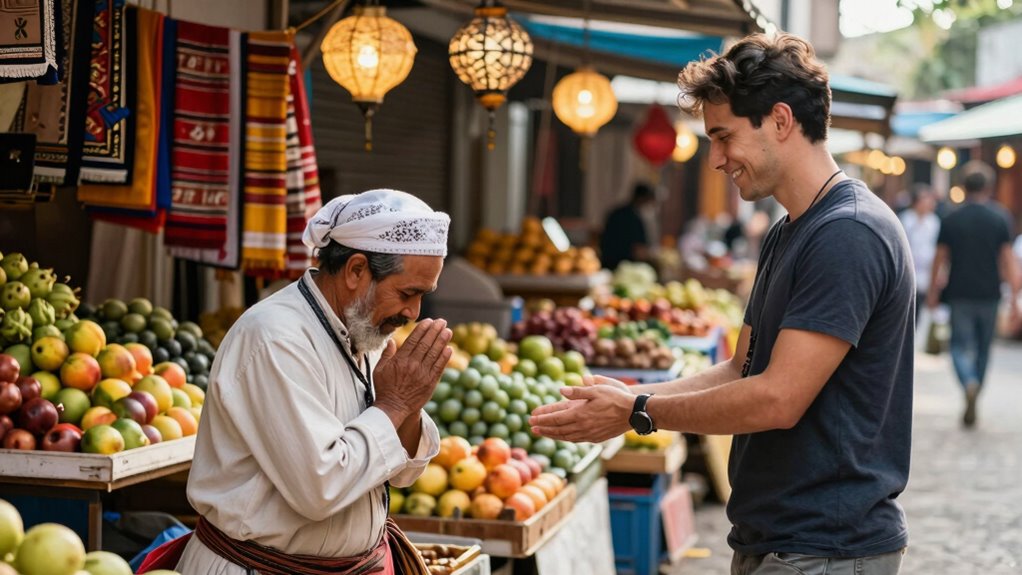

Focusing on local etiquette shows your respect for customs and traditions, which helps you connect authentically with locals. Simple gestures like smiling, bowing, or mimicking cultural norms build trust more effectively than perfect language skills. When you prioritize respectful actions, you demonstrate humility and openness, making interactions smoother and more genuine. Mastering local etiquette can often bridge language gaps and leave lasting positive impressions. Keep exploring to discover even more ways to build meaningful connections beyond words.
Key Takeaways
- Demonstrating cultural sensitivity fosters trust and genuine connections beyond language proficiency.
- Respectful gestures and body language build rapport more effectively than language alone.
- Embracing local customs shows humility and openness, preventing misunderstandings.
- Actions rooted in local etiquette convey respect and kindness, leaving lasting positive impressions.
- Understanding and practicing cultural norms enhances social integration and community engagement.
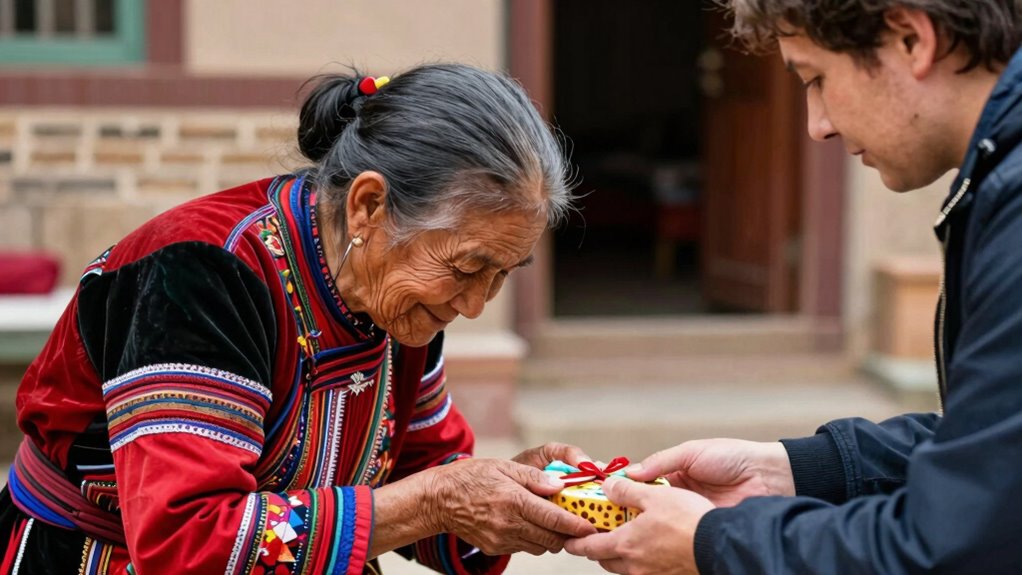
While speaking the local language can open doors, understanding and respecting local etiquette often has a greater impact on your experience abroad. When you show cultural sensitivity, you demonstrate that you value and respect the customs and traditions of the place you’re visiting. This effort can foster trust and open up more meaningful interactions than perfect language skills ever could. People appreciate when you make an effort to understand their ways of life, which often leads to warmer responses and a more genuine connection. Even if your language skills are limited, showing that you’re mindful of local norms can make a significant difference in how you’re perceived.
Respectful gestures go a long way in establishing rapport. Simple actions like greeting with a smile, using appropriate body language, or following local customs during conversations show that you’re considerate. For example, in some cultures, a handshake might be customary, while others prefer a bow or a nod. Paying attention to these details signals that you respect their traditions. It’s not about mastering every gesture but being observant and adaptable. When in doubt, follow the lead of locals—if they bow, do the same; if they remove their shoes before entering a home, do it too. These small acts can bridge cultural gaps and demonstrate genuine respect. Recognizing the importance of cultural norms can help you navigate social situations more effectively. Developing an awareness of social customs can also deepen your understanding and appreciation of the community you’re engaging with. Cultivating this cultural awareness encourages more meaningful exchanges and fosters mutual respect. Sometimes, learning a few key respectful gestures can significantly enhance your interactions and show your sincerity.
Simple respectful gestures like smiling, bowing, or removing shoes can build trust and show genuine cultural respect.
Understanding local etiquette often involves more than just knowing what to do; it’s about embodying a mindset of openness and humility. Your willingness to learn and adapt shows that you’re not there to impose your customs but to appreciate theirs. This cultural sensitivity can prevent misunderstandings and avoid unintentional offenses. It also helps you navigate social situations more smoothly, whether you’re dining, attending ceremonies, or engaging in daily interactions. Respectful gestures, rooted in awareness and empathy, become your tools for respectful engagement. They help you integrate into the community, making your experience richer and more authentic.
Ultimately, your ability to connect with people hinges on more than just language. When you prioritize local etiquette and demonstrate cultural sensitivity, you’re building bridges that language alone cannot. People respond to genuine respect and kindness, which often comes through your actions rather than words. So, focus on understanding the customs, practicing respectful gestures, and showing that you value the local way of life. This approach will not only enrich your experience but also leave a positive impression that lasts longer than any vocabulary lesson.
As an affiliate, we earn on qualifying purchases.
Frequently Asked Questions
How Can I Learn Local Customs Quickly?
To learn local customs quickly, observe and ask about social cues from locals. Pay attention to how they greet, eat, or dress, and adapt your behavior accordingly. Engage with locals genuinely, showing interest in their traditions, and ask respectful questions when unsure. Immersing yourself in everyday interactions helps with cultural adaptation, making it easier to understand unspoken social cues and seamlessly blend into the community.
Is Body Language More Important Than Verbal Politeness?
Body language often matters more than verbal politeness because non-verbal cues and gestural communication can convey respect, friendliness, or discomfort instantly. You can understand and respond to these cues even if your language skills are limited. Paying attention to gestures, eye contact, and posture helps you connect more genuinely, showing your respect for local customs. So, mastering body language can considerably enhance your interactions and cultural understanding.
What Are Common Local Etiquette Mistakes to Avoid?
Imagine stepping into a bustling market where a simple nod or handshake can make or break your experience. To avoid common local etiquette mistakes, respect cultural taboos—like avoiding certain gestures or topics—and follow greeting rituals carefully. Pay attention to how locals greet, whether it’s a bow, handshake, or cheek kiss. Being mindful of these nuances shows respect and helps you connect genuinely, avoiding awkward or offensive moments.
How Do Cultural Norms Influence Business Meetings?
Cultural norms heavily influence how you conduct business meetings, so being culturally sensitive is essential. Meeting protocol varies, affecting everything from greetings to decision-making. You should research and respect local customs to avoid misunderstandings. By adapting your approach, you demonstrate respect and build trust. This attentiveness guarantees smoother interactions, showing you value their traditions and fostering stronger business relationships. Remember, understanding and honoring local etiquette is key to successful international collaborations.
Can Respecting Local Customs Improve Travel Experiences?
Respecting local customs can considerably spice up your travel experiences. By practicing cultural sensitivity and engaging in respectful communication, you create connections and convey genuine regard for traditions. This thoughtful approach transforms encounters into memorable moments, making your journey joyful and enriching. When you embrace local norms, you not only avoid misunderstandings but also open hearts and minds, turning ordinary trips into extraordinary adventures filled with authentic appreciation and admiration.
Conclusion
Imagine walking through a bustling market, your smile warm and genuine, clothes respectful of local customs. Even if your words stumble, your understanding of the unspoken rules creates bridges. When you embrace local etiquette, you paint a vivid picture of respect and connection that language alone can’t convey. So, focus on the gestures, the pauses, the cultural cues—you’ll find that true understanding blooms where etiquette leads the way.