Among these smart thermostats with energy-saving features, I rank the ecobee Smart Thermostat Enhanced as the best overall for its balance of scheduling, room-sensor support, and broad smart-home features. The Amazon Smart Thermostat is a simpler value pick for Alexa households with a compatible C-wire, while the Google Nest Learning Thermostat Pro Edition is better suited to buyers who want automatic schedule learning and room sensing. The main tradeoffs are how much setup you want to handle, whether your HVAC wiring is compatible, and whether room-by-room temperature control matters more than keeping things simple. Some models need extra sensors or wiring accessories to deliver their full benefit. Read on for the full comparison, buying advice, and picks for different homes.

Get home appliances delivered free with Prime
- Fast, free delivery on millions of items
- Prime Video, Amazon Music and more included
- Member-only deals all year
Complete the kit


Key Takeaways
- ecobee Enhanced leads the roundup because it pairs energy-conscious scheduling with room-sensor support, without leaning as heavily on premium extras as the ecobee Premium.
- Room sensors are the clearest differentiator among these picks: the Nest E bundle, Nest Learning Pro, Honeywell X8S, and several ecobee options can address uneven temperatures beyond the thermostat’s location.
- Simple setups favor Amazon and Sensi, but the Amazon Smart Thermostat requires a C-wire; LEVOIT includes a C-wire adapter, which can make installation more approachable for some homes.
- Premium features do not automatically mean better energy savings: built-in voice assistants and richer displays may suit connected homes, while simpler models can cover scheduling needs with less complexity.
- Compatibility should narrow the list before features do: HVAC type, wiring, sensor availability, and smart-home ecosystem can rule out an otherwise appealing thermostat.
- Refurbished Amazon hardware is a distinct tradeoff: it offers the same basic product concept as the standard Amazon model, but buyers should weigh its condition and included accessories carefully.
| Honeywell Wi-Fi Smart Thermostat RTH9580WF |  | Best for a Customizable Display | Connectivity: Wi-Fi | Operation: Programmable | Display: Digital touchscreen | VIEW LATEST PRICE | See Our Full Breakdown |
| Google Nest Thermostat E and Temperature Sensor Bundle, White |  | Best for Room Prioritization | Connectivity: Wi-Fi | Scheduling: Auto-scheduling and learned preferences | Away setting: Eco Temperature | VIEW LATEST PRICE | See Our Full Breakdown |
| Google Nest Smart Thermostat, Charcoal | 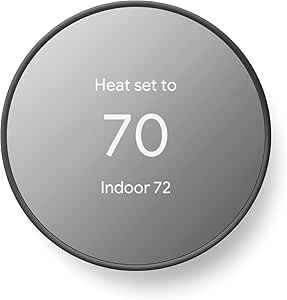 | Best for Automatic Away Savings | Connectivity: Wi-Fi 2.4 GHz and 5 GHz; Bluetooth Low Energy | Temperature control: Heating and cooling | Energy certification: ENERGY STAR | VIEW LATEST PRICE | See Our Full Breakdown |
| Google Nest Thermostat – Smart Programmable Wi-Fi (Snow) with Matching Trim Kit Wall Mount Plate |  | Best for a Finished Wall-Mount Installation | Connectivity: Wi-Fi | Energy features: Energy-saving temperature control, auto-schedule, smart energy monitoring | Controls: Google Home app, button, compatible Alexa and Google Assistant | VIEW LATEST PRICE | See Our Full Breakdown |
| Amazon Smart Thermostat – Save Money and Energy, Works with Alexa and Ring, C-Wire Required |  | Best for Alexa-Centered Homes | Model: S6ED3R | Connectivity: 2.4 GHz Wi-Fi (802.11 b/g/n) | System compatibility: Most 24V forced-air, heat-pump, and radiant-boiler systems; not 110–240V | VIEW LATEST PRICE | See Our Full Breakdown |
| ecobee Smart Thermostat Enhanced |  | Best for Flexible Energy Scheduling | Connectivity: Wi-Fi | Display: 4-inch LCD | Power: 24 volts; corded electric | VIEW LATEST PRICE | See Our Full Breakdown |
| Amazon Smart Thermostat, Like-New Refurbished | | Best for Alexa-Only Homes | Condition: Refurbished, tested, and certified to look and work like new | Model: S6ED3R | Dimensions: 3.56 × 3.56 × 0.84 inches | VIEW LATEST PRICE | See Our Full Breakdown |
| Google Nest Learning Thermostat Pro Edition with Temperature Sensor, 4th Gen (2024), Polished Silver |  | Best for Complex HVAC Systems | Generation: 4th Gen (2024) | Model: Nest Learning Thermostat Pro Edition | Connectivity: Bluetooth and Wi-Fi | VIEW LATEST PRICE | See Our Full Breakdown |
| Honeywell Home X8S Smart Wi-Fi Thermostat with Room Sensor, White |  | Best for Large, Sensor-Equipped Displays | Display: Customizable 5-inch touchscreen | Connectivity: Wi-Fi 2.4 or 5 GHz; Matter | Included sensor: Wireless room sensor, up to 200 feet range | VIEW LATEST PRICE | See Our Full Breakdown |
| Ecobee Smart Thermostat Premium – Wi‑Fi, Siri & Alexa Built‑In, Smart Sensor |  | Best Premium All-in-One | Connectivity: Wi-Fi | Voice assistants: Siri and Alexa built in | Included sensor: SmartSensor for room-by-room temperature control | VIEW LATEST PRICE | See Our Full Breakdown |
| Honeywell Home RTH9585WF1004 Wi-Fi Smart Color Programmable Thermostat |  | Best for Energy Feedback | Model: RTH9585WF1004 | Connectivity: Wi-Fi | Display: Customizable color touchscreen; LED | VIEW LATEST PRICE | See Our Full Breakdown |
| LEVOIT Smart Thermostat Aura 400S |  | Best for Multi-Room Sensing | Power supply: AC 24V, 60Hz | Connectivity: 2.4 GHz Wi-Fi; Zigbee 3.0 for room sensors | Display: 4-inch LCD IPS touchscreen with auto brightness | VIEW LATEST PRICE | See Our Full Breakdown |
| Ecobee Smart Thermostat Essential |  | Best for Broad Smart-Home Compatibility | Connectivity: Wi-Fi | Display: 3.74-inch LCD color touchscreen | Power: Battery powered; optional C-wire use with Power Extender Kit | VIEW LATEST PRICE | See Our Full Breakdown |
| Sensi Smart Thermostat ST55 |  | Best for DIY Installation | Connectivity: Wi-Fi | Power: 24 V AC; two AA backup batteries included | Display: 5-inch LED display | VIEW LATEST PRICE | See Our Full Breakdown |
| Ecobee3 Lite Smart Thermostat with Whole Home Sensors Bundle |  | Best Included Sensor Bundle | Certification: ENERGY STAR | Claimed energy savings: Up to 23% annually | SmartSensor range: 60 ft through walls and floors | VIEW LATEST PRICE | See Our Full Breakdown |
| smart thermostats with energy saving feature | Connectivity | Display |
|---|---|---|
| Honeywell Wi-Fi Smart Thermost | Wi-Fi | Digital touchscreen |
| Google Nest Thermostat E and T | Wi-Fi | — |
| Google Nest Smart Thermostat | Wi-Fi 2.4 GHz and 5 GHz; Bluetooth Low Energy | 2-inch LCD |
| Google Nest Thermostat | Wi-Fi | LED |
| Amazon Smart Thermostat | 2.4 GHz Wi-Fi (802.11 b/g/n) | — |
| ecobee Smart Thermostat Enhanc | Wi-Fi | 4-inch LCD |
| Amazon Smart Thermostat | — | — |
| Google Nest Learning Thermosta | Bluetooth and Wi-Fi | LCD |
| Honeywell Home X8S Smart Wi-Fi | Wi-Fi 2.4 or 5 GHz; Matter | Customizable 5-inch touchscreen |
| Ecobee Smart Thermostat Premiu | Wi-Fi | Large touchscreen |
| Honeywell Home RTH9585WF1004 W | Wi-Fi | Customizable color touchscreen; LED |
| LEVOIT Smart Thermostat Aura 4 | 2.4 GHz Wi-Fi; Zigbee 3.0 for room sensors | 4-inch LCD IPS touchscreen with auto brightness |
| Ecobee Smart Thermostat Essent | Wi-Fi | 3.74-inch LCD color touchscreen |
| Sensi Smart Thermostat ST55 | Wi-Fi | 5-inch LED display |
| Ecobee3 Lite Smart Thermostat | — | — |
More Details on Our Top Picks
Honeywell Wi-Fi Smart Thermostat RTH9580WF
The full-color touchscreen gives this Honeywell a more customizable, at-a-glance interface than the button-controlled Nest Thermostat E. Its programmable schedules and temperature and humidity sensors can help homeowners set back heating or cooling when a preferred schedule allows, while Wi-Fi adds remote adjustments and compatible voice control. I’d rank it for buyers who value on-device controls and a display they can tailor, rather than automatic away adjustments as the main energy-saving feature. Compared with the Amazon Smart Thermostat, it does not list a C-wire requirement in the supplied product details, but its compatibility still depends on having a supported 24V system. Skip it if your HVAC uses millivolt or 120/240V power, or if you want room sensors to prioritize temperatures across the home.
Pros:- Programmable schedules support planned temperature setbacks.
- Built-in temperature and humidity sensors provide local readings.
- Wi-Fi app control allows adjustments away from home.
- Full-color touchscreen can be customized.
Cons:- Not compatible with millivolt or 120/240V HVAC systems.
- No included remote room sensor is listed.
- Its energy-saving approach relies on schedules rather than listed automatic away adjustment.
Best for: Homeowners with compatible 24V HVAC who want a customizable touchscreen, scheduled temperature control, and app access.
Not ideal for: Homes with millivolt or 120/240V HVAC, or buyers who want included room sensors for balancing temperatures between rooms.
- Connectivity:Wi-Fi
- Operation:Programmable
- Display:Digital touchscreen
- Sensors:Built-in temperature and humidity
- System compatibility:Most 24V HVAC systems; not millivolt or 120/240V
- Dimensions:3.5 × 4.5 × 0.8 in
- Weight:1 lb
- Warranty:1-year limited
Our verdict“Choose this Honeywell if a customizable touchscreen and scheduled control matter more to you than room sensors or automatic away settings.”
Google Nest Thermostat E and Temperature Sensor Bundle, White
The included temperature sensor gives this bundle a practical advantage when one room routinely differs from the rest of the home. You can prioritize that room through the Nest app, while Eco Temperature and learned preferences help reduce heating or cooling when the home is empty or follow a recurring routine. That makes it a stronger fit for room-specific comfort than the Google Nest Thermostat in Charcoal, whose supplied details emphasize away adjustments and scheduling but do not list an included sensor. The tradeoff is that the sensor focuses on a selected room; it is not a promise of whole-home balancing. Remote features and notifications depend on working Wi-Fi, and supported system compatibility should be checked before purchase.
Pros:- Included sensor can prioritize a selected room’s temperature.
- Eco Temperature adjusts settings when the home is empty.
- Learning and scheduling can reduce reliance on manual changes.
- App and compatible voice assistant control are supported.
Cons:- Remote control and notifications require working internet and Wi-Fi.
- Compatibility is limited to supported heating and cooling systems.
- The included sensor measures a selected room rather than providing multi-room coverage.
Best for: Households with one frequently occupied room that runs warmer or cooler than the thermostat location and supported heating equipment.
Not ideal for: Buyers whose HVAC is outside the listed supported systems, or those who need multiple rooms monitored at once.
- Connectivity:Wi-Fi
- Scheduling:Auto-scheduling and learned preferences
- Away setting:Eco Temperature
- Included sensor:One room temperature sensor
- Controls:Button control, Nest app, compatible voice assistants
- Voltage:24V
- Mounting:Wall mount
- Compatible systems:Listed boilers, heating-only heat pumps, zoned systems, and district heating with electrical control valves
Our verdict“Pick this bundle if you want Nest scheduling and away settings with a sensor focused on one important room.”
Google Nest Smart Thermostat, Charcoal
The automatic adjustments when you leave make this Nest a straightforward choice for households that do not want energy savings to depend entirely on remembering a schedule. It also supports schedules and app-based remote control, with an ENERGY STAR certification listed in the product data. Compared with the Honeywell RTH9580WF, it emphasizes away behavior over a customizable full-color touchscreen; compared with the Nest Thermostat E bundle, it does not list an included room sensor. That keeps the setup simpler, but gives buyers fewer supplied tools for addressing temperature differences between rooms. Check wiring before choosing: some systems need a C wire or compatible power accessory, and remote features need Wi-Fi.
Pros:- Automatically adjusts settings when occupants leave.
- Schedules and remote control are available in the Google Home app.
- ENERGY STAR certified according to the supplied product data.
- Designed for do-it-yourself installation.
Cons:- Some HVAC systems require a C wire or compatible power accessory.
- Remote control and notifications depend on working internet and Wi-Fi.
- No room sensor is included in the listed product details.
Best for: Homeowners with compatible 24V heating and cooling who want automatic away adjustments and app scheduling without a bundled room sensor.
Not ideal for: Buyers who need room-by-room temperature prioritization, lack reliable Wi-Fi, or have a system requiring wiring support they cannot provide.
- Connectivity:Wi-Fi 2.4 GHz and 5 GHz; Bluetooth Low Energy
- Temperature control:Heating and cooling
- Energy certification:ENERGY STAR
- Display:2-inch LCD
- Control:Remote and compatible voice control
- Power:Battery powered; 2 AA batteries included
- Voltage:24V
- Mounting:Wall mount
Our verdict“Choose this Nest if you want away-based adjustments and app scheduling on a compatible system, and do not need a room sensor in the box.”
Google Nest Thermostat – Smart Programmable Wi-Fi (Snow) with Matching Trim Kit Wall Mount Plate
This Snow bundle pairs auto-scheduling and away temperature reductions with a matching steel trim plate, making it the pick for buyers who want energy controls and a more finished wall installation together. The supplied details also list smart energy monitoring, app control, and Alexa and Google Assistant compatibility. Compared with the charcoal Google Nest Thermostat, the clearest distinction here is the included trim kit, which can help cover the area around the mount; compared with the Honeywell RTH9580WF, it puts more emphasis on self-programming and away adjustments than touchscreen customization. Installation may be harder for buyers unfamiliar with thermostat wiring, and Wi-Fi is required for connected features. Verify that your HVAC is among the supported systems.
Pros:- Auto-scheduling can reduce the need for repeated manual programming.
- Away adjustments are designed to reduce heating or cooling when the home is empty.
- Matching steel trim plate and mounting hardware are included.
- App and compatible Alexa or Google Assistant control are listed.
Cons:- Requires Wi-Fi for connected features.
- Installation can be challenging for buyers unfamiliar with thermostat wiring.
- Older HVAC systems may fall outside the stated compatibility range.
Best for: Homeowners with compatible HVAC who want Nest scheduling and away controls plus a matching trim plate for wall installation.
Not ideal for: Renters or DIY beginners who cannot modify wiring, or homes with older HVAC equipment outside the thermostat’s compatibility range.
- Connectivity:Wi-Fi
- Energy features:Energy-saving temperature control, auto-schedule, smart energy monitoring
- Controls:Google Home app, button, compatible Alexa and Google Assistant
- Voltage:24V
- Power:AC/DC
- Display:LED
- Mounting:Wall mount; matching steel trim plate included
- Weight:8.16 oz
Our verdict“Choose this Snow bundle if you want Nest’s scheduling and away features with a trim plate that completes the wall installation.”
Amazon Smart Thermostat – Save Money and Energy, Works with Alexa and Ring, C-Wire Required
For an Alexa household with the right wiring, this thermostat bundles several practical energy controls: scheduled settings, vacation mode, presence-based adjustments, and indoor humidity sensing. Guided setup through the Alexa app can also help buyers who want a clear installation flow. Its ENERGY STAR certification supports its energy-saving focus, while automatic filter ordering adds a maintenance convenience that the Google Nest Thermostat in Charcoal does not list. The tradeoff is a firm C-wire requirement or separate adapter, plus 2.4 GHz Wi-Fi only. It has no built-in microphone, so voice commands require a compatible Alexa device. Compared with the sensor-bundled Nest Thermostat E, it lacks a listed remote room sensor for prioritizing a specific room.
Pros:- ENERGY STAR certified with schedules, vacation mode, and presence-based adjustments.
- Alexa app provides guided installation and remote control.
- Indoor humidity sensing is included.
- Automatic air filter ordering is listed as a feature.
Cons:- Requires a C wire or optional power adapter kit.
- Supports 2.4 GHz Wi-Fi only.
- Requires a separate Alexa device for voice control.
Best for: Alexa and Ring households with a compatible 24V HVAC system, C wire or adapter, and 2.4 GHz Wi-Fi.
Not ideal for: Homes without a C wire or adapter, users relying on 5 GHz-only Wi-Fi, or buyers wanting built-in voice control or a room sensor.
- Model:S6ED3R
- Connectivity:2.4 GHz Wi-Fi (802.11 b/g/n)
- System compatibility:Most 24V forced-air, heat-pump, and radiant-boiler systems; not 110–240V
- Power requirement:C wire or optional power adapter kit
- Energy certification:ENERGY STAR, ECOLOGO Gold
- Controls:Alexa app and three touch buttons
- Voice control:Compatible Alexa device required
- Dimensions and weight:3.56 × 3.56 × 0.84 in; 3.86 oz
Our verdict“Pick this Amazon thermostat if your home is already Alexa-centered and has the required wiring and 2.4 GHz Wi-Fi.”
ecobee Smart Thermostat Enhanced
The ecobee Smart Thermostat Enhanced earns this role by linking temperature adjustments to occupancy, schedules, and humidity, giving energy-conscious households several ways to avoid heating or cooling an empty home. Its included Power Extender Kit can help with installation in homes without a C-wire, while broad assistant support makes it easier to fit into an existing smart home. Compared with the Ecobee Smart Thermostat Premium, this model leaves out the included room sensor, built-in air quality monitor, and speaker, so it makes more sense for buyers focused on core temperature control than an all-in-one home hub. The tradeoff is that room-by-room occupancy features require separately purchased SmartSensors, and HVAC compatibility still needs checking before purchase.
Pros:- Adjusts temperature using occupancy, schedules, and humidity
- Power Extender Kit supports installation in some homes without a C-wire
- Works with Alexa, Google Assistant, Apple HomeKit, and SmartThings
- Remote control through the ecobee app
Cons:- SmartSensors for room-by-room occupancy detection are sold separately
- Buyers need to verify compatibility with their HVAC system
Best for: Households with compatible HVAC that want occupancy-aware schedules and broad smart home control without needing an included room sensor
Not ideal for: Buyers who want room-by-room sensing out of the box or an integrated air quality monitor and voice assistant speaker
- Connectivity:Wi-Fi
- Display:4-inch LCD
- Power:24 volts; corded electric
- Mounting:Wall mount
- HVAC compatibility:Air conditioner, boiler, furnace, heat pump, and humidifier
- Smart home compatibility:Amazon Alexa, Android, Apple HomeKit, Google Assistant, and iOS
- Certification:ENERGY STAR
- Warranty:3 years
Our verdict“Choose the ecobee Enhanced if you want occupancy-aware energy scheduling and flexible smart home integration, and can add room sensors later if needed.”
Amazon Smart Thermostat, Like-New Refurbished
The Amazon Smart Thermostat, Like-New Refurbished is a straightforward pick for buyers who already use Alexa and want schedules plus automatic home, away, and sleep settings to guide temperature changes. Its guided setup, app controls, and three on-device touch buttons offer a simple control path, while compatible Echo devices can serve as temperature sensors. Compared with the ecobee Smart Thermostat Enhanced, it has a narrower smart home focus and supports only 2.4 GHz Wi-Fi, but its controls cover the main scheduling needs without requiring a more feature-rich interface. The energy-saving setup depends on compatible 24V HVAC and a C-wire or separately sold adapter. As a refurbished unit, it is a fit for buyers comfortable with certified refurbished condition rather than those seeking a new thermostat.
Pros:- Automatic home, away, and sleep temperature settings
- Guided installation through the Alexa app
- Compatible Echo devices can act as temperature sensors
- On-device touch buttons supplement app and voice controls
Cons:- Requires a C-wire or separately sold power adapter
- Does not support 110–240V electric baseboard systems
- Works only on 2.4 GHz Wi-Fi and voice control needs an Alexa-enabled device
Best for: Alexa households with compatible 24V HVAC that want guided installation, basic scheduling, and automatic away settings
Not ideal for: People with electric baseboard heat, 5 GHz-only Wi-Fi, or no Alexa-enabled device for voice control
- Condition:Refurbished, tested, and certified to look and work like new
- Model:S6ED3R
- Dimensions:3.56 × 3.56 × 0.84 inches
- Weight:3.86 ounces
- HVAC compatibility:Most 24V systems, including forced air, heat pump, and radiant boiler
- Power requirement:C-wire or separately sold power adapter kit
- Wi-Fi:2.4 GHz, 802.11 b/g/n; no 5 GHz support
- Scheduling:Up to four time periods per day
Our verdict“Pick this refurbished Amazon thermostat if your home already runs on Alexa and its 24V and C-wire requirements fit your system.”
Google Nest Learning Thermostat Pro Edition with Temperature Sensor, 4th Gen (2024), Polished Silver
The Google Nest Learning Thermostat Pro Edition stands out for homes with a broader mix of equipment: its stated compatibility includes heat pumps, radiant heating, dual-fuel, geothermal, and zoned HVAC. The included Nest Temperature Sensor can help address rooms that do not track the thermostat’s location, giving buyers a route to more targeted comfort without buying a separate sensor first. Compared with the Honeywell Home X8S, this Nest lists wider system compatibility and includes a sensor, while the Honeywell offers a larger touchscreen and Matter support. The tradeoff is a more involved setup: professional installation and calibration are recommended, and the product uses a nonstandard battery. It suits buyers who need system flexibility and sensor-based control more than a simple self-install.
Pros:- Supports a wide range of 24V heating and cooling systems
- Includes a Nest Temperature Sensor for room-based control
- App control connects over Wi-Fi and Bluetooth
- Programmable learning and remote temperature control
Cons:- Professional installation and calibration are recommended
- Requires a nonstandard battery
Best for: Homeowners with zoned, radiant, geothermal, or dual-fuel 24V HVAC who want an included room temperature sensor
Not ideal for: Renters or DIY-first buyers seeking an uncomplicated installation and standard battery replacement
- Generation:4th Gen (2024)
- Model:Nest Learning Thermostat Pro Edition
- Connectivity:Bluetooth and Wi-Fi
- Display:LCD
- Compatible systems:Most 24V systems, including gas, electric, oil, forced air, heat pump, radiant, dual-fuel, geothermal, and zoned HVAC
- Included sensor:Nest Temperature Sensor
- Weight:1.5 pounds
- Finish:Polished silver
Our verdict“Choose the Nest Pro Edition if your HVAC system is complex and its included sensor and broad compatibility justify a more involved setup.”
Honeywell Home X8S Smart Wi-Fi Thermostat with Room Sensor, White
The Honeywell Home X8S pairs a 5-inch touchscreen with an included wireless room sensor, occupancy detection, and auto-scheduling. That combination gives households a clear way to manage room comfort and avoid conditioning an empty space, while Wi-Fi on both 2.4 and 5 GHz and Matter support offer broad connectivity. Compared with the Google Nest Learning Thermostat Pro Edition, the X8S has a larger customizable screen and Matter, but its listed system limits are more specific: up to 3 heat/2 cool heat pump with electric backup or 2 heat/2 cool conventional systems. It also requires a C-wire, and some ventilation or air quality functions depend on additional equipment. This is a stronger fit for buyers who value the display and sensor bundle than for baseboard-heated homes.
Pros:- Customizable 5-inch touchscreen
- Wireless room sensor included with range up to 200 feet
- Occupancy detection, remote control, and auto-scheduling
- Matter support and compatibility with major smart home platforms
Cons:- Requires a C-wire, though an adapter voucher is included if needed
- Does not support 120–240V electric baseboard heat
- Some ventilation and air quality functions may need additional HVAC equipment or accessories
Best for: Households with supported conventional or heat pump systems that want a large touchscreen, room sensor, and Matter connectivity
Not ideal for: Owners of 120–240V electric baseboard heat or buyers who want every ventilation feature to work without added equipment
- Display:Customizable 5-inch touchscreen
- Connectivity:Wi-Fi 2.4 or 5 GHz; Matter
- Included sensor:Wireless room sensor, up to 200 feet range
- System compatibility:Up to 3 heat/2 cool heat pump with electric backup, or 2 heat/2 cool conventional
- Smart home compatibility:Amazon Alexa, Google Assistant, and Apple Home
- Power requirement:C-wire required; adapter voucher included if needed
- Mounting:Wall mount
- Certification:ENERGY STAR
Our verdict“Pick the Honeywell X8S if a large, readable screen and included room sensor matter more than broad HVAC compatibility.”
Ecobee Smart Thermostat Premium – Wi‑Fi, Siri & Alexa Built‑In, Smart Sensor
The Ecobee Smart Thermostat Premium is the most integrated option in this group: its included SmartSensor enables room-by-room temperature control, while a built-in air quality monitor and Siri or Alexa speaker add functions beyond scheduling. Occupancy sensing can help limit heating and cooling when spaces are empty, and the included Power Extender Kit and trim kit support DIY installation. Compared with the ecobee Smart Thermostat Enhanced, the Premium adds a room sensor and air quality features in the box; that makes its feature set easier to use immediately, but also more involved to configure. Apple Home hub requirements apply to Siri, and full security features require a subscription. Buyers wanting focused scheduling can skip the extras and choose the Enhanced instead.
Pros:- Included SmartSensor supports room-by-room temperature control
- Occupancy sensing can reduce conditioning of empty spaces
- Built-in air quality monitor provides alerts and filter reminders
- Power Extender Kit and trim kit support DIY installation
Cons:- Full security features require an additional subscription
- Siri functionality requires an Apple Home hub
- Extensive features and interface may take more setup
Best for: Smart home owners who want room-by-room temperature control, air quality alerts, and voice control in one thermostat
Not ideal for: Buyers seeking a simple schedule-focused thermostat or those unwilling to configure extra features, use an Apple Home hub for Siri, or subscribe for full security features
- Connectivity:Wi-Fi
- Voice assistants:Siri and Alexa built in
- Included sensor:SmartSensor for room-by-room temperature control
- Air quality:Built-in air quality monitor
- HVAC compatibility:95% of systems
- Display:Large touchscreen
- Included installation accessories:Power Extender Kit and trim kit
- Warranty:3-year limited
Our verdict“Choose the Ecobee Premium if you will use its included room sensor and air quality tools, and prefer an integrated smart home hub over simpler scheduling.”
Honeywell Home RTH9585WF1004 Wi-Fi Smart Color Programmable Thermostat
Energy reports and personalized tips give this Honeywell a useful role for buyers who want to see patterns in their heating and cooling use, then adjust flexible schedules or vacation holds. The customizable color touchscreen also makes on-wall controls more legible than the button-focused Sensi ST55. Remote app access and Alexa and Google Home support make schedule changes practical when plans shift. Compared with the LEVOIT Aura 400S, this model offers fewer room-sensor options, but its reports and equipment reminders keep attention on routine energy management. The tradeoff is installation: it requires a C-wire and cannot control 120–240 V electric baseboard systems. Buyers should check their wiring and system type before choosing it.
Pros:- Energy reports and personalized tips help identify usage patterns.
- Flexible temporary, permanent, and vacation holds adapt schedules to changing plans.
- Customizable color touchscreen provides clear on-wall control.
- Wi-Fi app access and Alexa and Google Home compatibility enable remote adjustments.
Cons:- Requires a C-wire for installation.
- Does not support 120–240 V electric baseboard heat.
- Offers no listed room-sensor network for room-to-room temperature management.
Best for: Homeowners with compatible forced-air, heat-pump, hot-water, or steam systems who want energy reports and flexible schedule controls.
Not ideal for: Homes with 120–240 V electric baseboard heat or no available C-wire.
- Model:RTH9585WF1004
- Connectivity:Wi-Fi
- Display:Customizable color touchscreen; LED
- Power:AC power; C-wire required
- Compatible systems:Forced-air gas, oil, or electric; hot water and steam; heat pumps with electric backup
- Smart home compatibility:Amazon Alexa, Google Home
- Certification:ENERGY STAR
- Compatibility limitation:Does not support 120–240 V electric baseboard heat
Our verdict“Choose this Honeywell if energy reports and flexible scheduling matter more to you than room sensors, and your system has a C-wire.”
LEVOIT Smart Thermostat Aura 400S
The Aura 400S is the strongest fit here for households trying to manage temperature differences between rooms. It supports up to 16 Levoit sensors, so readings beyond the thermostat’s location can inform comfort and energy routines; the sensors are sold separately. Its Eco settings and programmable schedules provide the energy-saving foundation, while the 4-inch touchscreen displays temperature, humidity, and weather at a glance. Compared with the Ecobee3 Lite bundle, the Aura can connect to more listed sensors, but Ecobee includes a SmartSensor and door/window sensor in its bundle. Levoit also connects to compatible VeSync appliances and smart-home scenes. The included C-wire adapter can ease installation, though unfamiliar HVAC wiring may still be a challenge, and the thermostat does not support high-voltage systems.
Pros:- Supports up to 16 Levoit sensors for broader temperature monitoring.
- Eco settings and schedules can reduce unnecessary heating or cooling.
- 4-inch IPS touchscreen shows temperature, humidity, and weather.
- Includes a C-wire adapter and supports Alexa and Google Assistant.
Cons:- Additional Levoit sensors must be purchased separately.
- Does not support 120–240 V high-voltage systems.
- Installation can still be difficult for buyers unfamiliar with HVAC wiring.
Best for: Households with uneven room temperatures that are willing to add Levoit sensors and use the VeSync app.
Not ideal for: Owners of high-voltage or heating-only systems without a C-wire, or buyers who want room sensors included.
- Power supply:AC 24V, 60Hz
- Connectivity:2.4 GHz Wi-Fi; Zigbee 3.0 for room sensors
- Display:4-inch LCD IPS touchscreen with auto brightness
- Temperature setting range:32°–99°F
- Humidity display range:0–99% RH
- Sensor support:Up to 16 Levoit sensors, sold separately
- C-wire adapter:Included
- Voice assistants:Amazon Alexa, Google Assistant
Our verdict“Pick the Aura 400S if you want to build a multi-room sensing setup and are comfortable sourcing and installing its extra sensors.”
Ecobee Smart Thermostat Essential
For buyers whose energy routines need to fit an existing smart home, the Ecobee Essential pairs auto-scheduling and Auto-Away with app control and support for Apple HomeKit, Google Assistant, and Alexa. Those automatic adjustments can reduce heating or cooling while the home is empty, while the color touchscreen keeps manual changes straightforward. Ecobee cites savings of up to 23% on heating and cooling; actual results depend on the home, system, and settings. Compared with the Sensi ST55, the Essential offers a more touch-focused interface and broad platform compatibility, while Sensi emphasizes guided DIY installation. The Essential can work without a C-wire using an optional Power Extender Kit, but that kit and Ecobee SmartSensors are separate accessories. Buyers seeking room-by-room control should account for those extras.
Pros:- Auto-Away and auto-scheduling can adjust heating and cooling around occupancy and routines.
- Works with Apple HomeKit, Google Assistant, and Alexa.
- Color touchscreen and mobile app offer convenient controls.
- Optional Power Extender Kit provides a C-wire alternative for compatible installations.
Cons:- Power Extender Kit is sold separately.
- SmartSensors for additional room monitoring are sold separately.
- Battery-powered setup may require periodic battery replacement.
Best for: Smart-home households using Apple HomeKit, Google Assistant, or Alexa that want automatic away and schedule adjustments.
Not ideal for: Buyers who want room sensors or a C-wire alternative included in the box.
- Connectivity:Wi-Fi
- Display:3.74-inch LCD color touchscreen
- Power:Battery powered; optional C-wire use with Power Extender Kit
- Control features:Auto-Away, auto-scheduling, fan control, programmable
- Smart home compatibility:Apple HomeKit, Google Assistant, Amazon Alexa
- Mounting:Wall mount
- Color:White
Our verdict“Choose the Ecobee Essential if you want automatic schedule and away adjustments alongside broad smart-home support, and can budget for optional accessories.”
Sensi Smart Thermostat ST55
The Sensi ST55 puts guided DIY installation at the center of its appeal: the built-in level and app instructions help homeowners handle setup without relying on a more elaborate touchscreen interface. Its programmable schedules, remote access, and usage reports support practical energy management, and ENERGY STAR certification gives it a clear efficiency focus. Sensi claims savings of up to 23% on HVAC energy use, though results vary with the home and how schedules are set. Compared with the Honeywell RTH9585WF1004, Sensi uses buttons instead of a customizable color touchscreen, but it supports a wider stated set of smart-home platforms, including HomeKit, SmartThings, and Vera. Some systems may still need a C-wire, and its AA batteries require eventual replacement.
Pros:- Built-in level and app guidance support DIY installation.
- Scheduling, remote access, and usage reports support energy-conscious adjustments.
- Works with Alexa, Google Assistant, Apple HomeKit, SmartThings, and Vera.
- ENERGY STAR certified.
Cons:- Some HVAC systems may require a C-wire.
- AA batteries used for backup need periodic replacement.
- Button controls provide a less visual on-device experience than the Honeywell RTH9585WF1004 touchscreen.
Best for: DIY-minded homeowners with compatible low-voltage HVAC who value guided setup, scheduling, and usage reports.
Not ideal for: Buyers who want a large touchscreen, built-in room sensors, or guaranteed installation without checking wiring first.
- Connectivity:Wi-Fi
- Power:24 V AC; two AA backup batteries included
- Display:5-inch LED display
- Controls:Buttons; app and voice control
- Compatible uses:Air conditioner, boiler, furnace, heat pump
- Smart home compatibility:Amazon Alexa, Google Assistant, Apple HomeKit, SmartThings, Vera
- Installation features:Built-in level and step-by-step app guidance
- Certification:ENERGY STAR
Our verdict“Pick the Sensi ST55 if you want guided installation and energy reports with broad platform support, and are comfortable checking your wiring and replacing backup batteries.”
Ecobee3 Lite Smart Thermostat with Whole Home Sensors Bundle
This bundle makes its case through sensors included in the package: a SmartSensor can help account for occupancy and temperature away from the thermostat, while the door/window sensor can pause heating or cooling when an opening is detected. That gives it a more ready-made approach to room and opening awareness than the LEVOIT Aura 400S, which supports more sensors but requires separate purchases. Ecobee’s eco+ features add schedule assistance, humidity detection, and time-of-use preconditioning to the energy-saving mix, and the product is ENERGY STAR certified. The cited savings of up to 23% annually are a manufacturer claim, with results depending on the home and use. A tradeoff is that full door/window automation requires a Smart Security subscription, and some advanced functions may not suit older HVAC equipment.
Pros:- Bundle includes a SmartSensor and a door/window sensor.
- Occupancy sensing can help direct comfort toward used rooms.
- eco+ features include schedule assistance, humidity detection, and time-of-use preconditioning.
- ENERGY STAR certified with monthly energy reports.
Cons:- Full door/window automation requires an additional Smart Security subscription.
- Some advanced features may not work with older or incompatible HVAC equipment.
- SmartSensor range is listed as 60 feet through walls and floors, which may not suit every home layout.
Best for: Households that want occupancy sensing and a door/window sensor in the bundle to inform heating and cooling decisions.
Not ideal for: Buyers who want door/window automation without a subscription or have older HVAC equipment with limited feature compatibility.
- Certification:ENERGY STAR
- Claimed energy savings:Up to 23% annually
- SmartSensor range:60 ft through walls and floors
- Door/window sensor:One included
- HVAC compatibility:Listed as compatible with 85% of HVAC systems
- eco+ features:Indoor humidity detection, schedule assistant, time-of-use preconditioning
- Energy reporting:Monthly energy reports
Our verdict“Choose this Ecobee3 Lite bundle if included occupancy and door/window sensors matter more than avoiding a subscription for full opening-triggered automation.”
How We Picked
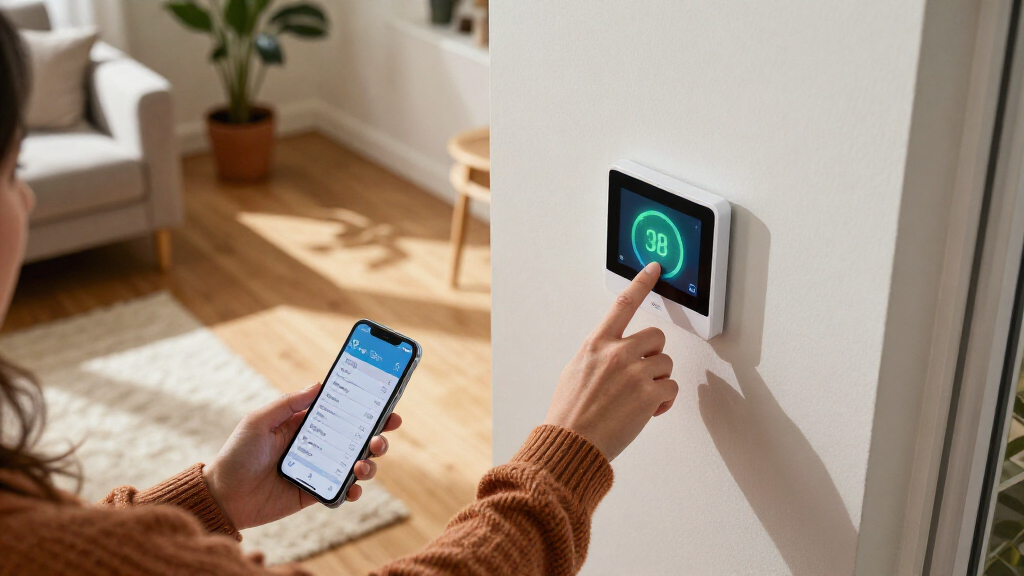
I ranked these thermostats by how directly their features can help households reduce unnecessary heating and cooling: programmable schedules, learning or automation, occupancy-aware controls where available, and support for room sensors. I also weighed day-to-day usability, compatibility requirements, installation demands, and how much the product asks buyers to add before its energy features become useful. A sensor bundle or included wiring adapter can change the practical value of a thermostat, while a C-wire requirement can make a low-friction setup less likely.
The order favors a useful balance of energy controls, accessibility, and flexibility over premium extras alone. That puts ecobee Enhanced first as a broadly capable option, with simpler choices such as Amazon and Sensi suited to buyers who prioritize straightforward scheduling. Models with stronger learning, sensor, display, or voice features rank well for specific needs, but their added complexity or system requirements narrow their audience. I treat refurbished hardware separately because condition and included accessories can vary.
Factors to Consider When Choosing Smart Thermostats With Energy Saving Features
Before choosing by brand or smart-home compatibility, I would match the thermostat to the heating and cooling system and to the way the household actually uses rooms. Energy-saving features work best when the schedule, sensors, and installation fit real routines.
Check HVAC compatibility and wiring first
Start with the exact HVAC equipment and wiring at the wall, including whether the system uses a heat pump, multiple stages, or a separate humidifier. A thermostat can have strong scheduling features and still be unsuitable for a particular system. Check the manufacturer’s compatibility information before buying, and compare it with the labels on the existing thermostat wires. A C-wire requirement matters because it supplies steady power; an included adapter may help in some installations, but it is not a universal fix. If wiring is unclear or the system is unusual, getting qualified installation advice can prevent a costly mismatch. Treat compatibility as a pass-or-fail filter before comparing app features.
Decide whether room sensors solve a real problem
A thermostat measures the temperature near its own wall, which may not reflect bedrooms, sunny rooms, or a frequently used home office. Remote sensors can help the system respond to selected rooms or occupancy patterns, depending on the model and settings. They are most useful when temperature differences are a regular problem, not simply because a bundle includes one. Before paying for sensor support, identify which rooms matter and whether the thermostat can use sensor readings on the schedule you want. Sensors also need sensible placement and occasional attention, such as battery changes. A single-zone home with even temperatures may gain more from reliable scheduling than from extra sensors.
Choose automation that matches your routine
Automatic learning can reduce the work of building a schedule, but it needs a stable picture of when people are home and comfortable. If household routines change often, a schedule you can edit directly may be easier to trust. Geofencing can help when everyone regularly leaves and returns at predictable times, though shared phones and irregular shifts can complicate it. Look at how the thermostat handles manual changes, vacations, and schedule overrides before choosing. Energy controls help only when people understand and keep using them. I would favor automation that is easy to review and correct over a feature list that sounds impressive but feels opaque.
Compare total setup and upkeep, not just the thermostat
The thermostat itself may not be the only hardware needed for the intended setup. Sensors, trim plates, wiring adapters, and any required professional installation all affect the effort involved. Check what is included in the specific bundle and whether accessories are compatible with that exact model generation. A trim plate can cover wall marks left by an older thermostat, while a wiring adapter may address certain homes without a C-wire. Sensor batteries and placement add small recurring tasks that are easy to overlook. Comparing the full installation plan helps prevent a purchase that seems simple until the box is open.
Match smart-home features to the people using them
Voice control and integrations can make routine adjustments easier, especially in a home that already relies on Alexa, Google Home, or Siri. Those features matter less if household members prefer the thermostat’s physical controls or a basic app. Check whether the controls you care about require a specific platform, account, or additional device. A built-in assistant adds convenience but also brings another interface to configure and maintain. For shared homes, consider whether everyone can adjust schedules and temperatures without relying on one person’s account. Keep the energy-saving decision centered on controls that will be used consistently.
Know when paying for premium features makes sense
A more advanced model can be worthwhile when it solves a concrete need, such as room-to-room temperature differences, automatic schedule changes, or a built-in voice assistant that replaces another device. A premium display or extra integrations alone do not guarantee lower energy use. Compare each added feature with the household’s current habits and equipment before choosing. If the main goal is a dependable weekly schedule, a simpler thermostat may cover the essentials with fewer setup decisions. If multiple rooms need attention, sensor support may justify a more capable system. Pay for the feature that changes how the home is managed, rather than for the longest feature list.
Frequently Asked Questions
Will a smart thermostat save energy if I keep the same temperature all day?
It can still help through clearer control and remote adjustments, but savings are more likely when you use schedules or other settings to avoid heating or cooling an empty home. Start with changes that do not make the home uncomfortable, such as adjusting the setpoint while everyone is away or asleep. The right schedule depends on the building, climate, and HVAC system, so there is no single setting that fits every household. Compare energy use over similar periods rather than expecting a specific reduction from the thermostat alone. The device supports better decisions; it cannot compensate for every source of heat loss or inefficient equipment.
Should I choose a thermostat that learns my schedule or one I program myself?
Learning is appealing when daily routines are predictable and you want the thermostat to adapt with less manual setup. A manually programmed schedule is often easier to inspect and adjust when work shifts, school hours, or occupancy vary. Consider how each system handles a late return or a temporary temperature change, since those moments can affect whether the automation feels dependable. Some buyers may prefer to begin with a simple schedule and add automation only after they understand their home’s patterns. The better choice is the one whose behavior you can review and correct without hassle.
Do I need room sensors to get useful energy savings?
No. A thermostat with a well-set schedule can be useful without remote sensors, especially in a home where rooms stay at similar temperatures. Sensors are more relevant when the thermostat’s location gives a poor picture of occupied rooms or when temperatures vary substantially across the house. They do not necessarily control every room independently; check how a model uses sensor readings and whether it can prioritize the rooms you care about. Also account for sensor placement and battery upkeep. If uneven temperatures are not a recurring issue, the added hardware may not change your decision.
How can I tell whether I need a C-wire before ordering?
Turn off power to the HVAC system before removing the thermostat faceplate, then inspect the wire labels and compare them with the thermostat maker’s compatibility guide. Wire colors alone are not reliable proof of function, so use the terminal labels and system documentation. Some thermostats require a C-wire, while others may support an adapter or alternative power arrangement for certain systems. If your wiring is unfamiliar, or you have a heat pump or multiple HVAC stages, seek help from a qualified installer. Confirm the exact model’s requirements before buying accessories or starting installation.
Is a refurbished smart thermostat a sensible choice for an energy-focused home?
It can be, provided the unit is compatible and the listing clearly states what condition and accessories are included. Missing trim, wiring pieces, or other parts can add setup work, and a used sensor may not be part of the package. Check the seller’s return and warranty terms, then confirm that the thermostat still supports the integrations you plan to use. Energy-saving controls depend on correct installation and configuration, so uncertain hardware condition can undercut the appeal of a lower-cost refurbished option. Buyers who want a predictable setup may prefer a new unit with clearly listed contents.
Conclusion
I recommend the ecobee Smart Thermostat Enhanced as the best overall pick for buyers who want a strong mix of scheduling and room-sensor flexibility. The Amazon Smart Thermostat is my best value choice for an Alexa household with compatible wiring, while the Google Nest Learning Thermostat Pro Edition is the best premium fit for buyers who want learning features and a sensor in the bundle. For beginners, I would compare the straightforward Sensi ST55 with the Amazon model, then let wiring and preferred smart-home controls decide. Choose the Honeywell Home X8S if room sensing is a priority, or the LEVOIT Aura 400S if its included C-wire adapter and large display suit your setup. Check HVAC compatibility first; then pick the energy features you will actually use.