When selecting the best satellite communicator for hiking, reliability and ease of use are key. The Garmin inReach Mini 2 stands out for its compact design and robust GPS features, making it ideal for serious trekkers. The ZOLEO Satellite Communicator offers seamless global messaging and emergency alerts, perfect for those who prioritize communication. Meanwhile, the Motorola Defy Satellite Link combines rugged durability with straightforward messaging for outdoor enthusiasts. All options involve tradeoffs—like cost versus functionality or size versus battery life—so continue reading to see which model suits your needs best.
Key Takeaways
- The top models balance size, battery life, and communication features differently, catering to various hiking needs.
- Rugged durability is a common thread among the best options, especially for remote or challenging environments.
- Two-way messaging and emergency SOS are critical features that distinguish high-end models from basic ones.
- Price varies significantly, with premium devices offering more advanced navigation and safety features, while budget options focus on core messaging.
- Compatibility with smartphones and ease of setup are important factors influencing overall user experience.



More Details on Our Top Picks
Garmin inReach Mini 2 Satellite Communicator, Lightweight Compact Rugged Design, Portable GPS Handheld for Hiking, Two-Way Text Messaging Device Bundle with Accessories (Flame Red)
The Garmin inReach Mini 2 stands out for its robust build, offering MIL-STD-810 durability and IPX7 water resistance, making it ideal for harsh outdoor conditions. Compared with the Garmin GPSMAP 67, it’s more compact and lightweight, perfect for minimal pack weight, though it lacks the extensive mapping features of the GPSMAP 67. Its impressive battery life of up to 14 days in 10-minute tracking mode ensures long-lasting performance on multi-day trips, while its reliable two-way messaging and interactive SOS provide peace of mind. However, its smaller size means a less detailed display, which can be a drawback for users needing detailed maps or navigation. This pick makes the most sense for hikers seeking a durable, lightweight device with reliable communication and long endurance—less suited for those needing detailed terrain maps. Pros: Rugged design, long battery life, reliable two-way messaging, compact size. Cons: Limited display size, fewer mapping features, no onboard maps.
Verdict: Ideal for hikers prioritizing durability and battery life over detailed navigation, this device is perfect for serious outdoor adventurers.
Specs:- Compatible with Vehicle Type: Tracback
- Screen Size: 1.27 Inches
- Additional Features: Bluetooth Connectivity, GPS
- Battery Average Life: 336 Hours
- Mounting Type: Handheld
- Display Type: Sunlight-Readable, Monochrome
Pros:- Rugged, impact-resistant design suitable for harsh environments
- Excellent battery life supporting multi-day excursions
- Reliable two-way messaging and interactive SOS
Cons:- Small display limits detailed map viewing
- Lacks onboard detailed mapping capabilities
- Requires active satellite subscription for full features
Best for: Backcountry hikers and adventure travelers needing a rugged, long-lasting satellite communicator with reliable SOS features.
Not ideal for: Hikers who require detailed topographical maps and onboard navigation, as this device focuses more on communication and basic navigation.
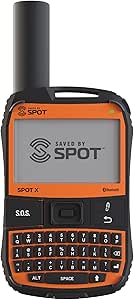
Spot X with Bluetooth 2-Way Satellite Messenger | SOS Protection | Handheld Portable 2-Way GPS Messenger for Hiking, Camping, Cars| Globalstar Satellite Network Coverage | Subscription Applicable
The Spot X excels in two-way communication with its Bluetooth connectivity, allowing users to sync with smartphones for messaging and search and rescue coordination, making it especially useful for those who want to stay connected with family or emergency services. Compared to the Garmin inReach Mini 2, it offers similar SOS and GPS features but with a slightly bulkier design and less emphasis on mapping. Its long battery life of up to 240 hours supports extended outdoor activities, and the device’s ability to send S.O.S. alerts directly to 24/7 rescue services adds a critical safety layer. However, its bulkier size and the need for an active subscription can be drawbacks for ultralight hikers. This device makes the most sense for users who want seamless phone integration and two-way messaging, especially in remote areas. Pros: Bluetooth support for phone sync, long battery life, two-way messaging, SOS alerting. Cons: Bulky design, subscription required, limited onboard mapping.
Verdict: Perfect for outdoor enthusiasts who prioritize seamless communication and safety with smartphone integration, but less suited for ultralight backpackers.
Specs:- Compatible with Vehicle Type: Outdoor activities, Remote communication
- Battery Average Life: 240 Hours
- Supported Application: Contacts, GPS
- Additional Features: Bluetooth, USB
- Dimensions: 2.9 x 0.94 x 6.54 inches
- Weight: 0.44 Pounds
Pros:- Supports Bluetooth connection with smartphones
- Long-lasting battery suitable for extended trips
- Two-way messaging and SOS features for safety
Cons:- Bulkier and heavier than compact devices like the Garmin inReach Mini 2
- Requires ongoing subscription fee
- Limited onboard mapping features
Best for: Hikers and campers who want two-way communication with their smartphone and emergency SOS in remote areas.
Not ideal for: Lightweight backpackers seeking minimal gear, as this device is bulkier and relies on subscriptions for full functionality.
Garmin inReach Mini 2, Lightweight and Compact Satellite Communicator, Hiking Handheld, Black
The Garmin inReach Mini 2 is a versatile, compact satellite communicator that offers reliable two-way messaging and interactive SOS, making it ideal for casual hikers and day-trippers. Unlike the GPSMAP 67, which is geared toward serious explorers, the Mini 2 prioritizes portability without sacrificing core safety features. Its battery life of up to 14 days and ability to connect with Garmin Explore app for trip planning make it a flexible choice for everyday outdoor activities. While it doesn’t have the extensive mapping of the GPSMAP 67, it pairs well with smartphone apps for navigation. Its small size and lightweight design make it perfect for minimalist hikers, but it has a smaller screen and fewer onboard features. Overall, this device suits those who want a reliable, portable satellite communicator for regular outdoor adventures. Pros: Small, lightweight design, long battery life, reliable two-way messaging, easy app integration. Cons: Limited onboard maps, smaller display, no advanced navigation features.
Verdict: An excellent choice for casual hikers and day-trippers looking for a portable, reliable satellite communication device.
Specs:- Compatible with Vehicle Type: Tracback
- Screen Size: 1.27 Inches
- Additional Features: Bluetooth, GPS
- Battery Average Life: 336 Hours
- Mounting Type: Handheld
- Display Type: Sunlight-Readable, Monochrome
Pros:- Small, lightweight, and portable
- Long battery life supports multi-day trips
- Reliable two-way messaging and SOS capabilities
- Easy to pair with Garmin Explore app
Cons:- Limited onboard mapping; relies on app for detailed navigation
- Smaller display limits map detail
- Subscription required for active satellite service
Best for: Lightweight hikers and outdoor enthusiasts wanting a portable device for basic communication and safety.
Not ideal for: Hikers needing detailed maps or advanced navigation features, as the Mini 2 focuses on core safety functions and portability.
Bottom line: Best suited for casual hikers and day adventures who prioritize portability and basic safety features over detailed maps.
Garmin GPSMAP 67i Rugged GPS Handheld with inReach® Satellite Technology, Two-Way Messaging, Interactive SOS, Mapping
The Garmin GPSMAP 67i combines extensive mapping, rugged durability, and satellite communication, making it ideal for serious outdoor enthusiasts. It features a large 3” sunlight-readable color display that simplifies navigation, even in bright conditions, and preloaded TopoActive maps with the ability to add premium content. Its multi-band GNSS supports accurate positioning in challenging environments like dense forests and remote terrains. The device’s long battery life of up to 165 hours in 10-minute tracking mode ensures it can handle multi-day expeditions, and its comprehensive tools—including altimeter, barometer, and compass—are invaluable for advanced navigation. Compared to smaller devices like the inReach Mini 2, it offers a richer display and more detailed maps but at the cost of increased size and weight. This device is best for serious hikers, trail runners, and explorers who need detailed maps, ruggedness, and reliable communication. Pros: Large color display, detailed mapping, multi-band GNSS, durable construction. Cons: Heavier and bulkier, higher price point, requires active subscription for satellite features.
Verdict: Perfect for explorers who need detailed maps, rugged durability, and comprehensive navigation in remote environments, but it’s less suitable for ultralight backpackers.
Specs:- Compatible with Vehicle Type: Car, Motorcycle
- Screen Size: 3 Inches
- Additional Features: Bluetooth, USB, Mapping, SOS
- Battery Average Life: 165 Hours
- Mounting Type: Handheld
- Display Type: Transflective Color TFT
Pros:- Large, sunlight-readable color display
- Supports detailed topographical maps and imagery
- Rugged, impact-resistant design
- Multi-band GNSS for precise positioning
Cons:- Heavier and bulkier than smaller devices like the Mini 2
- Higher cost with premium features
- Requires subscription for full satellite capabilities
Best for: Serious hikers, trail runners, and outdoor explorers who require advanced maps and rugged durability.
Not ideal for: Ultralight hikers or casual users who prioritize minimal gear and basic safety functions without detailed mapping.
Bottom line: Best for those who need a rugged, feature-rich device with detailed maps and advanced navigation in remote terrain.
Garmin inReach Mini 2, Lightweight and Compact Satellite Communicator, Hiking Handheld, Orange – 010-02602-00
The Garmin inReach Mini 2 earns its place as the best overall for hikers who need dependable, global communication in a compact form. Compared to the ZOLEO device, it offers more advanced navigation features like a digital compass and seamless trip planning via the Garmin Explore app, which can be vital on complex terrains. While its battery life extends up to 14 days in tracking mode, it does require an active satellite subscription, adding ongoing costs. The device’s rugged, water-resistant design ensures durability in harsh conditions, but its reliance on subscription plans makes it less appealing for casual users. Its size and weight are minimal, perfect for lightweight hikers. However, its digital compass can be less intuitive for beginners, and the high initial price might deter budget-conscious adventurers. This pick is best for serious hikers seeking a reliable, feature-rich device that integrates with other Garmin gear.
Pros:- Compact and lightweight, easy to carry on long hikes
- Up to 14 days of battery life in tracking mode
- Includes advanced navigation features like a digital compass and trip planning via Garmin Explore
Cons:- Requires an active satellite subscription, adding ongoing costs
- Higher initial purchase price compared to basic models
- Digital compass may be less intuitive for beginners
Best for: Experienced hikers and outdoor enthusiasts who want a durable, feature-packed device for extensive trips.
Not ideal for: Casual walkers or occasional campers who prefer simpler, lower-cost solutions without subscription fees.
- Compatible with Vehicle Type:Car, Motorcycle, Truck
- Screen Size:1.27 Inches
- Water Resistant:Yes
- Battery Life:Up to 336 hours
- Connectivity:Bluetooth, USB
- Supported Satellite Navigation System:GPS, Galileo, QZSS
- Operating System Compatibility:Windows
- Display Type:Sunlight-Readable, Monochrome, Transflective
- Measurement (L x W x H):2.04″ x 1.03″ x 3.9″
Bottom line: Ideal for experienced outdoor users needing dependable, feature-rich satellite communication and navigation.
Motorola Defy Satellite Link – Rugged Handheld GPS Communicator, Two-Way Global SMS Text Messenger, Emergency SOS Alerting – Android iOS Compatible
The Motorola Defy Satellite Link stands out for its rugged durability and ease of use, making it perfect for off-grid adventures like mountain hikes or coastal camping where cell service is nonexistent. Unlike the Garmin inReach Mini 2, it emphasizes straightforward satellite messaging and SOS functions, with a simple check-in button that sends your coordinates or messages quickly. Its compatibility with both Android and iOS devices ensures broad accessibility, but the monthly service fee of $19.99 could be a turnoff for occasional users. The device’s tough construction withstands harsh conditions, yet its limited navigation capabilities mean it’s less suited for complex route planning. Its reliance on a service plan means ongoing costs, and the device’s bulkier profile compared to mini units might be less comfortable for lightweight hikers. This device is best for users who prioritize ruggedness and simple emergency features over advanced navigation.
Pros:- Rugged, water-resistant design for tough outdoor conditions
- Simple one-button check-in and SOS for quick emergency alerts
- Compatible with both Android and iOS smartphones
Cons:- Monthly fee of $19.99 for service plans, increasing ongoing costs
- Less advanced navigation and mapping features
- Bulkier than compact mini devices, may be less comfortable for lightweight hiking
Best for: Off-grid campers, mountain hikers, and bikers needing robust emergency communication with minimal fuss.
Not ideal for: Urban explorers or light hikers who prefer smaller devices with more advanced navigation features.
- Compatible with Vehicle Type:Not specified
- Screen Size:Not specified
- Water Resistant:Yes
- Battery Life:Not specified
- Connectivity:Satellite, Bluetooth
- Supported Satellite Navigation System:Not specified
- Operating System Compatibility:Android, iOS
- Measurement (L x W x H):Not specified
Bottom line: Great for rugged, off-grid adventures where durability and straightforward emergency communication are top priorities.
ZOLEO Satellite Communicator – Two-Way Global SMS Text Messenger & Email, Emergency SOS Alerting, Check-in & GPS Location – Android iOS Smartphone Accessory (Renewed)
The ZOLEO Satellite Communicator offers a compelling balance of affordability and extended battery life, making it ideal for casual or infrequent adventurers. With over 200 hours of battery life, this device can last through multiple days of remote camping or biking trips without frequent recharging, unlike the Garmin inReach Mini 2, which may need more regular charging. Its ability to transmit texts and emails over Iridium satellite networks via your smartphone provides versatile communication options, including weather forecasts and long messages. The device’s rugged IP68-rated enclosure makes it durable enough for tough conditions, yet its reliance on a subscription plan and somewhat simpler interface means it might lack advanced navigation features. Also, as a renewed model, some buyers might question long-term reliability. This is best for those seeking low-cost, long-lasting satellite messaging with essential SOS features.
Pros:- Over 200 hours of battery life for long trips
- Affordable monthly service plans starting around $20
- Supports email, SMS, and GPS location sharing
Cons:- Limited advanced navigation features compared to Garmin devices
- Refurbished model may raise concerns about durability
- Requires a subscription plan for satellite service
Best for: Budget-conscious hikers and campers who need reliable messaging and SOS with extended battery life.
Not ideal for: Advanced navigation users or those requiring detailed mapping features in their device.
- Compatible Devices:Android, iOS
- Battery Capacity:2000 Milliamp Hours
- Additional Features:2-way messaging, SOS, check-in, GPS
- Battery Life:Over 200 hours
- Enclosure Material:Plastic, Metal
- Support:Weather forecasts, long messages
- Rating:4.3 out of 5 stars
Bottom line: Best suited for casual outdoor users who prioritize long-lasting battery life and cost-effective messaging over complex navigation.
How We Picked
The products in this roundup were evaluated based on their reliability, ease of use, battery life, durability, and communication capabilities. We prioritized devices that are specifically designed for outdoor hiking, ensuring they perform well in remote areas with limited connectivity. Value was also a key factor—balancing price against features—along with user-friendly interfaces and ruggedness. Devices that offer two-way messaging, emergency SOS, and GPS accuracy scored higher, as these are vital for safety and navigation during hikes. Our rankings reflect a combination of these criteria to help hikers choose the best fit for their adventures.Factors to Consider When Choosing Best Satellite Communicator For Hiking
Choosing the best satellite communicator for hiking involves considering several important factors beyond just features. The right device depends on your hiking style, environment, and safety priorities. Here are some key considerations to help you make an informed decision and avoid common pitfalls.Coverage and Satellite Network
Not all satellite networks offer the same coverage, especially in remote wilderness areas. Devices using Iridium or Globalstar networks provide global coverage, but some regions may have limited service. Confirm the network compatibility to ensure your device works where you hike most often. Investing in a device with reliable coverage is crucial for safety, especially if you frequently hike in remote locations.
Battery Life and Power Management
Battery life varies widely among satellite communicators. Longer hikes demand devices with extended battery life, or at least the ability to easily swap batteries or recharge via USB. Be wary of models that drain power quickly, as this can leave you without communication in critical moments. Consider devices with power-saving modes or solar charging options for extended trips.
Size, Weight, and Durability
Lightweight, compact devices are more comfortable for long hikes, but they may sacrifice some features or battery capacity. Durability is equally important—look for rugged IP-rated devices that withstand water, dust, and drops. Balancing portability with toughness ensures your device won’t fail when you need it most.
Ease of Use and Interface
An intuitive interface can make a big difference, especially in emergency situations. Devices with simple menus, clear displays, and straightforward setup will serve you better. Compatibility with smartphones via apps can also streamline operation, but ensure the app is reliable and easy to navigate under stress.
Cost and Subscription Fees
While some satellite communicators come with upfront costs similar to smartphones, many require ongoing subscription plans for satellite service. These fees can add up over time, so consider your budget and the expected frequency of use. Sometimes, paying more initially for a device with lower ongoing costs can be more economical long-term.
Frequently Asked Questions
Can I use a satellite communicator without a phone?
Many satellite communicators offer standalone operation, meaning you can send messages and activate emergency features without a smartphone. However, some models rely heavily on companion apps for setup and messaging, so check whether the device can function independently. For frequent or emergency use, choosing a device with a dedicated screen and user interface often makes things simpler.
What is the best satellite communicator for long-distance hikes?
For extended trips, look for a device with excellent battery life and reliable satellite coverage. The Garmin GPSMAP 67i, for example, offers mapping, two-way messaging, and a rugged build that’s well-suited for long-distance adventures. Devices with solar charging options can also extend operational time, reducing the need for frequent recharging in remote areas.
Is two-way messaging worth the extra cost?
Absolutely. Two-way messaging allows you to communicate with loved ones or emergency services directly, which can be life-saving in remote locations. It also provides peace of mind, enabling you to check in or request help without relying solely on emergency alerts. While it adds to the subscription or device cost, the safety benefits often justify the expense.
How important is durability in a satellite communicator?
Durability is critical because hiking often involves exposure to water, dust, and rough handling. Devices with rugged, waterproof, and dustproof ratings perform better over time and in adverse conditions. Investing in a tough device can prevent failures when you are miles from help, making durability a priority for serious hikers.
Are there affordable options for casual hikers?
Yes, there are budget-friendly satellite communicators that cover basic messaging and emergency functions. These often have simpler interfaces and shorter battery life but can be sufficient for infrequent or short hikes. Be aware that cheaper models may lack some features like mapping or extended coverage, so assess your specific needs before choosing a more affordable device.
Conclusion
For the most demanding hikers or those venturing into remote wilderness regularly, the Garmin inReach Mini 2 offers a balanced mix of size, durability, and safety features, making it the best overall choice. If you want the best value, the ZOLEO Satellite Communicator provides reliable global messaging at a lower cost, especially for casual users. For those new to satellite communication, the Motorola Defy Satellite Link combines ruggedness with simplicity, perfect for beginners. Budget hikers might consider basic models with essential features, but prioritizing safety features like SOS and two-way messaging remains essential regardless of price. Tailor your pick to your hiking style, environment, and safety priorities to get the most out of your satellite communicator in 2026.