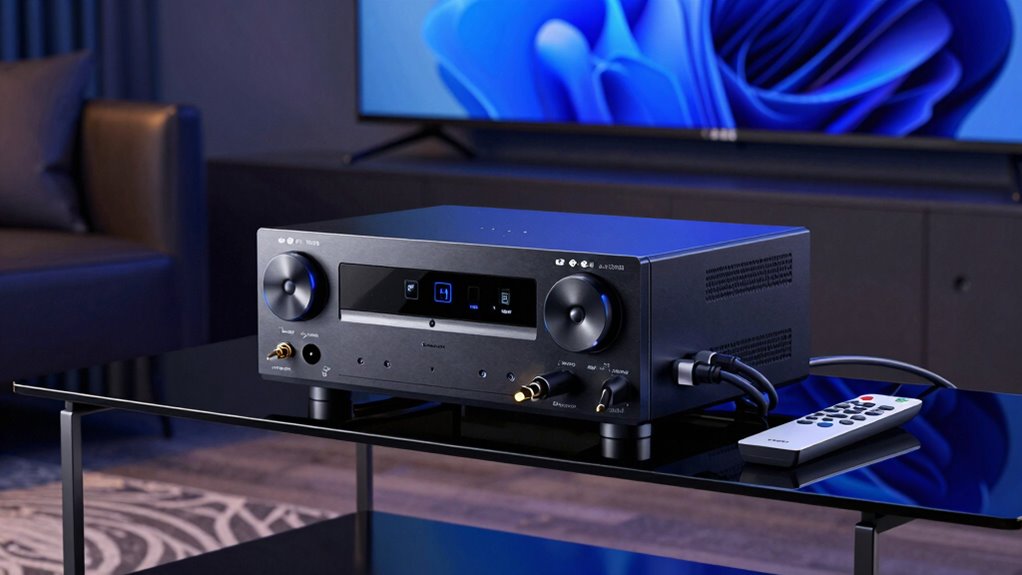

Starting with a budget AV receiver doesn’t mean sacrificing quality. The Yamaha RX-V385 stands out as the best overall choice, offering reliable 4K support and Bluetooth at an affordable price. For those prioritizing multi-room audio, the Yamaha RX-V6A provides extra channels and MusicCast features. If simplicity and compact design matter most, the Sony STRDH190 offers straightforward stereo sound with essential features. The main tradeoffs involve balancing features against ease of use and future expandability. Continue reading for a detailed breakdown of each option and what suits different needs best.
Get ready for Prime Big Deal Days — try Prime free
Exclusive member deals on October 6–7, plus fast free delivery. Cancel anytime.
Start your free trialAs an affiliate, we earn on qualifying purchases.
Key Takeaways
- The best overall pick, Yamaha RX-V385, balances performance and price with reliable 4K support and Bluetooth streaming.
- Higher channel count and multi-room features, like on Yamaha RX-V6A, are worth considering if you plan to expand your setup.
- Compatibility with streaming services and smart home integration varies; not all budget receivers support the latest standards.
- Compact and simplified models, like Sony STRDH190, excel for basic stereo setups but lack surround sound features.
- Price differences often reflect channel count, HDMI inputs, and future expandability, so consider your long-term needs.
| Yamaha RX-V385 5.1-Channel 4K Ultra HD AV Receiver with Bluetooth |  | Best for Beginners Seeking Solid Video and Audio Support | Channels: 5.1 | Video Support: 4K Ultra HD, HDR10, Dolby Vision, Hybrid Log-Gamma, BT.2020 | Connectivity: HDMI 2.1 with HDCP 2.2, Bluetooth | VIEW ON AMAZON | See Our Full Breakdown |
| Denon AVR-S570BT AV Receiver 5.2 Channel 8K Ultra HD Audio & Video, Bluetooth Streaming, 4 HDMI 8K Inputs | 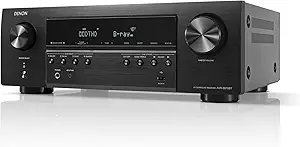 | Best for 8K Support and Easy Setup on a Budget | Channels: 5.2 | HDMI Inputs: 4 | HDMI Output: 1 | VIEW ON AMAZON | See Our Full Breakdown |
| Yamaha R-S202BL Stereo Receiver |  | Best for Simple Stereo Audio with Power | Output Power: 85 Watts per channel | Connectivity Technology: Bluetooth 4.1 + EDR | Supported Internet Services: Streaming music services | VIEW ON AMAZON | See Our Full Breakdown |
| Yamaha R-S202 Stereo Receiver with Bluetooth – Black (Renewed) |  | Best for Power and Versatility in a Budget | Power Output: 100W per channel at 8 ohms | Bluetooth: Yes | FM/AM Presets: 40 | VIEW ON AMAZON | See Our Full Breakdown |
| Yamaha RX-V6A 7.2-Channel AV Receiver with MusicCast |  | Best for Future-Proofing and Advanced Home Theater | Connectivity Technology: Yes (SBC / AAC) | Controller Type: Apple HomeKit | Built-in Bluetooth: Yes | VIEW ON AMAZON | See Our Full Breakdown |
| Yamaha RX300A 5.2-Channel Home Theater AV Receiver with Dolby Atmos, 4K120/8K HDMI, Bluetooth Multipoint |  | Best Overall for V Reciever Compatibility | Channels: 5.2 | Power: 70W per channel | HDMI Support: 4K120/8K HDMI, HDMI eARC/ARC | VIEW ON AMAZON | See Our Full Breakdown |
| Sony STRDH590 5.2 Channel Surround Sound Home Theater Receiver |  | Best for Budget-Conscious Beginners Focused on Video Quality | Channel Configuration: 5.2 | Power Output: 725W | Supported Video: 4K HDR, HDCP 2.2 | VIEW ON AMAZON | See Our Full Breakdown |
| Sony STRDH190 2-Ch Home Stereo Receiver with Phono Inputs & Bluetooth |  | Best for Music Lovers Preferring Simplicity and Turntable Compatibility | Power Output: 100 watts x 2 | Features: Bluetooth, Phono input, FM radio | Dimensions: 5 ¼ inches tall | VIEW ON AMAZON | See Our Full Breakdown |
| Yamaha RX-V4A 5.2-Channel AV Receiver with MusicCast |  | Best for Future-Ready Streaming and Voice Control | Connectivity Technology: Wi-Fi, Bluetooth, Airplay2 | Number of HDMI Ports: 5 | Output Power: 80 Watts | VIEW ON AMAZON | See Our Full Breakdown |
More Details on Our Top Picks
Yamaha RX-V385 5.1-Channel 4K Ultra HD AV Receiver with Bluetooth
The Yamaha RX-V385 stands out for its support of 4K Ultra HD, HDR10, and Dolby Vision, making it suitable for newcomers wanting high-quality visuals without complex setup. Unlike the Yamaha R-S202BL, which focuses solely on stereo audio, the RX-V385 supports surround sound with 5.1 channels, expanding the home theater experience. Its YPAO auto-calibration helps optimize sound for different room acoustics, but the receiver’s interface might still challenge first-timers due to limited detailed specs and potential setup complexity. While it offers Bluetooth for wireless music, it lacks the extensive HDMI ports or advanced features of the RX-V6A, making it a more straightforward choice for entry-level users.
Pros:- Supports 4K Ultra HD and HDR formats for high-quality video
- Bluetooth connectivity for wireless streaming
- Auto-calibration with YPAO for easy sound optimization
Cons:- Limited detailed specs in the description can hinder setup
- No advanced HDMI ports or gaming-specific features
Best for: Beginners who want a balanced AV receiver capable of supporting basic surround sound and 4K video with minimal fuss
Not ideal for: Advanced users or gamers needing multiple HDMI 2.1 inputs or high refresh rate features for fast-paced gaming
- Channels:5.1
- Video Support:4K Ultra HD, HDR10, Dolby Vision, Hybrid Log-Gamma, BT.2020
- Connectivity:HDMI 2.1 with HDCP 2.2, Bluetooth
- Audio Features:Audio Delay (0-500 ms), YPAO auto-calibration
Our verdict“This receiver is ideal for beginners wanting reliable 4K support and simple auto-calibration without overwhelming features.”
Denon AVR-S570BT AV Receiver 5.2 Channel 8K Ultra HD Audio & Video, Bluetooth Streaming, 4 HDMI 8K Inputs
The Denon AVR-S570BT is a compelling option for those stepping into higher-resolution content, supporting 8K Ultra HD and multiple HDMI 8K inputs. Compared to the Yamaha RX-V385, which is more straightforward, the Denon offers a more modern, feature-rich experience, especially for users wanting future-proofing with 8K compatibility. Its on-screen setup simplifies installation, but the 70W per channel power might fall short in larger rooms or for those seeking loud volumes. This receiver is perfect for beginners who plan to upgrade their display and want a simple, reliable way to get 8K content flowing without complex controls.
Pros:- Supports 8K Ultra HD with multiple HDMI 8K inputs
- Built-in Bluetooth for wireless streaming
- Easy on-screen setup for quick installation
Cons:- Limited to 70W per channel, possibly insufficient for large spaces
- Requires additional speakers for full surround sound
Best for: Beginners eager to future-proof their setup with 8K support and straightforward setup features
Not ideal for: Large room users needing high power output or audio enthusiasts requiring more advanced surround sound options
- Channels:5.2
- HDMI Inputs:4
- HDMI Output:1
- 8K Support:Yes
- Power:70W x 5
- Supports:HDR, HLG, Dolby Vision, HDR10+, VRR, QFT
Our verdict“This model suits beginners wanting 8K support with easy setup and reliable basic features without overspending.”
Yamaha R-S202BL Stereo Receiver
The Yamaha R-S202BL provides solid stereo output with 85 Watts per channel, ideal for those who want a straightforward setup without surround sound complexity. Unlike the AV receivers, such as the RX-V385 or Denon AVR-S570BT, it lacks multi-channel support, making it better suited for music lovers or small spaces. Bluetooth streaming adds convenience, but the absence of Wi-Fi or multi-room features limits versatility. This receiver is best for users who prioritize quality stereo sound and ease of use over multi-channel home theater features. Its simple interface and classic design make it accessible, but it won’t handle surround sound or high-end video features.
Pros:- Powerful 85 Watts per channel output
- Bluetooth streaming for wireless music
- Simple, sleek design with brushed aluminum finish
Cons:- Limited to stereo sound, no surround capabilities
- No Wi-Fi or internet streaming support
Best for: Music enthusiasts seeking powerful stereo sound in a compact, easy-to-use package
Not ideal for: Home theater enthusiasts or gamers needing surround sound or multiple HDMI inputs
- Output Power:85 Watts per channel
- Connectivity Technology:Bluetooth 4.1 + EDR
- Supported Internet Services:Streaming music services
- Color:Black
- Controller Type:Remote Control
- Speaker Selector:Yes, for 2 systems
Our verdict“This stereo receiver is perfect for those who want strong audio for music in a simple setup, not for surround sound or multi-room setups.”
Yamaha R-S202 Stereo Receiver with Bluetooth – Black (Renewed)
The Yamaha R-S202, even in its renewed form, offers a robust 100W per channel, making it suitable for larger rooms or those needing more volume. It shares many features with the non-renewed R-S202BL but emphasizes higher power output. Compared to the Yamaha RX-V385, which balances video and audio, this model focuses solely on stereo sound, making it less complex but also less versatile for home theater setups. Its multiple input options, including RCA, provide plenty of connectivity, but as a renewed product, its condition varies, and it lacks surround sound features. It’s a solid choice for users prioritizing power and simplicity over surround sound or modern smart features.
Pros:- Powerful 100W per channel output
- Bluetooth connectivity for wireless streaming
- Multiple input options for versatility
Cons:- Refurbished condition may vary in reliability
- Limited to stereo sound, no surround features
Best for: Users seeking high-power stereo audio in a budget-friendly, straightforward package, especially in larger spaces
Not ideal for: Those wanting surround sound or multi-channel home theater features
- Power Output:100W per channel at 8 ohms
- Bluetooth:Yes
- FM/AM Presets:40
- Inputs:4 x RCA-In
- Output:RCA-Out
- Headphone Jack:1/4”
Our verdict“This receiver suits budget-conscious users who need powerful stereo audio without surround sound complexity.”
Yamaha RX-V6A 7.2-Channel AV Receiver with MusicCast
The Yamaha RX-V6A offers a significant step up with 7.2 channels, Dolby Atmos, and DTS:X, making it suitable for users wanting immersive surround sound. Its 8 HDMI ports with 4K and 8K support rival more expensive models, and built-in Wi-Fi, Bluetooth, AirPlay 2, and MusicCast provide flexible streaming options. Compared to the more basic RX-V385, the RX-V6A is much more feature-rich, but its setup can be overwhelming for beginners due to the multitude of options and settings. It’s best for users who want a future-proof system with smart home compatibility and advanced audio formats, but those new to AV receivers might find it too complex and costly.
Pros:- Supports 8 HDMI ports with 4K and 8K video support
- Built-in Wi-Fi, Bluetooth, and AirPlay 2 for versatile streaming
- Dolby Atmos and DTS:X for immersive sound
Cons:- Setup can be complex for beginners due to many features
- Price range not specified, potentially higher for entry-level budgets
Best for: Beginners with some experience who want a fully featured, future-ready home theater system with multi-room streaming
Not ideal for: Complete novices seeking a simple plug-and-play solution or those on a tight budget
- Connectivity Technology:Yes (SBC / AAC)
- Controller Type:Apple HomeKit
- Built-in Bluetooth:Yes
- Total Number of HDMI Ports:8
- HDMI Connector Type:HDMI, RCA
- Audio Encoding:DTS, H.264, H.265/HEVC
- Output Power:100 Watts
- Number of Channels:7
Our verdict“This receiver suits beginners ready to invest in a comprehensive, smart home-compatible home theater system with immersive audio features.”
Yamaha RX300A 5.2-Channel Home Theater AV Receiver with Dolby Atmos, 4K120/8K HDMI, Bluetooth Multipoint
The Yamaha RX300A stands out for its support of Dolby Atmos and DTS Virtual:X, making it a solid choice for those seeking immersive sound without the complexity of higher-end models like the Yamaha RX-V6A. It offers high-quality video support through 4K and 8K HDMI compatibility, which is essential for future-proofing a home theater setup. Its room calibration and Bluetooth Multipoint make setup and wireless streaming straightforward, but the array of features might feel overwhelming for absolute beginners. Compared to the Sony STRDH590, it provides more advanced audio formats, but lacks built-in Wi-Fi, limiting streaming flexibility. This model is well-suited for users who want immersive audio and HDMI support but aren’t concerned with expanding to more channels or built-in streaming. Its 5.2 channels, 70W per channel, and multiple HDMI inputs make it a versatile yet manageable choice for small to medium rooms.
Pros:- Supports Dolby Atmos and DTS Virtual:X for immersive sound
- High-quality 4K and 8K HDMI compatibility
- Room calibration simplifies setup
- Wireless streaming via Bluetooth Multipoint
Cons:- Complex features may be overwhelming for newcomers
- Limited to 5.2 channels, not a 7.1 or higher system
- No built-in Wi-Fi for streaming
Best for: Beginners who want immersive sound with Dolby Atmos and are comfortable with a slightly complex setup for future expandability
Not ideal for: Casual users seeking simple plug-and-play solutions or built-in Wi-Fi for seamless streaming
- Channels:5.2
- Power:70W per channel
- HDMI Support:4K120/8K HDMI, HDMI eARC/ARC
- Dolby Atmos:Yes
- Bluetooth:Multipoint
- Room Correction:Yes
Our verdict“Ideal for beginners who want an immersive audio experience with future-proof video support, despite the complexity.”
Sony STRDH590 5.2 Channel Surround Sound Home Theater Receiver
The Sony STRDH590 offers reliable 4K HDR support and virtual surround sound through S Force PRO, making it a good choice for those prioritizing high-quality video and straightforward setup. Its 4 HDMI inputs and Bluetooth streaming are familiar features at a budget price, but it doesn’t include Wi-Fi or advanced multi-channel options like Dolby Atmos, which limits future expandability. When compared with the Yamaha RX300A, it lacks Atmos support but benefits from a simpler interface that might appeal to first-time users. This receiver works well for small living rooms where high-resolution video matters, but it’s less suited for those wanting multi-channel surround sound beyond 5.2. Its 725W power output may be misleading, as it’s not per channel, which can confuse buyers about actual volume capacity.
Pros:- Supports 4K HDR and HDCP 2.2 for high-quality video
- Virtual surround sound with S Force PRO
- Multiple HDMI inputs and Bluetooth connectivity
Cons:- Limited to 5.2 channels, no Atmos support
- No built-in Wi-Fi for streaming services
- Power rating may be misleading for actual volume capacity
Best for: Beginners on a tight budget who want 4K HDR support and virtual surround for movies and TV
Not ideal for: Users seeking Dolby Atmos or multi-room audio features, as this model focuses on basic surround sound
- Channel Configuration:5.2
- Power Output:725W
- Supported Video:4K HDR, HDCP 2.2
- Connectivity:Bluetooth, HDMI
- HDMI Ports:4 in / 1 out
- Supported Audio:High-Resolution, Dolby, DTS
Our verdict“A straightforward, budget-friendly choice for beginners who prioritize 4K video and virtual surround sound without extra features.”
Sony STRDH190 2-Ch Home Stereo Receiver with Phono Inputs & Bluetooth
The Sony STRDH190 is a compact, 2-channel receiver that excels in delivering high-resolution stereo sound, especially for music enthusiasts who still enjoy vinyl. Its built-in phono input makes it a rare find at this price, and Bluetooth streaming adds convenience. Compared with multi-channel options like Yamaha RX300A or Yamaha RX-V4A, it’s limited to stereo sound, which might disappoint those looking for surround sound. Its 100W per channel output is suitable for small to medium rooms, but it doesn’t support surround formats or HDMI video, making it unsuitable for home theater use. The basic display and controls are straightforward, but the lack of multi-channel support limits its versatility.
Pros:- Bluetooth streaming for easy music playback
- Built-in phono input for turntables
- Compact, simple design fits small spaces
- High-resolution audio support
Cons:- Limited to 2 channels, no surround sound
- Power output may be insufficient for larger rooms
- Basic controls and display lack advanced features
Best for: Music lovers who want high-quality stereo sound with turntable compatibility in a compact form
Not ideal for: Home theater newcomers seeking surround sound or multiple HDMI inputs for movies
- Power Output:100 watts x 2
- Features:Bluetooth, Phono input, FM radio
- Dimensions:5 ¼ inches tall
- Speaker Impedance:6–16 ohms
- Connectivity:Bluetooth, RCA, Phono
- Power Requirement:AC 120 V 60 Hz
Our verdict“A perfect stereo receiver for music aficionados wanting high-quality sound and turntable support, but not suitable for surround sound setups.”
Yamaha RX-V4A 5.2-Channel AV Receiver with MusicCast
The Yamaha RX-V4A makes a compelling case for beginners interested in streaming and smart home integration. Its support for 4K and 8K HDMI pass-through, along with Wi-Fi, Bluetooth, and AirPlay 2, offers extensive streaming options, surpassing models like the Sony STRDH590 in convenience. It also includes YPAO room calibration, which helps optimize sound in space, and voice control compatibility with Alexa. However, its complex setup, with many features, might be daunting for those new to AV receivers. Unlike more straightforward models, it lacks a display on the unit itself, which could be inconvenient. The price isn’t specified here, but this model typically falls on the higher end of the beginner budget range, requiring buyers to consider whether the extra features justify the cost.
Pros:- Supports 4K and 8K HDMI pass-through for high-quality video
- Wi-Fi, Bluetooth, and AirPlay 2 streaming capabilities
- YPAO room calibration for optimized sound
- Voice control compatibility
Cons:- Setup may be complex for newcomers
- No built-in display on the receiver
- Potentially higher price point for beginners
Best for: Beginners seeking a future-proof, smart home-compatible AV receiver with extensive streaming options
Not ideal for: Those who prefer simple, plug-and-play solutions without the hassle of setup or smart features
- Connectivity Technology:Wi-Fi, Bluetooth, Airplay2
- Number of HDMI Ports:5
- Output Power:80 Watts
- Number of Channels:5
- Supported Internet Services:Spotify, Pandora, TIDAL, others
- Smart Home Compatibility:Amazon Alexa
Our verdict“An excellent choice for beginners wanting a versatile, future-ready AV receiver with smart features, despite a more involved setup process.”
How We Picked
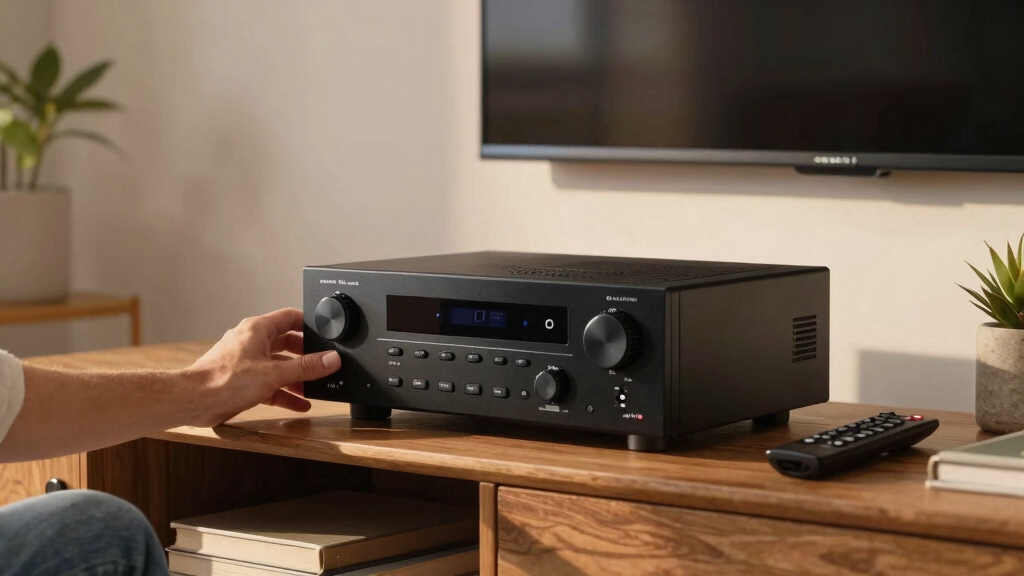
I evaluated these AV receivers based on a combination of performance, ease of use, build quality, and value for beginners on a budget. Priority was given to models that support 4K or 8K video, Bluetooth streaming, and simple setup, ensuring they meet current home entertainment standards. I also considered user reviews and industry reputation to ensure reliability and longevity. Products were ranked according to how well they balance core features with affordability for those new to home theater systems, favoring options that provide room for future upgrades without overwhelming first-time buyers.Factors to Consider When Choosing Budget Av Receiver For Beginners
Choosing a budget AV receiver for beginners involves balancing essential features with simplicity and future expandability. It’s important to avoid overpaying for unnecessary extras while not sacrificing core capabilities like 4K support or Bluetooth. Understanding key factors can help you make a smart purchase that fits your current needs without limiting your options later. This section highlights the most important considerations to keep in mind.Channel Count and Surround Sound
For a basic home theater experience, a 5.1-channel receiver typically suffices, offering surround sound with five speakers and one subwoofer. If you plan to upgrade later or want more immersive audio, a 7.2-channel model like the Yamaha RX-V6A provides extra channels and Dolby Atmos support. Be mindful that more channels usually mean a higher price, but they also extend your system’s capabilities for future expansion.
HDMI Inputs and Video Support
Most budget receivers now support 4K, with some offering 8K compatibility. Look for models with enough HDMI inputs for your devices—game consoles, streaming boxes, Blu-ray players—without needing additional switches. Features like HDCP 2.2 and HDR support are critical for compatibility with modern content. Remember, more HDMI inputs generally come with a higher price, so prioritize your current device needs.
Connectivity and Streaming Capabilities
Bluetooth is common on budget models, allowing quick wireless music streaming. Some receivers also include Wi-Fi and support for streaming platforms or multi-room audio via MusicCast or similar. Check whether the model supports your preferred apps and whether it’s compatible with your smart home ecosystem. Wireless features add convenience but can complicate setup for absolute beginners.
Ease of Use and Setup
Beginners benefit from receivers with simple on-screen setup and clear instructions. Look for models with auto-calibration features like Yamaha’s YPAO, which optimize speaker settings automatically. Avoid overly complex interfaces or models with a steep learning curve, as these can frustrate new users. Ease of use should be a priority to ensure your home theater setup is enjoyable rather than a chore.
Build Quality and Reliability
Even at a budget level, choose a receiver from a reputable brand known for durability and customer support, like Yamaha or Sony. Cheaper models may cut corners on build materials, leading to quicker wear or performance issues. Reading user reviews can reveal common pitfalls and help you avoid unreliable options, ensuring your investment lasts for years to come.
Frequently Asked Questions
Can I connect a budget AV receiver to my existing speakers?
Most budget AV receivers are designed to connect to standard speaker wiring, making compatibility straightforward for common speaker types. However, check the receiver’s power output and impedance specifications to ensure they match your speakers. If your speakers are specialized or high-end, verify that the receiver can handle their requirements before purchasing. For typical home setups, most budget models will integrate easily with standard bookshelf or floor-standing speakers.
Is it worth spending more on a budget receiver with more HDMI inputs?
Yes, if you have multiple devices like gaming consoles, streaming boxes, and Blu-ray players, more HDMI inputs can save you from buying additional switches or adapters later. Spending a bit extra now can provide flexibility and reduce clutter, especially if you plan to expand your setup. However, if you only connect a few devices, a model with fewer inputs may still meet your needs without forking out extra cash.
Do budget AV receivers support Dolby Atmos or DTS:X?
Many budget receivers now include basic Dolby Atmos or DTS:X support, especially those with 5.2 or higher channels like the Yamaha RX-V6A. These formats add height effects for more immersive sound, but the experience depends on compatible speakers and setup. If Atmos or DTS:X is a priority, ensure the model explicitly supports these formats and that you’re willing to invest in the necessary speakers later.
Can I upgrade my speaker system later with a budget receiver?
Absolutely. Most budget AV receivers are designed with expandability in mind, supporting additional speakers, subwoofers, or advanced audio formats over time. Just check the number of channels and outputs to make sure your future upgrades are compatible. Starting with a modest system and upgrading gradually is a common and practical approach for beginners.
Should I prioritize 8K support in a budget receiver?
While 8K support is appealing, it may not be necessary for most beginners on a tight budget, especially if your current devices and content are still primarily 4K. Focusing on reliable 4K support, and future-proofing with sufficient HDMI inputs and good audio quality, will often be a smarter choice. If 8K content becomes widespread soon, you can consider an upgrade later, but for now, 4K compatibility remains most important.
Conclusion
For most beginners, the Yamaha RX-V385 offers a balanced mix of features, ease of use, and affordability, making it the best overall choice. If you want a more expandable system with multi-room audio, the Yamaha RX-V6A is worth the extra investment. Those seeking straightforward stereo sound on a tight budget should consider the Sony STRDH190, which simplifies setup and use. Ultimately, your selection depends on whether you prioritize future expansion, simplicity, or feature set—match your choice to your current needs and plans for growth.
Fall Picks
fall essentials
As an affiliate, we earn on qualifying purchases.