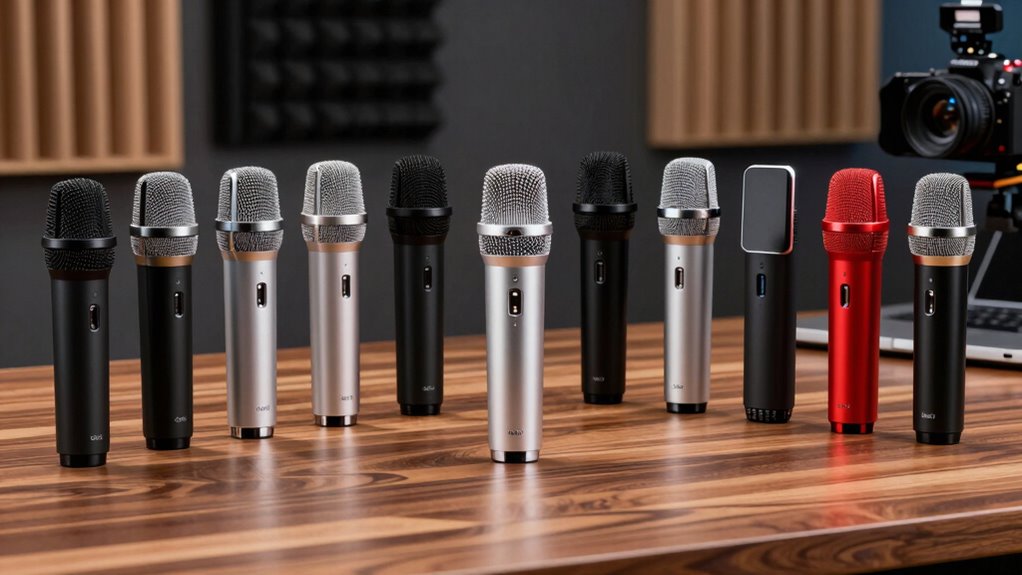

Finding the right usb microphone for podcasting can be a game-changer for your recordings. The Logitech Blue Yeti stands out as the best overall choice thanks to its versatile patterns and user-friendly features. For those seeking professional quality without breaking the bank, the FIFINE T669 offers solid sound at a compelling price. Meanwhile, streamers and content creators will appreciate the ZealSound Podcast Microphone for its noise cancellation and monitoring options. Each option involves tradeoffs, like price, complexity, or flexibility. Keep reading for a detailed breakdown to find your perfect match.
Listen free for 30 days with Audible
Thousands of audiobooks and originals — cancel anytime.
Start your free trialAs an affiliate, we earn on qualifying purchases.
Complete the kit


Key Takeaways
- The Blue Yeti remains the most versatile and user-friendly microphone, ideal for beginners and versatile setups.
- Professional podcasters should consider dynamic microphones like the amazon.com/dp/B0BQM4TKF7?tag=tweedot-20&ascsubtag=dc-845238″ target=”_blank” rel=”nofollow sponsored noopener”>RØDE PodMic for better noise rejection in imperfect environments.
- Price varies widely, with budget options like FIFINE offering good quality but fewer features, while premium picks add more control and clarity.
- Features like multiple pickup patterns and onboard controls significantly enhance usability for varied recording scenarios.
- Build quality and compatibility are key, especially for long-term use and integration with different devices.
| Logitech Blue Yeti USB Microphone for PC, Mac, Gaming, Recording, Streaming, Podcasting, Studio, Condenser Mic with Blue VO!CE Effects, 4 Pickup Patterns, Plug and Play – Blackout | 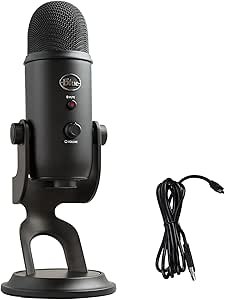 | Best Overall for Versatile Podcasting | Pickup Patterns: Cardioid, Omni, Bidirectional, Stereo | Connectivity: USB | Software: Blue VO!CE effects | VIEW ON AMAZON | See Our Full Breakdown |
| ZealSound Podcast Microphone for PC, Noise Cancellation USB Mic with Gain, Volume Adjustment & Mute Button, Monitoring & Echo, for YouTube, TikTok, Podcasting, Streaming, iPhone, iPad, Android, Mac |  | Best for Studio-Quality on Multiple Devices | Frequency Response: 40Hz–18kHz | Sampling Rate: 46kHz | Sensitivity: –45dB ±3dB | VIEW ON AMAZON | See Our Full Breakdown |
| TONOR Podcast Microphone, USB Computer Mic, Cardioid Condenser |  | Best Budget-Friendly for Beginners | Pickup Pattern: Cardioid | Connectivity: USB 2.0 | Compatibility: Windows, Mac, PS4, PS5, Zoom, Skype, Discord | VIEW ON AMAZON | See Our Full Breakdown |
| RØDE PodMic USB Dynamic Broadcast Microphone, XLR + USB-C |  | Best for Dual Connectivity and Broadcast-Quality Sound | Connectivity: USB-C, XLR | Polar Pattern: Unidirectional | Maximum Frequency: 20 KHz | VIEW ON AMAZON | See Our Full Breakdown |
| RØDE NT-USB Mini Studio-Quality USB Condenser Microphone |  | Best Compact for Professional Sound Quality | Connectivity Technology: USB | Polar Pattern: Unidirectional | Frequency Response: 20 Hz – 20 kHz | VIEW ON AMAZON | See Our Full Breakdown |
| FIFINE T669 Studio Condenser USB Microphone for Recording and Podcasting |  | Best Overall for Home and Studio Podcasting | Connectivity Technology: USB | Connector Type: USB Type-A, USB Type-C | Special Feature: Gain Knob, 8.2ft Detachable USB Cable, Boom Arm Stand | VIEW ON AMAZON | See Our Full Breakdown |
| Logitech Blue Yeti USB Microphone for PC, Mac, Gaming, Streaming, Podcasting, Studio, Silver |  | Best for Versatility and Broadcast-Quality Sound | Pickup Patterns: Cardioid, Omni, Bidirectional, Stereo | Connectivity: USB | Color: Silver | VIEW ON AMAZON | See Our Full Breakdown |
| Logitech Blue Yeti USB Microphone for PC, Mac, Gaming, Streaming, Podcasting, Studio, Midnight Blue |  | Best for Multiple Pickup Patterns and Easy Use | Pickup Patterns: Cardioid, Omni, Bidirectional, Stereo | Connectivity: USB | Color: Midnight Blue | VIEW ON AMAZON | See Our Full Breakdown |
| MAONO PD200W Hybrid Wireless Podcast Microphone for PC, Dynamic XLR USB Mic |  | Best for Flexible, Professional-Grade Wireless and Wired Recording | Connectivity: Wireless, USB, XLR | Microphone Type: Dynamic | Pickup Pattern: Cardioid | VIEW ON AMAZON | See Our Full Breakdown |
| FIFINE K669B USB Microphone, Condenser Recording Mic for Vocals, Meetings |  | Best for Budget-Friendly, Easy Recording | Connectivity Technology: USB | Connector Type: USB Type-A, USB Type-C | Special Feature: 6.5ft USB-B to USB-A/C Cable, Desktop Mic, Stand, Volume Control | VIEW ON AMAZON | See Our Full Breakdown |
| Amazon Basics Condenser Microphone for PC, USB, Cardioid Pickup, Adjustable Stand, Black |  | Best Budget-Friendly USB Mic for Clear Streaming | Connectivity Technology: USB | Polar Pattern: Unidirectional | Audio Sensitivity: 75 db | VIEW ON AMAZON | See Our Full Breakdown |
| FIFINE AmpliTank K688CT Podcast Microphone Kit, USB/XLR Dynamic Vocal Mic |  | Most Versatile Podcast Kit with Professional Features | Connectivity Technology: USB, XLR | Polar Pattern: Unidirectional | Signal-to-Noise Ratio: 80 dB | VIEW ON AMAZON | See Our Full Breakdown |
| usb microphone for podcasting | Connectivity | Frequency Response | Polar Pattern | Signal-to-Noise Ratio |
|---|---|---|---|---|
| Logitech Blue Yeti USB Microph | USB | — | — | — |
| ZealSound Podcast Microphone f | USB-C, Lightning adapters included | 40Hz–18kHz | — | — |
| TONOR Podcast Microphone | USB 2.0 | — | — | — |
| RØDE PodMic USB Dynamic Broadc | USB-C, XLR | — | Unidirectional | 60 dB |
| RØDE NT-USB Mini Studio-Qualit | — | 20 Hz – 20 kHz | Unidirectional | 82 dB |
| FIFINE T669 Studio Condenser U | — | 20 Hz – 20 KHz | Unidirectional | 78 db |
| Logitech Blue Yeti USB Microph | USB | — | — | — |
| Logitech Blue Yeti USB Microph | USB | — | — | — |
| MAONO PD200W Hybrid Wireless P | Wireless, USB, XLR | — | — | 82dB |
| FIFINE K669B USB Microphone | — | 20 Hz – 20 KHz | Unidirectional | 78 db |
| Amazon Basics Condenser Microp | — | 20 KHz | Unidirectional | — |
| FIFINE AmpliTank K688CT Podcas | — | 16 KHz | Unidirectional | 80 dB |
More Details on Our Top Picks
Logitech Blue Yeti USB Microphone for PC, Mac, Gaming, Recording, Streaming, Podcasting, Studio, Condenser Mic with Blue VO!CE Effects, 4 Pickup Patterns, Plug and Play – Blackout
The Blue Yeti stands out for its versatility, offering four pickup patterns which make it suitable for a wide range of podcasting styles, from solo broadcasts to panel discussions. Compared with the RØDE NT-USB Mini, it provides more pattern options, though it is bulkier and less portable. The onboard Blue VO!CE effects enhance audio quality without additional software, but some users find the controls complex, which could hinder quick adjustments during live recordings. Its plug-and-play design simplifies setup for beginners, yet the size might be a drawback for those with limited desk space. Overall, this mic is ideal for creators who want flexibility and broadcast-quality sound in one package.
Pros:- Four selectable pickup patterns for versatile use
- Built-in Blue VO!CE effects for enhanced audio
- Easy plug-and-play setup with adjustable desktop stand
Cons:- Bulky design may not suit tight spaces
- Complex onboard controls could confuse beginners
Best for: Podcasters who need a highly adaptable microphone for different recording scenarios and value built-in effects.
Not ideal for: Streamers with small desks or mobile content creators who prioritize portability over multiple pickup patterns.
- Pickup Patterns:Cardioid, Omni, Bidirectional, Stereo
- Connectivity:USB
- Software:Blue VO!CE effects
- Controls:Headphone volume, pattern selection, mute, mic gain
- Design:Adjustable desktop stand, pivoting microphone
- Compatibility:PC, Mac
Our verdict“This mic is a strong choice for those seeking a flexible, studio-quality solution for multiple podcasting styles.”
The ZealSound K66 excels in delivering professional sound with its high-performance condenser capsule and effective noise cancellation, making it comparable to the RØDE NT-USB Mini in audio clarity. Unlike the Blue Yeti, it offers more precise gain and volume controls, which are easier to fine-tune during recordings, though it lacks the multiple pickup patterns. Its real-time monitoring ensures accurate audio feedback, essential for live edits or streaming, but the physical controls might be less customizable than software-based options for some users. This microphone is particularly suited for creators who prioritize sound fidelity and device compatibility across mobile and desktop platforms.
Pros:- High-quality condenser capsule with noise reduction
- Wide device compatibility including mobile devices
- Real-time zero-latency monitoring
Cons:- Requires manual adjustment for optimal levels
- Limited to USB connectivity, no XLR option
Best for: Content creators and streamers who need studio-quality sound across multiple devices with minimal setup.
Not ideal for: Beginners who prefer a simple, single-control microphone or those who need multiple pickup patterns.
- Frequency Response:40Hz–18kHz
- Sampling Rate:46kHz
- Sensitivity:–45dB ±3dB
- Connectivity:USB-C, Lightning adapters included
- Monitoring:3.5mm headphone jack with volume control
- Controls:Gain, volume, echo, mute
Our verdict“Ideal for creators demanding studio sound quality and flexible device compatibility without complicated setup.”
TONOR Podcast Microphone, USB Computer Mic, Cardioid Condenser
The TONOR Podcast Microphone offers solid audio performance with its cardioid pattern, making it a good entry-level choice for podcasting and streaming. Compared with the FIFINE K669B, it includes a shock mount, pop filter, and adjustable angle, providing more accessories for a comprehensive setup. However, it’s not compatible with Xbox consoles, limiting versatility for gaming streams. Its simple plug-and-play operation makes it accessible for beginners, but the microphone angle adjustment can require careful handling to avoid instability. Overall, this model provides good audio quality at a budget-friendly price, suitable for newcomers who want an easy start without sacrificing too much sound clarity.
Pros:- Clear audio with background noise reduction
- Includes shock mount, pop filter, and adjustable stand
- Plug-and-play setup with no drivers needed
Cons:- Not compatible with Xbox consoles
- Microphone angle adjustment may be sensitive
Best for: Beginners and casual podcasters seeking an affordable, straightforward microphone with essential accessories.
Not ideal for: Advanced users or gamers needing Xbox compatibility or more advanced controls.
- Pickup Pattern:Cardioid
- Connectivity:USB 2.0
- Compatibility:Windows, Mac, PS4, PS5, Zoom, Skype, Discord
- Included Accessories:Foldable Mic Tripod, Shock Mount, Pop Filter
- Adjustable:Yes
- Design:Desktop stand
Our verdict“A practical choice for new podcasters who want decent sound and added accessories without a high investment.”
RØDE PodMic USB Dynamic Broadcast Microphone, XLR + USB-C
The RØDE PodMic USB combines durability with professional-grade audio, standing out with both XLR and USB-C options. Unlike the Blue Yeti, it’s a dynamic microphone, which excels at rejecting background noise—ideal for noisy environments—though it requires an external interface for optimal XLR use. Its internal DSP provides polished, studio-like sound, but the need for additional equipment can increase complexity and cost. Its solid metal build makes it ideal for portable, rugged use, yet the higher price and reliance on extra hardware might deter hobbyists. This model is suited for serious podcasters or streamers who value flexibility and professional sound quality.
Pros:- Dual XLR and USB-C connectivity for flexibility
- Internal DSP for studio-quality sound
- Zero-latency monitoring for real-time feedback
Cons:- Requires external interface for XLR use
- More expensive than simple USB microphones
Best for: Serious content creators who want versatile connectivity and premium broadcast sound.
Not ideal for: Casual users or those with tight budgets who prefer an all-in-one USB solution without additional gear.
- Connectivity:USB-C, XLR
- Polar Pattern:Unidirectional
- Maximum Frequency:20 KHz
- Signal-to-Noise Ratio:60 dB
- Enclosure Material:Metal
- Power Source:USB or XLR
Our verdict“A robust choice for professionals needing both XLR and USB options with premium audio performance.”
RØDE NT-USB Mini Studio-Quality USB Condenser Microphone
The RØDE NT-USB Mini offers a portable, compact design without sacrificing studio-quality sound, making it ideal for on-the-go podcasters and streamers. Compared to the bulkier Blue Yeti, its smaller form factor makes it easier to mount in tight spaces or travel with. It features a unidirectional polar pattern, which is excellent for isolating voice and reducing background noise, but it limits versatility for multi-person recordings. The built-in pop filter and zero-latency monitoring enhance audio clarity, though its fixed cardioid pattern may not suit every recording scenario. Overall, this mic provides professional sound in a small package, perfect for mobile or space-constrained setups.
Pros:- Studio-quality sound with compact size
- Plug-and-play USB connectivity
- Built-in pop filter and zero-latency monitoring
Cons:- Limited to unidirectional polar pattern
- Bulkier than some portable mics
Best for: Podcasters and streamers needing a portable, high-quality microphone for desktop or mobile use.
Not ideal for: Environments requiring multi-directional pickup or more adjustable patterns, such as panel discussions or group recordings.
- Connectivity Technology:USB
- Polar Pattern:Unidirectional
- Frequency Response:20 Hz – 20 kHz
- Signal-to-Noise Ratio:82 dB
- Form Factor:Mini
- Hardware Platform:PC, Tablet
Our verdict“A solid, portable option for creators who want professional sound in a small, easy-to-mount package.”
FIFINE T669 Studio Condenser USB Microphone for Recording and Podcasting
This microphone stands out for its straightforward, plug-and-play USB connection and included accessories like a durable boom arm, which makes it an excellent choice for those starting out or setting up a home studio. Compared with the Blue Yeti, the T669 offers a simpler setup without sacrificing sound quality, making it more approachable for beginners. However, it doesn’t have the extensive onboard controls or software effects of the Yeti, which might matter to users seeking advanced customization. The cardioid capsule ensures clear voice capture, while the metal construction guarantees durability. Its main tradeoff is limited compatibility, as it doesn’t work with Xbox, and ambient noise can be an issue if not positioned carefully.
Pros:- Easy plug-and-play USB connection
- Includes versatile boom arm and accessories
- High-quality sound with wide frequency response
- Durable metal construction
Cons:- Incompatible with Xbox consoles
- May pick up ambient noise if not positioned properly
- Requires external stand or mount for optimal use
Best for: Home podcasters or content creators who want reliable sound quality with minimal fuss
Not ideal for: Gamers or streamers using Xbox consoles, since it’s incompatible with Xbox and may require additional mounts
- Connectivity Technology:USB
- Connector Type:USB Type-A, USB Type-C
- Special Feature:Gain Knob, 8.2ft Detachable USB Cable, Boom Arm Stand
- Polar Pattern:Unidirectional
- Frequency Response:20 Hz – 20 KHz
- Signal-to-Noise Ratio:78 db
Our verdict“This model suits beginners and home studio users seeking straightforward, high-quality audio without complex features.”
Logitech Blue Yeti USB Microphone for PC, Mac, Gaming, Streaming, Podcasting, Studio, Silver
The Blue Yeti is renowned for its multiple pickup patterns—cardioid, omni, bidirectional, and stereo—which make it ideal for diverse recording scenarios like podcasting, streaming, or group interviews. Its onboard controls, including gain, mute, and headphone volume, facilitate quick adjustments during live sessions, setting it apart from simpler models like the FIFINE K669B. The Blue VO!CE software offers customizable effects, but some users find it adds complexity rather than convenience. Its bulkier design may be less suitable for tight desk setups, yet this tradeoff allows for detailed audio control. If you need flexibility and broadcast-quality sound, this model delivers but at the expense of portability and simplicity.
Pros:- Multiple pickup patterns for versatile recording
- Built-in Blue VO!CE effects for enhanced audio
- User-friendly plug-and-play setup
- Onboard controls for quick adjustments
Cons:- Bulky, occupying more desk space
- Software effects can be complex for beginners
- Limited mobility due to USB connection
Best for: Podcasters and streamers who want professional-grade sound with flexible pickup options and onboard controls
Not ideal for: Users with limited desk space or those seeking a compact, portable microphone
- Pickup Patterns:Cardioid, Omni, Bidirectional, Stereo
- Connectivity:USB
- Color:Silver
- Software:Blue VO!CE
- Controls:Headphone volume, pattern selection, mute, gain
Our verdict“This microphone is a strong choice for creators needing flexible, broadcast-quality sound and onboard control, despite its size and complexity.”
Logitech Blue Yeti USB Microphone for PC, Mac, Gaming, Streaming, Podcasting, Studio, Midnight Blue
Similar to the silver version, the Midnight Blue Yeti provides the same broadcast-quality sound with four pickup patterns and onboard controls, but its eye-catching color appeals to users wanting a more distinctive look. Its adjustable desktop stand and pivotable microphone make positioning straightforward, but some find its bulk can clutter smaller desks compared to more compact mics like the FIFINE T669. The inclusion of Blue VO!CE effects enhances audio but might be overwhelming for newcomers. Overall, this model offers flexibility and quality for those who prioritize ease of setup and varied recording options, though it’s less portable and space-efficient.
Pros:- Multiple pickup patterns for diverse recordings
- Blue VO!CE effects improve audio quality
- Adjustable desktop stand for precise positioning
- Plug-and-play with Mac and PC
Cons:- Bulky design may take up desk space
- Requires USB connection, limiting mobility
- Controls may seem complex initially
Best for: Content creators who desire a visually distinctive microphone with versatile recording modes
Not ideal for: Streamers or podcasters with limited desk space or those preferring a smaller form factor
- Pickup Patterns:Cardioid, Omni, Bidirectional, Stereo
- Connectivity:USB
- Color:Midnight Blue
- Software:Blue VO!CE
- Controls:Headphone volume, pattern selection, mute, mic gain
Our verdict“This microphone is best for users seeking a colorful, versatile device with professional features and straightforward setup.”
MAONO PD200W Hybrid Wireless Podcast Microphone for PC, Dynamic XLR USB Mic
The MAONO PD200W offers a unique blend of wireless, USB, and XLR connectivity, making it highly adaptable for professional podcasts or live interviews. Its dynamic capsule reduces ambient noise, which is especially helpful in noisy environments compared to condenser models like the FIFINE T669. The dual microphone support and noise cancellation features make it stand out for duo podcasts or multi-guest recordings. However, full customization relies on the MaonoLink app, which can add complexity and may be a barrier for less tech-savvy users. While the wireless range and battery life are impressive, accessories like camera or lightning adapters are sold separately, adding extra cost.
Pros:- Versatile connectivity: wireless, USB, XLR
- Noise-canceling dynamic capsule for clear sound
- Supports dual microphones for interviews
- Long battery life up to 60 hours
Cons:- Accessories sold separately, increasing total cost
- Full feature set requires using the app, which may be complex
- Some setup complexity compared to plug-and-play models
Best for: Professional podcasters or streamers needing wireless flexibility and dual-mic support
Not ideal for: Casual content creators or those preferring simple USB setups without extra apps or accessories
- Connectivity:Wireless, USB, XLR
- Microphone Type:Dynamic
- Pickup Pattern:Cardioid
- Signal-to-Noise Ratio:82dB
- Wireless Range:60m
- Battery Life:up to 60 hours
Our verdict“This microphone suits advanced users who need wireless flexibility and professional sound, accepting some setup and accessory tradeoffs.”
FIFINE K669B USB Microphone, Condenser Recording Mic for Vocals, Meetings
The FIFINE K669B offers a straightforward, plug-and-play condenser microphone designed for vocals, meetings, and gaming. Its durable metal construction plus adjustable volume control provide a reliable experience for content creators on a budget. Compared to the more feature-rich Blue Yeti models, the K669B lacks multiple pickup patterns and onboard effects, but it compensates with simplicity and affordability. Its unidirectional polar pattern helps focus on voice, yet manual adjustment of levels is necessary to avoid distortion. Its limited compatibility to USB-A and USB-C ports makes it less versatile for certain setups, but for basic recording needs, it delivers solid value.
Pros:- Affordable, great value for basic recording
- Durable metal build
- Clear sound with noise reduction
- Adjustable volume control
Cons:- Limited to USB-A and USB-C ports
- No multiple pickup patterns or onboard effects
- Requires manual level adjustments for optimal sound
Best for: Budget-conscious podcasters and streamers who want a reliable, easy-to-use microphone
Not ideal for: Professional users needing multiple patterns or advanced effects, or setups requiring XLR connectivity
- Connectivity Technology:USB
- Connector Type:USB Type-A, USB Type-C
- Special Feature:6.5ft USB-B to USB-A/C Cable, Desktop Mic, Stand, Volume Control
- Polar Pattern:Unidirectional
- Frequency Response:20 Hz – 20 KHz
- Signal-to-Noise Ratio:78 db
Our verdict“This microphone is an excellent choice for newcomers or casual users seeking dependable performance at a low price point.”
Amazon Basics Condenser Microphone for PC, USB, Cardioid Pickup, Adjustable Stand, Black
This model stands out for its straightforward design and excellent sound clarity, especially in quiet environments. Compared to the FIFINE K669B, it offers similar sensitivity but lacks a boom arm and advanced controls, making it less versatile for dynamic setups. Its plug-and-play USB connection simplifies setup for beginners, but the absence of professional features like gain control limits fine-tuning. The cardioid pattern helps reduce background noise, which is ideal for solo podcasting, yet it’s restricted to PC use and doesn’t include a tripod or boom arm, which could be inconvenient for those seeking a more complete setup.
Pros:- High sensitivity and low noise for clear audio
- 360° adjustable stand for versatile positioning
- Plug-and-play USB connectivity with no drivers needed
- Built-in mute function for quick control
Cons:- Limited to PC compatibility; no Mac or mobile support
- No included tripod or boom arm, which could limit placement options
- Basic design may lack the professional aesthetic or features some users want
Best for: Beginners or budget-conscious podcasters who need a simple, reliable microphone for streaming and recording on a PC.
Not ideal for: Podcast creators needing a flexible setup with professional controls or multi-platform compatibility, as it lacks advanced features and XLR options.
- Connectivity Technology:USB
- Polar Pattern:Unidirectional
- Audio Sensitivity:75 db
- Frequency Response:20 KHz
- Item Dimensions:3.37 x 3.37 x 5.79 inches
- Item Weight:0.2 kg
Our verdict“This microphone is ideal for entry-level podcasters on a budget who prioritize simplicity and decent sound quality on a PC.”
FIFINE AmpliTank K688CT Podcast Microphone Kit, USB/XLR Dynamic Vocal Mic
This pick excels for podcasters who want flexibility, offering both USB and XLR connections, making it suitable for beginners and more advanced setups alike. Compared to the Amazon Basics model, the FIFINE K688CT includes a sturdy boom arm, shock mount, and windscreen, which contribute to better sound isolation and a more professional appearance. While its noise reduction and gain controls offer greater customization, the disabled function keys when using XLR can be frustrating for those who rely on quick access to mute or volume adjustments. Additionally, the need for manual volume tuning via gain knobs or an audio interface might be less convenient for casual users.
Pros:- Dual USB and XLR connectivity for maximum versatility
- Includes a sturdy boom arm and shock mount for stable positioning
- Features intuitive controls like mute button and gain adjustment
- Effective noise reduction with included accessories
Cons:- Function keys are disabled when using XLR, reducing quick control options
- Requires manual adjustment of input volume, which may be less intuitive for beginners
- Some features only accessible via USB, limiting flexibility when using XLR
Best for: Serious hobbyists or semi-professional podcasters seeking a flexible, durable microphone kit with professional accessories.
Not ideal for: Podcasters who prefer a plug-and-play setup or have limited space, as the included arm and accessories add bulk and complexity.
- Connectivity Technology:USB, XLR
- Polar Pattern:Unidirectional
- Signal-to-Noise Ratio:80 dB
- Frequency Response:16 KHz
- Form Factor:Microphone with Arm Stand
- Enclosure Material:Metal
Our verdict“This microphone kit suits podcasters who need adaptability and professional-grade accessories in a single package, despite some operational quirks.”
How We Picked
To determine the best USB microphones for podcasting, I focused on a combination of performance, usability, build quality, and value. I evaluated each model’s sound clarity, noise rejection, and flexibility in different recording environments. Ease of use, such as plug-and-play functionality and onboard controls, also played a major role. Durability and compatibility with various devices were considered to ensure long-term reliability. The ranking reflects a balance between price and features, aiming to guide both beginners and advanced users to suitable options.| usb microphone for podcasting | Connectivity |
|---|---|
| Logitech Blue Yeti USB Microph | USB |
| ZealSound Podcast Microphone f | USB-C, Lightning adapters included |
| TONOR Podcast Microphone | USB 2.0 |
| RØDE PodMic USB Dynamic Broadc | USB-C, XLR |
| RØDE NT-USB Mini Studio-Qualit | — |
| FIFINE T669 Studio Condenser U | — |
| Logitech Blue Yeti USB Microph | USB |
| Logitech Blue Yeti USB Microph | USB |
| MAONO PD200W Hybrid Wireless P | Wireless, USB, XLR |
| FIFINE K669B USB Microphone | — |
| Amazon Basics Condenser Microp | — |
| FIFINE AmpliTank K688CT Podcas | — |
Factors to Consider When Choosing Usb Microphone For Podcasting
Choosing the right USB microphone for podcasting involves more than just looking at specifications. It’s important to consider your recording environment, your budget, and how much control you want over your sound. Think about whether you need features like multiple pickup patterns, onboard controls, or built-in noise cancellation. Paying attention to build quality and compatibility can save you headaches later on. By understanding these factors, you’ll make a smarter investment that suits your specific podcasting needs.Sound Quality and Pickup Pattern
High-quality sound is the foundation of a good podcast. Look for microphones with condenser capsules for clarity, but consider dynamic microphones if you record in noisy environments. Multiple pickup patterns, such as cardioid or omnidirectional, give you flexibility depending on your setup. For solo recording, cardioid is usually best, while multiple patterns are useful if you record with guests or in varied locations.
Ease of Use and Compatibility
Plug-and-play functionality is essential for minimizing setup time, especially for beginners. Check whether the microphone is compatible with your operating system—Windows, Mac, or mobile devices—and whether it requires additional drivers. Built-in controls like mute buttons, volume knobs, or pattern switches add convenience during recording or streaming sessions, reducing the need for external mixers or software adjustments.
Build Quality and Durability
A microphone is an investment, so durability matters. Look for sturdy construction with metal housings rather than plastic, especially if you plan to transport or travel with it. A stable stand or shock mount can also improve recording quality by minimizing vibrations and handling noise. Remember, a well-built microphone lasts longer and maintains consistent sound quality over time.
Price and Value
Balance your budget against desired features. Budget microphones like FIFINE can provide decent sound but might lack advanced controls or noise rejection. Mid-range options, such as the TONOR or ZealSound, often strike a good balance, offering better sound quality and usability for a reasonable price. Premium models, like the RØDE NT-USB Mini, add professional-grade features but at a higher cost. Consider what features are essential for your setup to avoid overspending on unnecessary extras.
Additional Features to Consider
Features like onboard headphone monitoring, adjustable gain, or multiple pickup patterns can enhance your recording experience. Noise cancellation technology helps in noisy environments, ensuring your voice remains clear. Some microphones include bundled accessories such as pop filters or shock mounts, which can improve audio quality and reduce handling noise. Think about your specific use case—live streaming, solo podcasts, or interviews—and choose features accordingly.
Frequently Asked Questions
Is a more expensive USB microphone always better for podcasting?
Not necessarily. While higher-priced microphones often offer better sound quality, more features, and durability, many budget options like FIFINE or TONOR provide excellent value for beginners or casual podcasters. The key is matching the microphone’s capabilities to your specific needs. If you require professional sound or plan to record in noisy environments, investing in a premium model makes sense. Otherwise, a budget microphone can be perfectly adequate for starting out or casual use.
Do I need any additional equipment with a USB microphone?
Most USB microphones are designed to be plug-and-play, meaning they don’t require extra equipment to operate. However, accessories like pop filters, boom arms, or shock mounts can significantly improve your recording quality and comfort. If you’re in a noisy environment, an external soundproofing setup or a dedicated recording space can also help. For mobile recording, consider a portable stand or a USB hub if your device has limited ports.
Can I use a USB microphone for live streaming and recording at the same time?
Yes, many USB microphones support real-time monitoring and can be used simultaneously for streaming and recording. Features like headphone outputs and onboard controls make this easier. Just ensure your recording or streaming software recognizes the microphone, and check for any latency issues. Using a high-quality microphone designed for versatile use will give you a smoother experience across different applications.
How important is it to get a microphone with multiple pickup patterns?
Multiple pickup patterns add flexibility, allowing you to adapt to different recording scenarios. For example, cardioid is ideal for solo podcasts, while omnidirectional captures sound from all directions—useful in group settings. Bidirectional patterns work well for interviews. If you plan to record with guests or switch between setups, a microphone with multiple patterns can save you from buying additional equipment. However, for straightforward solo podcasting, a simple cardioid microphone may suffice.
What should I consider if I want a microphone that works with both PC and mobile devices?
Look for models that explicitly mention compatibility with both PC and mobile platforms, ideally with plug-and-play USB-C or USB-A connections. Some microphones also support adapters or have dual connectivity options. Pay attention to power requirements and whether the microphone needs external power or special drivers for mobile use. Testing compatibility beforehand can prevent frustration, especially if you plan to record on smartphones or tablets.
Conclusion
For most users, the Logitech Blue Yeti remains the best overall option thanks to its versatility and ease of use, making it suitable for beginners and seasoned podcasters alike. Those on a budget will find the FIFINE T669 strikes a compelling balance of quality and affordability, perfect for new creators. If you seek professional-grade sound and durability, the RØDE NT-USB Mini offers a premium experience without sacrificing portability. Content creators and streamers should lean toward models with multiple controls like the ZealSound or MAONO PD200W for greater flexibility. Ultimately, your choice depends on your environment, budget, and specific podcasting goals, but this list provides a solid starting point for every type of creator.
Flea & tick season Picks
flea and tick prevention
As an affiliate, we earn on qualifying purchases.