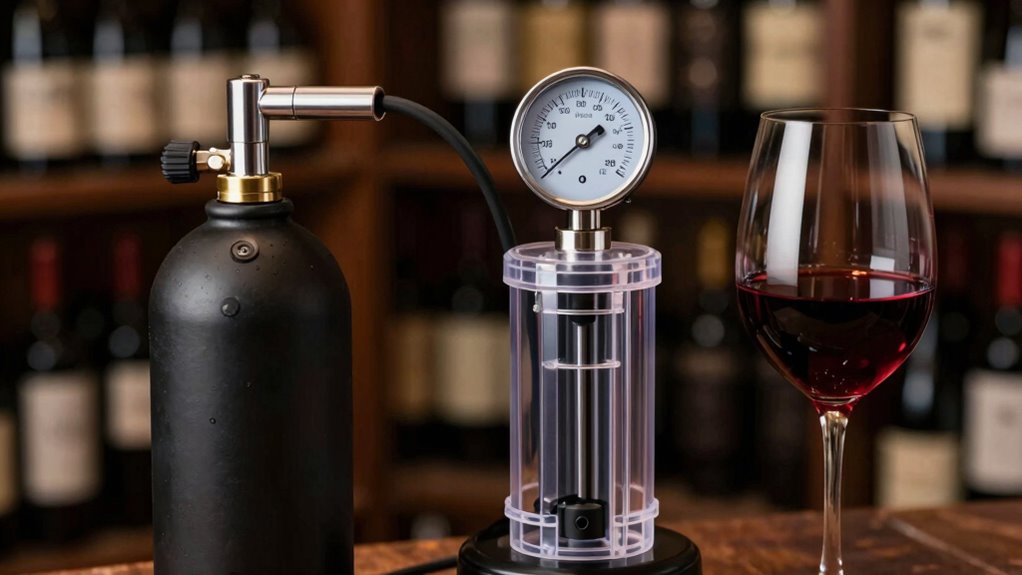
Wine preservation systems like argon and vacuum work differently to keep your wine fresh. Argon uses an inert gas to create a barrier, displacing oxygen and preventing oxidation, which helps preserve flavor and aroma over days or even weeks. Vacuum systems remove air from the bottle’s headspace, slowing oxidation but may not be as effective long-term. Understanding these methods helps you pick the best one for your needs—continue to learn more about their unique differences and applications.

Get home appliances delivered free with Prime
- Fast, free delivery on millions of items
- Prime Video, Amazon Music and more included
- Member-only deals all year
Key Takeaways
- Argon creates an inert, oxygen-displacing barrier, preserving wine’s original flavor and extending freshness over longer periods.
- Vacuum systems remove oxygen from the bottle headspace, slowing oxidation but may impact aroma and flavor over time.
- Inert gas preservation methods like argon are generally more effective for long-term storage compared to vacuum pumps.
- Proper sealing, storage conditions, and handling are crucial regardless of the system chosen to maintain wine quality.
- The main difference lies in argon’s inert, non-reactive properties versus vacuum’s oxygen removal, each suited for different preservation needs.
As an affiliate, we earn on qualifying purchases.
What Are the Main Types of Wine Preservation Systems?
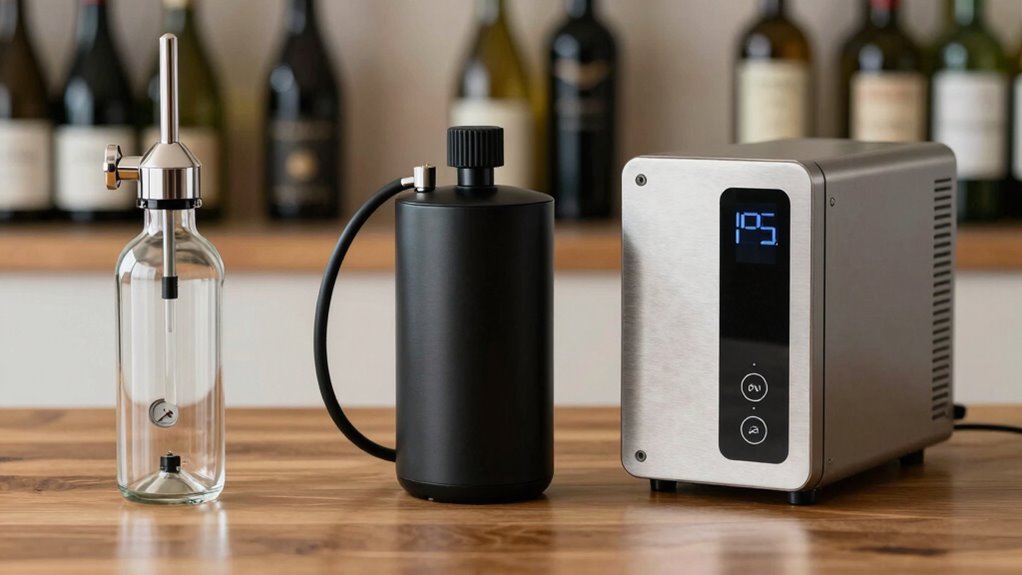
Have you ever wondered how to keep your opened wine fresh for longer? There are a few main types of wine preservation systems to contemplate. Alternative storage containers, like vacuum seals or specially designed stoppers, are popular because they remove air or limit oxygen contact, helping preserve wine’s flavor. However, some wine preservation myths suggest these methods are foolproof, but they often only slow oxidation temporarily. Other systems include inert gas sprays or preservation pumps that create a barrier against air. While each system varies in effectiveness, understanding the differences helps you choose what’s best for your needs. Remember, no single method guarantees indefinite freshness, so knowing the main types helps you make smarter choices and enjoy your wine longer. Innovative preservation methods like inert gas systems are increasingly being adopted for their effectiveness in maintaining wine quality over time. Additionally, considering the effectiveness of each system can help you manage expectations and prevent waste. Recognizing how oxygen exposure impacts wine can further inform your choice of preservation method, especially given the role of oxidation in wine spoilage. Moreover, advancements in preservation technology continue to improve how well these systems work over extended periods.
How Does Argon Gas Preserve Wine?
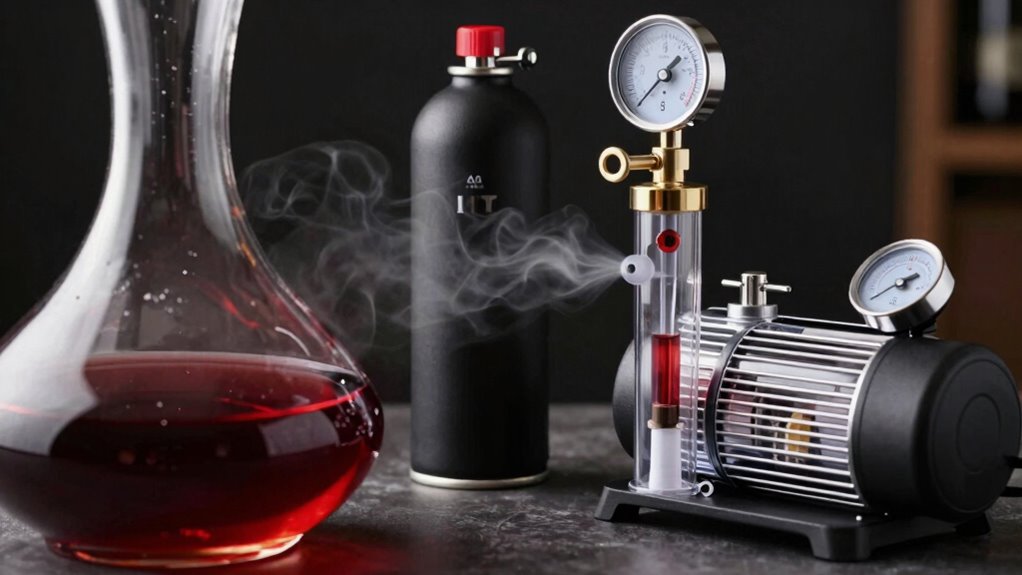
Argon gas is inert, meaning it doesn’t react with wine or cause any changes in flavor. When you use it to preserve wine, it creates a protective layer that reduces oxidation risks. This helps your wine stay fresh longer without compromising its taste. Additionally, the inert nature of argon makes it a popular choice among wine enthusiasts seeking a preservation method that maintains the wine’s original quality. Its gas properties ensure that it displaces oxygen effectively, further enhancing preservation. The use of inert gases like argon aligns with wilderness safety principles, emphasizing minimal interference with natural conditions to preserve quality. Moreover, its non-reactive nature ensures that it does not introduce any unwanted chemical reactions during storage. Proper application techniques and understanding of body jewelry measurements can optimize storage and minimize potential risks.
Inert Properties of Argon
Because of its inert nature, argon gas doesn’t react with wine or its components, making it an ideal preservative. As a noble gas, argon has inert properties that prevent it from chemically interacting with the wine. This stability means it won’t alter the wine’s flavor, aroma, or composition during preservation. Unlike reactive gases, argon remains chemically inactive, creating a protective barrier that displaces oxygen without introducing unwanted reactions. Its inert properties guarantee that the wine stays fresh and unaltered for longer periods. Being one of the noble gases, argon’s lack of reactivity is a key factor in why it’s used in wine preservation systems. This chemical stability offers peace of mind, knowing your wine is protected without any risk of oxidation or flavor compromise. Additionally, gas purity is crucial to ensure that no contaminants interfere with the wine’s preservation. The non-reactive nature of argon further enhances its effectiveness, ensuring the preservation process remains completely neutral. Proper gas handling also plays a significant role in maintaining the integrity of the preservation process and avoiding contamination.
Minimizing Oxidation Risks
To effectively preserve wine, minimizing oxidation is essential, and argon gas plays a key role in this process. By creating an inert barrier over the wine’s surface, argon controls oxidation, preventing the wine from reacting with oxygen. This oxidation control maintains the wine’s original flavor profile, ensuring it stays fresh and true to its character. Unlike air, argon is dense and doesn’t mix with the wine, forming a protective layer that slows down deterioration. Using argon in preservation systems helps you extend the wine’s lifespan after opening while preserving its complex aromas and taste. Understanding inert gases can help you make better choices for wine storage and preservation, especially when selecting the right system for your needs. This method is especially beneficial for delicate wines, where flavor preservation is critical to enjoying the full depth and nuance of your favorite bottles. Additionally, understanding how inert gases work can help you make better choices for wine storage and preservation. Employing gas preservation techniques can further enhance the effectiveness of your wine preservation system, ensuring optimal freshness over time. Incorporating Glycolic Acid benefits in skincare routines has shown to support skin health and maintain a youthful appearance. Moreover, learning about oxidation processes can deepen your understanding of how different preservation methods impact wine quality.
When Should You Use Argon for Wine Preservation?
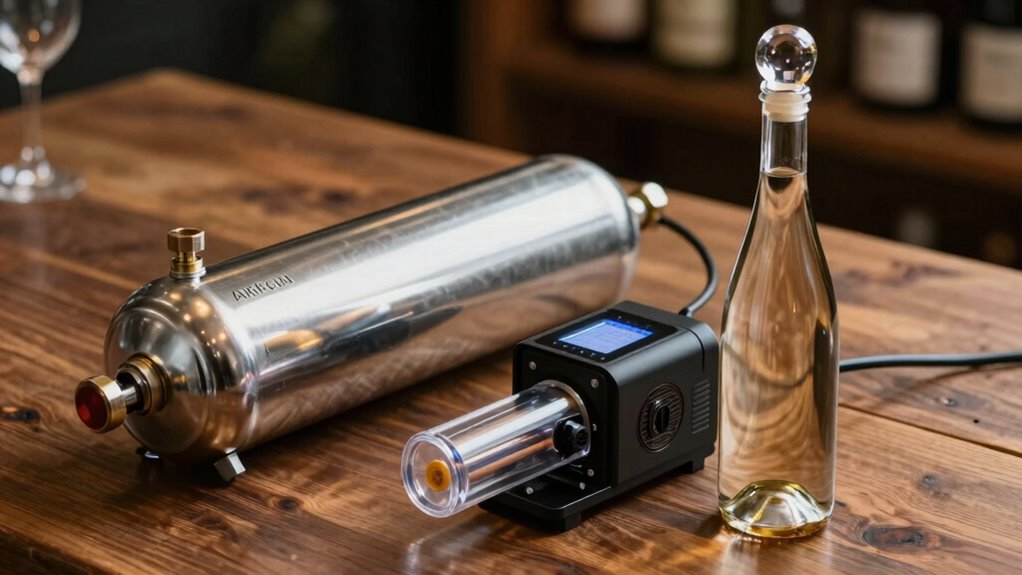
Knowing when to use argon for wine preservation can make a significant difference in maintaining your wine’s quality. Use argon when you plan to enjoy a bottle over several days or want to preserve your vintage collection. It’s ideal after a wine tasting session, especially if some bottles are unfinished. Argon creates a protective blanket, preventing oxidation and keeping flavors fresh longer. Consider using argon for wines you don’t intend to drink immediately but want to enjoy later with optimal taste. It’s also useful if you’re storing wine for special occasions or collecting valuable bottles. Proper storage techniques can further enhance preservation results and help maintain wine integrity over time, especially when combined with the right preservation system. Additionally, understanding gas compositions used in wine preservation can help you select the most effective method for your needs. For instance, some eco-friendly alternatives are gaining popularity among environmentally conscious wine enthusiasts. Moreover, selecting the appropriate preservation method depends on the type of wine and duration of storage.
How Do Vacuum Pump Systems Keep Your Wine Fresh?
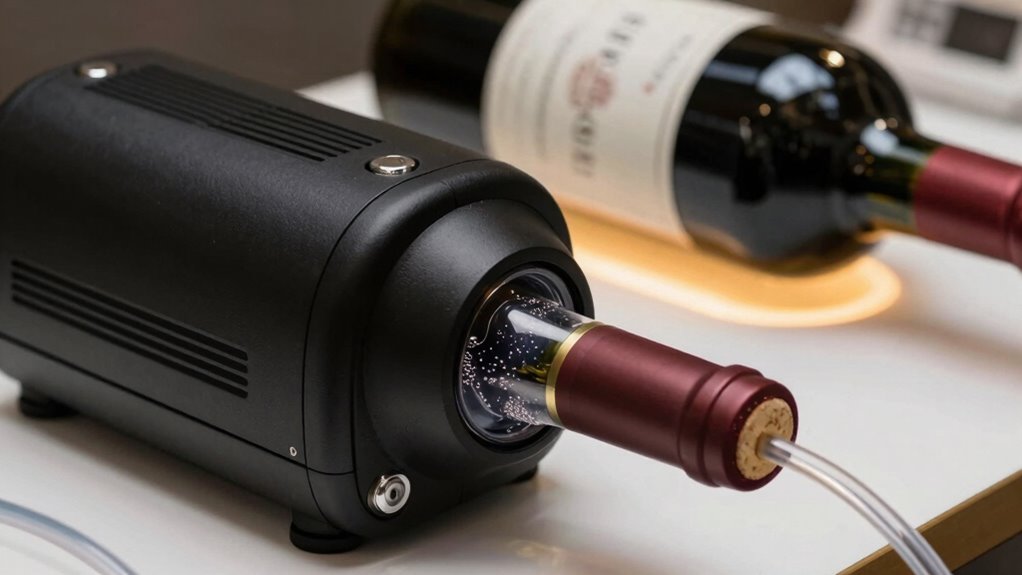
Vacuum pump systems offer an effective way to keep your wine fresh after opening. They work by removing air from the bottle, which slows oxidation and preserves flavors. Unlike aeration techniques that intentionally introduce oxygen to enhance aroma, vacuum systems limit oxygen exposure, preventing spoilage. To use a vacuum pump, you place a stopper on the bottle and pump out the air until a tight seal forms. This process is compatible with various wine glass types, ensuring versatility whether you’re pouring into a large or small glass. Regular use of vacuum systems helps maintain the wine’s original taste and aroma, especially if you prefer to enjoy a glass over multiple days. They’re simple, quick, and effective at extending your wine’s freshness. Additionally, many quality preservation methods are designed to be user-friendly, making it easier to enjoy wine at its best over time. Incorporating connected wine preservation devices can also offer real-time monitoring of wine condition, further enhancing your experience. Furthermore, the effectiveness of vacuum systems can be influenced by the seal integrity, emphasizing the importance of proper stopper fit for optimal preservation. To maximize their effectiveness, it’s also helpful to be aware of the storage conditions, as temperature and light can impact wine preservation.
Which Preservation Method Works Best: Argon or Vacuum?
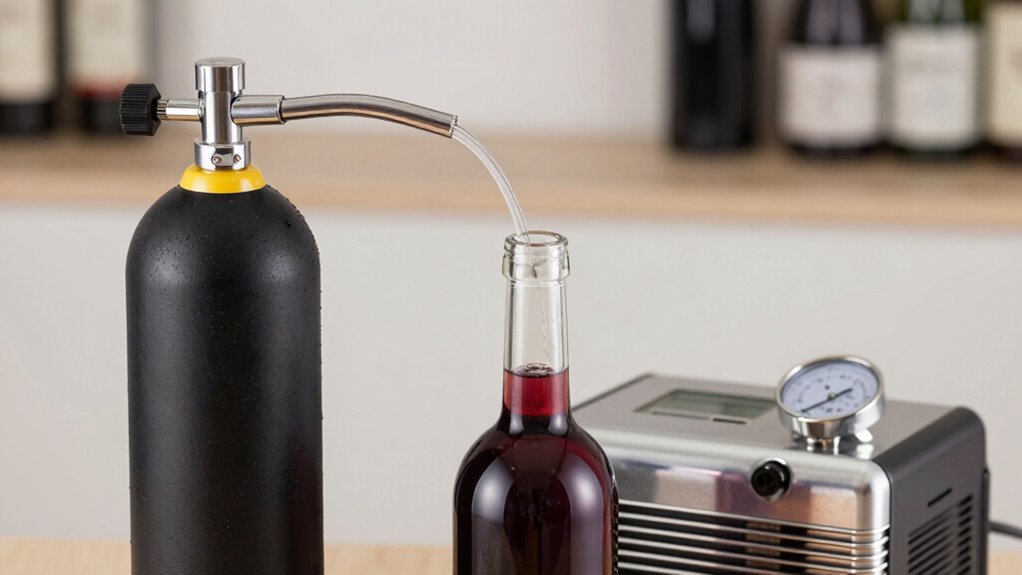
When choosing between argon and vacuum methods, you’ll want to contemplate which preserves wine better over time. Both are simple to use, but one may offer longer-lasting freshness depending on your needs. Let’s compare their effectiveness, convenience, and impact on your wine’s longevity to find the best fit.
Preservation Effectiveness Comparison
To determine which preservation method is most effective, it’s important to compare how well argon and vacuum techniques prevent wine oxidation over time. Argon works by displacing oxygen in the bottle, slowing oxidation during bottle aging and reducing the need for cork replacement. It helps maintain wine freshness longer, especially for wines meant to be aged. Vacuum preservation, on the other hand, extracts oxygen from the bottle’s headspace, markedly reducing oxidation but sometimes affecting the wine’s aroma and flavor. While both methods extend wine life, argon tends to preserve overall quality better over extended periods, making it ideal for bottle aging. Vacuum systems are convenient for shorter-term preservation but may not be as effective in preventing the subtle changes that occur during long-term storage.
Ease of Use and Convenience
Argon preservation systems are generally straightforward to use, often requiring just a simple press of a button to displace oxygen and seal the bottle. This makes them highly convenient for everyday wine storage. You’ll find that argon systems are user-friendly, with minimal setup needed—usually just inserting the nozzle and pressing the button. The ease of use enhances storage convenience, allowing you to preserve wine without hassle. In comparison, vacuum systems might require more effort, such as manually pumping a device or replacing stoppers, which can be less intuitive. Overall, if you prioritize simplicity and quick operation, argon systems tend to be more appealing. Their straightforward design makes them an ideal choice for those seeking hassle-free wine preservation at home.
Impact on Wine Longevity
Choosing the most effective preservation method directly impacts how long your wine stays fresh once opened. Argon preserves wine by creating an inert barrier that slows oxidation processes, helping it maintain its flavors longer. It’s especially effective when storage conditions are less than ideal, such as warmer temperatures or fluctuating humidity. Vacuum systems, on the other hand, remove air from the bottle to reduce oxygen exposure, but they may not fully prevent oxidation over extended periods. While vacuum preservation can extend freshness for a few days, argon often provides a longer-lasting solution, particularly for wines you want to enjoy over a week or more. Ultimately, your choice depends on how you store your wine and how long you want it to stay ideal.
Are There Other Wine Preservation Options You Should Know About?
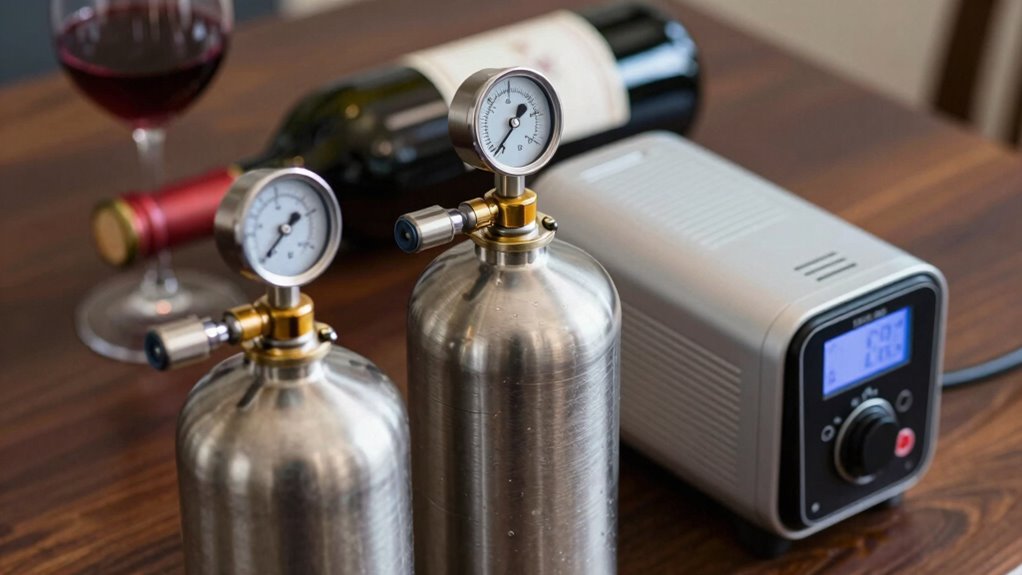
Beyond the popular wine preservation systems, there are several other options worth considering to keep your wine fresh longer. Alternative preservation methods include wax sealing bottles, which create a barrier against oxygen, and inert gas sprays that can be applied directly to the wine’s surface. You might also explore specialized wine storage solutions like temperature-controlled wine cabinets or custom wine lockers, which provide ideal conditions for aging. Additionally, some people use mineral oil seals or silicone stoppers designed for longer-term storage. While these options vary in effectiveness, they can be suitable for specific needs or short-term preservation. Keep in mind, choosing the right method depends on how often you drink wine and how long you want to preserve it.
How to Choose the Right Preservation System for Your Drinking Habits?
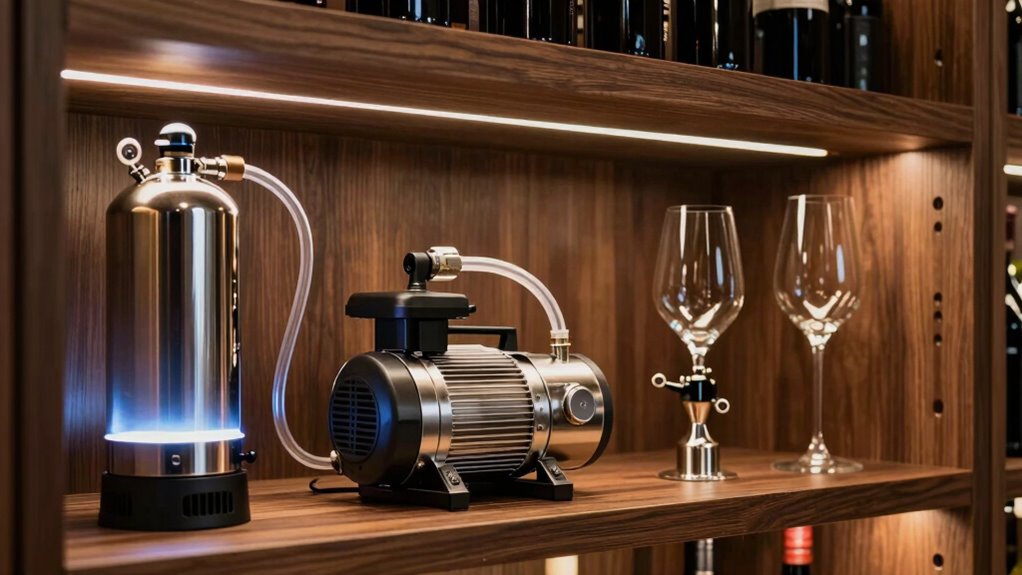
To select the right preservation system, you need to contemplate how often and how quickly you typically finish a bottle. If you enjoy wine pairing with frequent meals or small sips, a system like argon or vacuum can keep your wine fresh longer. For infrequent drinkers, simpler options may suffice. Consider your wine storage techniques and how they fit your lifestyle. The table below highlights different preservation methods based on your habits:
| Drinking Frequency | Preservation System | Ideal For |
|---|---|---|
| Daily | Argon or Vacuum | Small, frequent servings |
| Weekly | Argon or Vacuum | Moderate consumption |
| Monthly | Vacuum or Basic Seal | Infrequent wine lovers |
| Rarely | Basic or No system | Occasional sips |
| Special Occasions | Specialized Systems | Preserving delicate wines |
Choose wisely to enjoy your wine at its best.
Tips to Maximize the Freshness and Flavor of Preserved Wine
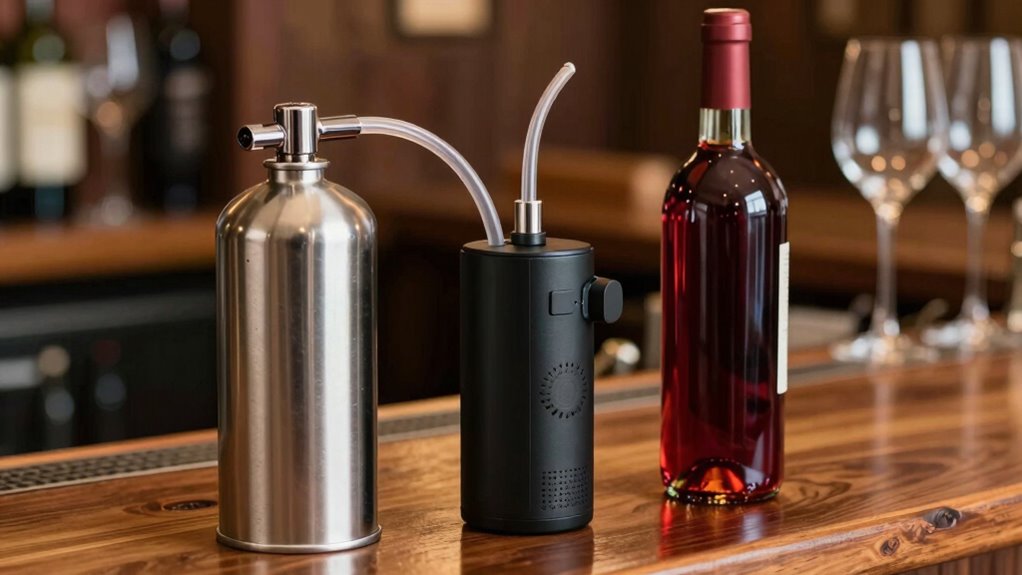
Maintaining the ideal freshness and flavor of preserved wine requires careful handling and attention to detail. Always store your wine bottle upright to minimize surface contact with the preservation method, reducing oxidation risk. After opening, reapply your chosen preservation method promptly—whether it’s argon, vacuum, or another system—to slow down deterioration. Keep the wine at a consistent, cool temperature, away from direct sunlight, as fluctuations can compromise quality. Use your preservation system as directed, ensuring a tight seal to prevent air exposure. When resealing, avoid shaking or disturbing the wine, which can affect its flavor. Regularly check your preservation method’s effectiveness, and consume the wine within the recommended period to enjoy its peak freshness and flavor.
Frequently Asked Questions
Can Wine Preservation Systems Extend Wine Shelf Life After Opening?
Yes, wine preservation systems can extend your wine’s shelf life after opening. They help prevent wine spoilage by controlling oxidation, which is the main cause of flavor deterioration. Using argon or vacuum systems slows down oxidation, keeping your wine fresh longer. With proper oxidation control, you can enjoy your opened wine for days or even weeks longer, ensuring it stays flavorful and enjoyable.
Are There Cost Differences Between Argon and Vacuum Preservation Methods?
Yes, there’s a cost difference between argon and vacuum preservation methods. Argon systems tend to be more expensive upfront due to the cost of gas cartridges and specialized equipment, making them a better choice if you’re willing to invest. Vacuum systems are generally more budget-friendly, with lower initial costs, but you should consider your budget considerations and how often you plan to use the system when choosing the best option for you.
How Long Can Wine Stay Fresh Using Each Preservation System?
Imagine opening a wine bottle that tastes just as fresh as the day you uncorked it. With argon, you can delay oxidation and extend your bottle lifespan up to 2-3 weeks. Vacuum systems, however, typically preserve wine for about 5-7 days, as they slow oxidation but don’t stop it completely. Your choice impacts how long your wine stays vibrant, flavorful, and ready to enjoy.
Do Preservation Systems Impact the Taste of Different Wine Types?
Preservation systems can impact the taste of different wine types by preserving or slightly altering their wine flavor. Argon, for example, maintains wine’s original taste with minimal impact, while vacuum systems might subtly change flavors over time. You might notice a slight difference in taste impact, especially with delicate or aromatic wines. Choosing the right system helps keep your wine’s flavor profile intact, ensuring each sip remains enjoyable.
Are Preservation Systems Suitable for Both Red and White Wines?
Yes, preservation systems work well for both red and white wines. Red wine compatibility is high because these systems prevent oxidation, keeping flavors fresh longer. White wine benefits from preservation as well, especially since cooler, more delicate whites are prone to spoilage. You’ll find that these systems help maintain the original taste and aroma, making it easier to enjoy your wines over several days without sacrificing quality.
Conclusion
Imagine opening a bottle and savoring that fresh, vibrant aroma as if it were just poured. With the right preservation system—be it argon or vacuum—you can keep your wine tasting like it’s just been uncorked. Think of each sip as a snapshot of perfection, preserved in time. Choose what fits your habits best, and let your wine’s true character shine through every glass, no matter how long it’s been waiting.
Fall Picks
fall essentials
As an affiliate, we earn on qualifying purchases.