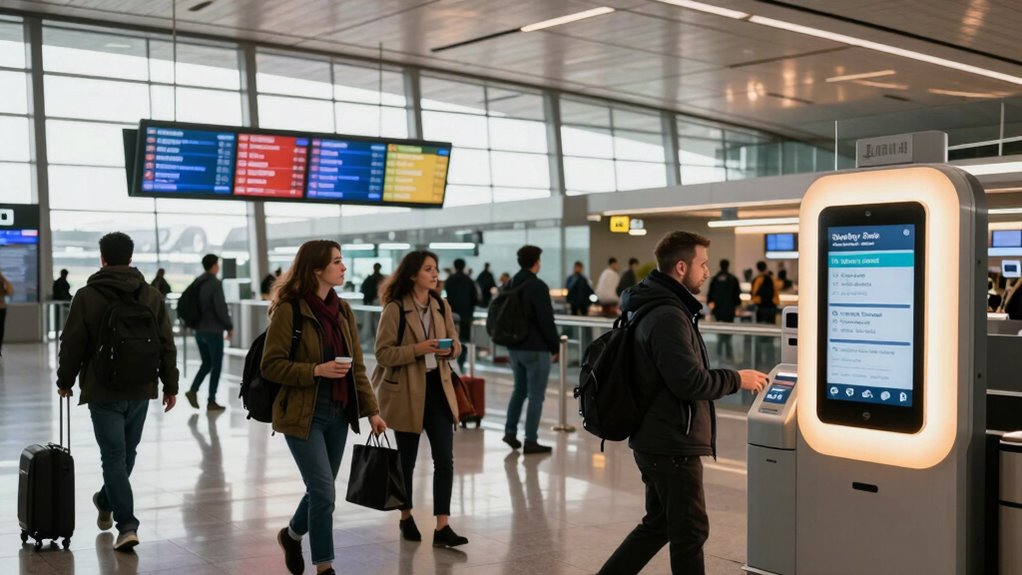

AI improves travel safety by providing you with timely, accurate alerts that help you make informed decisions without triggering unnecessary panic. It analyzes vast data quickly, offering personalized updates on weather, political unrest, or other risks. Clear and precise communication guarantees you receive actionable advice calmly, reducing anxiety in emergencies. By balancing technology with ethical standards and privacy, AI keeps you safe while respecting your rights. Stay with us to learn how AI ensures your safety is prioritized ethically and securely.
Key Takeaways
- AI provides timely, accurate alerts to prevent misinformation and reduce unnecessary alarm among travelers.
- Transparent communication about data sources and alert criteria builds trust and mitigates panic.
- Personalization of safety updates ensures relevant information without overwhelming users with excessive alerts.
- Responsible AI practices, including bias prevention, ensure fair and unbiased safety information dissemination.
- Clear, actionable guidance from AI helps travelers respond effectively without causing undue fear.

Artificial intelligence is revolutionizing how travel safety information is gathered, analyzed, and shared, making it easier for you to stay informed and protected. With AI-powered systems, you can receive timely alerts about potential risks, from weather disruptions to political unrest, without feeling overwhelmed. However, as these technologies become more integrated into your travel experience, it’s important to contemplate AI ethical considerations and user privacy concerns. These issues influence how data is collected, used, and shared, and they shape your trust in the information provided.
AI ethics demand transparency and responsible data handling. Travel safety platforms utilizing AI should clearly communicate how your data is being used, ensuring that your personal information isn’t exploited or shared without your consent. Developers must prioritize ethical guidelines to prevent biases that could distort safety alerts or unfairly target certain groups. When AI systems are designed ethically, they help you get accurate, unbiased information without causing unnecessary panic or misinformation. Additionally, establishing regulations and standards for AI implementation can further ensure responsible usage and protect user rights. Promoting ethical AI practices in this context is vital for fostering user trust and ensuring that safety measures do not infringe on individual rights.
User privacy concerns are at the forefront of AI’s application in travel safety. Many AI tools rely on collecting data from your devices, social media, or location services to monitor potential dangers. While this enables real-time updates tailored to your specific situation, it also raises questions about how securely your data is stored and who has access to it. Responsible AI deployment involves implementing strict security measures and giving you control over your data—so you decide what information you want to share and when. Additionally, understanding the importance of data security and how it relates to trustworthy AI is crucial for maintaining your confidence.
Despite these concerns, AI’s ability to analyze vast amounts of data quickly offers significant benefits. It can identify emerging threats faster than traditional methods, providing you with early warnings that help you make informed decisions. Moreover, leveraging machine learning algorithms enhances the accuracy of safety predictions, which is vital for avoiding false alarms or missed dangers. Instead of causing panic, AI-driven alerts aim to be clear, precise, and actionable. They’re designed to empower you with reliable information, reducing uncertainty during emergencies.
Incorporating AI into travel safety doesn’t mean sacrificing your privacy or ethical standards. Instead, it’s about striking a balance—using advanced technology responsibly to enhance your safety while respecting your rights. By staying informed about how your data is used and advocating for ethical AI practices, you can enjoy the benefits of safer travel experiences. AI’s potential to improve travel safety is enormous, but it must be guided by principles that prioritize your privacy and uphold ethical standards, ensuring you’re protected without compromising your trust.
As an affiliate, we earn on qualifying purchases.
Frequently Asked Questions
How Does AI Ensure Privacy When Collecting Travel Safety Data?
AI guarantees privacy when collecting travel safety data by implementing strict privacy protocols and data anonymization techniques. You can trust that personal details are protected because identifying information is removed or encrypted. AI systems follow these protocols to prevent data misuse. This way, your safety data remains confidential, allowing AI to analyze trends without compromising individual privacy, ensuring a secure and trustworthy safety information system for travelers.
Can AI Predict Future Travel Risks Accurately?
AI can predict future travel risks with a fair degree of accuracy by leveraging risk assessment and predictive analytics. You can trust that AI analyzes vast amounts of data—such as weather patterns, political stability, and health reports—to forecast potential dangers. While predictions aren’t foolproof, continuous improvements in algorithms and real-time data help AI provide timely insights, empowering travelers and authorities to make informed safety decisions.
What Are the Limitations of AI in Emergency Situations?
In emergencies, AI faces limitations like bias and data accuracy issues, which can hinder effective responses. You might find that biased algorithms could misinterpret situations, leading to inappropriate advice or actions. Additionally, if data isn’t accurate or up-to-date, AI’s recommendations could be flawed. This means you should rely on AI as a tool rather than the sole source during crises, always cross-checking with human judgment and official guidance.
How Do Travelers Trust Ai-Generated Safety Information?
You probably wonder if AI-generated safety info can be trusted, right? Well, traveler skepticism is real, but transparency in data helps build trust. When AI openly shares its sources and logic, you feel more confident. Just imagine, no more guessing if the info’s fake or biased—it’s like having a trustworthy travel buddy who never lies. With clear data, your confidence in AI grows, making travel safer and less stressful.
Will AI Replace Human Travel Safety Experts?
AI won’t fully replace human travel safety experts because they bring essential judgment, cultural sensitivity, and an understanding of travel ethics that AI can’t replicate. You rely on experts to interpret complex situations and respect local customs, ensuring travelers stay safe without causing misunderstandings. While AI enhances safety info, human experts maintain a nuanced approach, balancing technology with cultural awareness, which is vital for responsible and ethical travel experiences.
Conclusion
By embracing AI to enhance travel safety information, you can enjoy your journeys with greater confidence and peace of mind. Some worry that AI might cause unnecessary panic, but in reality, it provides accurate, timely updates that help you make informed decisions. With AI’s support, you won’t be caught off guard—you’ll be prepared. So, trust this technology to keep you safe, and focus on enjoying your adventures without fear.