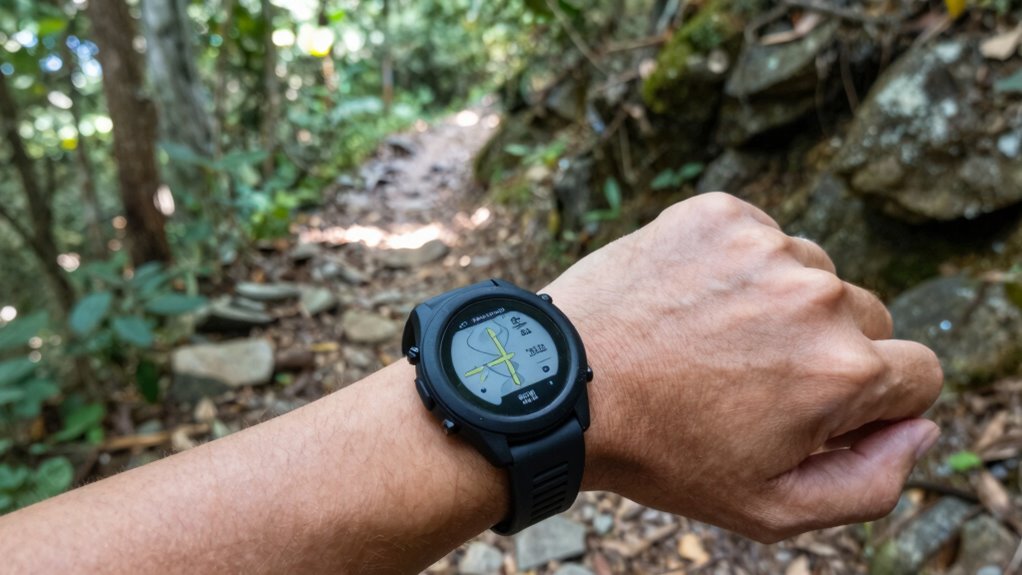

When choosing a hiking GPS watch, prioritize durability and battery life over flashy screens. You want a device that can withstand tough terrain, harsh weather, and accidental impacts, ensuring it works when you need it most. Long battery life lets you go for days without recharging, especially in remote areas. Focus on these core features to stay reliable and safe on your adventures, and you’ll learn more about what truly matters as you explore further.
Key Takeaways
- Durability and rugged construction ensure the watch withstands tough trail conditions and impacts.
- Long battery life is essential for multi-day hikes without frequent recharging.
- Weather resistance protects the device from rain, snow, and harsh environmental elements.
- Balance between screen quality and durability maintains visibility without compromising toughness.
- Overall dependability, including impact resistance and battery longevity, is more critical than screen size.
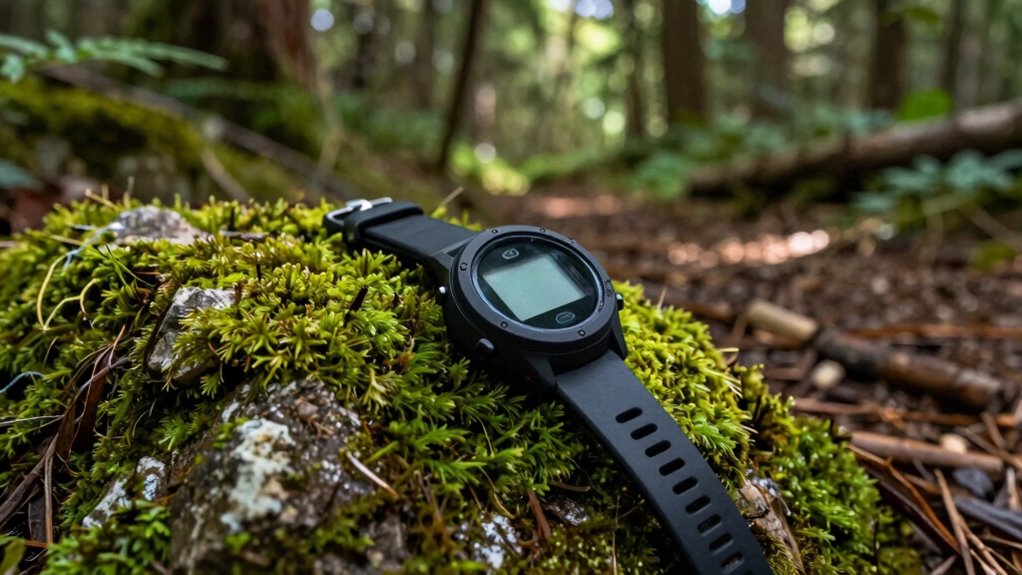
Whether you’re an experienced hiker or just starting out, having a reliable GPS watch can make all the difference on the trail. When choosing a device, two factors stand out as essential: trail durability and battery life. These aren’t just features; they’re the foundation of dependable navigation and safety in the wilderness. You want a watch that can withstand the elements, and that keeps working when you need it most.
Trail durability is critical because hiking often pushes gear to its limits. Trails can be rough—rocky, muddy, or snowy—and your watch needs to handle it all. Look for a GPS watch built with rugged materials, like reinforced cases or scratch-resistant screens. A durable design ensures your device won’t crack or break from a fall or a splash of rain. Waterproofing is equally important, especially if you’re crossing streams or caught in unexpected storms. The last thing you want is for your watch to fail just because it wasn’t designed to endure the trail’s challenges.
Trail-ready GPS watches need rugged materials, waterproofing, and resistance to handle tough terrain and weather conditions.
Battery life is another key factor, especially on longer hikes or multi-day trips. You don’t want your watch dying halfway through your adventure. Opt for models that offer extended battery life—some can last days on a single charge—so you can rely on your device without constantly worrying about recharging. Many watches now include power-saving modes or GPS-only options, which help stretch the battery for longer outings. Keep in mind that GPS tracking can be a drain, so choosing a watch with efficient power management can make a real difference. If you’re venturing into remote areas where charging isn’t an option, a watch with impressive battery longevity becomes even more valuable. Additionally, selecting a device with rugged construction can further ensure it withstands harsh conditions and rough handling. A good understanding of weather resistance features can help you select a device suited for various climates and weather scenarios. Understanding the environmental durability of your device ensures it can handle the specific terrain and climate you encounter. Furthermore, investing in a GPS watch with accurate positioning capabilities is essential for precise navigation in unfamiliar terrain.
While screens are tempting, their quality or size shouldn’t overshadow the importance of durability and battery life. A large, colorful display might look appealing, but if it’s fragile or drains the battery quickly, it’s less practical. Instead, focus on a watch that balances clear visibility with energy efficiency and robustness. The best GPS watches for hiking prioritize these core features, ensuring they remain reliable companions regardless of weather or terrain.
In the end, your choice of a GPS watch should hinge on how well it endures your adventures and how long it can operate without interruption. These aspects keep your navigation smooth and your safety intact, no matter how challenging the trail gets.
As an affiliate, we earn on qualifying purchases.
Frequently Asked Questions
How Accurate Are GPS Watches in Remote Areas?
GPS watches in remote areas can be quite accurate, but their map accuracy depends on signal reliability. You might experience occasional signal loss due to dense tree cover or rugged terrain, affecting pinpoint precision. However, most modern watches use multiple satellite systems to improve accuracy, so you can usually trust their navigation. Just remember, maintaining a clear view of the sky enhances signal strength and overall reliability during your hike.
Do GPS Watches Work Without Cell Service?
Yes, GPS watches work without cell service because they rely on satellite connectivity, not cellular networks. When you’re off the grid, your watch still tracks your location using satellites. Many models also feature map integration, helping you navigate even without cell coverage. Just make certain your device has sufficient battery life and preloaded maps, so you can confidently explore remote areas without worrying about losing signal.
What Is the Battery Life of Hiking GPS Watches?
Battery life on hiking GPS watches varies, but with smart power management, you can often get days of use. Typically, they last anywhere from 12 to 30 hours in GPS mode, depending on the device. Think of it as a marathon, not a sprint—conserving battery longevity through features like low-power modes or turning off unnecessary functions helps extend your watch’s runtime, ensuring it’s ready when you need it most.
Are GPS Watches Suitable for Beginner Hikers?
Yes, GPS watches are suitable for beginner hikers. They enhance trail safety by helping you stay on track and avoid getting lost. Many models offer weather resistance, ensuring they work well in rain or snow. Their ease of use makes them a great tool for beginners, providing confidence and guidance during hikes. Plus, with features like real-time location updates, you can enjoy your hike while staying safe and prepared.
Can GPS Watches Track Elevation Changes Effectively?
Yes, GPS watches can effectively track elevation changes, including elevation gain and loss, during your hike. They use barometric altimeters or GPS signals to measure terrain elevation accurately. Many models also feature terrain mapping, helping you visualize elevation profiles and plan routes better. This way, you can monitor your ascent and descent, ensuring you’re staying on track and managing your effort throughout challenging terrains.
Conclusion
When choosing a GPS watch for hiking, it’s wise to focus on the features that truly serve your journey—like reliable navigation and long battery life—rather than just flashy screens. Think of the watch as your trusted companion, quietly supporting your adventures without unnecessary distractions. By prioritizing what genuinely matters, you’ll find your hikes more enjoyable and safer. After all, it’s the subtle details that often make the biggest difference on the trail.