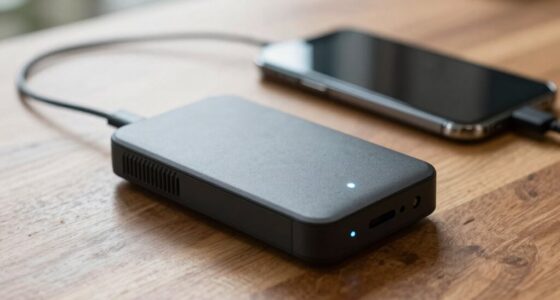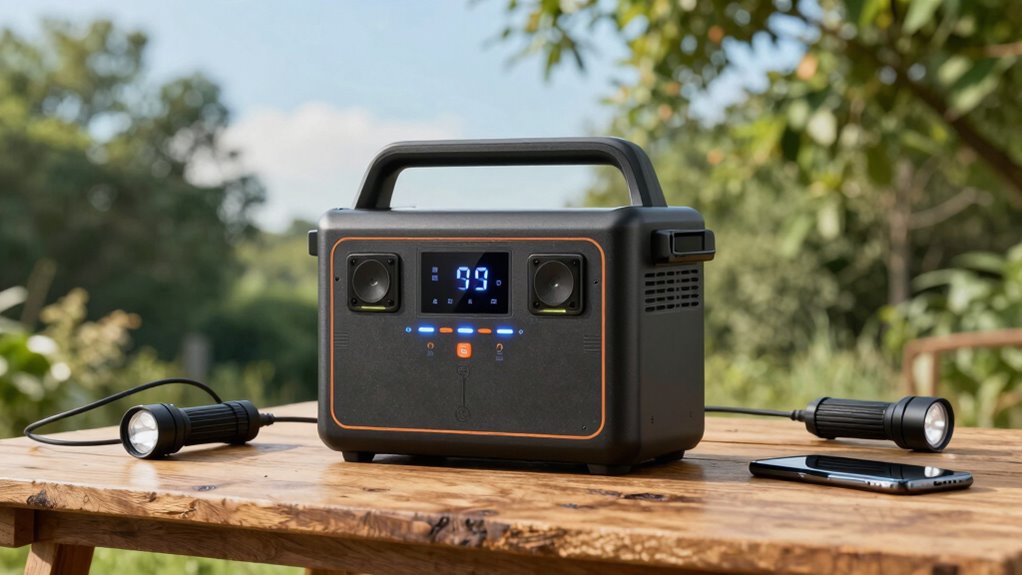

Portable power stations store energy in batteries and deliver power through outlets, making them handy for camping or emergencies. Watt-hours (Wh) measure the total energy capacity, while watts (W) show immediate power output. To find what you need, add up your devices’ wattage and estimate how long you’ll use them. Choosing the right station depends on matching your device demands with its capacity—stick around to learn more about selecting and using the perfect unit.

Get home appliances delivered free — and shop member deals
- Fast, free delivery on millions of items
- Access to Prime Big Deal Days deals on October 6–7
- Prime Video, Amazon Music and more included
Key Takeaways
- Watt-hours (Wh) measure total energy capacity, indicating how long devices can run before recharging.
- Watts (W) represent current power output, showing the immediate power a station can supply.
- To determine your needs, total device wattage times usage duration estimate, then select a station with sufficient Wh.
- Battery chemistry affects efficiency, capacity, lifespan, and compatibility with your devices.
- Matching station capacity and port types with your devices ensures safe, reliable portable power usage.
portable power station for camping
As an affiliate, we earn on qualifying purchases.
As an affiliate, we earn on qualifying purchases.
What Are Portable Power Stations and How Do They Work?
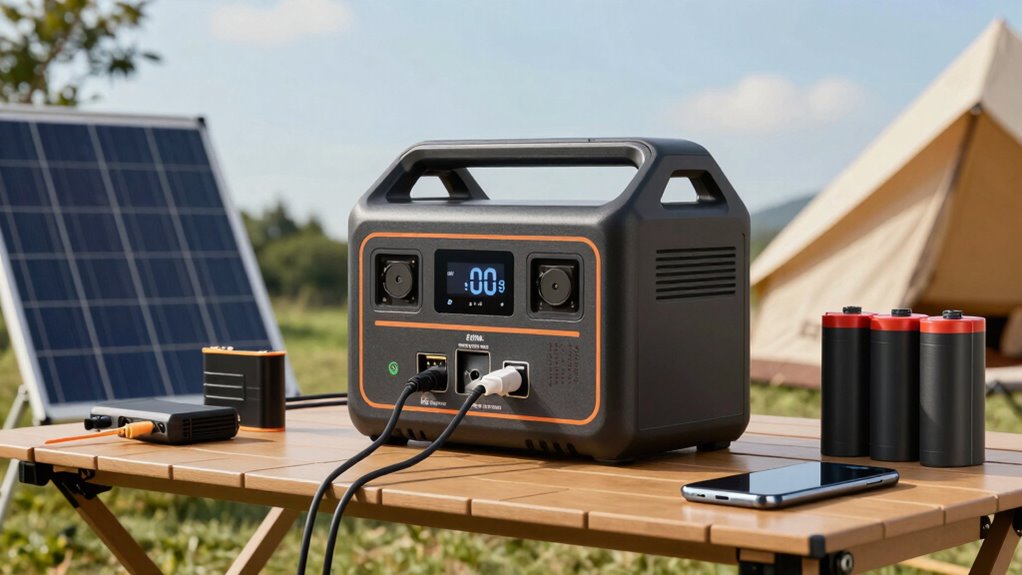
Portable power stations are compact, rechargeable devices that provide electricity on the go. They work by storing energy in their batteries, which use different battery chemistry types like lithium-ion or lithium-polymer. These chemistries influence the station’s weight, efficiency, and lifespan. To keep them ready for use, you can charge them through various methods, including AC outlets, solar panels, or car chargers. Each charging method impacts how quickly the station replenishes its power and how convenient it is for your needs. Once charged, you can connect your devices via multiple outlets—USB, AC, or DC—making it easy to run everything from phones to small appliances. Understanding how these stations store and recharge energy helps you select the right one for your portable power needs. Energy-efficient design is increasingly important for sustainable outdoor and emergency power solutions. Additionally, considering the power capacity ensures the station meets your specific energy requirements for different devices. Knowing the battery capacity can also help you estimate how long your devices will run before needing a recharge. Being aware of the recharge methods ensures you can keep your station powered in diverse situations. Moreover, understanding the battery chemistry can help you choose a power station with the best balance of weight, lifespan, and efficiency for your needs.
Watt-Hours and Watts Explained: What They Mean for Your Power Needs
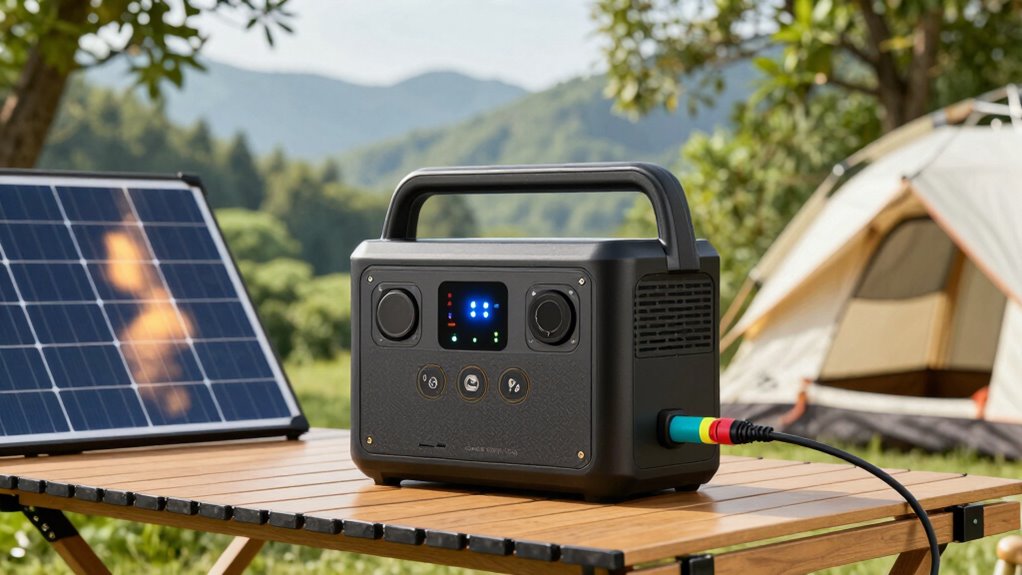
Understanding watt-hours and watts helps you figure out how much power your devices need and how long your portable station can run them. You’ll learn the difference between watts, which measure power at a moment, and watt-hours, which show total energy over time. This knowledge allows you to select the right station for your devices and guarantee your power needs are met. Additionally, grasping power capacity helps you determine how much energy a portable station can store and deliver over time, much like robot vacuum navigation and mapping systems optimize cleaning efficiency. Recognizing the benefits of raw food can also inform your choices about sustainable and healthy energy sources, as both involve understanding energy flow and utilization. Developing a smart energy management approach enables you to monitor and optimize your energy consumption in various applications.
Understanding Watt-Hours
Watt-hours (Wh) are a measurement of energy that tell you how much power a device can store or use over time. This rating helps you understand how long your portable power station can run your devices. The battery chemistry inside affects how efficiently it stores and releases energy, impacting overall capacity. For example, lithium-ion batteries generally offer higher energy density and longer lifespan through more charging cycles. Knowing the watt-hour rating helps you estimate runtime based on your device’s power consumption. It’s important to contemplate that batteries with more charging cycles can maintain their capacity longer, ensuring your power station remains reliable over time. Additionally, understanding the battery chemistry can inform you about the efficiency and longevity of the power station’s storage. Recognizing the energy capacity of a power station allows users to better plan for their energy needs during outdoor activities or emergencies. When choosing a power station, considering its charge cycles can help you select a durable option that maintains performance over time. Ultimately, understanding watt-hours helps you choose a power station that fits your specific energy needs and usage patterns. Moreover, familiarizing yourself with efficiency metrics can assist in selecting a device that performs optimally for your requirements. Being aware of manufacturer specifications can also help compare different models more effectively.
Differentiating Watts and Watt-Hours
Have you ever wondered how to compare different power sources effectively? Understanding the difference between watts and watt-hours is key. Watts measure power output at a specific moment, indicating how much energy a device uses or supplies per second. Watt-hours, on the other hand, show total stored energy over time, reflecting a battery’s capacity. Battery chemistry influences both these measures, affecting efficiency and longevity through charging cycles. For example, a higher watt-hour rating means longer usage between charges, regardless of watt output. Recognizing these differences helps you select a portable power station that matches your needs—whether quick bursts of power or sustained energy. By grasping how watts and watt-hours relate, you make smarter decisions about which device suits your power requirements.
Applying Measurements to Devices
When choosing a portable power station, knowing how watt-hours and watts correlate helps guarantee it meets your needs. To apply these measurements to your devices, consider the power requirements listed on each device. For example, a device with a wattage of 60W will run for about 10 hours on a 600Wh power station. If you plan to use a solar panel, ensure it can recharge the station efficiently, matching your energy consumption. Keep in mind that frequent deep discharges can reduce the battery lifespan, so choose a capacity that allows for occasional buffer. Understanding these measurements helps you balance your device needs with the station’s capacity, ensuring reliable power while maintaining the longevity of your battery and maximizing your solar panel’s efficiency. Additionally, understanding power management techniques can help optimize your energy use and extend your station’s overall lifespan. Properly managing discharge cycles can significantly improve the lifespan of your portable power station, especially when combined with smart charging practices that prevent unnecessary strain on the battery. Incorporating battery maintenance practices can also contribute to the overall durability of your power station over time. Being aware of capacity planning can help you select the right station size for your specific energy needs and avoid over- or under-utilizing your power source.
How to Calculate Your Power Requirements for Camping or Emergencies
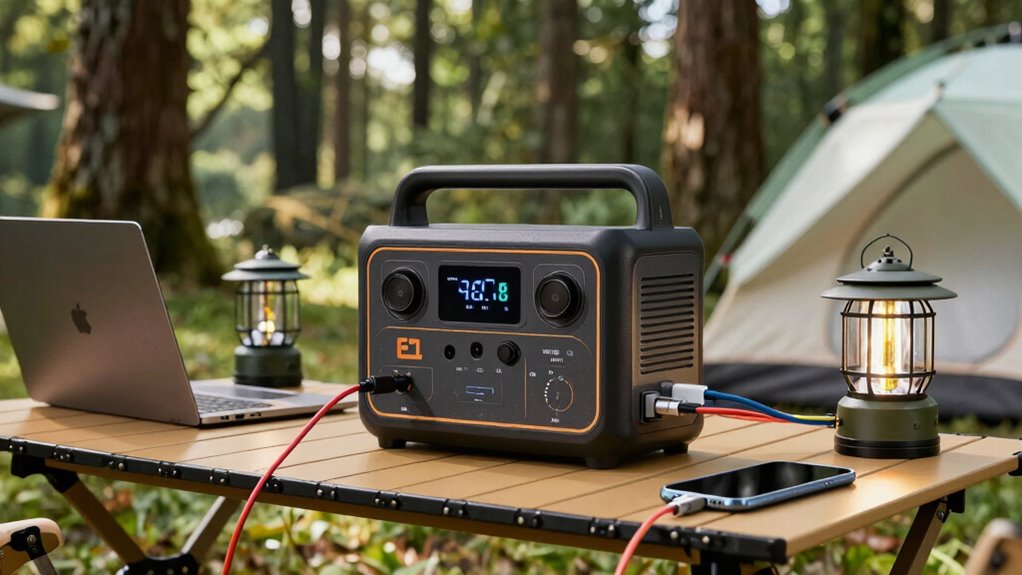
Calculating your power requirements is essential to make certain your portable power station can meet your needs during camping trips or emergencies. Start by listing all devices you’ll use, noting their wattage and how long they’ll run. This will help you determine the total watt-hours needed, ensuring that your chosen station provides enough capacity. Keep these in mind:
Assess your device needs to ensure your portable power station provides sufficient watt-hours for camping or emergencies.
- Identify essential devices to avoid overloading your station.
- Estimate daily usage to ensure your battery life estimation aligns with your needs.
- Check solar panel compatibility for recharging options during extended use.
- Calculate total watt-hours to pick a station that matches your energy demands.
- Understand how kWh and Wh relate to your device power consumption for more accurate planning.
- Remember that understanding battery capacity can help you better gauge how long your devices will run on a given power station.
- Additionally, being aware of power management techniques can help optimize your energy usage and extend the operational time of your devices.
- Being familiar with energy efficiency can further help in reducing overall power consumption and maximizing your station’s runtime.
How to Choose the Best Portable Power Station for Your Devices and Situation
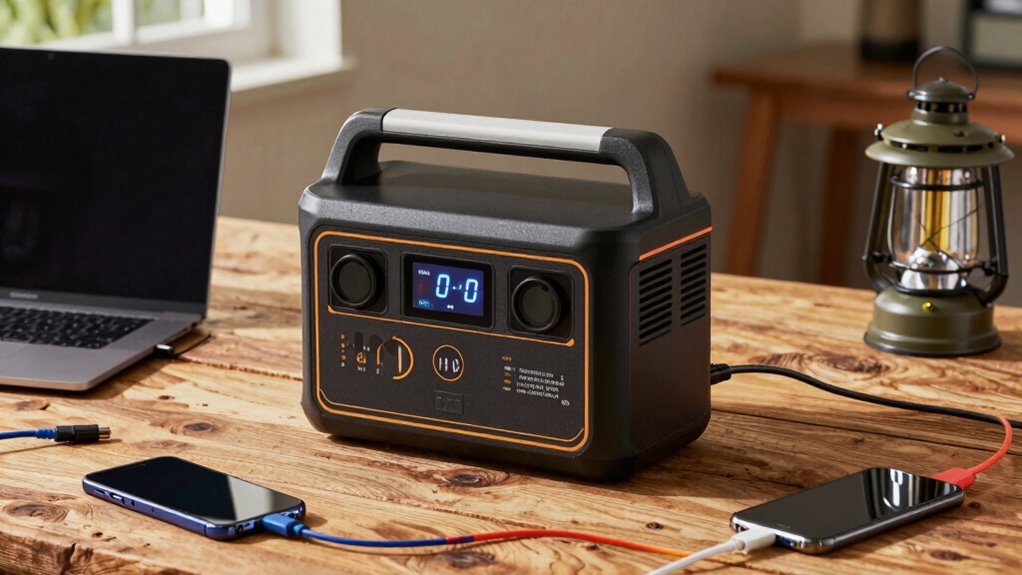
To choose the right portable power station, start by evaluating your power needs to guarantee it can handle your devices. Make sure the station is compatible with the types of plugs and power requirements you use. Also, consider the port options, size, and weight to match your situation, whether you’re camping or preparing for emergencies. Additionally, understanding the difference between watt-hours and watts can help you select a unit with appropriate capacity and output understanding power measurements. Being aware of vetted wave and wind energy options can also inform sustainable choices for longer-term energy needs. Recognizing how home energy integration can enhance your backup power strategy may also guide your decision-making process.
Assess Your Power Needs
Are you unsure how much power your devices need or which portable power station suits your situation? To find the right fit, consider these key factors:
- Identify your essential devices and their wattage to determine the minimum battery capacity needed.
- Estimate your usage duration to ensure the power station can sustain your devices throughout the day.
- Think about future needs—adding a solar panel can extend your station’s usability by replenishing battery capacity with sunlight.
- Match the power station’s watt output with your devices’ requirements to avoid overloads or insufficient power.
Match Device Compatibility
Choosing the right portable power station starts with guaranteeing it’s compatible with your devices. Battery compatibility is vital—check if your devices’ power requirements match the station’s output capacity. Device matching involves verifying the type of connectors and outlets, such as USB, AC, or DC ports, to ensure your gadgets can connect easily. Some power stations are better suited for small electronics like smartphones or tablets, while others can handle larger devices like laptops or small appliances. Always review the power station’s specifications and compare them to your devices’ voltage and current needs. This way, you avoid overloading or underpowering your gear. Matching the right battery capacity and output options ensures your devices operate efficiently and safely, giving you peace of mind during use.
Consider Port and Size
When selecting a portable power station, considering its port options and size can make a significant difference in how well it fits your needs. Portability considerations help you decide if it’s easy to carry on hikes or camping trips, while size efficiency guarantees it doesn’t take up too much space at home or in your vehicle. Think about these key factors:
- Do you need multiple charging ports for various devices?
- Is weight a concern for frequent transport?
- Will a compact size suit your storage space?
- Are you balancing power capacity with portability?
Choosing the right size and ports ensures you stay connected without sacrificing convenience. Prioritizing portability considerations and size efficiency helps you find a power station that’s just right for your specific situation.
Tips for Using and Maintaining Your Portable Power Station
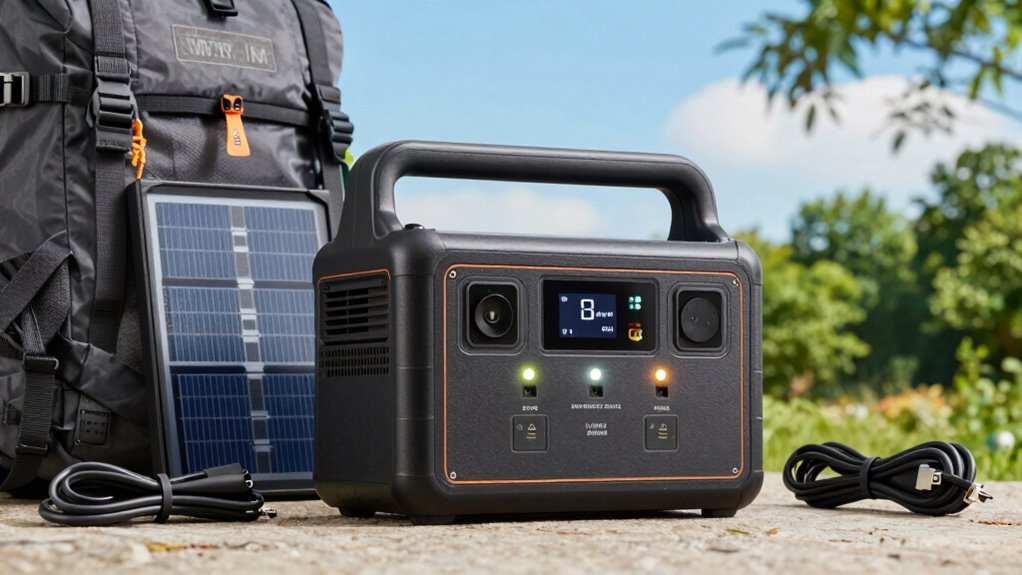
To guarantee your portable power station performs reliably, it’s essential to follow proper usage and maintenance practices. Regular battery maintenance helps prolong its lifespan, so avoid letting it sit fully drained for long periods. Instead, keep it charged within 20-80% if you won’t use it for a while. Storage tips are equally important; store your station in a cool, dry place away from direct sunlight. Before long-term storage, fully charge the unit and then discharge it to around 50%. Also, periodically check for dust or debris and keep vents clear to prevent overheating. Proper handling and routine maintenance ensure your power station remains ready whenever you need it, maximizing its efficiency and lifespan during outdoor adventures or emergencies.
Common Mistakes to Avoid When Selecting a Portable Power Station
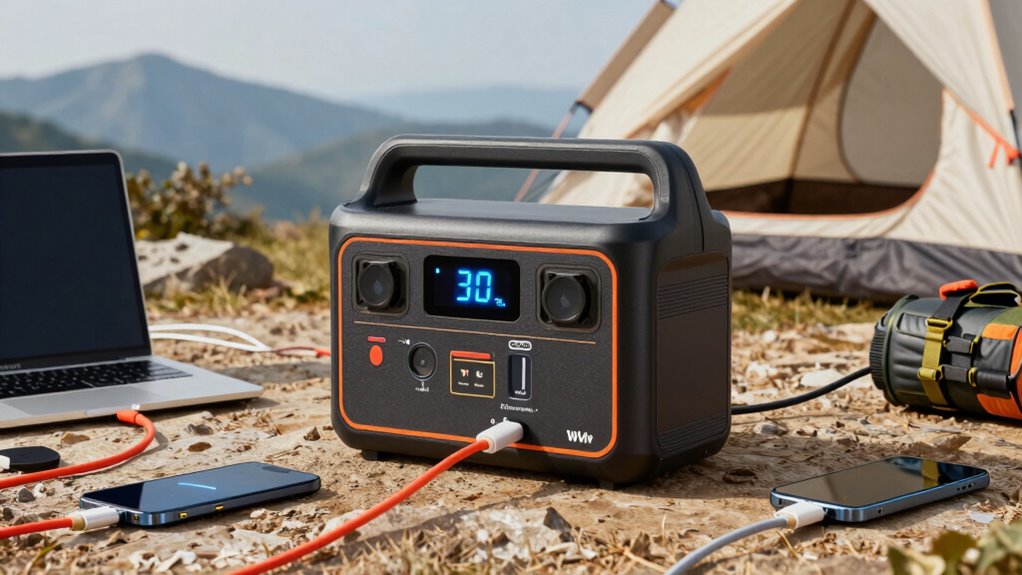
Selecting the right portable power station involves more than just picking the most popular model. Avoid these common mistakes:
- Overlooking battery capacity needs, which can leave you powerless during critical moments.
- Ignoring charging speed, causing delays when you need quick power on the go.
- Choosing a station with insufficient watt-hours, limiting the number of devices you can run simultaneously.
- Focusing solely on size and weight, risking underpowered units that won’t meet your energy demands.
Frequently Asked Questions
How Long Can a Portable Power Station Run My Devices?
The duration a portable power station runs your devices depends on its battery capacity and your devices’ power consumption. If your station has a higher watt-hour (Wh) rating, it’ll power your gadgets longer. Keep in mind, device compatibility matters—larger devices draw more power, reducing runtime. To estimate, divide the station’s watt-hours by your device’s wattage. This way, you can plan how long your devices stay powered in any situation.
Can Portable Power Stations Be Recharged With Solar Panels?
In a flash, yes, portable power stations can be recharged with solar panels. Today’s models often feature solar panel compatibility, making eco-friendly recharging a breeze. You simply connect compatible solar panels to the power station using specific recharging methods like MC4 connectors or Anderson plugs. This flexibility allows you to harness the sun’s energy, providing a sustainable way to keep your devices powered off-grid or during emergencies.
Are Portable Power Stations Waterproof or Weather-Resistant?
Most portable power stations are not fully waterproof but do offer some weather resistance. You should look for models with water protection features, like sealed casings or IP ratings, if you plan to use them outdoors. Keep in mind, weather resistance helps protect against rain, splashes, or dust, but it’s not a substitute for proper water protection. Always store your station in a dry, sheltered area when possible to maximize its lifespan.
What Safety Features Do Portable Power Stations Typically Include?
You’ll find that portable power stations typically include safety features like battery management systems to prevent overcharging, overheating, and short circuits. Surge protection shields the device from sudden power spikes, safeguarding your connected devices. These features work together to guarantee safe operation, durability, and reliability during use. Always check the specific model’s safety features to ensure it meets your needs and provides peace of mind during outdoor adventures or emergencies.
How Do I Safely Dispose of or Recycle a Used Power Station?
Think of your used power station as a worn-out hero needing a proper farewell. To guarantee eco-friendly disposal, look for local battery recycling programs or designated e-waste facilities. Avoid tossing it in regular trash, as harmful chemicals can harm the environment. By recycling responsibly, you give the device a respectful ending, supporting sustainability and protecting nature’s future. Your mindful disposal transforms a discarded item into a step toward a greener world.
Conclusion
Now that you understand watts, watt-hours, and how to pick the right portable power station, you’re better equipped to keep your devices charged when it counts. Think of it as having the right tools in your toolbox—being prepared makes all the difference. With a little know-how, you’ll avoid pitfalls and keep the power flowing, no matter where life takes you. Stay sharp, plan ahead, and don’t let a dead battery catch you off guard.
NFL season / tailgating Picks
team gear
As an affiliate, we earn on qualifying purchases.