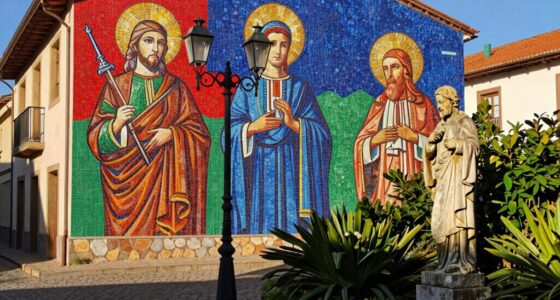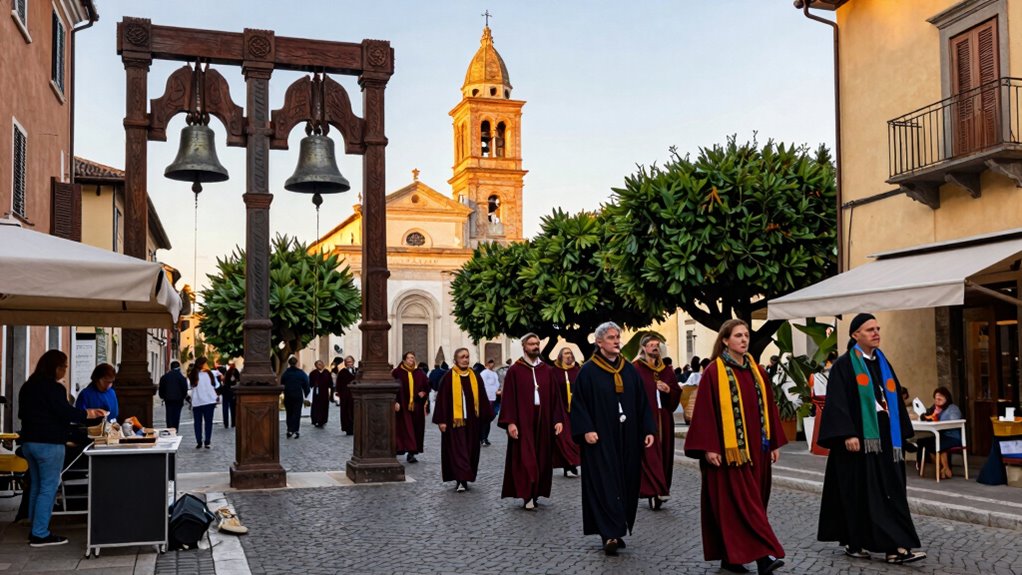

In Italian culture, bells, processions, and soundscapes play a subtle yet powerful role in shaping community identity and preserving history. Bells mark important moments and connect you with ancestors, while processions celebrate saints, milestones, and local legends, turning streets into living monuments. The vibrant soundscape of church chimes, folk music, and daily chatter creates a sensory tapestry that fosters belonging and pride. Explore further to discover how these sounds continue to sustain Italy’s rich cultural legacy.
Key Takeaways
- Bells serve as historical markers, signaling events and maintaining cultural continuity across generations in Italian communities.
- Processions embody community cohesion, celebrating saints and milestones, and turning streets into living cultural monuments.
- Local soundscapes, including bells and folk music, create a sensory tapestry that preserves and narrates cultural traditions.
- Sound environments influence daily life, fostering social bonds and connecting residents to their shared history.
- Auditory cues from bells and processions uphold cultural identity, linking past and present through shared rituals and memories.
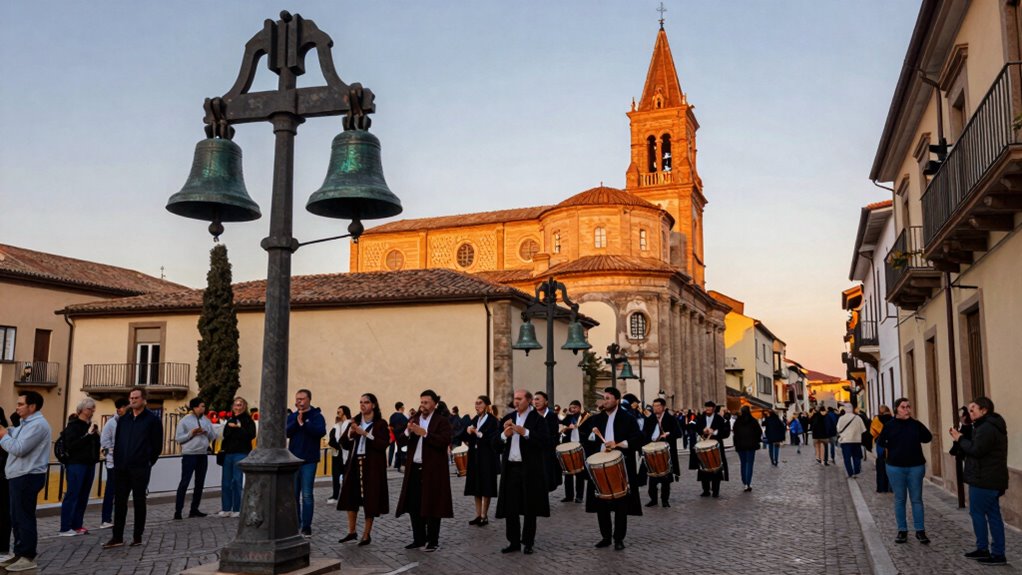
In Italy, sounds like bells, processions, and local soundscapes do more than mark the passage of time or celebrate religious festivals—they shape the very fabric of community life. When you hear the ringing of church bells, you’re not just recognizing a moment on the clock; you’re experiencing a tradition rooted in centuries of history. These sounds carry a deep historical significance, often serving as reminders of a town’s origins, its saints, and its collective memory. Bells once signaled important events—warnings of danger, calls to worship, or celebrations of victories—embedding themselves into the historical narrative of each community. Their chimes echo through time, connecting present-day residents with their ancestors and the stories that define their local identity. The cultural symbolism embedded in these sounds helps preserve a sense of continuity across generations. Additionally, the soundscape diversity reflects the unique character and history of each locale, contributing to a richer cultural tapestry. These diverse sound elements collectively foster a strong sense of local pride and identity. The auditory environment also influences the daily rhythms and social interactions within these communities, shaping how residents experience their surroundings.
Processions, too, hold profound cultural symbolism. When you witness a religious procession winding through narrow streets, you’re observing a ritual that symbolizes more than faith. These events embody community cohesion, showcasing shared values and collective devotion. Often, they commemorate saints, historical milestones, or local legends, turning the streets into living monuments of cultural identity. The rhythmic steps of participants, the ornate floats, and the traditional music all serve as visual and auditory markers of history and belief. They reinforce social bonds, reminding communities of their common past and the enduring importance of tradition. Moreover, the symbolic significance of these processions helps maintain cultural continuity and reinforces social harmony within the community.
The local soundscape of Italy’s towns and villages shapes daily life in subtle yet powerful ways. You may notice the mingling of church bells, street vendors calling out, and folk music drifting from open windows—each element weaving together to create a sensory tapestry that defines a place. These sounds are more than background noise; they are symbols of cultural continuity. They tell stories of local craftsmanship, religious devotion, and communal celebration. Over generations, these soundscapes have become a living archive, preserving cultural symbolism and fostering a sense of belonging. When you immerse yourself in them, you connect with a tradition that’s been passed down, carrying echoes of history and identity in every note and chime. This rich auditory environment serves as a daily reminder of shared heritage and collective memory.
As an affiliate, we earn on qualifying purchases.
Frequently Asked Questions
How Do Italian Soundscapes Influence Local Community Identities?
Italian soundscapes shape your community identity through rich auditory heritage and musical symbolism. You hear local bells, processions, and traditional melodies that create a sense of belonging and cultural pride. These sounds connect you to history, reinforce shared values, and foster community cohesion. By experiencing these unique soundscapes, you become part of a living tradition that defines your local identity and preserves Italian cultural legacy.
What Are the Regional Variations in Italian Procession Traditions?
You’ll notice regional variations in Italian procession traditions, where vibrant festival melodies echo through narrow streets and colorful banners wave in the breeze. In Tuscany, traditional procession costumes shimmer with intricate embroidery, while in Sicily, lively drums and folk tunes accompany fiery dances. These regional differences reflect local histories, customs, and artistry, immersing you in the unique cultural tapestry woven into each community’s celebration.
How Have Bells Historically Impacted Italian Architectural Design?
Bells have profoundly impacted Italian architectural design through their symbolic meaning and functional role. You’ll notice bell towers often serve as focal points, emphasizing bell symbolism in church and civic structures. Architects carefully consider acoustic properties in design, enhancing architectural acoustics to guarantee the bell’s sound resonates beautifully across spaces. This integration of sound and structure creates a harmonious environment, blending spiritual symbolism with practical architectural elements.
Are There Modern Innovations Preserving Traditional Italian Sound Practices?
You see modern innovations like digital preservation transforming Italian sound practices. For instance, a small town used modern acoustics and recording tech to capture its historic bell sounds, ensuring future generations experience tradition. These efforts blend tradition with technology, allowing communities to preserve their unique soundscapes while adapting to contemporary needs. Such projects highlight Italy’s commitment to safeguarding its cultural heritage through innovative methods.
How Do Soundscapes Affect Tourism in Italian Cultural Sites?
Soundscapes greatly influence your experience at Italian cultural sites, shaping your perception and emotional connection. They create a memorable atmosphere through sound symbolism and acoustic branding, making locations more distinctive and inviting. When you hear traditional bells or ambient sounds, you’re more likely to feel immersed and curious, encouraging tourism. These carefully crafted sound environments boost the authenticity of the experience, drawing more visitors and enhancing their overall appreciation of Italy’s rich heritage.
Conclusion
As you’ve seen, bells, processions, and soundscapes are more than mere traditions—they’re the heartbeat of Italian culture, weaving history, faith, and community into everyday life. They remind you that sometimes, the smallest sounds carry the deepest meanings, proving that the devil is in the details. Embracing these hidden melodies reveals Italy’s soul, proving that you have to look beyond the surface to truly understand its rich, vibrant tapestry.