
To reduce anxiety with breathwork, focus on mindful breathing or diaphragmatic exercises. Practice paying attention to your inhale and exhale without judgment, or place a hand on your belly to promote deep, full breaths. These techniques activate your relaxation response, lowering stress hormones and calming your nervous system. Incorporating brief sessions into your daily routine or during stressful moments can make a big difference. Keep exploring—more techniques and tips await your discovery.
Key Takeaways
- Mindful breathing focuses on present sensations, reducing worry and promoting calmness during stressful moments.
- Diaphragmatic (belly) breathing deepens oxygen intake and activates the relaxation response.
- Regular practice of breathwork lowers cortisol levels and enhances mental resilience.
- Techniques like slow, deliberate inhales and exhales can quickly interrupt anxiety episodes.
- Breathwork can be done anytime, anywhere, without equipment, making it an accessible anxiety management tool.
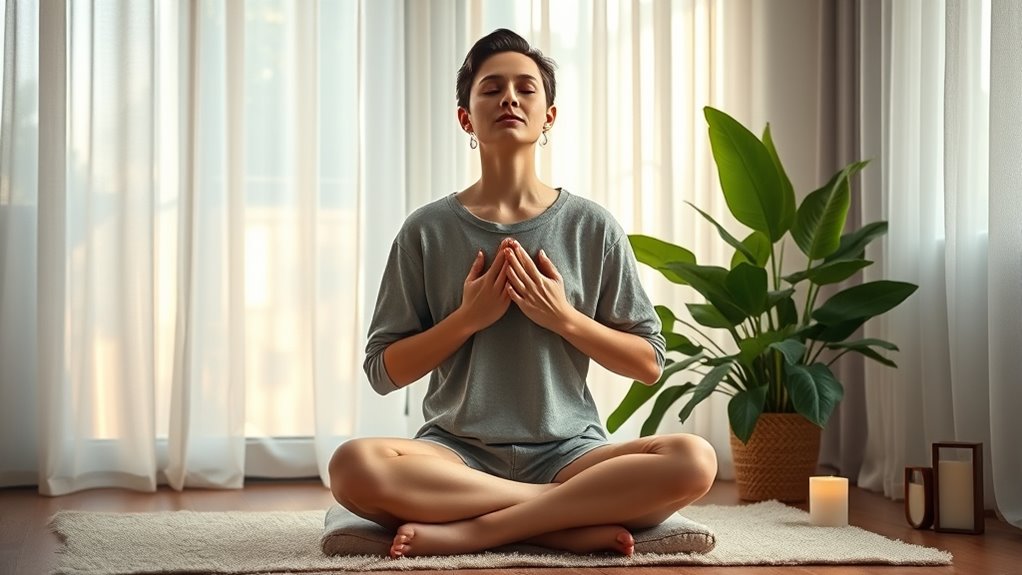
Are you looking for a simple, effective way to manage anxiety? Breathwork offers powerful tools you can incorporate into your daily routine to help calm your mind and body. One of the most accessible techniques is mindful breathing, where you focus your attention on your breath, observing each inhale and exhale without judgment. This practice helps anchor your awareness in the present moment, reducing worries about the past or future that often fuel anxiety. When you engage in mindful breathing, you notice sensations like the cool air entering your nostrils or your chest rising and falling. This simple act can quickly shift your mental state from stress to calm, especially when practiced regularly.
Another effective breathwork method is diaphragmatic exercises, also known as belly breathing. These exercises involve deep, intentional breaths that expand your diaphragm, the muscle beneath your lungs. To do this, sit or lie comfortably, place one hand on your chest and the other on your belly. As you inhale deeply through your nose, focus on expanding your abdomen rather than your chest. You want your belly to rise as you fill your lungs with air. Then, slowly exhale through your mouth or nose, allowing your belly to fall. Diaphragmatic exercises promote full oxygen exchange, which signals your nervous system to relax. Over time, this practice can lower cortisol levels and decrease feelings of anxiety.
The key to making these techniques effective is consistency. Start with just a few minutes each day, gradually increasing your practice time as you become more comfortable. During stressful moments, taking a few mindful breaths can interrupt a cascade of anxious thoughts and bring you back to a sense of control. When practicing diaphragmatic exercises, concentrate on slow, deliberate breaths, ensuring each inhale and exhale is smooth and steady. This focus encourages your parasympathetic nervous system—the part responsible for rest and digest—to activate, counteracting the fight-or-flight response that makes anxiety feel overwhelming. Incorporating structured breathwork routines can further enhance your ability to manage stress effectively.
You don’t need any special equipment or training to benefit from mindful breathing or diaphragmatic exercises. These techniques are simple, portable, and can be done anywhere—at work, before bed, or during a stressful commute. By integrating these breathwork practices into your daily life, you develop a reliable toolkit for managing anxiety, giving you a sense of empowerment over your mental well-being. With patience and regular practice, you’ll likely notice a more resilient, calm state of mind that supports your overall health and happiness.
Frequently Asked Questions
Can Breathwork Replace Medication for Anxiety?
Breathwork can be a helpful alternative to medication for anxiety, but it shouldn’t substitute professional advice or treatment. As a natural remedy, breathwork offers calming effects that reduce stress and promote relaxation. You might find it effective for mild anxiety or as a complementary practice. However, for severe or persistent anxiety, consult a healthcare provider to explore all medication alternatives and ensure you receive appropriate care tailored to your needs.
How Often Should I Practice Breathwork for Best Results?
You should practice breathwork daily, ideally twice a day, to see the best results. Maintaining consistency is key, so set aside specific times and stick to them. The more regularly you practice, the more your body and mind will adapt, reducing anxiety over time. Don’t wait for symptoms to worsen—making breathwork a daily habit will strengthen its calming effects and enhance your overall well-being.
Are There Specific Breath Techniques Suited for Severe Anxiety?
For severe anxiety, you should focus on deep breathing and diaphragmatic breathing techniques. These methods help calm your nervous system quickly. Try slow, controlled breaths, inhaling deeply through your nose, expanding your belly, then exhaling slowly through your mouth. Practice these techniques several times a day, especially during stressful moments, to build resilience and reduce anxiety more effectively. Consistency enhances their calming benefits over time.
Can Breathwork Cause Dizziness or Discomfort?
Breathwork can cause dizziness or discomfort, especially if you overdo it or hold your breath too long. To minimize dizziness risk, start with gentle techniques and focus on comfortable breathing. If you experience discomfort, slow down or pause until it subsides. Always listen to your body and practice in a safe environment. Proper discomfort management guarantees you benefit from breathwork without feeling overwhelmed or unwell.
Is Breathwork Effective for All Types of Anxiety Disorders?
Ever wondered if breathwork works for every anxiety disorder? While techniques like diaphragmatic breathing and mindfulness meditation can markedly reduce symptoms, they aren’t a one-size-fits-all solution. Some individuals find these practices highly effective, especially for generalized anxiety and panic attacks, but others might need additional treatments. It’s worth trying breathwork as part of your routine, but consult a mental health professional for personalized guidance tailored to your specific anxiety type.
Conclusion
By embracing breathwork, you can break free from burdens and banish bothersome anxiety. Breathe mindfully, balance your body, and boost your well-being. With consistent practice, you’ll notice noticeable calmness and confidence creeping in, transforming turmoil into tranquility. So, start small, stay steady, and see how simple, soulful breathing can soothe your spirit, strengthen your stability, and serve as a superpower against stress. Breathe better, be brighter—your peaceful, powerful pause awaits!