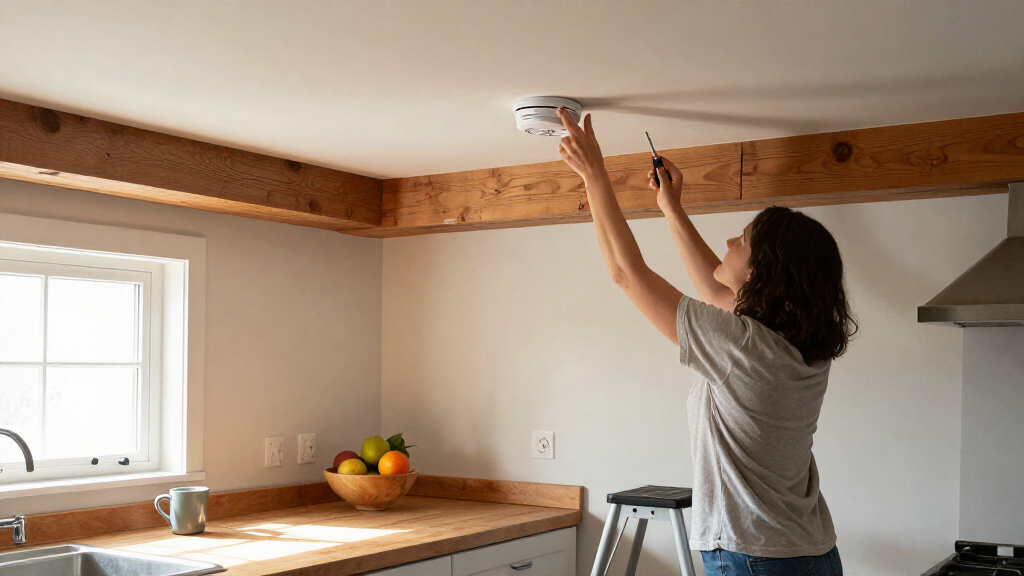

When selecting smart smoke and carbon monoxide detectors, the primary challenge is balancing reliable connectivity with ease of installation. My top recommendation is the X-Sense Wireless Interconnected Smoke and Carbon Monoxide Detector, which stands out for its seamless mesh networking and affordable multi-pack value. For those integrated into existing smart home ecosystems, the Kidde Smart Smoke and CO Detector with Ring offers superior app integration and voice assistant compatibility. Buyers must weigh the hassle of hardwiring against the reliability of battery-backed wireless units, as well as the cost of proprietary hubs versus standalone connectivity. Continue reading for a detailed breakdown of how these devices compare in sensitivity, maintenance, and long-term value.

Get home appliances delivered free with Prime
- Fast, free delivery on millions of items
- Prime Video, Amazon Music and more included
- Member-only deals all year
Complete the kit



Key Takeaways
- Wireless interconnected models like the X-Sense SC07-W offer the best balance of coverage and simplicity for most homes, eliminating the need for complex wiring while maintaining synchronized alerts.
- Hardwired options such as the First Alert SC5 provide consistent power but require professional installation or significant DIY effort, making them better suited for new construction or major renovations.
- Ecosystem integration varies widely; Ring-compatible Kidde units offer robust smart home features, while HEIMAN requires a dedicated gateway, adding cost and complexity for users outside its native platform.
- Battery life and replacement logistics are major differentiators; 10-year sealed battery models reduce maintenance but limit placement flexibility compared to easily swappable AA battery units.
- Value packs significantly lower the per-unit cost for large homes, with 6-pack options like the X-Sense SC06-W providing comprehensive coverage without the premium price tag of single-unit smart hubs.
| X-Sense Wireless Interconnected Smoke and Carbon Monoxide Detector, 3-Pack |  | Best for Smaller Homes | Brand and model: X-Sense XP0H-WN | Pack size: 3 detectors | Detection: Smoke and carbon monoxide | VIEW LATEST PRICE | See Our Full Breakdown |
| X-Sense SC07-W Interconnected Smoke and Carbon Monoxide Detectors, 6-Pack |  | Best for Whole-Home Coverage | Brand and model: X-Sense SC07-W | Quantity: 6 alarms | Detection: Photoelectric smoke and electrochemical carbon monoxide | VIEW LATEST PRICE | See Our Full Breakdown |
| First Alert SC5 Hardwired Smart Smoke and Carbon Monoxide Alarm |  | Best Hardwired Smart Pick | Brand and model: First Alert SMCO600NV-AC | Alarm type: Smoke and carbon monoxide combination alarm | Power: Corded electric | VIEW LATEST PRICE | See Our Full Breakdown |
| X-Sense 6-Pack Interconnected Smoke & CO Detector (SC06-W) |  | Best for Simple Wireless Installation | Model: X-Sense SC06-W | Unit count: 6 | Detection: Photoelectric smoke and electrochemical carbon monoxide | VIEW LATEST PRICE | See Our Full Breakdown |
| First Alert SC5 Battery Smart Smoke and Carbon Monoxide Alarm |  | Best Battery-Powered Smart Pick | Brand and model: First Alert SMCO600NV | Alarm type: Smoke and carbon monoxide combination alarm | Power: Battery-powered | VIEW LATEST PRICE | See Our Full Breakdown |
| X-Sense SC07 Smoke and Carbon Monoxide Detector Combo, 5-Pack |  | Best for Long-Term, No-Wiring Coverage | Detection: Smoke and carbon monoxide | Sensors: Photoelectric smoke sensor and electrochemical CO sensor | Pack size: 5 detectors | VIEW LATEST PRICE | See Our Full Breakdown |
| Kidde 30CUDR Smoke and Carbon Monoxide Detector, Battery-Powered, 3-Pack |  | Best for Simple, Familiar Battery-Powered Protection | Detection: Smoke and carbon monoxide | Pack size: 3 alarms | Power: Two included AA batteries per alarm | VIEW LATEST PRICE | See Our Full Breakdown |
| HEIMAN Smart Interconnected Carbon Monoxide Detectors, 3-Pack with Gateway |  | Best for Connected CO Monitoring | Detection: Carbon monoxide | Pack contents: 3 CO alarms and 1 gateway | Sensor: FIGARO TGS5141 electrochemical | VIEW LATEST PRICE | See Our Full Breakdown |
| Kidde Smart Smoke and CO Detector with Ring, Hardwired with AA Battery Backup |  | Best Hardwired Pick for Ring Homes | Detection: Smoke and carbon monoxide | Power: Hardwired with AA battery backup | App notifications: Ring alerts for smoke, CO, and low battery | VIEW LATEST PRICE | See Our Full Breakdown |
| Kidde Smart Smoke and CO Detector with Ring, AA Battery, RGCUDR-RW |  | Best Battery-Powered Smart Pick | Detection: Smoke and carbon monoxide | Model: RGCUDR-RW | Power: 2 included AA alkaline batteries | VIEW LATEST PRICE | See Our Full Breakdown |
| X-Sense Interconnected Smoke and Carbon Monoxide Detector Kit with Remote |  | Best for Multi-Room Coverage | Included: 4 XP0H-WN combination alarms and 1 RC01 Pro remote | Sensors: Photoelectric smoke and electrochemical CO | Power: Sealed 10-year lithium metal battery | VIEW LATEST PRICE | See Our Full Breakdown |
| Kidde Hardwired Smart Smoke and Carbon Monoxide Detector with App Alerts and Battery Backup |  | Best for App Alerts on Existing Hardwiring | Model: 30CUAR-W | Power: 120V AC hardwired | Backup batteries: 2 AA batteries | VIEW LATEST PRICE | See Our Full Breakdown |
| smart smoke and carbon monoxide detector | Power | Detection | Certifications | Interconnection |
|---|---|---|---|---|
| X-Sense Wireless Interconnecte | Sealed lithium battery, up to 10 years | Smoke and carbon monoxide | UL 217 and UL 2034 | Wireless; all alarms sound together |
| X-Sense SC07-W Interconnected | — | Photoelectric smoke and electrochemical carbon monoxide | UL 217 and UL 2034 | Wireless |
| First Alert SC5 Hardwired Smar | Corded electric | — | — | Compatible alarms sound together |
| X-Sense 6-Pack Interconnected | — | Photoelectric smoke and electrochemical carbon monoxide | UL 217 and UL 2034 | Wireless RF, up to 6 units |
| First Alert SC5 Battery Smart | Battery-powered | — | — | Compatible alarms |
| X-Sense SC07 Smoke and Carbon | — | Smoke and carbon monoxide | UL 217 and UL 2034 | — |
| Kidde 30CUDR Smoke and Carbon | Two included AA batteries per alarm | Smoke and carbon monoxide | — | — |
| HEIMAN Smart Interconnected Ca | Battery operated; batteries included | Carbon monoxide | UL 2034 5th edition; CSFM approved | — |
| Kidde Smart Smoke and CO Detec | Hardwired with AA battery backup | Smoke and carbon monoxide | — | — |
| Kidde Smart Smoke and CO Detec | 2 included AA alkaline batteries | Smoke and carbon monoxide | — | — |
| X-Sense Interconnected Smoke a | Sealed 10-year lithium metal battery | — | UL 217 and UL 2034; ETL listed | RF interconnected |
| Kidde Hardwired Smart Smoke an | 120V AC hardwired | — | UL 217, UL 2034, and FCC | — |
More Details on Our Top Picks
X-Sense Wireless Interconnected Smoke and Carbon Monoxide Detector, 3-Pack
The X-Sense XP0H-WN 3-pack suits buyers who want smoke and CO coverage across a few rooms without replacing batteries regularly. Its wireless interconnection means all three alarms sound when one detects a hazard, a useful advantage over standalone alarms when a risk starts away from bedrooms. The sealed battery is designed to last up to 10 years, and the large mounting bracket can cover marks or screw holes left by an older alarm. Compared with the six-unit X-Sense SC07-W, this pack is a more focused fit for a smaller home, but it offers fewer alarms and no LCD display. It is not Wi-Fi connected, so it cannot send app alerts, and it is not hardwired or compatible with a base station.
Pros:- Detects both smoke and carbon monoxide in one alarm
- Wireless interconnection makes all three alarms sound together
- Sealed lithium battery is designed to last up to 10 years
- Large mounting bracket can cover old screw holes and ceiling marks
Cons:- No Wi-Fi or app alerts
- Cannot connect to a base station
- Battery-powered rather than hardwired
Best for: Owners of smaller homes or apartments who want interconnected smoke and CO coverage without hardwiring or routine battery changes.
Not ideal for: People who want phone notifications, base-station monitoring, hardwired power, or enough detectors for a larger home.
- Brand and model:X-Sense XP0H-WN
- Pack size:3 detectors
- Detection:Smoke and carbon monoxide
- Sensor types:Photoelectric and electrochemical
- Power:Sealed lithium battery, up to 10 years
- Interconnection:Wireless; all alarms sound together
- Wi-Fi and base station:Not supported
- Certifications:UL 217 and UL 2034
- Mounting bracket:5.7 inches (145 mm)
Our verdict“Choose this three-pack for straightforward, interconnected protection in a smaller home; skip it if remote alerts or wider coverage are priorities.”
X-Sense SC07-W Interconnected Smoke and Carbon Monoxide Detectors, 6-Pack
For a home that needs alarms in several rooms, the X-Sense SC07-W six-pack offers broader coverage than the three-unit XP0H-WN. Its alarms wirelessly interconnect, so when one senses smoke or CO, the rest sound too; that can make an alert easier to hear across floors or at night. A sealed 10-year battery avoids regular battery swaps, while the LCD gives a local readout rather than app-based monitoring. The combination of photoelectric smoke and electrochemical CO sensing covers both hazards, and the units are certified to UL 217 and UL 2034. The tradeoff is that this is a standalone alarm network, not a smart-home system: there is no Wi-Fi or phone alerting, and the alarms are battery-powered rather than hardwired. Choose it over First Alert’s app-connected SC5 when room coverage matters more than remote notifications.
Pros:- Six alarms support coverage across multiple rooms
- Wireless interconnection broadcasts an alarm throughout the network
- Sealed battery is designed to last 10 years
- LCD display and mounting hardware are included
Cons:- No Wi-Fi or app notifications
- Not hardwired, so it does not use a home alarm circuit
- Six units may be more than smaller homes need
Best for: Households furnishing multiple bedrooms and common areas that want alarms to sound together without running wiring.
Not ideal for: Buyers who need phone alerts, smart-home integration, hardwired power, or a smaller set of detectors.
- Brand and model:X-Sense SC07-W
- Quantity:6 alarms
- Detection:Photoelectric smoke and electrochemical carbon monoxide
- Power and battery life:Sealed lithium battery; designed for 10 years
- Interconnection:Wireless
- Alarm volume:85 dB
- Display:LCD
- Dimensions:5.7 × 5.7 × 2 inches
- Certifications:UL 217 and UL 2034
Our verdict“Pick the SC07-W six-pack when broad, interconnected room coverage matters more than app alerts or hardwired installation.”
First Alert SC5 Hardwired Smart Smoke and Carbon Monoxide Alarm
The First Alert SC5 hardwired alarm is the clearest choice here for buyers who want alerts beyond the sound of an alarm. It sends notifications through the First Alert app, while voice alerts identify the hazard type and location—more informative than the basic local alerts from the battery-powered X-Sense SC07-W. Compatible alarms can interconnect, and a backup lithium battery helps maintain protection during an outage. Its Quick Connect Plug can simplify replacement where a compatible hardwired connection already exists, but this is still a single alarm, not a multi-room pack. Installation depends on a hardwired connection, making it a poor fit for homes without existing alarm wiring or for renters who cannot alter fixtures. The smart features also depend on app connectivity, so buyers seeking a simple, self-contained battery alarm may prefer the X-Sense options.
Pros:- Sends smoke and CO alerts through the First Alert app
- Voice alerts identify the type and location of danger
- Backup battery provides protection during power outages
- Compatible alarms can sound together, and Quick Connect Plug can simplify replacement
Cons:- Requires a hardwired connection
- Includes one alarm rather than a multi-unit pack
- App alerts depend on connectivity beyond the alarm itself
Best for: Homeowners replacing an existing hardwired alarm who want app notifications and spoken identification of the hazard location.
Not ideal for: Renters or homeowners without compatible alarm wiring, and buyers who want a multi-alarm pack in one purchase.
- Brand and model:First Alert SMCO600NV-AC
- Alarm type:Smoke and carbon monoxide combination alarm
- Power:Corded electric
- Backup battery:3V lithium battery pack
- Connectivity:First Alert app alerts
- Interconnection:Compatible alarms sound together
- Voice alerts:Identifies hazard type and location
- Dimensions:5.75 × 1.6 × 5.75 inches
- Unit count:1
Our verdict“Choose this model to add app and voice alerts while replacing a compatible hardwired alarm; skip it if you need battery-only installation.”
X-Sense 6-Pack Interconnected Smoke & CO Detector (SC06-W)
The X-Sense SC06-W is a practical fit when the main goal is getting six rooms covered without running new wires. Its battery-powered alarms use wireless RF interconnection, so all units can sound together, and the photoelectric and electrochemical sensors detect smoke and CO respectively. Against the similarly sized X-Sense SC07-W, the SC06-W offers the same broad format of six interconnected alarms and a sealed 10-year battery, but the supplied details do not list an LCD display. Neither model provides Wi-Fi or app alerts, so these are connected to one another, not to your phone. The battery cannot be replaced; the alarm must be replaced when its service life ends. The network is also limited to up to six units, which makes it less suitable for larger properties needing more alarms.
Pros:- Six alarms cover multiple rooms
- Wireless RF connection makes every unit sound when one detects a hazard
- Sealed battery is designed to last 10 years
- Includes mounting hardware and needs no rewiring
Cons:- No Wi-Fi or smart-home integration
- Battery is non-replaceable, so the unit must be replaced at end of life
- Interconnection is limited to up to six units
Best for: People installing alarms in up to six rooms who want wireless interconnection and do not need phone alerts.
Not ideal for: Owners of larger properties needing more than six connected alarms, or anyone seeking app notifications or a replaceable battery.
- Model:X-Sense SC06-W
- Unit count:6
- Detection:Photoelectric smoke and electrochemical carbon monoxide
- Power and battery life:Battery-powered; sealed lithium battery designed for 10 years
- Interconnection:Wireless RF, up to 6 units
- Alarm sound level:85 dB
- Dimensions:5.7 × 5.7 × 2 inches
- Certifications:UL 217 and UL 2034
- Enclosure material:Heat-resistant PC
Our verdict“Choose the SC06-W for a six-room wireless alarm network without rewiring, but not for app-based monitoring or larger installations.”
First Alert SC5 Battery Smart Smoke and Carbon Monoxide Alarm
The First Alert SC5 battery model brings app-connected smoke and CO alerts to homes where hardwired installation is not an option. Like its hardwired sibling, the SC5 SMCO600NV-AC, it provides voice alerts that identify the hazard type and location, plus interconnection with compatible alarms. This version uses CR123A lithium batteries, so it avoids a wiring requirement while keeping remote alerts in the mix. Precision Detection Technology is intended to help reduce nuisance alarms, and low-battery notifications can give owners a warning before power runs out. The tradeoff is that this is a single alarm, unlike the six-unit X-Sense SC07-W, which offers wider room coverage out of the box. Buyers should also check which compatible alarms are already installed and remember that app notifications require the First Alert app and a working connection.
Pros:- Sends smoke and CO notifications through the First Alert app
- Voice alerts identify hazard type and location
- Battery-powered installation does not require a hardwired connection
- Low-battery notifications and Precision Detection Technology are included
Cons:- Sold as a single alarm, so whole-home coverage requires additional units
- App alerts depend on connectivity and app setup
- Uses replaceable CR123A lithium batteries
Best for: Renters or homeowners without hardwired alarm wiring who want phone alerts and voice hazard identification from a battery-powered unit.
Not ideal for: Buyers needing multiple alarms in one pack, or those who prefer a basic alarm without app-dependent features.
- Brand and model:First Alert SMCO600NV
- Alarm type:Smoke and carbon monoxide combination alarm
- Power:Battery-powered
- Battery:3V CR123A lithium batteries
- Connectivity:First Alert app alerts
- Interconnection:Compatible alarms
- Voice alerts:Identifies hazard type and location
- Dimensions:5.75 × 1.6 × 5.75 inches
- Unit count:1
Our verdict“Pick this single alarm for battery-powered installation with app and voice alerts, but choose a multi-pack if you need broad coverage at once.”
X-Sense SC07 Smoke and Carbon Monoxide Detector Combo, 5-Pack
I’d choose the X-Sense SC07 5-Pack for buyers who want smoke and CO detection across several rooms without replacing batteries on a routine schedule. Its sealed battery rated for 10 years and no-rewiring installation make it simpler to place than the hardwired Kidde Smart Smoke and CO Detector with Ring. The LCD adds useful context: it shows battery status and real-time CO levels, rather than only signaling an alarm. That visibility comes with a clear tradeoff: these alarms work independently, with no Wi-Fi or wireless interconnection, so one detector will not relay an alert to the others or to a phone. Compared with the interconnected HEIMAN set, this is the more straightforward multi-room option, but not the pick for connected alerts.
Pros:- Detects both smoke and carbon monoxide with separate sensor types
- Sealed battery is rated for 10 years, avoiding routine battery changes
- LCD shows CO levels in PPM and battery status
- Wall- or ceiling-mount installation requires no rewiring
Cons:- No wireless interconnection between detectors
- No Wi-Fi or app notifications
- Standalone alarms provide less whole-home alert coordination than the HEIMAN interconnected set
Best for: Homeowners who need several smoke-and-CO alarms, want a long-life sealed battery, and do not need phone alerts or alarms linked across rooms
Not ideal for: People who want an alarm in one room to trigger others or need remote alerts while away from home
- Detection:Smoke and carbon monoxide
- Sensors:Photoelectric smoke sensor and electrochemical CO sensor
- Pack size:5 detectors
- Battery:Sealed lithium battery rated for 10 years
- Display:LCD with real-time CO levels in PPM and battery status
- Installation:Wall or ceiling mount; no rewiring required
- Connectivity:No Wi-Fi or wireless interconnection
- Certifications:UL 217 and UL 2034
Our verdict“Choose the SC07 five-pack for low-maintenance, room-by-room protection, but skip it if you want interconnected alarms or smartphone alerts.”
Kidde 30CUDR Smoke and Carbon Monoxide Detector, Battery-Powered, 3-Pack
The Kidde 30CUDR 3-Pack suits buyers who want uncomplicated smoke and CO alarms without hardwiring or app setup. Each unit runs on two included AA batteries, and its 85 dB alarm pairs with a red LED warning for audible and visual notice. Kidde also designs the detector to reduce nuisance alarms from cooking or steam, a practical fit for homes where kitchen-related alerts are a concern. Unlike the Ring-connected Kidde RGCUDR-RW, this model has no specified app alerts or wireless interconnection; it is a basic local alarm, not a remote-monitoring choice. Its replaceable batteries also mean more upkeep than the sealed-battery X-Sense SC07. The 10-year limited warranty is a strong support feature, though it does not remove the need to maintain the batteries.
Pros:- Detects both smoke and carbon monoxide
- Uses included AA batteries and needs no wiring
- Combines an 85 dB alarm with a red LED warning
- Designed to reduce cooking- and steam-related false alarms
Cons:- AA batteries require periodic replacement
- No interconnection feature is specified
- No app or remote alert capability is specified
Best for: Renters or homeowners who want a three-alarm battery-powered set with audible and visual alerts, and prefer not to configure smart-home features
Not ideal for: Buyers who want phone alerts, alarms linked across rooms, or a sealed battery that avoids periodic replacement
- Detection:Smoke and carbon monoxide
- Pack size:3 alarms
- Power:Two included AA batteries per alarm
- Alarm volume:85 dB
- Visual alert:Red LED warning light
- Nuisance alarm design:Designed to reduce alarms from cooking or steam
- Warranty:10-year limited warranty
- Standards:UL 217 10th Edition, UL 2034 5th Edition, and FCC
Our verdict“Pick this Kidde set for straightforward local alarms and easy battery-powered installation, not for connected whole-home alerts.”
HEIMAN Smart Interconnected Carbon Monoxide Detectors, 3-Pack with Gateway
I’d pick the HEIMAN C1-R when connected carbon monoxide coverage matters more than having smoke detection in the same device. Its three alarms interconnect across up to 200 m, so a CO alarm can be heard elsewhere in the home, while the included gateway sends app alerts and keeps alarm logs. That is a meaningful step up from the standalone X-Sense SC07, which displays CO readings locally but cannot relay alerts. The HEIMAN’s compact, lightweight detectors and battery operation suit homes where wiring is inconvenient. The tradeoff is scope: these are CO-only detectors, unlike the Kidde 30CUDR combo, so they do not replace smoke alarms. App access depends on the gateway, and smart-home integrations may take compatible equipment and setup. I’d treat this as a connected CO layer, not a full smoke-and-CO solution.
Pros:- Interconnected alarms can spread a CO alert across the home
- Included gateway supports app alerts and alarm logs
- Battery-powered installation avoids wiring
- Compact detectors include test and silence controls
Cons:- Detects carbon monoxide only, not smoke
- App alerts require the included gateway
- Some smart-home integrations may need compatible hubs or additional setup
Best for: Smart-home owners adding interconnected CO coverage who already have separate smoke alarms and are comfortable setting up a gateway
Not ideal for: Buyers seeking one device for both smoke and CO detection, or those who do not want gateway-dependent app features
- Detection:Carbon monoxide
- Pack contents:3 CO alarms and 1 gateway
- Sensor:FIGARO TGS5141 electrochemical
- Interconnection range:Up to 200 m (656 ft)
- Power:Battery operated; batteries included
- Detector dimensions:2.75 × 2.75 × 1.45 in
- Smart-home compatibility:Home Assistant, IFTTT, Google Home, and SmartThings
- Certifications:UL 2034 5th edition; CSFM approved
Our verdict“Choose HEIMAN for connected, home-wide CO alerts alongside separate smoke alarms, rather than as a standalone combo-detector solution.”
Kidde Smart Smoke and CO Detector with Ring, Hardwired with AA Battery Backup
For a home with existing alarm wiring and Ring devices, this Kidde hardwired smart detector brings smoke and CO alerts into the Ring app, including low-battery notifications. It also supports Alexa notifications and can relay alerts from other hardwired alarms, giving it a connected role that the battery-only Kidde 30CUDR does not offer. The hardwired supply makes sense as a fixed replacement, while AA battery backup provides another power path if household electricity is interrupted. Kidde says its sensing is designed to reduce cooking-related nuisance alarms. The main compromise is installation: unlike the battery-powered Ring RGCUDR-RW, this model requires compatible wiring, so it is not the easier choice for renters or homes without wired alarms. Optional 24/7 monitoring is sold separately; app notifications are available without that service.
Pros:- Detects both smoke and carbon monoxide
- Ring app sends smoke, CO, and low-battery alerts without a monitoring subscription
- AA battery backup supplements hardwired power
- Can relay alerts from other hardwired alarms and supports Alexa notifications
Cons:- Requires hardwired installation, limiting placement and suitability for renters
- 24/7 monitoring is an optional paid service
- Smart alerts depend on the Ring setup and connectivity
Best for: Homeowners replacing a hardwired alarm who already use Ring or Alexa and want app alerts for smoke, CO, and low battery
Not ideal for: Renters or buyers without compatible hardwired connections, and anyone expecting included 24/7 professional monitoring
- Detection:Smoke and carbon monoxide
- Power:Hardwired with AA battery backup
- App notifications:Ring alerts for smoke, CO, and low battery
- Smart-home connectivity:Alexa notifications; can relay alerts from other hardwired alarms
- Nuisance alarm design:Enhanced sensing designed to reduce cooking-related nuisance alarms
- Standards:UL 217 and FCC
- Optional monitoring:24/7 monitoring sold separately
Our verdict“Choose this model for a Ring-connected home with existing alarm wiring; choose the battery-powered RGCUDR-RW if wiring is unavailable.”
Kidde Smart Smoke and CO Detector with Ring, AA Battery, RGCUDR-RW
The Kidde RGCUDR-RW is the more flexible Ring-connected choice for homes where adding wiring is not practical. It detects smoke and CO, sends Ring app alerts for alarms and low battery, and runs on included AA batteries. It can also connect wirelessly with other Kidde alarms and work with Alexa-enabled devices, extending alerts beyond the detector itself. Compared with the hardwired Kidde Ring model, this one is easier to place without an existing alarm circuit; the tradeoff is reliance on replaceable batteries rather than hardwired power with backup. Like the hardwired version, it is designed to reduce cooking-related nuisance alarms, and 24/7 monitoring is optional through a separate Ring subscription. This is a stronger fit than the basic Kidde 30CUDR for buyers who want remote notifications, but those who do not use Ring may not benefit from its connected features.
Pros:- Detects both smoke and carbon monoxide
- Ring app provides remote alarm and low-battery notifications without a monitoring subscription
- Battery-powered installation does not require wiring
- Wireless interconnectivity with other Kidde alarms and Alexa support
Cons:- AA batteries need replacement over time
- 24/7 monitoring requires a separate Ring subscription
- Connected features are less useful to buyers who do not use Ring or Alexa
Best for: Renters and homeowners who need a battery-powered smoke-and-CO alarm with Ring alerts and compatibility with other Kidde alarms
Not ideal for: People who want a hardwired replacement, avoid changing batteries, or do not use Ring or Alexa
- Detection:Smoke and carbon monoxide
- Model:RGCUDR-RW
- Power:2 included AA alkaline batteries
- Connectivity:Ring app notifications and wireless interconnectivity with Kidde alarms
- Voice assistant:Alexa-enabled devices
- Nuisance alarm design:Designed to reduce cooking-related nuisance alarms
- Standards:UL 217 and FCC
- Optional monitoring:24/7 monitoring available through a separate Ring subscription
Our verdict“Choose the RGCUDR-RW for Ring alerts and wireless flexibility without hardwiring, but pick the wired Kidde version for an existing hardwired setup.”
X-Sense Interconnected Smoke and Carbon Monoxide Detector Kit with Remote
I’d choose this four-alarm kit when the priority is covering several rooms with linked smoke and CO alerts, without adding new wiring. Its RF interconnection means an alarm can prompt the other units to sound, while the included remote lets you test or silence them without reaching each ceiling-mounted detector. The LCD CO-level display also gives more information than a basic alarm, including battery level and operating status. Compared with the single Kidde 30CUAR-W, this kit covers more locations out of the box but does not offer its app notifications when you’re away. The tradeoff is the sealed 10-year battery: there’s no routine battery swap, but the entire alarm must be replaced when the battery reaches end of life.
Pros:- Four combination alarms provide multi-room smoke and CO coverage.
- RF interconnection lets alarms sound together across the home.
- Remote supports testing and silencing without reaching each unit.
- LCD shows CO levels, battery level, and working status.
Cons:- The sealed battery requires replacing the entire unit at end of life.
- No app alerts are listed for remote monitoring while away.
Best for: Households that need four linked smoke and CO alarms across multiple rooms and prefer installation without rewiring.
Not ideal for: Buyers who want smartphone alerts while away, or who prefer to replace batteries instead of replacing a whole alarm at battery end of life.
- Included:4 XP0H-WN combination alarms and 1 RC01 Pro remote
- Sensors:Photoelectric smoke and electrochemical CO
- Power:Sealed 10-year lithium metal battery
- Interconnection:RF interconnected
- Display:LCD showing CO levels, battery level, and working status
- Installation:Wall or ceiling mounting; no rewiring
- Certifications:UL 217 and UL 2034; ETL listed
- Dimensions:5.7 x 5.7 x 2 inches
- Warranty and support:5-year quality warranty; lifetime technical support
Our verdict“Choose this kit for linked, multi-room coverage and remote control without rewiring; choose the Kidde 30CUAR-W instead if app alerts are the priority.”
Kidde Hardwired Smart Smoke and Carbon Monoxide Detector with App Alerts and Battery Backup
This single-unit Kidde is a practical fit for buyers who already have a hardwired alarm location and want phone alerts for smoke, CO, and low battery. Its voice alerts identify the hazard, while two AA backup batteries help keep the alarm operating through a power outage. Compared with the four-alarm X-Sense kit, it offers app connectivity but covers just one location, so a whole-home setup may require additional compatible alarms. The app connection depends on 2.4 GHz Wi-Fi, which makes it a poor match for homes using only another Wi-Fi band or for anyone who wants a wireless, no-wiring installation. I’d favor it when remote notifications matter more than bundled multi-room coverage.
Pros:- App notifications cover smoke, CO, and low-battery alerts.
- Voice alerts identify which hazard the alarm detects.
- Two AA backup batteries support operation during power outages.
- Combines smoke and carbon monoxide detection in one unit.
Cons:- Installation requires a 120V hardwired connection.
- App connectivity requires 2.4 GHz Wi-Fi.
- One unit offers less bundled coverage than the four-alarm X-Sense kit.
Best for: Homeowners with an existing 120V hardwired alarm location who want app notifications and voice alerts for smoke or CO.
Not ideal for: Renters or buyers without compatible hardwiring, and households that need several linked alarms in one kit.
- Model:30CUAR-W
- Power:120V AC hardwired
- Backup batteries:2 AA batteries
- Connectivity:2.4 GHz Wi-Fi
- Alerts:Smoke, carbon monoxide, and low battery
- Voice alerts:Identifies the detected hazard
- Certifications:UL 217, UL 2034, and FCC
- Included items:Alarm, mounting bracket, wiring harness, 2 AA batteries, user guide, and quick start guide
- Unit count:1
Our verdict“Pick this Kidde for app and voice alerts at an existing hardwired location; choose the X-Sense kit for several interconnected alarms without rewiring.”

How We Picked
I evaluated these detectors based on three core pillars: connectivity reliability, installation complexity, and smart home integration. Connectivity was judged by the stability of interconnection—whether alarms trigger simultaneously across the home—and the clarity of app notifications. Installation complexity considered the need for wiring, hubs, or specialized tools, favoring options that offer straightforward DIY setup. Smart home integration assessed compatibility with major platforms like Ring, Alexa, and Google Home, as well as the utility of remote testing and monitoring features.
Ranking priority was given to devices that minimize false alarms while maximizing user peace of mind. I also analyzed maintenance requirements, distinguishing between sealed 10-year batteries and replaceable cells, as long-term ownership costs heavily influence value. Products were grouped by their primary strength, whether it be budget efficiency, ecosystem depth, or professional-grade reliability, ensuring that each recommendation serves a distinct buyer profile rather than offering redundant choices.
| smart smoke and carbon monoxide detector | Detection | Interconnection | Certifications |
|---|---|---|---|
| X-Sense Wireless Interconnecte | Smoke and carbon monoxide | Wireless; all alarms sound together | UL 217 and UL 2034 |
| X-Sense SC07-W Interconnected | Photoelectric smoke and electrochemical carbon monoxide | Wireless | UL 217 and UL 2034 |
| First Alert SC5 Hardwired Smar | — | Compatible alarms sound together | — |
| X-Sense 6-Pack Interconnected | Photoelectric smoke and electrochemical carbon monoxide | Wireless RF, up to 6 units | UL 217 and UL 2034 |
| First Alert SC5 Battery Smart | — | Compatible alarms | — |
| X-Sense SC07 Smoke and Carbon | Smoke and carbon monoxide | — | UL 217 and UL 2034 |
| Kidde 30CUDR Smoke and Carbon | Smoke and carbon monoxide | — | — |
| HEIMAN Smart Interconnected Ca | Carbon monoxide | — | UL 2034 5th edition; CSFM approved |
| Kidde Smart Smoke and CO Detec | Smoke and carbon monoxide | — | — |
| Kidde Smart Smoke and CO Detec | Smoke and carbon monoxide | — | — |
| X-Sense Interconnected Smoke a | — | RF interconnected | UL 217 and UL 2034; ETL listed |
| Kidde Hardwired Smart Smoke an | — | — | UL 217, UL 2034, and FCC |
Factors to Consider When Choosing Smart Smoke And Carbon Monoxide Detectors
Choosing the right safety device involves more than just picking a brand; it requires matching the technology to your home’s infrastructure and your personal tech habits. The following factors will help you navigate the tradeoffs between cost, convenience, and capability.
Hardwired vs. Battery-Powered Connectivity
Hardwired detectors are often viewed as the gold standard for continuous power, eliminating the anxiety of dead batteries. However, they require existing electrical boxes and often need a licensed electrician for installation, which adds to the upfront cost. Battery-powered smart detectors have closed the gap in reliability, with many modern units offering 10-year sealed batteries or easy-to-replace cells. Battery-powered models are far more versatile for renters or older homes lacking pre-wired infrastructure. If you are renovating, hardwiring might make sense, but for most existing homes, the ease of wireless installation outweighs the marginal benefit of direct power.
The Reality of Interconnected Alarms
Interconnection means that if one detector senses smoke, all detectors in the home sound the alarm. This is critical for multi-story homes where a fire might start far from the sleeping area. Some models use proprietary wireless protocols that require no hub, while others rely on Wi-Fi or Zigbee, which may need a gateway. Proprietary wireless mesh systems, like those from X-Sense, tend to be more reliable during internet outages because they do not depend on your router. Wi-Fi dependent models offer richer data but fail if your internet goes down. Always verify if the interconnection works locally or requires cloud processing, as local communication is faster and more dependable.
Ecosystem Integration and Smart Features
Not all smart detectors are created equal when it comes to app integration. Some offer basic push notifications, while others allow for remote silencing, voice assistant alerts, and detailed history logs. If you already use Ring, Alexa, or Google Home, choosing a detector that natively integrates with that platform reduces the number of apps you need to manage. Native integration often provides a smoother user experience and faster alert delivery compared to third-party bridges. However, be cautious of proprietary hubs that lock you into a specific brand’s ecosystem; these can limit your flexibility if you decide to upgrade your smart home system later.
Maintenance and Battery Replacement Cycles
The most common complaint with smart detectors is the nuisance chirp of a low battery. Sealed 10-year batteries eliminate this annoyance but mean you must replace the entire unit when the battery dies, which can be more expensive over time. Units with replaceable AA batteries allow you to swap cells cheaply, but they require you to remember when to do it. Many smart apps now provide battery health estimates, but they are not always precise. Consider your tolerance for maintenance: if you hate changing batteries, the higher upfront cost of sealed units is justified. If you prefer lower initial investment and don’t mind annual upkeep, replaceable batteries are the better choice.
Placement and Coverage Strategy
A single detector is rarely enough for a full home. Building codes typically require detectors in every bedroom, outside sleeping areas, and on every level. This makes multi-packs a smarter financial decision than buying single units. When planning placement, remember that CO detectors should be placed near sleeping areas and on every level, while smoke detectors should be on ceilings, away from vents and windows. Buying a kit ensures consistent technology and interconnection across all units. Mixing brands often breaks interconnection, so commit to a single ecosystem for your entire home to guarantee synchronized alerts.
Frequently Asked Questions
Do smart detectors work without Wi-Fi?
Most smart detectors rely on Wi-Fi to send push notifications to your smartphone, so if your internet goes down, you will not receive remote alerts. However, the local interconnection between units usually remains functional, meaning all alarms will still sound in the house if one detects danger. Some models with cellular backup can maintain remote connectivity during Wi-Fi outages, but these are less common and often require a subscription. If remote alerts are a priority, ensure you have a stable internet connection or consider a model with cellular fallback.
Can I mix different brands of interconnected detectors?
Generally, no. Interconnection protocols are proprietary to each manufacturer, so an X-Sense alarm will not communicate with a Kidde or First Alert unit. To achieve synchronized alarms, you must use the same brand and compatible model numbers throughout your home. If you already have hardwired detectors from one brand, replacing them with a different brand will require rewiring or abandoning the interconnection feature. Always check the compatibility chart for your specific existing units before purchasing replacements to avoid losing this critical safety feature.
Are hardwired detectors worth the installation cost?
For new construction or major electrical renovations, hardwired detectors are worth the investment because they offer uninterrupted power and often integrate with home security systems more easily. However, for existing homes without pre-wired boxes, the labor cost of electricians can exceed the price of the detectors themselves. In these cases, high-quality wireless interconnected models provide nearly identical safety benefits with a fraction of the installation hassle. The convenience of DIY installation and the ability to move units easily usually outweigh the benefits of hardwiring for most homeowners.
How accurate are app-based alerts compared to local sirens?
Local sirens are immediate and loud, designed to wake sleeping occupants regardless of phone status. App alerts, while useful for when you are away from home, can be delayed by network latency or battery optimization settings on your phone. You should never rely solely on app notifications for life-safety warnings. The local alarm is the primary safety mechanism; the app is a secondary layer for remote monitoring. Ensure your phone’s notification settings are configured to bypass do-not-disturb modes to minimize delays.
Do I need a separate carbon monoxide detector for every floor?
Yes, building codes and safety best practices recommend installing a CO detector on every level of your home, including basements and finished attics. CO is slightly lighter than air but mixes readily with air, so it can accumulate on any floor where fuel-burning appliances are present or from attached garages. Smoke detectors are typically placed on ceilings, while CO detectors are often recommended at knee height or per manufacturer instructions, but many combo units handle both. Placing at least one near sleeping areas is critical to waking occupants if levels rise at night.
Conclusion
Selecting the right smart smoke and carbon monoxide detector depends largely on your home’s infrastructure and your existing smart home setup. For the majority of homeowners seeking a balance of reliability, ease of installation, and cost-effectiveness, the X-Sense Wireless Interconnected Smoke and Carbon Monoxide Detector is the best overall choice. It offers robust mesh networking without the need for hubs or electricians. If you are deeply embedded in the Amazon ecosystem and value voice integration, the Kidde Smart Smoke and CO Detector with Ring is the premium pick, offering seamless Alexa and Ring app compatibility. For those on a strict budget who need to cover a large home, the X-Sense 6-Pack Interconnected Smoke & CO Detector provides unmatched value per unit. Beginners or renters should avoid hardwired models like the First Alert SC5 Hardwired unless they are comfortable with electrical work, opting instead for battery-powered wireless kits. Ultimately, consistency is key: stick to one brand to ensure all your alarms talk to each other, and prioritize local interconnection over cloud-dependent features for critical safety.