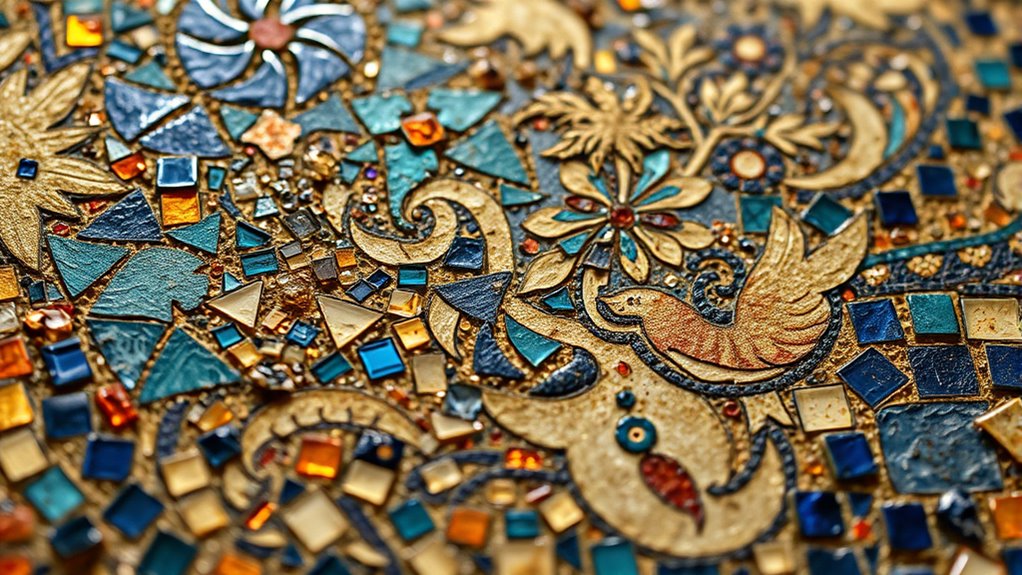

Roman mosaics use tiny, colorful tiles called tesserae, carefully arranged by skilled artisans to create intricate patterns and scenes. They tell stories of mythology, daily life, and historical events, reflecting Roman values and beliefs. Techniques involve detailed blueprints and symmetrical designs, ensuring durability and visual harmony. Each mosaic captures craftsmanship and cultural meaning, making them timeless symbols of Roman art. If you continue exploring, you’ll discover even more fascinating aspects of these ancient masterpieces.
Key Takeaways
- Roman mosaics used detailed blueprints and precise tesserae placement to create durable, intricate designs and storytelling scenes.
- Skilled tessellators arranged glass, stone, and ceramic tiles to depict mythological, daily life, or historical scenes.
- Patterns ranged from geometric motifs to complex narrative scenes, emphasizing cultural values and societal ideals.
- Colors and shapes were deliberately chosen to highlight key elements and convey messages within the mosaic.
- Mosaics served as storytelling tools, reflecting Roman beliefs, status, and cultural narratives through visual art.

Have you ever wondered how ancient Romans decorated their homes and public spaces? The answer lies in their masterful use of mosaics, a form of art that combines ancient craftsmanship with vibrant decorative patterns. These mosaics weren’t just decorative; they served as storytelling tools, status symbols, and expressions of cultural identity. When you walk through ancient Roman sites, you can almost hear the stories told through the intricate arrangements of tiny tiles, each carefully placed to create a larger, meaningful picture.
Roman mosaics are the result of incredible craftsmanship. Skilled artisans, known as tessellators, meticulously cut and laid thousands of small, colorful tiles called tesserae. These tesserae were made from diverse materials like glass, stone, and ceramic, chosen for their durability and color vibrancy. The process demanded precision and patience, as each piece had to be perfectly shaped and positioned to fit into the overall design. This level of craftsmanship ensured that mosaics would last for centuries, preserving the stories and symbols embedded in their patterns. The technique involved not just laying tiles randomly but following detailed drawings or cartoons, which acted as blueprints for the final artwork. This careful planning allowed for complex decorative patterns, often symmetrical and meticulously balanced, enhancing the aesthetic appeal of the spaces they adorned.
Roman mosaics showcase meticulous craftsmanship and detailed planning, ensuring their lasting beauty and storytelling power.
The decorative patterns within Roman mosaics are a tribute to their artistic ingenuity. They range from geometric motifs and floral designs to elaborate scenes depicting mythological stories, daily life, or historical events. These patterns were more than mere decoration; they conveyed messages and reflected the values or beliefs of the patrons commissioning the work. For example, a mosaic of a victorious gladiator might symbolize strength and heroism, while a scene from a myth could demonstrate cultural knowledge and admiration for divine stories. The use of colors and shapes was deliberate, creating visual harmony and emphasizing certain elements within the scene. The repetitive, rhythmic patterns often drew your eye and invited you to explore the detailed storytelling embedded in the artwork. Additionally, some mosaics incorporated innovative, durable materials that contributed to their longevity and vividness over centuries.
In essence, Roman mosaics are a fusion of skilled craftsmanship and rich storytelling. They reveal how the Romans used decorative patterns not only to beautify their surroundings but also to communicate cultural narratives and societal ideals. Every mosaic you encounter in ancient ruins holds a story, a glimpse into a world where art and craftsmanship intertwined to create enduring symbols of Roman life. These works of art continue to fascinate, reminding us of the remarkable creativity and technical skill that went into transforming simple tiles into timeless masterpieces.

Memento Mori Mosaic Tapestry – Ancient Roman Art – Pompeii Mosaic – Historic Home Decor – Classical Wall Art
Ancient Roman Art: This tapestry reproduces the famous Memento Mori mosaic from Pompeii, a striking reminder of life’s…
As an affiliate, we earn on qualifying purchases.
As an affiliate, we earn on qualifying purchases.
Frequently Asked Questions
How Did Roman Mosaics Influence Modern Tile Art?
Roman mosaics greatly influence modern tile art by inspiring techniques like intricate patterning and the use of durable materials. You can see their ancient tile techniques in today’s designs, blending craftsmanship with creativity. These mosaics set a foundation for modern artists, shaping how they approach composition, color, and storytelling through tiles. Their legacy continues to influence contemporary tile art, emphasizing durability, detail, and storytelling in every piece you create.
Were Roman Mosaics Used for Non-Decorative Purposes?
Yes, Roman mosaics were used for non-decorative purposes, particularly in funerary contexts. You’ll find intricate Roman mosaics in tombs, serving as memorials and conveying stories or symbols of the deceased’s life. Roman mosaic workshops specialized in creating these somber, meaningful designs, blending artistry with cultural significance. These mosaics not only decorated spaces but also played a role in rituals and honoring loved ones, showcasing their functional and symbolic value.
What Materials Were Most Commonly Used in Roman Mosaics?
You might be surprised to learn that Roman mosaics mainly used ceramic tesserae and natural pigments. These materials, often tiny, colorful tiles, were chosen for their durability and vibrant hues. Coincidentally, the natural pigments also made their way into other art forms, linking mosaics to broader Roman artistry. Your appreciation grows as you realize how these materials helped tell stories vividly, creating lasting visual impressions through meticulous craftsmanship.
How Were Large-Scale Mosaics Transported and Installed?
You transport large-scale mosaics carefully using wooden cradles and padded supports to prevent damage. Skilled artisans often disassembled complex sections for easier handling. For installation, they use precise alignment and adhesive techniques, ensuring each tile fits perfectly. Transportation methods include carts and boats, depending on the location. During installation, they often set the mosaic on a prepared surface, working systematically from the center outward for stability and accuracy.
Did Roman Mosaics Depict Everyday Life or Only Mythological Themes?
A picture is worth a thousand words, and Roman mosaics reveal both daily life scenes and mythological representations. You’ll find mosaics depicting everyday activities like markets and banquets alongside mythological stories, showcasing their cultural richness. These artworks serve as vibrant storytellers of Roman life, blending the mundane with the legendary. So, Roman mosaics don’t just focus on myth—they also celebrate the beauty and complexity of daily existence.

Adboros 12 Sets DIY Glass Mosaic Tiles for Crafts Mixed Color Mosaic Kits with Wooden Coaster for Adults Bamboo Coaster for Drinks Tray Handmade Home Decoration
Complete DIY Mosaic Kit: This mosaic kits for adults includes 12 sets of wooden coasters,6 round coasters and…
As an affiliate, we earn on qualifying purchases.
As an affiliate, we earn on qualifying purchases.
Conclusion
Roman mosaics reveal a fascinating glimpse into ancient life, showcasing intricate artistry and storytelling through tiny tiles. Did you know that some mosaics used over a million pieces to create detailed images? Next time you see a mosaic, imagine the skill and patience it took to craft such masterpieces. These timeless artworks continue to inspire us today, reminding us of the creativity and craftsmanship of the Roman era that still captivate our imagination.

Alexander The Great Battle of Issus Mosaic Canvas Wall Art, Ancient Greek Macedonian vs Persian King Darius III Poster, Classic Pompeii Historical Oil Painting Reproduction, Academic Study Room Decor (Unframed,08x12in(20x30cm))
Epic Historical Masterpiece: This stunning canvas print reproduces the world-famous "Alexander Mosaic," capturing the climactic moment of the…
As an affiliate, we earn on qualifying purchases.
As an affiliate, we earn on qualifying purchases.

Lanyani 1050 Pieces Mixed Shapes Glass Mosaic Tiles for Crafts, Colorful Stained Glass Pieces for Mosaic Projects
4 shapes of mosaic – These mosaic tiles come with 4 shapes, Diamond+Triangle+ Square+Rectangle
As an affiliate, we earn on qualifying purchases.
As an affiliate, we earn on qualifying purchases.