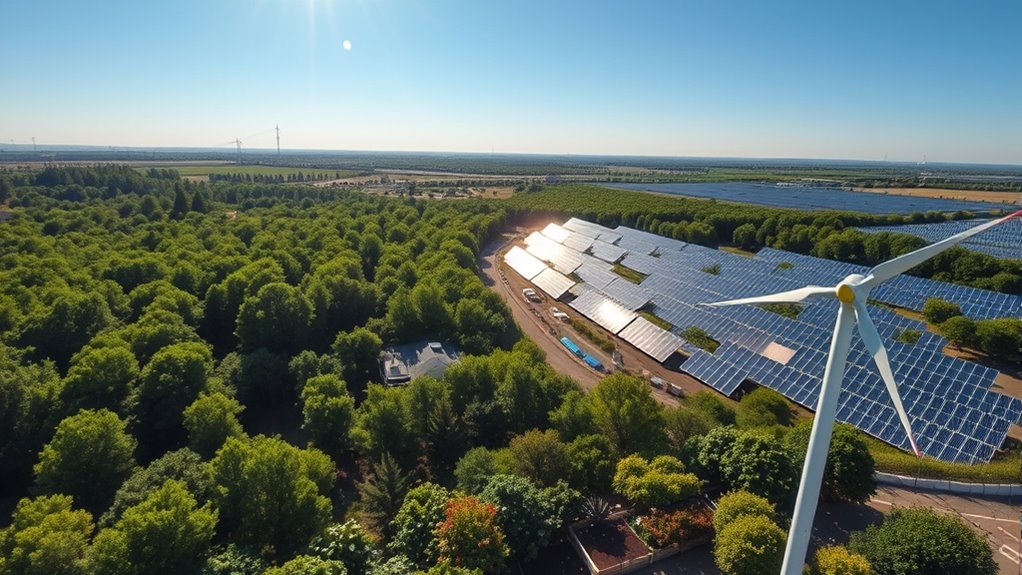

Carbon offsetting lets you support projects that reduce or capture greenhouse gases, like renewable energy initiatives, helping to balance your emissions. It offers benefits such as cutting emissions, creating jobs, and promoting sustainability, but also comes with challenges like ensuring real impact and avoiding false claims. To maximize positive effects, verify offsets through reputable standards and combine them with direct emission reductions. Exploring these details will give you a clearer view of how offsetting fits into your climate efforts.

Get home appliances delivered free — and shop member deals
- Fast, free delivery on millions of items
- Access to Prime Big Deal Days deals on October 6–7
- Prime Video, Amazon Music and more included
Key Takeaways
- Carbon offsetting involves investing in projects like renewable energy to reduce or capture greenhouse gases and compensate for emissions.
- It offers environmental benefits such as promoting clean energy, reducing emissions, and supporting sustainable development.
- Challenges include verifying project effectiveness, ensuring additionality, and avoiding greenwashing or market manipulation.
- Verified offsets through reputable standards ensure real, measurable emissions reductions and transparency.
- Combining offsetting with direct emission reduction efforts maximizes environmental impact and supports a comprehensive climate strategy.

Ever wondered if carbon offsetting is a reliable way to reduce your environmental impact? It’s a question many people ask as they seek ways to make a positive difference. Carbon offsetting involves investing in projects that reduce or capture greenhouse gases, balancing out your own emissions. One of the most effective ways to do this is by supporting renewable energy initiatives. When you fund wind, solar, or hydroelectric projects, you’re helping replace fossil fuel-based power with cleaner alternatives, which directly cuts emissions. These projects often generate carbon credits that can be purchased through carbon markets, giving you a tangible way to offset your carbon footprint. Carbon markets create a platform where emissions reductions are traded as commodities, providing transparency and accountability. By participating in such markets, you help finance renewable energy projects that might otherwise lack funding, accelerating the transition to a sustainable energy future.
However, it’s crucial to understand that not all offset projects are created equal. Some may deliver genuine environmental benefits, while others fall short due to poor oversight or lack of additionality—that is, the project wouldn’t have happened without your investment. When you buy offsets, you need to verify they are verified through reputable standards, guaranteeing that real, measurable emissions reductions are achieved. Supporting renewable energy through certified projects not only helps reduce emissions but also promotes economic development in communities, creating jobs and fostering innovation. Recognizing the importance of natural materials like wood, stone, and linen in farmhouse decor can inspire more sustainable choices in your lifestyle and home design.
While carbon markets facilitate this process, they’re not without their criticisms. Some argue that these markets can be manipulated or that they allow polluters to buy their way out of making meaningful changes to reduce emissions at the source. As a result, offsetting should never be your sole strategy for tackling climate change. Instead, combine offsets with efforts to reduce your own emissions—like conserving energy or switching to renewable energy sources at home or work. This all-encompassing approach ensures your actions have a more significant impact.
As an affiliate, we earn on qualifying purchases.
Frequently Asked Questions
How Do I Verify the Credibility of a Carbon Offset Provider?
To verify a carbon offset provider’s credibility, look for third-party verification and certification standards like Verra or Gold Standard. Check if their projects are independently audited, ensuring transparency and accuracy. Research reviews and reports from reputable organizations. Trust providers that openly share project details and verification certificates, so you know your offset truly contributes to reducing emissions. This guarantees your investment is credible, effective, and environmentally responsible.
Can Carbon Offsets Fully Compensate for My Personal Carbon Footprint?
Did you know that global carbon emissions need to drop by 45% by 2030 to meet climate goals? While carbon offsets can help reduce your individual impact, they can’t fully compensate for your personal carbon footprint due to offset limitations. Relying solely on offsets isn’t enough; you should also cut your emissions directly. Combining these efforts makes a more meaningful difference in combating climate change.
What Are the Legal Implications of Investing in Carbon Offset Projects?
When you invest in carbon offset projects, legal compliance is vital to avoid regulatory risks. You must ensure your investments adhere to local, national, and international laws governing environmental claims and project validation. Failing to do so can lead to fines, lawsuits, or reputational damage. Always verify that offsets are certified by reputable standards, and stay updated on evolving regulations to protect your investments and maintain legal integrity.
How Do Carbon Offset Projects Impact Local Communities Economically?
You’ll see that carbon offset projects can boost local communities by promoting community development and fueling economic growth. These projects create jobs, improve infrastructure, and support sustainable businesses. As a result, residents often experience better living standards and increased income. By investing in these initiatives, you help foster long-term economic stability, ensuring that the local community benefits from environmental efforts while also advancing their social and economic well-being.
Are There Specific Industries That Benefit More From Carbon Offsetting?
You’ll find that industrial sectors, especially those heavily reliant on fossil fuels, benefit the most from carbon offsetting. These industries can massively cut costs and boost their green credentials by investing in renewable energy projects. It’s like turning a mountain of pollution into a treasure chest of sustainability! By partnering with offset projects, they dramatically improve their environmental impact, making a huge difference in the fight against climate change.
Conclusion
Now that you’ve seen both the bright and dark sides of carbon offsetting, remember it’s not a magic wand but a tool that can make a real difference if used wisely. When you choose reputable projects and stay informed, you become part of a global movement that’s fighting climate change with the power of millions. Together, your actions can spark a revolution so powerful it could change the course of our planet’s future—don’t underestimate your impact!
NFL season / tailgating Picks
team gear
As an affiliate, we earn on qualifying purchases.