
To choose the right air purifier, focus on its CADR rating, which indicates how effectively it cleans air for your room size. Match the purifier’s CADR to your space’s square footage for best performance, and consider filters like HEPA for particles and activated carbon for odors. Proper sizing, maintenance, and filter choices make a big difference. Keep exploring to learn how to select, size, and maintain your perfect air purifier for healthier indoor air.

Get home appliances delivered free with Prime
- Fast, free delivery on millions of items
- Prime Video, Amazon Music and more included
- Member-only deals all year
Key Takeaways
- Match the Clean Air Delivery Rate (CADR) to your room’s square footage for effective air purification.
- Choose filters (HEPA, activated carbon, or both) based on specific pollutants like allergens, odors, or VOCs.
- Properly size your air purifier to ensure sufficient airflow without overworking the device or causing noise.
- Consider room size and pollution levels to select a unit with appropriate CADR and filter capacity.
- Regularly maintain filters and monitor device performance to sustain optimal air quality over time.
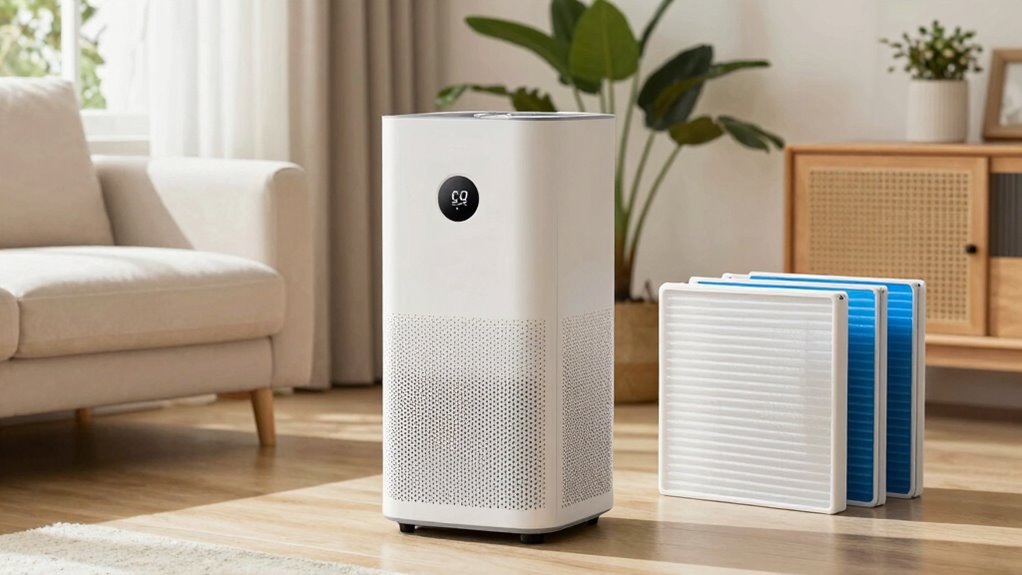
HEPA air purifier for large room
As an affiliate, we earn on qualifying purchases.
As an affiliate, we earn on qualifying purchases.
Why Indoor Air Quality Matters: and How to Improve It

Indoor air quality considerably impacts your health and well-being because we spend most of our time indoors. Poor air quality can lead to allergies, respiratory issues, and fatigue. To identify problems, start with air quality testing, which reveals pollutants like dust, mold, and volatile organic compounds (VOCs). Recognizing indoor pollutant sources is essential—these include cleaning products, cigarette smoke, pet dander, and mold growth. By understanding where pollutants originate, you can take targeted steps to reduce them. Improving indoor air quality isn’t just about comfort; it’s about safeguarding your health. Regular testing and awareness of pollutant sources help you maintain a cleaner, healthier environment, making your indoor space safer and more comfortable for you and your family. Additionally, trusted businesses and services can assist you in choosing effective air purifiers and filters tailored to your needs. Understanding indoor pollutant sources can also help you implement preventive measures that keep your air cleaner over time. Properly sizing your air purifier based on air exchange rates ensures optimal filtration efficiency, further enhancing your indoor air quality. Moreover, selecting filters with appropriate CADR ratings ensures that your purifier effectively removes pollutants for your room size. Knowing the types of filters available can help you select the best option for your specific indoor environment.
How to Choose the Right Air Purifier for Your Needs
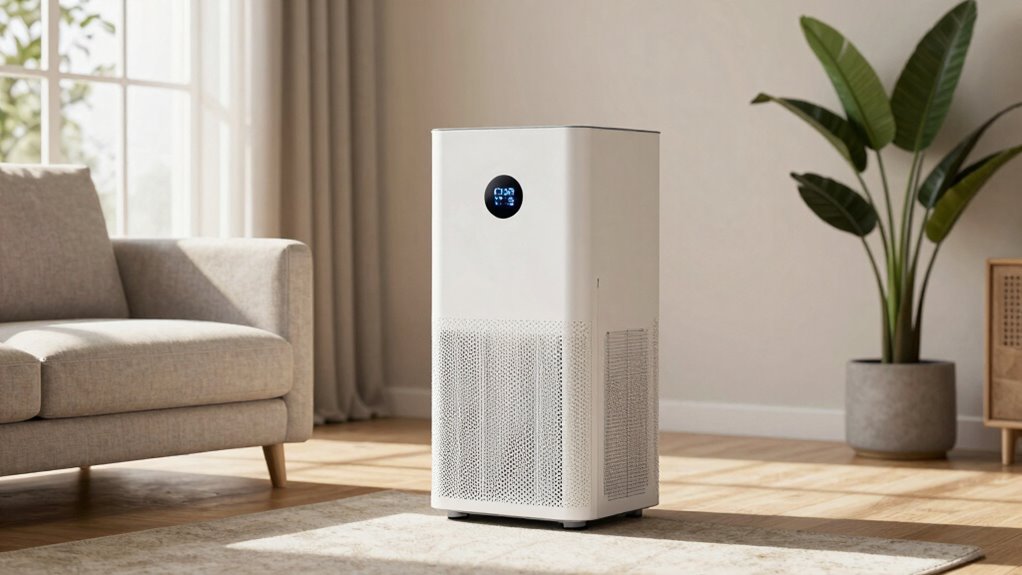
Choosing the right air purifier starts with understanding your specific needs and the pollutants present in your environment. First, consider if air quality sensors are necessary; they can automatically detect pollution levels and adjust operation accordingly, providing convenience and efficiency. Next, think about noise levels, especially if you plan to run the purifier in a bedroom or workspace—quiet models help maintain comfort without disruption. Assess the types of pollutants you want to target, such as allergens, dust, or odors, and choose a purifier with suitable filters. Size also matters—ensure the unit is appropriate for your room’s square footage. Additionally, reviewing filter maintenance requirements can help ensure ongoing performance and cost-effectiveness. Being aware of clean air delivery rate (CADR) ratings can help you select a model that effectively cleans your space within your desired timeframe. Understanding energy efficiency features can also contribute to lower operating costs and a smaller environmental footprint. Considering air exchange rates can further optimize your purifier’s performance for your specific space. By evaluating these factors, you can select an air purifier that effectively improves your indoor air quality while fitting seamlessly into your daily life.
What Are HEPA and Activated Carbon Filters: and Which Do You Need?
HEPA and activated carbon filters are two common types of filtration technologies used in air purifiers, each targeting different pollutants. HEPA filters are highly effective at capturing airborne particles like dust, pollen, pet dander, and smoke. They trap particles as small as 0.3 microns, ensuring cleaner, healthier air. Activated carbon filters, on the other hand, excel at removing odors, volatile organic compounds (VOCs), and chemical fumes. They work by adsorbing gases and odors onto their porous surface. You might need one or both types depending on your concerns. If allergies or dust are your main issue, a HEPA filter is essential. If odors or chemical fumes are a problem, activated carbon filters are your best choice. For extensive air cleaning, many units combine both technologies. Understanding the different filter types can help you choose the most effective air purifier for your needs.
How to Size an Air Purifier for Your Room
Selecting the right size air purifier guarantees it effectively cleans the air in your space. To do this, consider your room’s square footage and choose a purifier with an appropriate Clean Air Delivery Rate (CADR). A unit too small won’t eliminate pollutants efficiently, while one too large may increase noise levels unnecessarily. Also, check the filter lifespan; larger units often require more frequent filter changes, impacting maintenance. Noise levels vary by model and size, so opt for a quieter option if you’re sensitive to sound, especially in bedrooms or offices. Proper sizing ensures your purifier runs efficiently, maintains ideal filter lifespan, and keeps noise at tolerable levels. This approach guarantees cleaner air without unnecessary disruptions or costs. Additionally, understanding Free Floating particles can help you select a purifier capable of capturing the smallest pollutants for optimal air quality. Considering your air quality needs can further refine your choice, ensuring you address specific pollutants effectively. Moreover, being aware of air exchange rates can help you select a purifier that maintains consistent air turnover in your space.
How to Calculate the Right CADR for Your Space
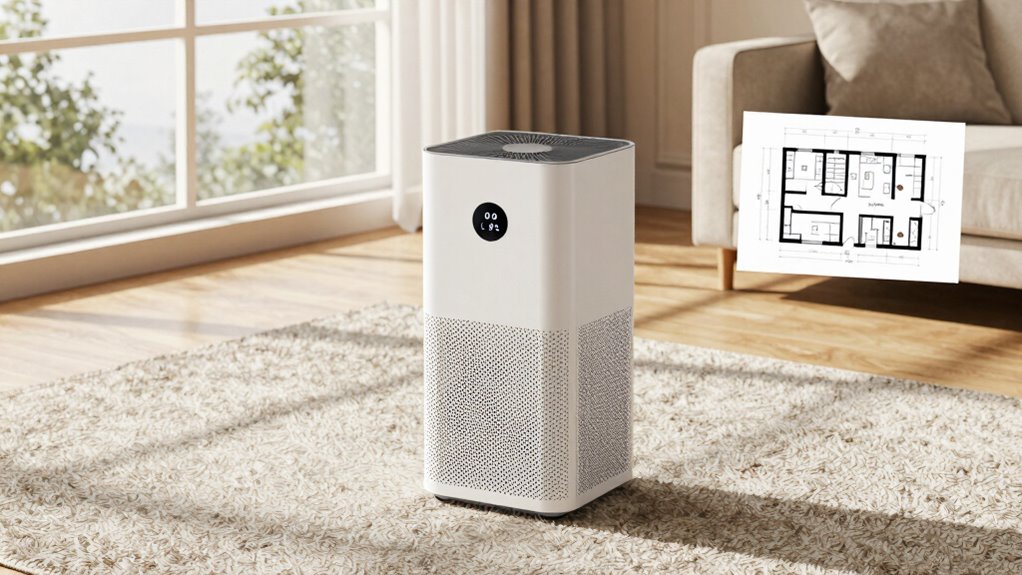
To determine the right CADR for your space, start by measuring the room’s square footage. Once you have that, you can select an air purifier with a CADR that matches your needs. Confirm the airflow is maximized for your room size to achieve maximum efficiency. Keep in mind that a higher CADR can improve air quality faster but may impact filter lifespan. To fine-tune your choice, consider these points:
Measure your room size and choose a CADR that balances airflow and filter lifespan for optimal air quality.
- Match CADR to room size for effective airflow and filtration
- Balance airflow to avoid overworking the filter, preserving its lifespan
- Use a slightly higher CADR for rooms with higher pollutant levels or air circulation needs
- Understanding airflow and filtration principles helps optimize your air purifier’s performance
- Ensuring proper filter maintenance extends the effectiveness of your air purifier
- Recognizing the importance of filter lifespan can help you plan for replacements and maintain optimal performance
- Being aware of air quality goals can guide your decision-making process to select the most suitable purifier
- Additionally, considering smart home integration can enable automated adjustments based on air quality readings for enhanced efficiency
Getting this right helps your air purifier perform at its best without sacrificing filter longevity.
Tips for Proper Placement and Use of Your Air Purifier
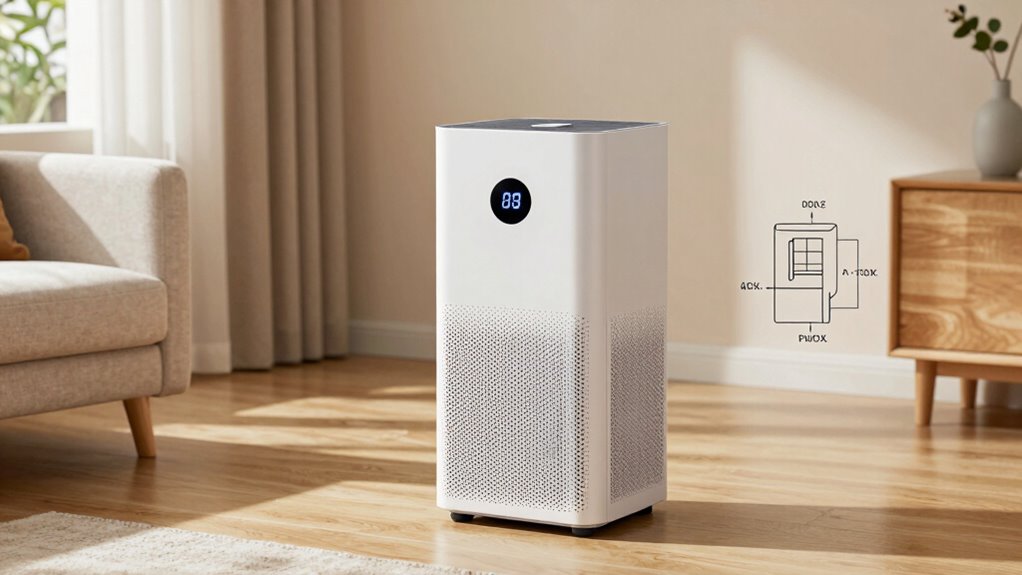
To get the most out of your air purifier, you need to place it in the right spot. Keep it away from walls and furniture to guarantee proper airflow, and position it where air circulates naturally. Remember to use it consistently for ideal air quality and replace filters as recommended. Proper airflow management enhances purifier efficiency and ensures cleaner air throughout your space. Additionally, understanding CADR ratings can help you select an air purifier that effectively covers your room size. Knowing how filter types work can also improve your maintenance routine and prolong the life of your device. Being aware of the real-world factors that influence air quality can further optimize your purifier’s performance and your overall indoor environment. Regularly monitoring air quality metrics can help you fine-tune your setup for optimal results.
Optimal Placement Strategies
Ever wondered why your air purifier doesn’t seem to be working as effectively as you’d like? Proper placement is key. To optimize airflow patterns, position your purifier where air can circulate freely, avoiding corners or behind furniture. Keep it at least a few feet away from walls or large objects to prevent obstructed airflow. Incorporating connected equipment can help monitor air quality and ensure your purifier is functioning optimally. Additionally, understanding the air circulation dynamics within your space can help you choose the best spot for maximum efficiency. Being aware of filtration systems and their capabilities can also guide you in selecting the right purifier for your needs.
Effective Usage Tips
For your air purifier to work effectively, proper placement and consistent use are vital. Place it in areas with good airflow, avoiding corners or behind furniture, and keep doors open for better circulation. Regular air quality monitoring helps you identify pollution sources and optimize usage. To extend your filter lifespan, check and replace filters as recommended. Use the device daily to maintain steady air quality. Here’s a quick guide:
| Placement Tips | Monitoring Benefits | Maintenance Needs |
|---|---|---|
| Keep away from walls | Track air quality trends | Replace filters on schedule |
| Avoid obstructions | Detect pollution spikes | Clean pre-filters regularly |
| Use in high-traffic areas | Ensure consistent airflow | Maintain device cleanliness |
Additionally, understanding air circulation can help you position your purifier for maximum effectiveness.
Common Mistakes When Choosing and Sizing Your Air Purifier
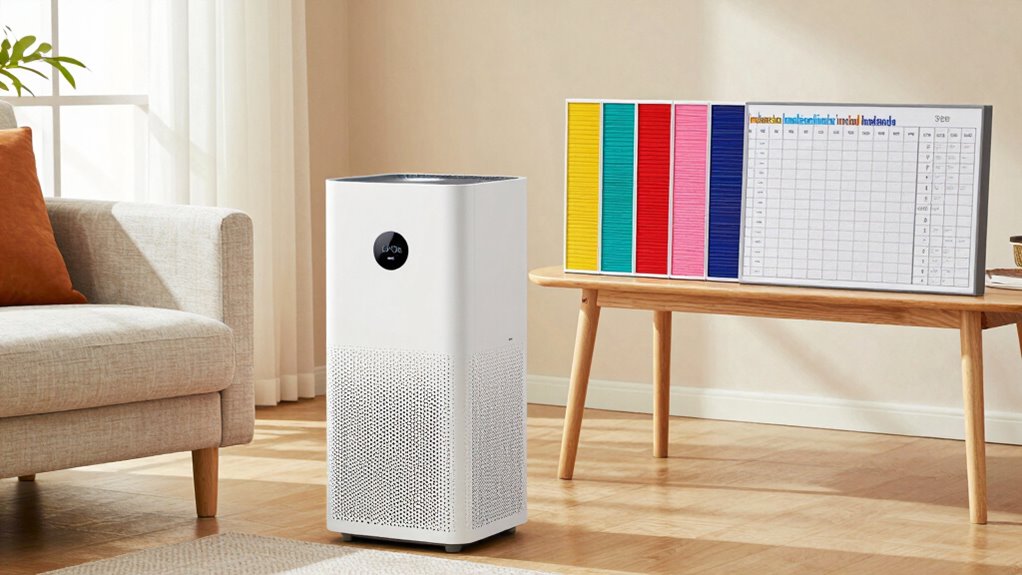
Many people make mistakes when selecting an air purifier, like ignoring the size of the room or overestimating its CADR ratings. You might also overlook the importance of choosing the right filter type for your needs. These errors can reduce the purifier’s effectiveness and leave you frustrated.
Ignoring Room Size
Choosing an air purifier without considering your room size can considerably reduce its effectiveness. If you select a unit too small, it won’t provide enough air exchange to clean the space properly. Conversely, a too-large purifier may be unnecessary and waste energy. To guarantee ideal performance, you need to match the purifier’s capacity to your room size. Ignoring this can lead to inadequate air cleaning, leaving pollutants behind. Keep in mind that the goal is to achieve enough air exchanges per hour for your space.
- Overlooking room size can cause underperformance and wasted energy
- An improperly sized purifier may not achieve the necessary air exchange rate
- Proper sizing ensures efficient and effective air purification
Overestimating CADR Values
One common mistake when selecting an air purifier is overestimating its CADR (Clean Air Delivery Rate) values. Many consumers rely on advertised numbers without considering measurement accuracy, which can vary between manufacturers and testing methods. This leads to misconceptions about how effectively a unit will clean your air, especially in real-world conditions. Overestimating CADR can result in choosing a purifier that’s too small for your room, reducing its efficiency. To avoid this, focus on verified CADR ratings from trusted sources and understand that actual performance may differ. Recognizing these consumer misconceptions helps you make a more informed decision, ensuring your air purifier meets your needs without overpromising on its capabilities.
Neglecting Filter Types
Neglecting to contemplate filter types can substantially undermine your air purifier’s effectiveness. Different filter materials target specific pollutants, like allergens, VOCs, or bacteria, making it essential to choose the right one for your needs. Additionally, filter lifespan varies based on material and usage, affecting how often you’ll need replacements and the overall cost. Failing to consider these factors can lead to reduced air quality and higher maintenance expenses.
Be mindful of:
- The filter material’s ability to trap pollutants effectively
- How long the filter will last before needing replacement
- Whether the filter type suits your specific air quality concerns
Choosing the wrong filter type or ignoring its lifespan can compromise your purifier’s performance and your indoor air health.
How to Maintain and Replace Filters for Best Performance
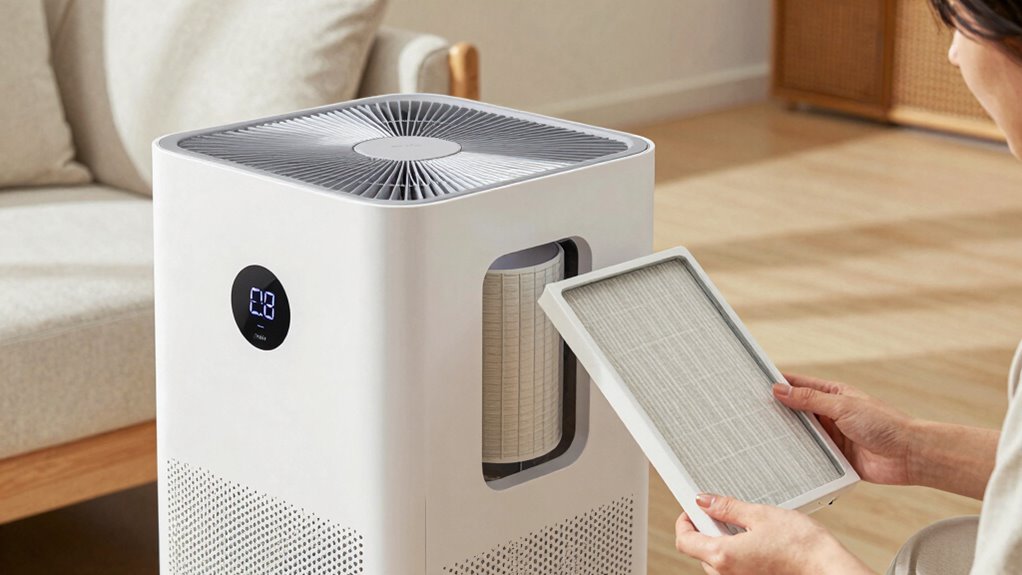
To guarantee your air purifier works effectively, regular maintenance and timely filter replacements are essential. Understanding your filter lifespan helps you know when to change or clean filters. Most filters need replacement every 6 to 12 months, but this varies based on air quality and usage. Cleaning frequency depends on your environment; for example, if you have pets or smoke indoors, you’ll need to clean or replace filters more often. Always follow the manufacturer’s instructions for maintenance. Regularly check filters for dirt buildup or clogging, and clean or replace them as recommended. Doing so ensures ideal airflow and filtration efficiency. Proper maintenance prevents strain on the device and maintains its ability to improve your air quality consistently.
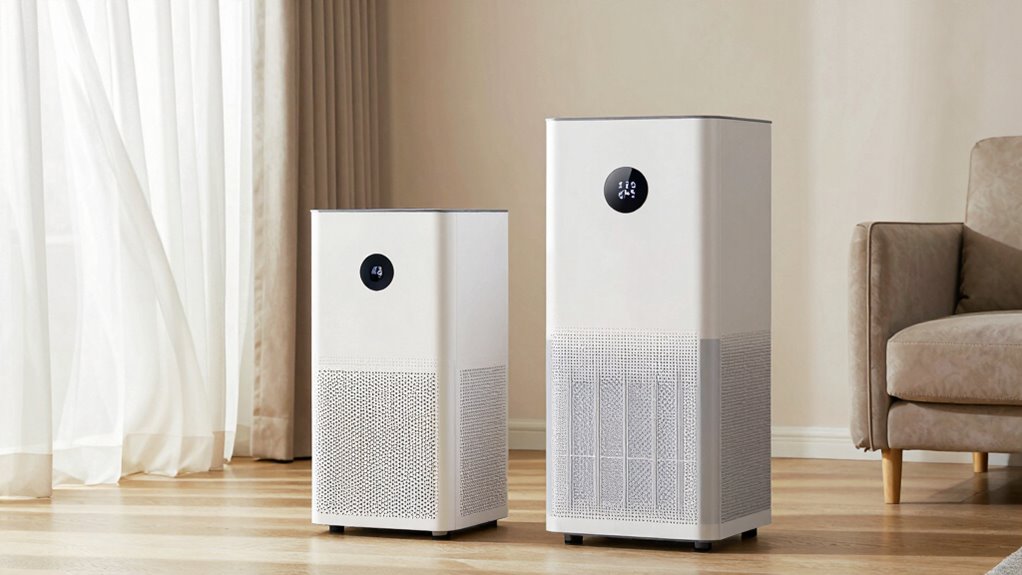
When choosing between budget and premium air purifiers, you need to take into account your budget and the features you want. Budget models often cost less but may lack advanced options, while premium units usually offer better filtration and smart features. Think about what’s more important for your needs and how much you’re willing to spend.
Cost Considerations
Are you trying to decide between budget and premium air purifiers? The cost comparison can be tricky, especially with recent price fluctuations. Budget options often cost less upfront but may require more frequent replacement or maintenance. Premium models tend to have higher initial prices but can offer better durability and efficiency over time. Consider your long-term needs and budget to make a smart choice. Keep in mind that prices can vary, so shopping around helps you find the best deal. Also, watch for sales or discounts that can make higher-end units more affordable. Balancing cost with the expected lifespan and performance of the purifier is key. Ultimately, choosing the right purifier depends on your budget and how much value you place on features and longevity.
Feature Differences
Choosing between budget and premium air purifiers often comes down to the features that matter most to you. Premium models typically offer longer air filter lifespans, reducing the frequency and cost of replacements, which appeals if you want low-maintenance operation. They also tend to have lower noise levels, making them suitable for bedrooms or quiet spaces. Budget options may have shorter-lasting filters, requiring more frequent changes, and can be noisier, especially at higher speeds. If you prioritize a quieter environment and fewer filter replacements, investing in a premium purifier might be worthwhile. However, if your needs are more basic and budget constraints are a concern, a lower-cost model can still improve air quality without those extra features. Consider your room size and comfort preferences before making a choice.
Final Tips for Picking the Best Air Purifier for Your Home or Office
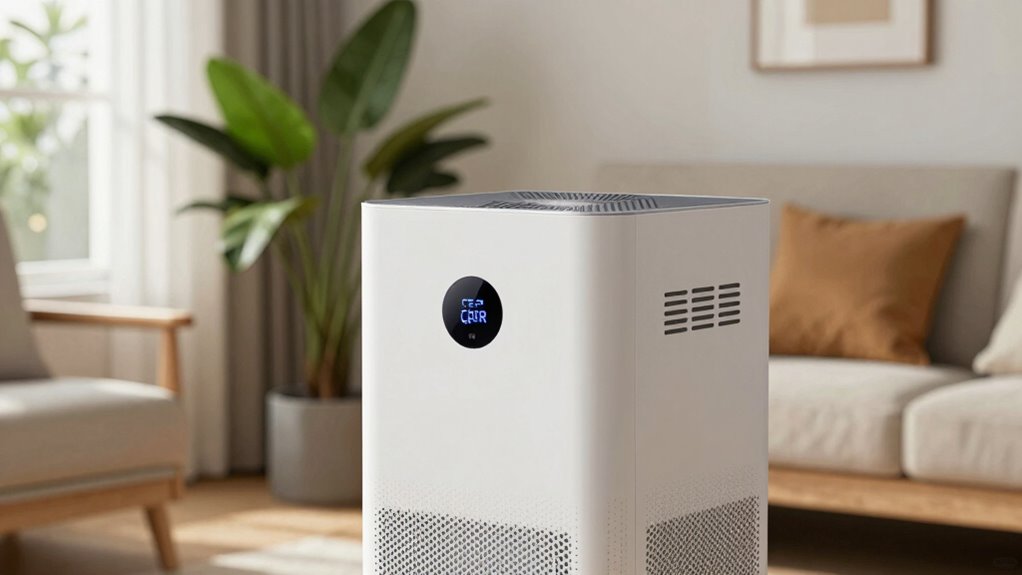
To find the best air purifier for your home or office, focus on your specific needs and the environment you’ll be using it in. Consider the air purifier technology that best suits your concerns, whether it’s allergen reduction or filtering out pollutants. Think about the size of the space to guarantee proper coverage and CADR ratings for effective air cleaning. Pay attention to noise levels if you’ll be using it in a workspace or bedroom. Also, check for features like user-friendly controls, filter replacement indicators, and energy efficiency. Ultimately, matching the purifier’s capabilities to your environment ensures ideal performance and cleaner air for your daily comfort.
- Select a model with proven allergen reduction capabilities
- Guarantee the device covers your room’s square footage
- Prioritize energy-efficient options for long-term use
Frequently Asked Questions
How Often Should I Replace My Air Purifier’s Filters?
You should replace your air purifier’s filters based on the filter lifespan and replacement frequency recommended by the manufacturer, usually every 3 to 6 months. Keep an eye on filter indicator lights or check for reduced airflow and increased odors. Regularly replacing filters guarantees your purifier works efficiently, maintains good air quality, and prevents buildup of dust and allergens, so stay proactive to keep your environment fresh and healthy.
Do Air Purifiers Effectively Remove Viruses and Bacteria?
Yes, air purifiers can effectively remove viruses and bacteria, aiding in viral elimination and bacteria removal. HEPA filters, in particular, capture particles as small as 0.3 microns, including many airborne viruses and bacteria. While they don’t eliminate all pathogens, using a purifier with a HEPA filter considerably reduces your exposure, especially in enclosed spaces. For maximum protection, combine air purification with good ventilation and hygiene practices.
Can Multiple Air Purifiers Be Used Together in One Room?
Yes, you can use multiple units in one room, and it can boost the combined effectiveness of air purification. Place them strategically around the space to guarantee even coverage and prevent dead zones. Keep in mind, however, that more units don’t always mean better results if they’re too close or if their CADR ratings aren’t compatible. Proper placement and matching units to room size optimize the overall air quality.
Are Smart Air Purifiers Worth the Extra Cost?
Smart air purifiers are worth the extra cost if you value smart features like app control, automation, and real-time air quality monitoring. They often offer convenience and better customization, helping you maintain cleaner air effortlessly. However, do a cost-benefit analysis to see if the added features justify the price. If you want convenience and advanced control, investing in a smart purifier can be a smart choice.
How Noise Levels Affect Air Purifier Performance and Placement?
Noise levels can influence your air purifier’s performance and placement considerations. Higher noise impact might tempt you to position the unit farther away or lower, but that can reduce effectiveness. To balance noise and performance, choose a quieter setting during sleep or quiet hours, and place the purifier in a central spot where it won’t be obstructed. Proper placement ensures efficient air cleaning without disturbing your comfort.
Conclusion
So, now you’re all set to pick the perfect air purifier—because clearly, breathing clean air is just a minor detail, right? Just remember, size and filters aren’t rocket science, but ignoring them might just turn your home into a sneezing contest. Whether you splurge or save, make sure your air stays as fresh as your attitude. After all, who wouldn’t want to be the hero battling dust and odors with a snazzy purifier?
Fall yard work Picks
leaf blowers
As an affiliate, we earn on qualifying purchases.