Italy’s influence on classical music is immense, thanks to legendary composers like Monteverdi and Verdi who pioneered new musical styles. Italian innovations in instrument design, especially with violins and keyboard instruments, transformed sound quality and expression. The birth of opera in Italy set the foundation for theatrical music, impacting the entire Western tradition. If you explore further, you’ll discover how Italy’s creative spirit continually shapes music’s evolution today.

Get home appliances delivered free — and shop member deals
- Fast, free delivery on millions of items
- Access to Prime Big Deal Days deals on October 6–7
- Prime Video, Amazon Music and more included
Key Takeaways
- Italy pioneered opera, blending music, drama, and visual art, establishing a foundation for Western theatrical music.
- Italian composers like Monteverdi advanced vocal and orchestral techniques, shaping early Baroque music.
- Italian luthiers such as Stradivari and Guarneri revolutionized violin, viola, and cello craftsmanship with innovative designs.
- Development of keyboard instruments like the harpsichord and early piano in Italy expanded expressive possibilities for performers.
- Italy’s musical innovations and legendary composers significantly influenced the evolution of Western classical music.

Italy has long been the birthplace of many foundational elements of classical music, shaping the very syntax and style that continue to influence composers today. When you explore its musical history, you’ll see how Italy revolutionized the way we experience sound, especially through the development of opera and instrument innovation. Opera, in particular, emerged in Italy during the late 16th century, and you can trace its roots back to Florence and Venice. These early performances combined music, drama, and visual arts, creating a new immersive experience for audiences. As you explore opera’s evolution, you’ll notice how Italian composers like Monteverdi pushed boundaries, shifting from simple monody to complex vocal and orchestral layers that express deep emotion. This development didn’t just serve entertainment; it laid the groundwork for modern theatrical music, influencing everything from grand opera houses to contemporary musical theater.
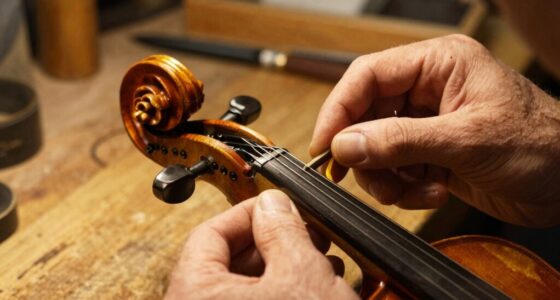
Simultaneously, Italy became a hub for instrument innovation. If you imagine the classical orchestra, many of its core instruments find their modern forms thanks to Italian craftsmanship. For example, the violin, viola, and cello saw significant improvements in design and manufacturing, thanks to Italian luthiers like Stradivari and Guarneri. Their meticulous work set new standards for sound quality and craftsmanship, which you can still appreciate today in concert halls worldwide. These innovations made instruments more expressive and versatile, allowing composers to craft richer, more nuanced music. Furthermore, Italy was instrumental in the development of keyboard instruments, with the harpsichord and early piano evolving through Italian ingenuity. This period marked a shift in how music was performed and composed, giving musicians greater control over dynamics and expression. Technological advances during this time also played a crucial role in refining instrument design and expanding musical possibilities.
You’ll also find that Italy’s influence extended beyond just the instruments and opera. The country’s technological and artistic advances fostered a culture where music became a crucial part of societal and religious life. As you listen to Italian compositions or attend operatic performances, you’re experiencing centuries of innovation rooted in Italian creativity. These developments continue to shape the way music evolves, inspiring new generations of composers and performers. Italy’s role in the birth of opera and instrument innovation didn’t just define historical periods; it set standards and opened pathways for future musical exploration. When you think about the foundations of Western classical music, Italy’s contributions stand out as essential pillars of its enduring legacy.
Frequently Asked Questions
How Did Italian Opera Evolve During the Renaissance?
During the Renaissance, Italian opera evolved markedly through innovations in staging and vocal development. You see, composers focused on enhancing expressive singing, which led to more emotional performances. Renaissance innovations included shaping the structure of operas and refining the use of orchestration. This period laid the groundwork for modern opera by emphasizing the importance of vocal technique and storytelling, making Italian opera a cornerstone of classical music history.
Which Italian Composers Introduced Innovative Orchestral Techniques?
Italian maestros like Antonio Vivaldi and Giovanni Gabrieli introduced groundbreaking orchestral innovations that transformed classical music. You’ll notice Vivaldi’s lively concertos and Gabrieli’s use of multiple choirs and spatial effects, which expanded orchestral possibilities. These maestros pushed boundaries by experimenting with instrumentation, dynamics, and composition techniques, leaving a lasting impact. Their innovations shaped the future of orchestral music and cemented Italy’s role as a hub for musical creativity.
What Regional Differences Influenced Italy’s Musical Styles?
Ever wondered how Italy’s diverse regions shape its musical styles? You’ll notice regional folk traditions influence lively, rhythmic melodies in southern Italy, while sacred traditions in the north bring a more solemn, choral sound. These differences stem from local histories, cultures, and religious practices. So, when you listen to Italian music, you’re experiencing a tapestry woven from regional folk and sacred traditions that reflect Italy’s rich cultural mosaic.
How Did Italian Music Influence Other European Countries?
Italian music influenced other European countries through its rich folk traditions and regional dialects, which inspired composers across the continent. You can see this impact in the way folk melodies and regional styles shaped early European music. Italian composers’ innovative techniques and expressive styles spread widely, encouraging local artists to incorporate regional dialects and folk elements into their own works, fostering a diverse and interconnected musical landscape across Europe.
What Role Did Italian Patrons Play in Classical Music Development?
You see, Italian patrons played a pivotal role in classical music development by providing essential funding influence and patronage impact. Their support allowed composers to focus on creating innovative works without financial worries, fostering a vibrant musical scene. Patronage helped sustain performances, commissions, and the dissemination of Italian music across Europe. Your understanding highlights how patrons’ financial backing directly shaped the growth and evolution of classical music during Italy’s influential era.
Conclusion
Italy’s legacy in classical music is a shining beacon that continues to inspire. From the soaring melodies of Verdi to the revolutionary operas of Puccini, Italy’s innovations echo through time, shaping your musical world. Their influence is a timeless symphony, a heartbeat that drives your passion for music forward. Remember, without Italy’s brilliance, the landscape of classical music would lack its soul, its rhythm, its everlasting magic.
Fall yard work Picks
leaf blowers
As an affiliate, we earn on qualifying purchases.