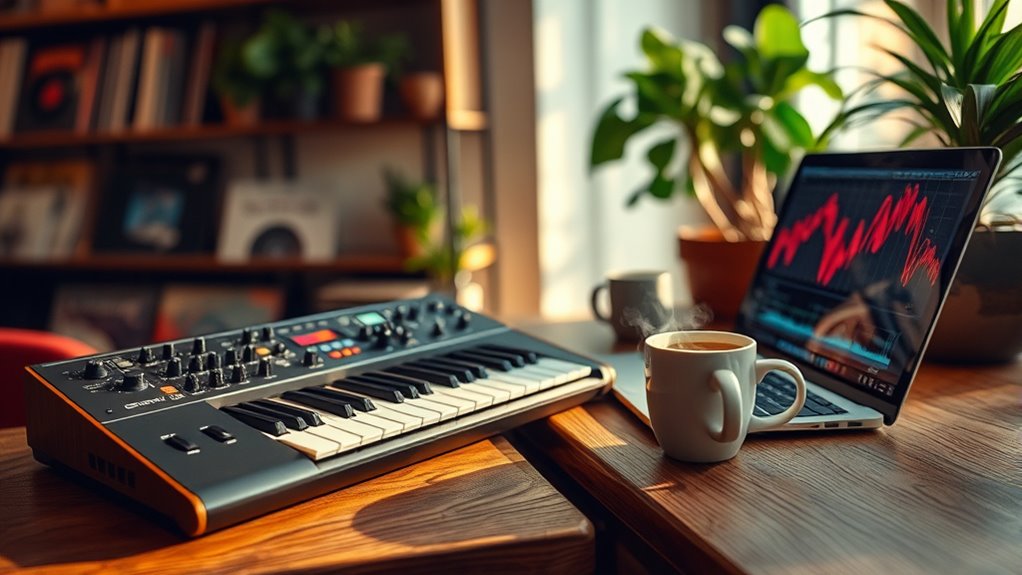

To synthesize ambient café sounds with generative audio, you can layer multiple sound elements like chatter, clinking cups, and background music using algorithms that introduce variability and evolution in real time. Manipulate parameters such as volume, pitch, and texture to create a natural, immersive environment that adapts to different moods or settings. Techniques like soundscape layering and granular synthesis allow you to craft dynamic, customizable soundscapes that feel both authentic and engaging—exploring these options will reveal even more.
Key Takeaways
- Use layered sound components like chatter, clinking, and background music to craft immersive café environments.
- Employ generative algorithms to produce evolving, non-repetitive ambient sounds that simulate real-time café activity.
- Manipulate synthesis parameters (volume, pitch, texture) for customized moods and dynamic soundscape adjustments.
- Combine soundscape layering with real-time control for flexible, responsive ambient environments suited for relaxation or work.
- Leverage synthesis techniques to create sustainable, versatile, and authentic café soundscapes without external recordings.

Creating authentic ambient café sounds through synthesis allows you to craft a relaxing and immersive environment without relying on recordings. Instead of sourcing external audio files, you leverage soundscape layering and generative audio techniques to produce dynamic, high-quality ambiance that feels natural and alive. Soundscape layering involves combining multiple sound elements, such as soft chatter, clinking cups, and gentle background music, into a cohesive auditory scene. By carefully designing each layer, you control their interactions, creating a rich, textured environment that mimics the complexity of a real café. With generative audio techniques, you add an element of variability and evolution, ensuring the soundscape remains engaging over time. These techniques use algorithms and mathematical models to produce continuously changing sounds, preventing the environment from feeling static or repetitive. Additionally, understanding the principles of Brewing Guides can inspire creative ways to synthesize sounds that mimic real brewing or café activities, enhancing realism. You start by breaking down the various sonic components that define the café atmosphere. For example, you might generate the ambient hum of conversations, the subtle clatter of dishes, and background music, each as separate layers. Using synthesis methods—such as granular synthesis or physical modeling—you can craft sounds that are both realistic and customizable. These approaches allow you to manipulate parameters in real time, adjusting volume, pitch, or texture to suit different moods or times of day. With soundscape layering, you can seamlessly blend these elements, ensuring passage feel natural and that no single sound overwhelms the others. Employing generative audio techniques introduces subtle variations, like fluctuating chatter levels or the random timing of clinks, which make the environment feel genuine and lively. The beauty of synthesizing ambient café sounds lies in the full control it grants you. You can tailor the atmosphere to evoke specific moods—calm mornings, bustling afternoons, or cozy evenings—by tweaking the layers and their interactions. Generative audio algorithms continuously produce variations, so the soundscape evolves, preventing listener fatigue and maintaining a soothing ambiance. This method also offers flexibility; you can easily adjust parameters remotely or automate changes, creating a dynamic environment that responds to your needs. Whether you’re designing a background for relaxation, meditation, or work, synthesizing these sounds with soundscape layering and generative techniques gives you a versatile and sustainable solution. Ultimately, you craft an authentic, immersive café environment that’s both customizable and endlessly engaging, all without depending on static recordings.
As an affiliate, we earn on qualifying purchases.
Frequently Asked Questions
Can Generative Audio Adapt to Different Café Atmospheres?
You can make generative audio adapt to different café atmospheres by programming it to respond to various cues, enhancing cultural authenticity and emotional resonance. This technology allows you to tailor sounds—like background chatter, music, or ambient noise—so they match the specific vibe you’re aiming for. As a result, your audience experiences a more immersive, authentic environment that resonates emotionally, making each café visit uniquely engaging.
What Hardware Is Needed for Real-Time Ambient Sound Synthesis?
Imagine your setup as a symphony orchestra in harmony. To synthesize ambient sounds in real time, you’ll need a good microphone for accurate capture, and careful microphone placement to avoid noise. Then, choose a powerful computer or audio interface to process data quickly. Don’t forget speaker calibration to balance sound levels. These components work together, creating a seamless soundscape that immerses listeners in a cozy café atmosphere.
How Does AI Ensure Natural Variability in Generated Café Sounds?
AI guarantees natural variability in generated café sounds by incorporating random variability into its algorithms, making each soundscape unique and less repetitive. It analyzes real ambient noise to mimic acoustic authenticity, adjusting parameters dynamically. This approach creates a more realistic and immersive experience, as you hear subtle changes in activity and ambient tones, preventing the sounds from feeling artificial or monotonous.
Are There User-Friendly Tools for Non-Experts to Create Ambient Audio?
You’ll find several user-friendly tools designed for non-experts to create ambient audio easily. Many feature intuitive interfaces that simplify sound design, allowing you to generate café sounds effortlessly. Additionally, plugin integrations with popular digital audio workstations make the process smoother, letting you customize your ambient environment without technical hassle. These tools enable you to experiment and craft relaxing soundscapes, even if you’re new to audio production.
How Can Synthesized Café Sounds Be Integrated Into Virtual Environments?
You can integrate synthesized café sounds into virtual environments by using background layering techniques that add depth and realism. Apply spatial positioning to place sounds accurately within the virtual space, making users feel immersed. Adjust volume and panning dynamically to match user movements, enhancing the experience. With user-friendly audio tools, you can easily blend ambient café sounds seamlessly, creating a more engaging and authentic virtual atmosphere.
Conclusion
As you blend these ambient café sounds, you’re not just creating background noise—you’re weaving a sanctuary where moments unfold. Each gentle clink and murmur symbolizes connection, comfort, and the simple joys of everyday life. Your synthesis becomes a bridge, inviting others to pause, breathe, and find warmth amid the chaos. In this acoustic tapestry, you hold the power to craft a space where serenity blooms, echoing the timeless beauty of shared human experience.