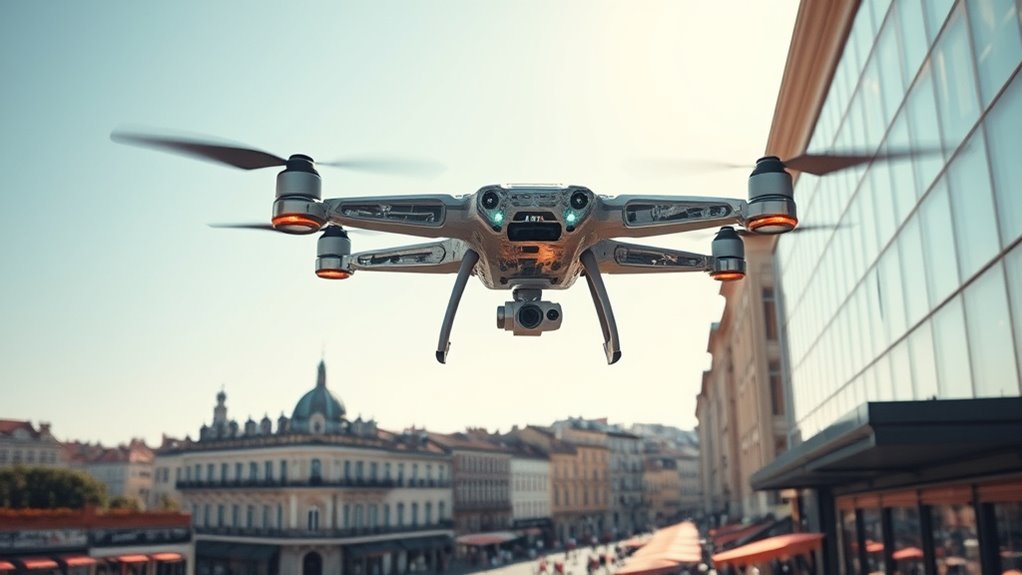

Implementing AI in air quality monitoring helps you place sensors strategically at key locations like landmarks and transit hubs, capturing accurate and relevant data. With centralized platforms, you can access real-time insights and identify pollution patterns quickly. AI-driven analysis enables proactive measures and forecasts, ensuring cleaner air for residents and tourists alike. If you want to discover how these technologies can transform urban environments, there’s more to explore below.
Key Takeaways
- AI analyzes sensor data to identify pollution patterns and sources, enabling targeted city-wide interventions.
- Strategically placed sensors ensure accurate, relevant air quality data reflecting tourists’ exposure areas.
- Centralized platforms integrate real-time air quality, traffic, and weather data for comprehensive environmental insights.
- Predictive analytics forecast pollution spikes, allowing proactive measures to protect tourists and residents.
- AI-driven insights support sustainable urban planning, enhancing air quality and tourist experiences in city environments.

In tourist cities where vibrant crowds and bustling streets are common, maintaining good air quality is essential for both visitor experience and public health. To achieve this, many cities are turning to AI-powered air quality monitoring systems that rely on strategic sensor deployment and seamless data integration. By deploying sensors across key locations—such as popular landmarks, busy intersections, and public transport hubs—you can gather real-time data on pollutants, particulate matter, and other air quality indicators. These sensors need to be carefully positioned to capture diverse environmental conditions, ensuring that the data reflects the actual air quality people are exposed to during their daily activities.
Once these sensors are in place, data integration becomes critical. You’ll want to connect sensor outputs with centralized platforms that compile and analyze the information swiftly. AI algorithms can process this data to identify patterns, spikes, and sources of pollution, providing city officials with actionable insights. For example, if a certain area shows consistently high levels of pollutants during specific times of the day, authorities can implement targeted measures—like adjusting traffic flow or increasing green spaces—to mitigate the impact. Data integration also allows you to combine air quality data with other relevant information such as weather conditions, traffic patterns, and public health reports, creating an extensive picture of environmental health.
AI enhances this process further by enabling predictive analytics. With continuous sensor deployment and data integration, you can forecast pollution trends before they worsen, giving authorities time to act proactively. For tourists, this means cleaner air and a more enjoyable experience, while residents benefit from a healthier environment. The real power of AI lies in its ability to analyze large datasets quickly, identify correlations, and generate insights that manual analysis simply can’t match. This not only improves responsiveness but also helps in long-term urban planning, ensuring air quality strategies are both effective and sustainable. Additionally, understanding the importance of sensor placement can significantly improve the accuracy and usefulness of air quality data collected.
In essence, deploying sensors thoughtfully and integrating data effectively are foundational steps in leveraging AI for air quality management. These strategies allow you to monitor environmental conditions with precision, respond swiftly to pollution issues, and plan future measures that keep tourist cities lively and healthy. As technology advances, combining sensor deployment with sophisticated data integration will become even more crucial, ensuring urban environments stay safe and enjoyable for everyone who visits or lives there.
air quality sensors for smart cities
As an affiliate, we earn on qualifying purchases.
As an affiliate, we earn on qualifying purchases.
Frequently Asked Questions
How Does AI Improve Real-Time AIr Quality Data Accuracy?
AI improves real-time air quality data accuracy by continuously analyzing sensor data, identifying anomalies, and adjusting for sensor calibration issues. It integrates data from multiple sources to create a all-encompassing view, reducing errors caused by faulty sensors or environmental factors. This active data integration allows you to receive precise, timely updates, helping you make informed decisions about air quality and ensuring a safer, healthier environment in tourist cities.
What Challenges Exist in Deploying AI in Tourist City AIr Monitoring?
Imagine you’re in 1899, trying to predict air pollution—futuristic, right? Deploying AI faces challenges like ensuring sensor calibration so data stays accurate, especially in dynamic tourist environments. Data integration from various sensors and sources can be tricky, risking inconsistencies. Additionally, managing infrastructure costs and addressing privacy concerns make implementation complex. You must navigate these hurdles carefully to harness AI’s full potential in monitoring air quality effectively.
How Is Data Privacy Maintained With Ai-Powered Air Quality Sensors?
You guarantee data privacy by implementing robust privacy safeguards and data encryption. These measures protect the sensitive information collected by AI-powered air quality sensors, preventing unauthorized access. You also anonymize data to avoid linking it to specific individuals. Regular security audits and strict access controls further maintain privacy, giving tourists confidence that their personal information remains secure while benefiting from improved air quality monitoring.
Can AI Predict Future AIr Pollution Trends in Tourist Areas?
You can use AI to predict future air pollution trends in tourist areas. For example, 85% of cities utilizing historical data and predictive modeling have improved air quality management. AI analyzes past patterns, enabling it to forecast potential pollution spikes. This helps city planners implement proactive measures, ensuring cleaner air for visitors. So, with ongoing data collection, AI becomes a powerful tool to anticipate and address air quality issues before they worsen.
What Are the Costs Associated With Implementing AI AIr Quality Systems?
You’ll face implementation costs that include purchasing sensors, deploying infrastructure, and integrating software. Maintenance expenses also add up, covering regular calibration, software updates, and troubleshooting. These costs can vary based on system complexity and coverage area. Budgeting for initial setup and ongoing upkeep is essential to guarantee reliable operation. Investing in quality equipment might seem high at first, but it helps avoid costly repairs and data inaccuracies later.
Conclusion
As you explore these vibrant tourist cities, imagine how AI could transform your experience by revealing hidden air quality secrets. With every breath, there’s a story waiting to be told—one that could change where you visit and how you breathe. The future of air monitoring is here, but its full potential remains unseen. Are you ready to discover what lies beneath the surface and breathe easier tomorrow? The next chapter is just around the corner.