
AI helps you conserve biodiversity in wine regions by providing real-time insights for land management, detecting invasive species early, and optimizing sustainable farming practices. It monitors soil health, assesses habitat conditions, and predicts pest outbreaks to enable targeted actions. With AI’s support, you can implement effective conservation strategies while maintaining vineyard productivity. Keep exploring how this innovative technology shapes environment-friendly wine production and long-term ecological balance.
Key Takeaways
- AI identifies biodiversity hotspots and guides targeted conservation efforts within wine regions.
- It enables habitat assessment and restoration planning through satellite imagery and machine learning.
- Automated image recognition detects invasive species and pests early, reducing ecological impact.
- AI optimizes land management practices to minimize chemical use and promote native flora and fauna.
- It facilitates stakeholder collaboration by providing accessible data for sustainable land and biodiversity management.
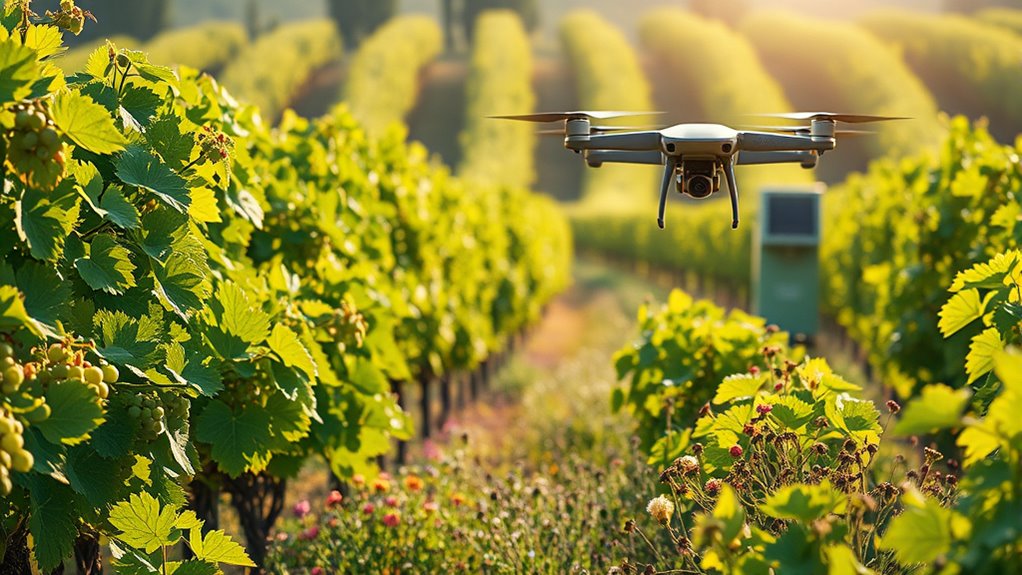
As wine regions face increasing environmental pressures, artificial intelligence is playing an essential role in protecting their biodiversity. You might not realize it, but AI is transforming how vineyards approach sustainable farming and habitat restoration. This technology helps you make smarter decisions, reducing your ecological footprint while improving grape quality. For example, AI-driven sensors monitor soil moisture, temperature, and nutrient levels in real-time, enabling you to optimize irrigation and fertilization. This precision farming minimizes water use and chemical inputs, fostering a healthier environment for native plants and animals. By adopting sustainable farming practices guided by AI insights, you contribute to maintaining the delicate balance of local ecosystems. Additionally, AI can help identify biodiversity hotspots and prioritize conservation efforts more effectively, ensuring your land management practices support native species and ecological resilience. AI also enhances habitat restoration efforts within wine regions. When natural habitats are threatened by expansion or climate change, AI-powered mapping tools identify areas most in need of intervention. You can leverage satellite imagery and machine learning algorithms to assess land degradation, track habitat loss, and plan restoration projects more efficiently. This targeted approach ensures resources are allocated efficiently, increasing the chances of restoring essential habitats for local wildlife. As you implement habitat restoration strategies guided by AI, you help preserve the biodiversity that forms the foundation of a resilient ecosystem, ultimately benefiting your vineyard’s health and productivity. Furthermore, AI aids in detecting invasive species that jeopardize native flora and fauna. Early identification through automated image recognition allows you to act swiftly, preventing the spread of harmful species. This proactive management protects the natural balance, ensuring native plants and animals thrive alongside cultivated vines. AI also supports you in managing pests and diseases sustainably, reducing reliance on chemical pesticides. By analyzing data patterns, AI can predict outbreaks, enabling you to apply targeted interventions only when necessary. This not only safeguards biodiversity but also aligns with eco-friendly farming principles. In addition, AI facilitates collaboration among stakeholders—winemakers, conservationists, and local communities—by providing accessible data and insights. You can participate in integrated conservation plans that prioritize biodiversity while maintaining vineyard productivity. As your understanding deepens through AI-driven analytics, you become more equipped to implement practices that support both ecological health and economic viability. This dual focus helps ensure long-term sustainability for your wine region. Ultimately, AI empowers you to adopt more responsible, biodiversity-friendly practices. By integrating AI into your sustainable farming and habitat restoration efforts, you play an essential role in preserving the unique environmental landscape of your wine region. This not only benefits the local ecosystem but also enhances the reputation of your wines as environmentally conscious and sustainable. Embracing this technology positions you at the forefront of innovative conservation, ensuring that your wine region remains vibrant and biodiverse for generations to come.

AC Infinity Soil Sensor Probe Exclusively for AI Controllers, Monitor Moisture & Saturation for Gardens, Grow Tents, Grow Spaces, Detachable Stem, IP67 Seal Protection
A soil meter designed specifically for AC Infinity AI Controllers to help monitor and maintain soil saturation.
As an affiliate, we earn on qualifying purchases.
As an affiliate, we earn on qualifying purchases.
Frequently Asked Questions
How Does AI Identify Invasive Species in Vineyards?
You can use AI for species detection by analyzing images from drones or cameras placed in vineyards. It quickly identifies invasive species by recognizing their unique features. AI also supports habitat monitoring, tracking changes over time and flagging areas where invasives spread. This allows you to respond swiftly, protecting native plants and maintaining biodiversity. AI makes invasive species management more efficient and accurate, helping you preserve healthy vineyard ecosystems.
Can AI Predict Long-Term Ecological Impacts of Vineyard Practices?
Predicting long-term ecological impacts, AI uses advanced ecological modeling to guide sustainable agriculture. You can leverage AI to analyze complex environmental data, anticipate ecological shifts, and inform eco-friendly vineyard practices. By continuously learning from environmental changes, AI helps you make smarter, more sustainable decisions. This proactive approach promotes biodiversity, balances vineyard productivity, and preserves ecosystems for future generations, ensuring your practices are both profitable and environmentally responsible.
How Is AI Integrated With Local Conservation Policies?
You can see AI integrated with local conservation policies through community engagement and policy development. AI tools analyze ecological data, helping policymakers craft targeted strategies that protect biodiversity. By involving local communities in data collection and decision-making, you guarantee policies are practical and widely accepted. This collaborative approach enhances conservation efforts, making policies more effective and sustainable, ultimately fostering a shared commitment to preserving the region’s natural ecosystem.
Does AI Help in Restoring Degraded Vineyard Ecosystems?
Yes, AI helps restore degraded vineyard ecosystems by monitoring soil health and identifying areas needing improvement. It can optimize irrigation and fertilization, promoting healthier soil and plant growth. Additionally, AI designs and maintains wildlife corridors, ensuring species movement and biodiversity. By analyzing data, you can make targeted decisions that enhance ecosystem resilience, supporting the overall health of vineyards and fostering sustainable biodiversity conservation.
What Are the Costs Associated With Implementing AI for Biodiversity?
Oh, the irony isn’t lost on you—investing in AI for biodiversity sounds cheap, right? Well, a thorough cost analysis reveals that the technology investment can be substantial, covering data collection, software, and training. While it promises eco-friendly gains, you must weigh these expenses against long-term benefits. Expect initial costs to be high, but remember, the real value lies in safeguarding biodiversity for generations to come.

Kxrgnst Hidden Camera – 1080P HD WiFi Wireless Security Camera – Nanny Camera – Best Mini Car Cameras for Surveillance – Surveillance Camera with Motion Detection and Night Vision
【1080P Ultra HD & Full Night Vision】: Hidden cameras featuring advanced 1080P HD camera technology, it delivers clear…
As an affiliate, we earn on qualifying purchases.
As an affiliate, we earn on qualifying purchases.
Conclusion
You might think AI is too complex or expensive for small wine regions, but it actually offers affordable, real-time insights that can protect local biodiversity effectively. By using AI, you can monitor your vineyards and surrounding ecosystems more precisely, preventing overuse of resources and safeguarding native species. Embracing this technology doesn’t mean losing the charm of traditional wine-making — it enhances sustainability and guarantees your region remains vibrant for generations to come.
satellite imagery land restoration tools
As an affiliate, we earn on qualifying purchases.
As an affiliate, we earn on qualifying purchases.

Garden Guru Eco Dandelion Weeder Tool with Ergonomic Wood Handle – 100% Recycled Stainless Steel – Rust Resistant – FSC Certified Wood – Weed Puller for Planting, Weeding, Flower & Vegetable Care
Get the entire root without needing to dig wide holes! This handheld weeder is great for removing pesky…
As an affiliate, we earn on qualifying purchases.
As an affiliate, we earn on qualifying purchases.