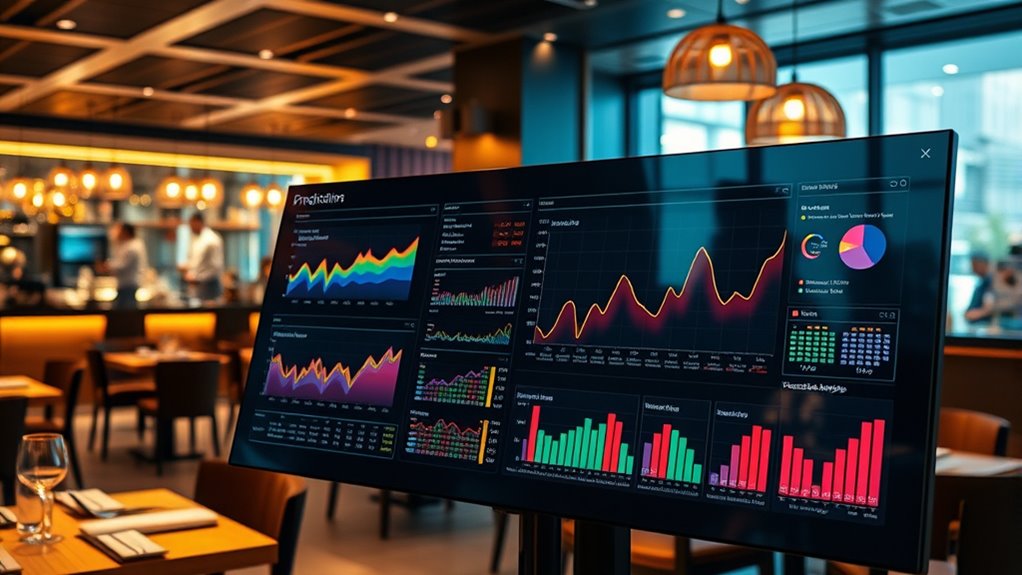
Machine learning models predict restaurant wait times by analyzing real-time and historical data, including reservation patterns, occupancy, weather, and local events. These models provide accurate, dynamic estimates that help you manage customer expectations and optimize staffing. By incorporating diverse data sources, they improve forecasting reliability and operational efficiency. And if you want to discover how these models can transform your restaurant’s guest experience, you’ll find valuable insights ahead.
Key Takeaways
- Utilize historical reservation data, occupancy levels, and external factors like weather to train accurate predictive models.
- Implement real-time data analysis to dynamically update wait time forecasts for enhanced reliability.
- Use machine learning to forecast busy periods, enabling optimized staffing and improved service quality.
- Continuously adapt models with new data to respond to emerging trends and sudden demand changes.
- Share precise wait time estimates through digital channels to boost customer satisfaction and operational efficiency.

Predicting restaurant wait times has become more accurate and efficient thanks to advances in machine learning models. These models analyze a multitude of data points—such as reservation patterns, historical wait times, current occupancy levels, and even external factors like weather or local events. By leveraging this information, you can provide customers with real-time estimates that are much more reliable than traditional guesswork. When customers receive precise wait time predictions, their satisfaction increases because they feel informed and valued. They’re less likely to become frustrated or abandon their plans if they know exactly how long they’ll wait, which directly boosts their overall dining experience.
Accurate wait time predictions boost customer satisfaction and streamline dining experiences.
Moreover, machine learning enhances staffing optimization, a critical aspect of running a successful restaurant. When you accurately forecast busy periods, you can adjust staff schedules proactively, ensuring you have enough team members on hand during peak hours without overstaffing during slow times. This balance minimizes operational costs while maintaining service quality. Proper staffing also means that customer service remains consistent, further elevating customer satisfaction. When your staff isn’t overwhelmed or underutilized, they can focus on delivering attentive, high-quality service, which leaves a positive impression on your guests.
These models continually learn and adapt, improving their predictions over time as they process more data. For instance, if a new event suddenly draws a large crowd to your restaurant, the machine learning system picks up on this trend and updates its forecasts accordingly. This dynamic adjustment helps you stay ahead of fluctuating demand, making your operations more agile and responsive. As a result, you’re better equipped to manage customer flow, reduce wait times, and avoid bottlenecks that can harm the guest experience.
Implementing machine learning for predicting wait times also benefits your marketing strategies. By sharing accurate wait time estimates through your website or app, you encourage customers to plan their visit more effectively. They’re more likely to choose your restaurant over competitors because they trust your transparency. Plus, improved wait time predictions reduce the need for customers to wait in line physically, which enhances their overall perception of your establishment’s efficiency. Additionally, understanding the factors that influence wait times can help you tailor your tuning strategies, such as adjusting staffing or menu options, to better meet customer expectations.
In essence, embracing machine learning models for predicting restaurant wait times transforms your operations. You create a smoother experience for your guests, foster customer satisfaction, and optimize staffing to run your restaurant more efficiently. The continual learning capability ensures your predictions stay relevant as your restaurant evolves, helping you stay competitive in an increasingly data-driven industry.
restaurant wait time prediction software
As an affiliate, we earn on qualifying purchases.
As an affiliate, we earn on qualifying purchases.
Frequently Asked Questions
How Do ML Models Adapt to Sudden Changes in Restaurant Capacity?
You can help ML models adapt to capacity fluctuations by providing real-time updates on changes in restaurant capacity. When these updates are fed into the system, the model quickly adjusts its predictions, reflecting the new situation. This continuous data flow guarantees that the model stays accurate during sudden shifts, allowing you to manage wait times effectively and improve customer experience despite unpredictable capacity fluctuations.
What Are the Privacy Concerns With Collecting Wait Time Data?
You should be aware that collecting wait time data raises privacy concerns because it involves handling user privacy and data security. If personal or location information is gathered without proper consent or safeguards, it could lead to misuse or breaches. To protect user privacy, guarantee you implement strict data security measures, anonymize data when possible, and be transparent about how the data is used and stored.
Can These Models Predict Wait Times for Multiple Restaurants Simultaneously?
Yes, these models can predict wait times for multiple restaurants simultaneously through multi-restaurant forecasting. They analyze real-time data from various sources, enabling scalable prediction across locations. By leveraging advanced algorithms, you can efficiently manage and anticipate wait times, improving customer experience. This scalability means you can handle increasing restaurant data without sacrificing accuracy, making the system more versatile and useful for large chains or multiple independent venues.
How Do External Factors Like Weather Influence Model Accuracy?
Weather impact and external variables substantially influence your model’s accuracy. When bad weather or unexpected events occur, they can cause fluctuations in wait times that your model might not have predicted. To improve accuracy, incorporate real-time weather data and other external variables into your model. Continuously updating these factors helps your predictions stay reliable, even when external conditions change unexpectedly.
What Is the Cost of Implementing These Machine Learning Solutions?
Implementing these machine learning solutions costs money, mainly for data collection, model development, and ongoing maintenance. You’ll face scalability challenges as your restaurant grows, requiring more computational resources and data infrastructure. While initial setup can be expensive, investing in scalable cloud solutions helps manage costs over time. Overall, the costs vary based on complexity, but careful planning guarantees you get a good return on your investment.

MWE 55 Inch 4K Digital Signage Display Kiosk, LCD Screen Indoor Floor Standing Advertising Displays, Android System Commercial Totem with Custom Service, Vertical Poster with Auto Media Player
【Ideal for Advertising and Promotion】MWE-QIXZOCV Floor Standing Digital Signage Display is designed with durability and sturdiness in mind….
As an affiliate, we earn on qualifying purchases.
As an affiliate, we earn on qualifying purchases.
Conclusion
Now, you see how machine learning models can forecast wait times with impressive accuracy. Like a busy restaurant’s bustling crowd, data flows continuously, yet these models sort through chaos to provide clarity. Imagine standing outside, knowing exactly when your table will be ready—no more impatient glances. By blending complex algorithms with everyday experiences, you gain a clearer picture of wait times, turning uncertainty into confidence and making dining out smoother for everyone.
Team Work Hours Planner: Streamline Employee Scheduling with Ease
As an affiliate, we earn on qualifying purchases.
As an affiliate, we earn on qualifying purchases.

Reservation Book For Restaurant: Full Year Table Wait List Reservations, 1 page with space for 36 reservations per day, Full Year Dinner Reservations Book, Hostess Table Log Book
As an affiliate, we earn on qualifying purchases.
As an affiliate, we earn on qualifying purchases.