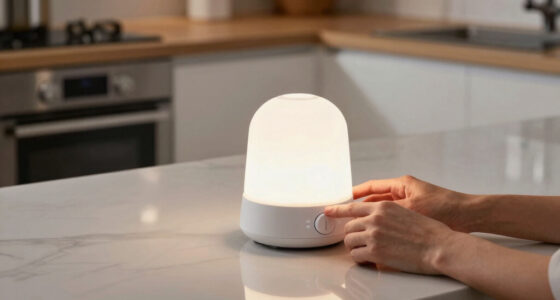
Voice-activated hotel rooms let you control lighting, temperature, and entertainment easily through voice commands, making your stay more seamless and personalized. These smart technologies improve your experience by eliminating manual adjustments and creating a more intuitive environment. They also help save energy and promote eco-friendliness by managing resources efficiently. Privacy concerns are addressed with local data processing and clear communication. Discover how these innovations are transforming hospitality, opening new ways to enjoy smarter, more comfortable stays.
Key Takeaways
- Voice-activated hotel rooms enable guests to control lighting, temperature, and entertainment via natural language commands for a seamless experience.
- They enhance privacy through local data processing, reducing risks of sensitive information exposure during interactions.
- These systems improve energy efficiency by automating lighting and climate adjustments based on occupancy and guest commands.
- Integration of smart voice technology supports sustainability goals by optimizing resource use and lowering the hotel’s environmental impact.
- Enhanced user interfaces and visual technologies, like high-contrast projectors, elevate guest comfort and entertainment quality.
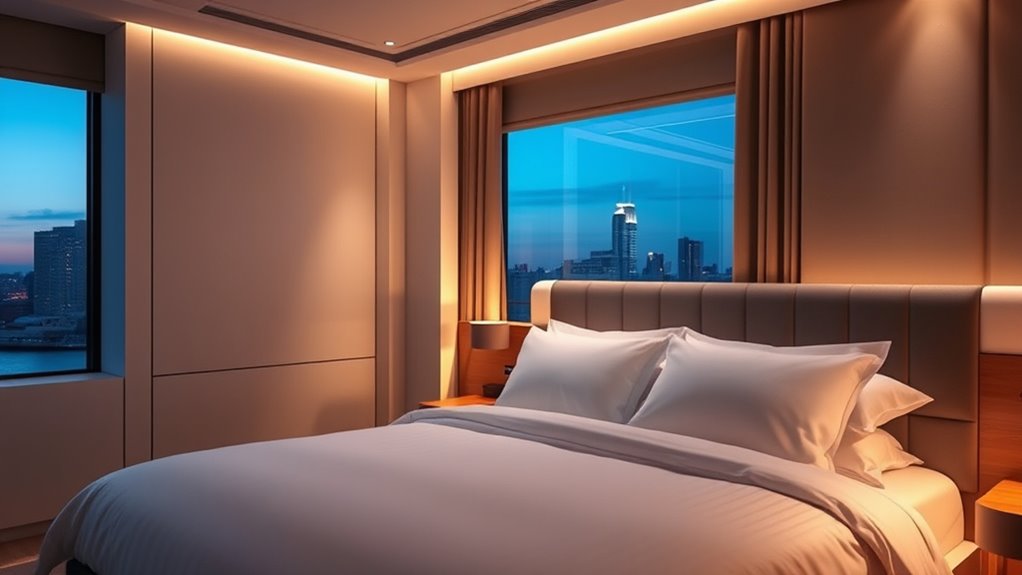
Imagine walking into a hotel room where everything responds to your voice commands, making your stay more seamless and personalized. As soon as you step inside, you can ask the room to adjust the lighting, set the temperature, or play your favorite music—all without lifting a finger. Voice-activated technology transforms the traditional hotel experience into something more intuitive and convenient. But as with any innovation, it raises important questions about guest privacy and energy efficiency.
Guest privacy is a vital consideration when introducing voice-controlled systems into hospitality settings. These devices are constantly listening for commands, which means sensitive data could potentially be at risk if not properly secured. Reputable hotels implement strict protocols to guarantee voice data remains confidential, often processing commands locally rather than transmitting them to external servers. This reduces the chance of breaches and reassures guests that their conversations are private. Clear communication about how voice data is used and stored also helps build trust. You’ll appreciate knowing that your personal information is protected, allowing you to enjoy the benefits of a smart room without concern over privacy invasions.
Energy efficiency is another significant benefit of voice-activated hotel rooms. These systems can intelligently control lighting, heating, and cooling based on your preferences and occupancy patterns. For example, when you leave the room, you can simply say, “Goodbye,” and the system can automatically turn off lights and adjust the thermostat to energy-saving settings. This not only reduces waste but also helps hotels lower their carbon footprint. Additionally, voice commands can streamline room management, ensuring that resources are used only when needed. As a guest, you have the power to make your stay more eco-friendly with simple voice prompts, reducing unnecessary energy consumption without sacrificing comfort.
The integration of voice technology in hotels also supports broader sustainability goals. Smart systems can analyze usage data to optimize energy use across the property, leading to more responsible resource management. This approach benefits both the environment and your wallet, as hotels can pass on the savings through more competitive rates or upgraded amenities. Plus, with voice-activated controls, you gain a more personalized experience—adjusting your room’s ambiance to your liking instantly, while knowing that your energy footprint is minimized. Furthermore, understanding the importance of high contrast ratios in projectors highlights the value of clear visuals, which parallels how well-designed voice interfaces contribute to a seamless user experience in smart hotel rooms.
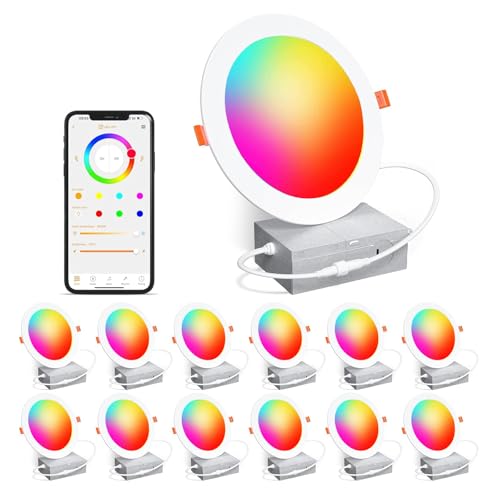
Recessed Lighting 6 Inch RGBCW Color Changing Smart Recessed Ceiling Lights 16W 1350LM LED Downlights Dimmable by Alexa & APP, 2700K-6500K,16 Million Colors – DIY Scenes – Timer – 23 Modes (12 Pack)
- Voice Control Compatibility: Supports Alexa and app control
- Bluetooth Mesh Technology: Mesh control for up to 125 lights
- Color and Brightness Options: 16 million colors, 1-100% dimming
As an affiliate, we earn on qualifying purchases.
As an affiliate, we earn on qualifying purchases.
Frequently Asked Questions
How Secure Are Voice-Activated Hotel Room Systems?
Voice-activated hotel room systems are generally secure, but you should be aware of potential risks. They can be vulnerable to voice hacking or system vulnerabilities if not properly protected. Hotel operators implement encryption and security protocols, but always double-check your room’s privacy settings. To stay safe, avoid sharing sensitive information through voice commands and report any suspicious activity to hotel staff immediately.
Can Guests Customize Voice Commands for Their Stay?
Yes, you can customize voice commands for your stay. Hotels often offer guest preferences settings that allow you to personalize voice command customization, making your experience more comfortable. You can set specific commands for lighting, temperature, or entertainment, ensuring your preferences are automatically recognized. This seamless integration helps you enjoy a tailored stay, giving you control with just your voice and making your hotel experience more convenient and enjoyable.
What Languages Are Supported by Voice-Activated Hotel Rooms?
Most voice-activated hotel rooms support multiple languages, offering multilingual support to cater to diverse guests. You can usually personalize language settings easily, allowing you to choose your preferred language for commands. Hotels often include popular options like English, Spanish, French, Chinese, and more. This flexibility ensures a seamless experience, so you can comfortably communicate with the system in your native language or switch languages as needed during your stay.
How Is Guest Privacy Protected With Voice Technology?
You might think your voice data is safe, but don’t worry—hotels prioritize guest consent and encrypt voice data storage, right? In reality, they often collect and store your voice commands, hoping you forget about privacy. To stay protected, always review the privacy policies, ask about data use, and opt out if possible. After all, your privacy shouldn’t be the price of a voice-activated room experience.
Are Voice-Activated Features Available in All Room Types?
Not all room types feature voice-activated technology, but many do, especially those designed for enhanced comfort and accessibility. You’ll find voice personalization options to tailor lighting, temperature, and entertainment to your preferences. These features also improve room accessibility for guests with mobility challenges. While availability varies, hotels increasingly integrate voice tech across room types to boost convenience, making your stay more seamless and personalized.
Conclusion
As you step into a voice-activated hotel room, you’re entering the future of hospitality—a symphony of convenience at your command. These innovations turn your stay into a seamless dance of technology and comfort, making every request feel like a whisper in the wind. Embracing smart hospitality isn’t just about gadgets; it’s about creating an experience that feels as effortless as a gentle breeze, leaving you relaxed and enthusiastic to return.