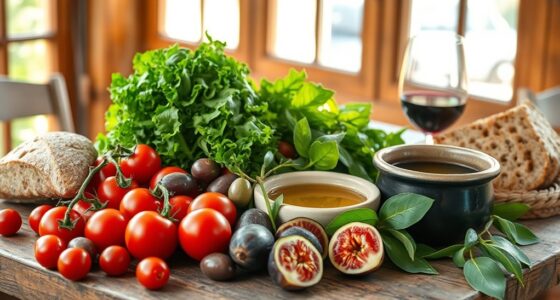
Ferragosto feasts showcase Italy’s diverse culinary traditions, from hearty northern dishes to light southern seafood. These gatherings celebrate regional customs, history, and community bonds through shared meals of local ingredients and family recipes. Food acts as a cultural thread, connecting generations and preserving Italy’s rich heritage. Each region’s unique flavors tell a story of local landscapes and traditions. If you explore further, you’ll discover how these celebrations truly reflect Italy’s vibrant cultural tapestry.
Key Takeaways
- Ferragosto feasts showcase regional culinary traditions, emphasizing local ingredients, customs, and historical influences.
- Shared meals reinforce community bonds and preserve cultural heritage through family recipes and regional specialties.
- The diverse dishes reflect Italy’s regional identities, highlighting Alpine, Mediterranean, and rustic culinary influences.
- Food acts as a cultural storyteller, connecting generations and celebrating regional history and social cohesion.
- Celebratory feasts embody Italy’s rich culinary landscape, fostering pride and continuity across different regions.
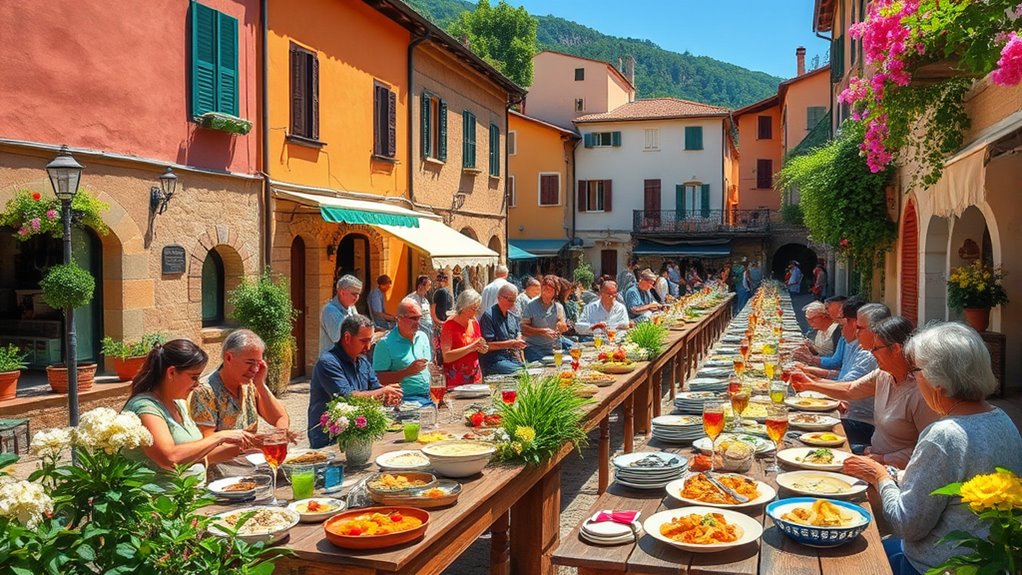
Every year on August 15th, Italians celebrate Ferragosto with lively feasts that showcase the country’s rich culinary traditions. This holiday isn’t just about taking a break; it’s a vibrant expression of regional culture, history, and community. As you partake in these festivities, you’ll notice how the food reflects Italy’s diverse landscapes and local customs through traditional recipes and regional variations. Each region adds its unique touch, making Ferragosto a tapestry of flavors and stories that connect past and present.
In northern Italy, the celebrations often feature hearty dishes rooted in Alpine traditions. Think of rich risottos infused with seasonal vegetables or hearty polenta served with rich stews. These traditional recipes highlight the region’s agricultural bounty and its love for comforting, filling meals. Moving south, the culinary scene shifts to lighter, Mediterranean-inspired fare. Here, you might savor fresh seafood salads, lemon-infused pasta, or grilled fish, emphasizing the sea’s bounty. The regional variations in southern Italy also include flavorful antipasti like caponata or marinated vegetables, which are often served as part of the communal feast.
Central Italy offers a blend of rustic and refined flavors. In Tuscany and Umbria, you’ll find hearty bread, fragrant herbs, and local cheeses paired with simple, yet flavorful, grilled meats. The use of local ingredients remains central to these traditional recipes, reinforcing regional identity. Meanwhile, in Lazio, dishes like carbonara or saltimbocca showcase the art of simple, skillful cooking handed down through generations. These regional variations make each Ferragosto celebration feel distinct, yet equally rooted in Italy’s culinary soul.
As you experience these feasts, you’ll also see how family and community gatherings revolve around shared meals. The traditional recipes serve not just as nourishment but as a way to preserve cultural heritage. Currency exchange plays a role in how Italians and visitors alike manage their preparations for the holiday, especially when sourcing ingredients from different regions or countries. Whether it’s a family recipe passed down through generations or a regional specialty that varies from town to town, each dish tells a story. These regional variations bridge the past with the present, fostering a sense of pride and continuity.
In essence, Ferragosto’s culinary traditions are a celebration of Italy’s regional diversity. From hearty northern dishes to vibrant southern flavors, each traditional recipe emphasizes local ingredients and customs. As you enjoy these feasts, you participate in a centuries-old tradition that unites Italians through food, history, and community. This holiday isn’t just about eating—it’s a heartfelt tribute to Italy’s rich and varied culinary landscape.
As an affiliate, we earn on qualifying purchases.
Frequently Asked Questions
How Did Ferragosto Originate Historically in Italy?
You might find out that Ferragosto originated from ancient Roman festivals honoring the harvest and the gods. It was initially called “Feriae Augusti,” established by Emperor Augustus to mark a period of rest after the agricultural harvest. Over time, it blended with Christian traditions, evolving into a summer holiday that celebrates leisure and community. Today, it still echoes those early agricultural and Roman roots in Italy’s festive customs.
Are There Regional Variations in Ferragosto Food Traditions?
You’ll find that regional cuisine and local traditions shape Ferragosto food traditions differently across Italy. In the north, hearty risottos often take center stage, while in the south, seafood and fresh produce shine brightly. Each area adds its unique flavor to the festivities, making your experience richer and more authentic. Embracing these variations lets you truly savor the diverse culinary tapestry that makes Ferragosto special nationwide.
What Symbols Represent Ferragosto Celebrations Across Italy?
You’ll notice Ferragosto celebrations are symbolized by olive branches and fireworks across Italy. Olive branches represent peace and prosperity, often seen in decorations or as gifts during festivities. Fireworks light up the night sky, symbolizing joy and celebration. Together, these symbols reflect Italy’s rich cultural heritage, emphasizing unity and happiness during Ferragosto. They create a vibrant, festive atmosphere that brings communities together in shared tradition.
How Has Ferragosto Evolved in Modern Italian Society?
You see that Ferragosto has evolved in modern Italian society by blending traditional customs with contemporary influences. Today, you might share the celebration through social media, capturing festive moments and connecting with friends and family virtually. Technological influences make organizing events easier, while modern social customs encourage diverse activities like concerts and beach parties, creating a vibrant mix of old and new traditions that keep Ferragosto lively and relevant in today’s Italy.
Are Ferragosto Feasts Celebrated Similarly by Italians Abroad?
Imagine a flame that flickers across borders—Ferragosto feasts abroad often mirror Italian traditions but adapt to local flavors. You’ll find expatriate communities embracing the holiday with cultural adaptation, blending their homeland’s dishes and customs with new surroundings. While the essence remains, these celebrations become a mosaic of Italian roots and local influences, creating a unique tapestry of Ferragosto that keeps the spirit alive, no matter where you are.
Conclusion
As you embrace Italy’s lively, legendary Ferragosto feasts, you’ll feel the festive fervor fueling family, friends, and flavor. Savor the sizzling salads, share stories over sizzling grills, and soak up the shared spirit of summer’s splendor. These traditions turn treasured tables into timeless tales, reminding you that food, fun, and fellowship form Italy’s heart. Celebrate with passion, partake in the popular, preserve the precious, and let Ferragosto’s fire forge unforgettable memories.