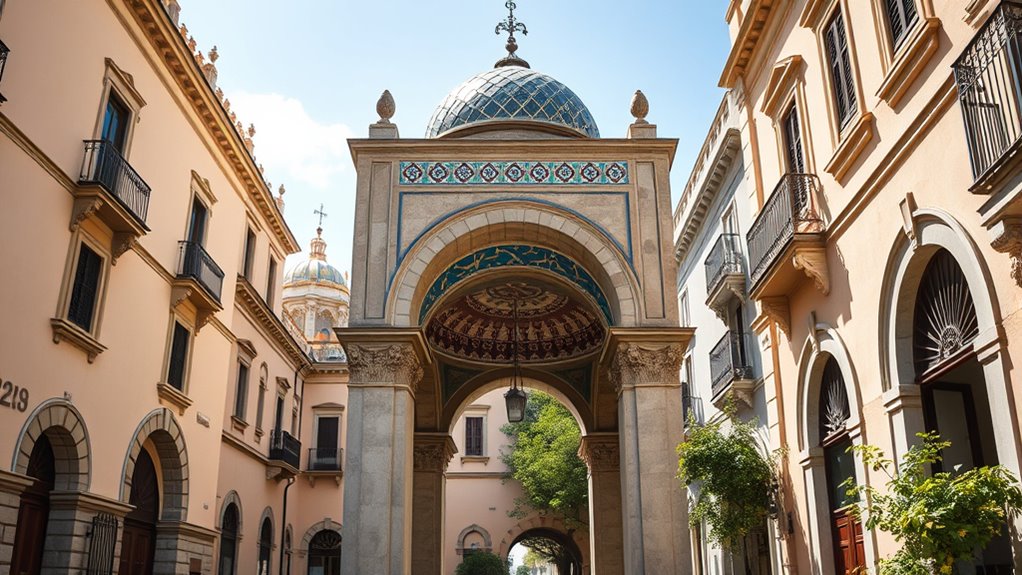

You’ll notice how Sicilian architecture combines Arab and Norman influences, with intricate Moorish patterns, horseshoe arches, and vibrant tile work blending seamlessly with sturdy stone walls, rounded arches, and fortified towers. Arab craftsmanship adds elegance and detailed decoration, while Norman structures provide strength and military features. This harmonious mix reveals a layered history of conquest and cultural exchange. Exploring further uncovers the rich story behind Sicily’s unique aesthetic and architectural heritage.
Key Takeaways
- Arab influences are evident in Sicily’s architecture through intricate geometric patterns, ornate tile work, and Moorish motifs like horseshoe arches.
- Norman structures feature massive stone walls, rounded arches, and battlements, often built atop or near Arab sites, reflecting layered historical influences.
- The coexistence of Arab and Norman styles creates a harmonious blend, visible in palaces, churches, and fortifications across Sicily.
- Decorative arts, especially tile work and vibrant patterns, showcase Arab craftsmanship integrated into Norman architecture.
- Sicilian architecture embodies a visual narrative of conquest, cultural fusion, resilience, and artistic refinement reflecting centuries of multicultural influence.
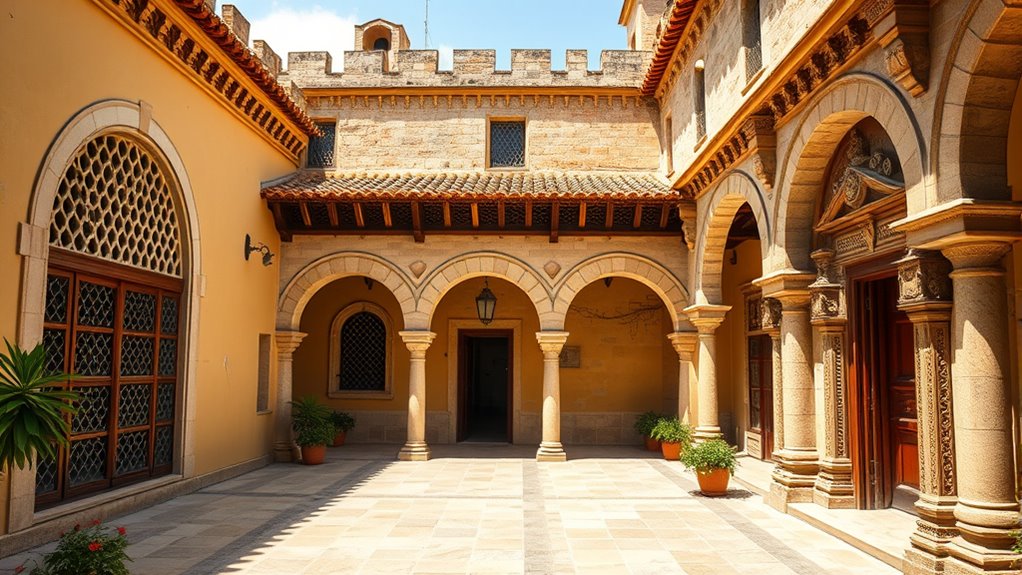
Sicilian architecture vividly reflects the island’s rich history, shaped markedly by Arab and Norman influences. As you explore its buildings, you’ll notice how Moorish motifs intertwine with Norman fortifications, creating a unique fusion of styles that tell stories of conquest and cultural exchange. Moorish motifs, characterized by intricate geometric patterns, horseshoe arches, and ornate tile work, reveal the deep Arab presence on the island. These elements often adorn palaces, mosques, and even churches, blending seamlessly into the local landscape. When you see the delicate arabesques or the vibrant, tile-covered courtyards, you’re witnessing the artistry of Moorish craftsmanship, which has left an indelible mark on Sicilian aesthetics.
Meanwhile, Norman fortifications stand as a testament to the island’s strategic importance during medieval times. You’ll find massive stone walls, imposing towers, and fortified gateways that served both as defense mechanisms and symbols of Norman authority. These structures are often built atop or near earlier Arab sites, reflecting a layered history of conquest and adaptation. The Normans, upon arriving in Sicily, didn’t erase the Arab influences; instead, they integrated them, building formidable fortresses that incorporated Moorish design elements. For example, you may notice rounded arches and decorative battlements that echo Arab architectural principles, yet are part of a broader Norman military style. This hybrid approach creates a distinctive aesthetic that’s both functional and beautiful.
As you stroll through towns like Palermo or Cefalù, you’ll see how these influences coexist. Palaces and churches feature Norman architectural features—such as thick battlements and large, arched windows—yet are decorated with Moorish motifs that add a layer of elegance and exoticism. The combination offers a visual narrative of Sicily’s complex history, where conquest did not mean the loss of previous cultures but rather their transformation and integration. The Arab legacy’s influence on decorative arts, combined with the Normans’ focus on construction and defense, results in a distinctive architectural style that’s both resilient and refined. Each structure invites you to appreciate the island’s multicultural past, revealing a harmony born from centuries of cultural blending. Additionally, the use of decorative tile work exemplifies the Arab influence, showcasing intricate patterns and vibrant colors that continue to inspire modern design.
Frank Lloyd Wright Falling Water: 18×36 Stretched Canvas – Iconic Architectural Masterpiece Wall Art – Elegant Home Decor, Modern Design, Artistic Gift for Architecture Enthusiasts, Timeless Aesthetic
FRANK LLOYD WRIGHT FALLING WATER WALL ART – The "Frank Lloyd Wright Falling Water" wall art stretched canvas…
As an affiliate, we earn on qualifying purchases.
As an affiliate, we earn on qualifying purchases.
Frequently Asked Questions
How Did Local Sicilian Materials Influence Architectural Styles?
You notice how local stone usage shapes Sicilian architecture, giving buildings a distinctive, sturdy appearance. The material diversity, including limestone, pumice, and sandstone, allows for creative designs and adaptations to the environment. These materials influence architectural styles by blending practicality with regional character. You can see how the availability of local stones fosters unique textures and colors, making Sicilian structures stand out and reflect the island’s rich, diverse material resources.
Are There Specific Buildings Exemplifying Arab-Norman Fusion?
You can see Arab-Norman fusion vividly in buildings like Palermo’s Cathedral, where mosaic masterpieces blend Byzantine and Arab influences beautifully. The Castel del Monte exemplifies fortress fortifications with its unique octagonal design, showcasing Norman engineering, while decorative mosaics reflect Arab artistic mastery. These structures embody a seamless integration of Arab and Norman styles, giving Sicily a distinctive architectural identity that’s both functional and artistically rich.
How Did Religious Beliefs Shape Architectural Ornamentation?
You notice how religious beliefs subtly shape architectural ornamentation through medieval iconography and sacred motifs. These elements serve as visual sermons, gently guiding worshippers’ minds toward divine truths. Intricate carvings and mosaics blend Arab and Norman influences, creating a sacred language that elevates the spiritual experience. Such ornamentation reflects the deep reverence for faith, transforming buildings into visual hymns that celebrate divine presence and spiritual devotion.
What Role Did Trade Routes Play in Architectural Exchanges?
Trade routes profoundly shaped Sicilian architecture by introducing diverse influences through Silk Road exchanges and maritime trade impacts. You can see this in the blending of styles, materials, and construction techniques, as merchants and travelers brought new ideas from Asia, Africa, and Europe. These interactions fostered a unique architectural landscape where Arab and Norman elements merged, reflecting Sicily’s vibrant role as a crossroads of cultures and commerce.
How Has Modern Architecture Integrated Arab-Norman Elements?
You might think modern architecture shuns old styles, but it actually weaves Arab-Norman elements into sleek designs, celebrating Sicily’s rich heritage. Irony aside, architects preserve cultural identity by blending traditional motifs with contemporary techniques, creating harmony. They prioritize architectural preservation, ensuring these historic influences remain visible while embracing innovation. So, today’s structures proudly echo Sicily’s storied past, proving that old and new can coexist beautifully, strengthening cultural bonds rather than erasing them.

NAKLEO Tile Painting Stencil 13”x13”, Valetta Spanish Moorish Flower Moroccan, Plastic Reusable Template, Home Decor Craft DIY, Floor Concrete Patio Wall – Terracotta
STENCILS IMITATING TILES: Give existing tiles or pavers a new look, or create a pattern that imitates tiles…
As an affiliate, we earn on qualifying purchases.
As an affiliate, we earn on qualifying purchases.
Conclusion
You might find it fascinating that over 70% of Sicilian architectural features blend Arab and Norman influences, creating a unique cultural mosaic. This fusion reflects Sicily’s rich history of conquest and coexistence, making its buildings truly stand out in the Mediterranean. By exploring these structures, you gain insight into how diverse cultures shape art and architecture. So, next time you visit Sicily, pay close attention—you’re walking through a living history book of Arab and Norman legacies.
White Marble Arch Decorative Object – Rounded Horseshoe Sculpture Modern Home Decor – Contemporary Shelf & Coffee Table Decor for Office & Living Room – 5" x 6"
Architectural Home Accent: Measuring 5"x2"x6", this white marble arch tabletop decor features natural veining and a smooth finish….
As an affiliate, we earn on qualifying purchases.
As an affiliate, we earn on qualifying purchases.

SZCO Supplies 32"" Medieval Replica Studded Battle Axe (882439)
32" overall
As an affiliate, we earn on qualifying purchases.
As an affiliate, we earn on qualifying purchases.