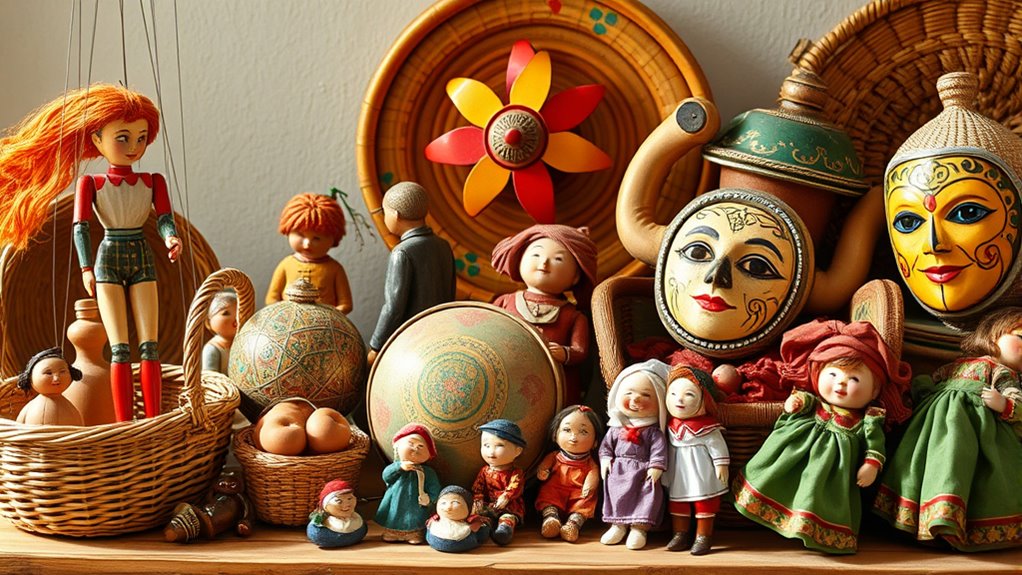

Traditional Italian toys and games reveal a rich cultural history passed down through generations. From handcrafted wooden puzzles and puppets in the North to clay figurines in the South, each region’s craftsmanship reflects local customs and stories. Many toys have evolved with modern touches, blending tradition and innovation. By exploring these pastimes, you’ll discover Italy’s unique regional identities and timeless craftsmanship—if you keep exploring, more fascinating details await you.
Key Takeaways
- Traditional Italian toys vary regionally, reflecting local materials, craftsmanship, and cultural customs across northern, southern, and central Italy.
- Many traditional toys have evolved into modern, eco-friendly, and technologically integrated versions while preserving their cultural roots.
- Toys often incorporate regional themes, such as Venetian masks or Tuscan figurines, fostering cultural pride and storytelling.
- Skilled craftsmanship and local materials ensure the authenticity and uniqueness of Italy’s traditional toys, preserving regional artistic traditions.
- These toys serve as tangible links to Italy’s history, promoting cultural awareness and heritage appreciation among new generations.
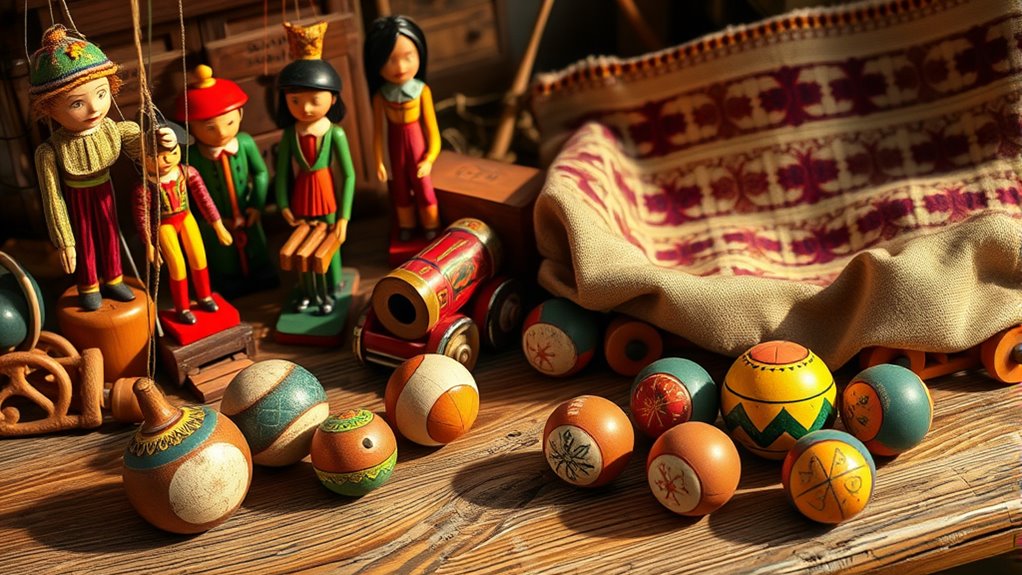
Italy has a rich tradition of toys and games that have been passed down through generations, reflecting the country’s cultural heritage. These toys often showcase regional variations, highlighting local craftsmanship, materials, and customs. For example, in the northern regions, you might find wooden toys crafted from local forests, often painted with vibrant colors or decorated with intricate designs. In contrast, southern Italy features handcrafted clay figurines and puppets, which have long been part of local festivities and storytelling traditions. These regional differences not only offer a glimpse into Italy’s diverse cultural landscape but also influence the types of toys children played with in different areas. Despite these variations, many of these traditional toys have evolved over time, leading to modern adaptations that keep the spirit of the past alive while appealing to contemporary tastes.
Today, you can find traditional Italian toys reimagined with modern materials and design. For instance, wooden puzzles and dolls, once handmade, now come in sleek, colorful forms that appeal to today’s children. These modern adaptations often incorporate eco-friendly and sustainable materials, respecting Italy’s long-standing appreciation for craftsmanship. Additionally, some toy manufacturers blend old traditions with new technology, creating interactive versions of classic toys—like digital versions of wooden blocks or augmented reality puppets—that blend history with innovation. These adaptations serve to preserve traditional play while making it relevant for today’s digital age.
You might also notice that regional variations influence the themes and stories behind these toys. In Venice, for example, traditional masks inspire toys that emphasize storytelling and theatrical play, while in Tuscany, figurines of historical characters connect children to Italy’s rich history. These regional influences ensure that each toy carries a piece of local identity, fostering a sense of pride and cultural awareness in young players. As these toys are adapted for modern times, they often retain their cultural significance, serving as educational tools or souvenirs that celebrate Italy’s diverse heritage.
Furthermore, the use of regional craftsmanship plays a crucial role in maintaining the authenticity and uniqueness of these traditional toys, ensuring that each piece reflects local artistic techniques passed down through generations. In essence, Italy’s traditional toys and games are a living tradition that adapts to change without losing their roots. Whether through regional variations or modern updates, these playthings offer a tangible link to Italy’s history and culture, inviting new generations to discover and cherish their heritage. You get to experience a blend of past and present, where craftsmanship and innovation come together to keep Italy’s playful spirit alive for years to come.
traditional Italian wooden puzzles
As an affiliate, we earn on qualifying purchases.
As an affiliate, we earn on qualifying purchases.
Frequently Asked Questions
How Have Italian Toys Evolved Over the Centuries?
You’ve seen how Italian toys have evolved over the centuries from simple, handcrafted items to more modern, mass-produced ones. Today, you notice a blend of historical toy craftsmanship and regional toy variations, reflecting Italy’s rich cultural diversity. Modern toys still honor traditional techniques, but now incorporate new materials and designs. This evolution keeps Italian toy traditions alive while embracing innovation, making playtimes both nostalgic and exciting for today’s children.
Are Traditional Italian Games Still Played Today?
You’ll find that traditional Italian games still dance in the hearts of many, like echoes of a bygone melody. These games hold deep cultural significance, weaving history into daily life. They also carry educational value, teaching skills and values from generation to generation. Though modern toys emerge, the spirit of these timeless games persists, inviting children and adults alike to embrace Italy’s rich heritage through playful, meaningful moments.
What Regional Differences Exist in Italian Toy Traditions?
You’ll find regional variations in Italian toy traditions, reflecting local folk traditions and cultural influences. In northern Italy, for example, you might see handcrafted wooden toys, while in the south, colorful clay figurines are popular. These differences highlight how regional folk traditions shape playthings. So, when exploring Italy, you’ll notice that each area celebrates its unique toy heritage, preserving cultural identity through these regional variations in traditional games and toys.
How Did Italian Toys Influence Modern Game Design?
Your curiosity about how Italian toys influenced modern game design is truly a treasure chest of insights. These toys, rooted in cultural significance and crafted with intricate craftsmanship techniques, inspired game designers to blend tradition with innovation. Their emphasis on storytelling, skill, and community has shaped contemporary gameplay, making it more immersive and meaningful. You can see their legacy in today’s engaging, culturally rich games that celebrate Italian artistry and ingenuity.
Are There Any Italian Toy Festivals or Events?
You can explore Italian toy festivals like the Fiera di San Nicola in Bari, which celebrates Italian toy craftsmanship and traditional games. These events often focus on folk game preservation, showcasing handcrafted toys and regional game traditions. Attending such festivals gives you a chance to experience Italy’s rich toy heritage firsthand, connect with artisans, and learn how these timeless crafts continue to influence modern play.
Conclusion
As you explore Italy’s traditional toys and games, you connect with a vibrant history that’s as rich as a vintage vinyl record. These pastimes, from wooden tops to marbles, remind you that play transcends time—no need for an app to enjoy simple joys. So next time you’re feeling nostalgic, pick up a marbles or a spinning top, and let yourself step into a time when kids truly played with heart, not just screens.