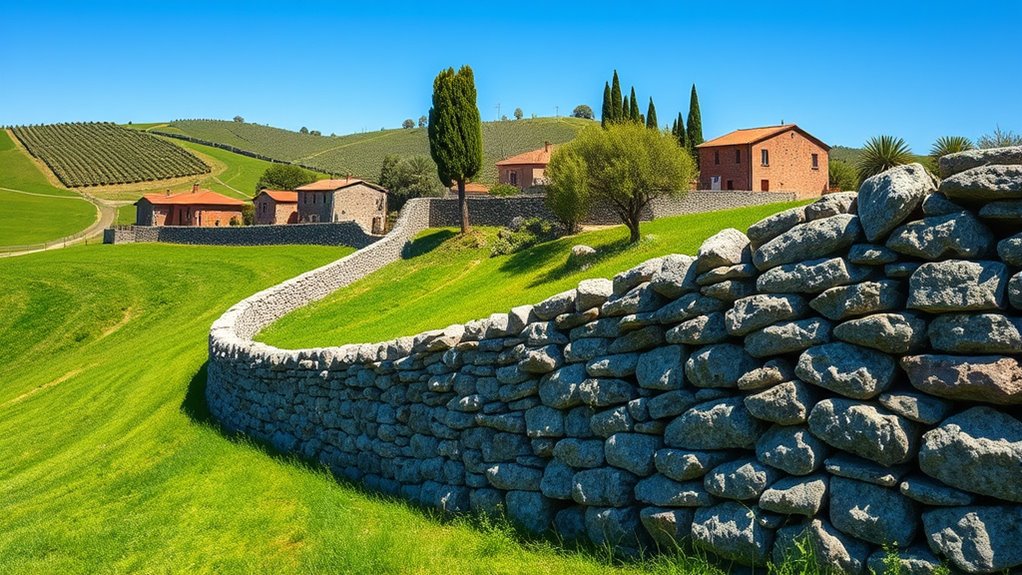

Dry stone construction in rural Italy is a centuries-old craft that embodies the region’s cultural heritage and sustainable building practices. You’ll see how skilled artisans carefully choose and fit stones without mortar, creating durable, eco-friendly walls that blend seamlessly with the landscape. These structures serve as terraces, boundaries, and habitats, supporting land preservation and local ecosystems. Recognized as a UNESCO World Heritage site, they highlight Italy’s rural ingenuity—and if you continue exploring, you’ll discover more about their unique history and significance.
Key Takeaways
- Dry stone construction in rural Italy is a UNESCO World Heritage recognized practice, showcasing centuries of local craftsmanship and cultural identity.
- These structures are built solely with carefully fitted local stones, relying on gravity and skill without mortar or cement.
- They serve practical roles as terraces, boundary markers, and habitat creators, supporting sustainable land use and ecosystems.
- The technique offers environmental benefits by reducing carbon footprint and allowing structures to naturally adapt to land shifts.
- Preserving these walls maintains Italy’s rural heritage, traditional craftsmanship, and promotes sustainable practices rooted in cultural tradition.
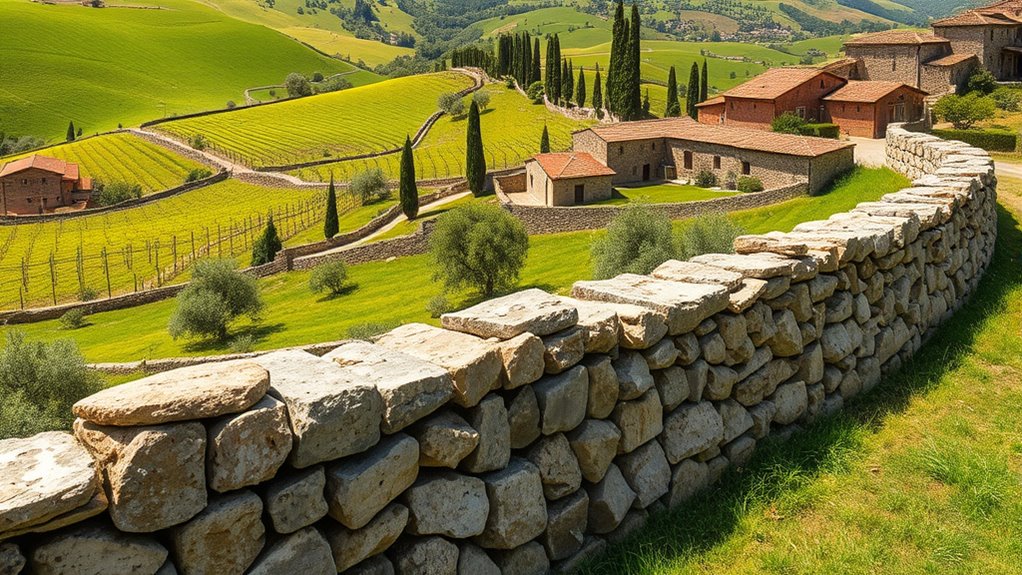
Dry stone construction has been a vital part of rural Italy for centuries, shaping the landscape with its sturdy, timeless walls. As you explore these ancient structures, you’ll notice more than just their durability—you’ll see a reflection of sustainable techniques passed down through generations. Unlike modern building methods that rely heavily on mortar or cement, dry stone walls are built without binding agents, making them environmentally friendly and highly adaptable. This technique uses locally sourced stones, minimizing transportation emissions and reducing the carbon footprint. The stones are carefully selected and meticulously fitted together, allowing the walls to breathe and adapt to the natural shifts of the land. These sustainable techniques guarantee that the walls age gracefully, requiring minimal maintenance while supporting local ecosystems by allowing flora and fauna to thrive within their crevices.
Beyond their practical function, these dry stone structures hold profound cultural significance. They embody a way of life rooted in harmony with nature, reflecting centuries of rural ingenuity. As you walk along these walls, you’re walking through history—each stone telling a story of local craftsmanship, community effort, and agricultural tradition. Many of these structures served as terraces for vineyards and olive groves, helping farmers maximize arable land on steep slopes. Their enduring presence highlights the resilience and resourcefulness of rural communities, who relied on simple yet effective techniques to sustain themselves. Recognized as UNESCO World Heritage sites, these constructions symbolize a collective cultural identity, linking past and present through their enduring form.
The cultural importance extends beyond their function; they represent a tangible connection to Italy’s rural heritage. These walls often define landscapes, mark boundaries, and create a sense of place. They’re more than just fences—they’re symbols of local pride and tradition. As a visitor, you’re encouraged to appreciate their craftsmanship and the cultural stories embedded within each stone. Preserving these structures isn’t just about maintaining aesthetics; it’s about safeguarding a way of life that emphasizes sustainability, craftsmanship, and respect for the land. By understanding their significance, you’ll gain a deeper appreciation of how these ancient techniques continue to inspire contemporary sustainable practices, blending history with environmental consciousness. In Italy’s rural heartlands, dry stone construction remains a testament to ingenuity—an art form that celebrates the enduring bond between people and their landscape.
Frequently Asked Questions
How Do Dry Stone Walls Withstand Weather Over Centuries?
Dry stone walls withstand weather over centuries because their clever design provides excellent weather resistance and erosion prevention. By carefully fitting stones without mortar, you create a flexible structure that absorbs and disperses the impact of rain, wind, and temperature changes. The gaps between stones also allow water to drain, reducing erosion. This natural, adaptive construction helps the walls endure the test of time, maintaining their strength and stability.
What Tools Are Traditionally Used in Dry Stone Construction?
You typically use simple hand tools like hammers, chisels, and levers for dry stone construction. About 80% of the work involves careful stone selection to guarantee stability. These tools help shape and position stones precisely, allowing you to create durable, weather-resistant walls without mortar. This traditional approach relies on skill and judgment, making every project a testimony to craftsmanship passed down through generations.
Are There Specific Regional Styles Within Italy’s Dry Stone Architecture?
Yes, you’ll notice regional variations in Italy’s dry stone architecture, shaped by local landscapes and cultural influences. In Tuscany, you might see elegant, well-balanced walls, while in Liguria, the structures are more rugged and integrated into the hillsides. These regional styles reflect unique building techniques and traditions, giving each area a distinctive character. You’ll appreciate how cultural influences and environment come together to create diverse, beautiful dry stone structures across Italy.
How Is the Structural Integrity Maintained Without Mortar?
You maintain the structural integrity of dry stone constructions through mortar alternatives like precise stone placement and careful load distribution. By selecting stones with fitting shapes, you guarantee stability and balance, allowing the structure to withstand environmental forces. The skillful arrangement distributes weight evenly, preventing collapse. This ancient technique relies on craftsmanship and understanding of physics, creating durable, sustainable structures that have stood the test of time without mortar.
Can Dry Stone Techniques Be Easily Adapted for Modern Construction?
Dry stone techniques can be adapted for modern construction, turning ancient skills into innovative solutions. You can incorporate adaptive techniques like reinforced joints or modern tools to enhance stability and efficiency. While traditional methods hold timeless appeal, blending them with contemporary materials and engineering opens doors to new applications. Think of it as giving old roots a fresh coat of paint—preserving heritage while embracing modernity.
Conclusion
You now see how dry stone construction isn’t just a method—it’s a timeless masterpiece holding Italy’s rural soul together. This ancient craft, passed down through generations, embodies resilience and harmony with nature. By appreciating these stone marvels, you realize they’re more than walls—they’re the heartbeat of Italy’s heritage, whispering stories that could fill an eternity. Protecting them means safeguarding a treasure more precious than gold, a legacy that truly defines the art of enduring craftsmanship.