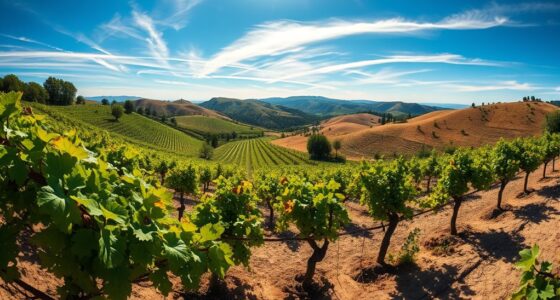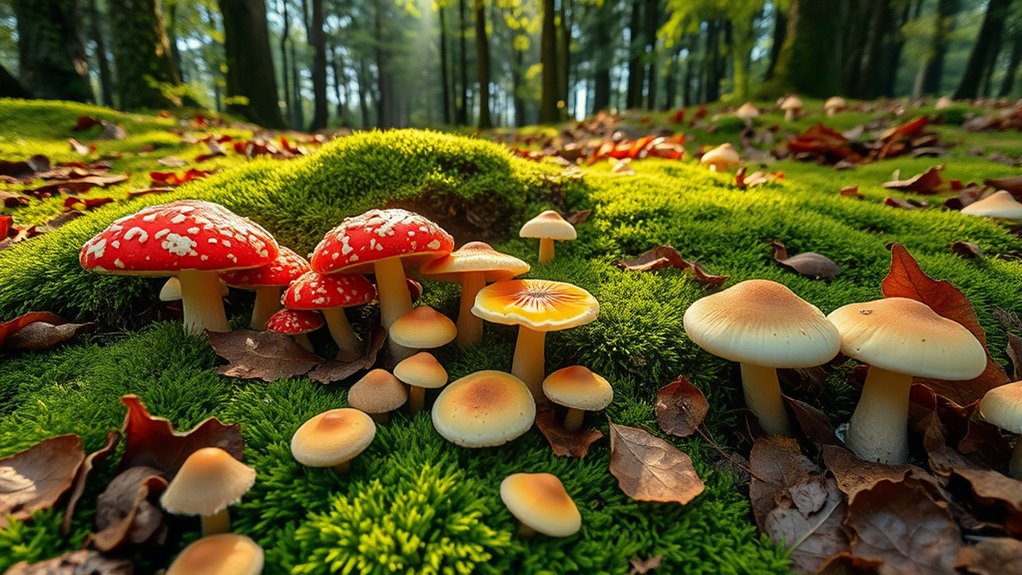
To safely forage for mushrooms in Italy, you should learn to identify popular edible species like porcini, chanterelles, and morels, especially their seasonal peaks in autumn and spring. Practice sustainable harvesting by only taking what you can positively identify and leaving some behind to support the ecosystem. Always forage in trusted locations and avoid polluted areas. If you keep exploring, you’ll discover expert tips that help you enjoy Italy’s rich mushroom bounty responsibly.
Key Takeaways
- Identify common edible Italian mushrooms like porcini, chanterelles, and morels, while learning to distinguish toxic look-alikes.
- Forage mainly during spring and autumn, considering local climate and recent rainfall for peak mushroom availability.
- Use sustainable practices: harvest carefully with a knife, avoid over-harvesting, and leave some mushrooms to support ecosystems.
- Always check for pollutants or pesticides in foraging areas and consult local experts or mycologists when uncertain.
- Incorporate responsibly harvested mushrooms into traditional Italian dishes to enjoy authentic flavors safely and sustainably.
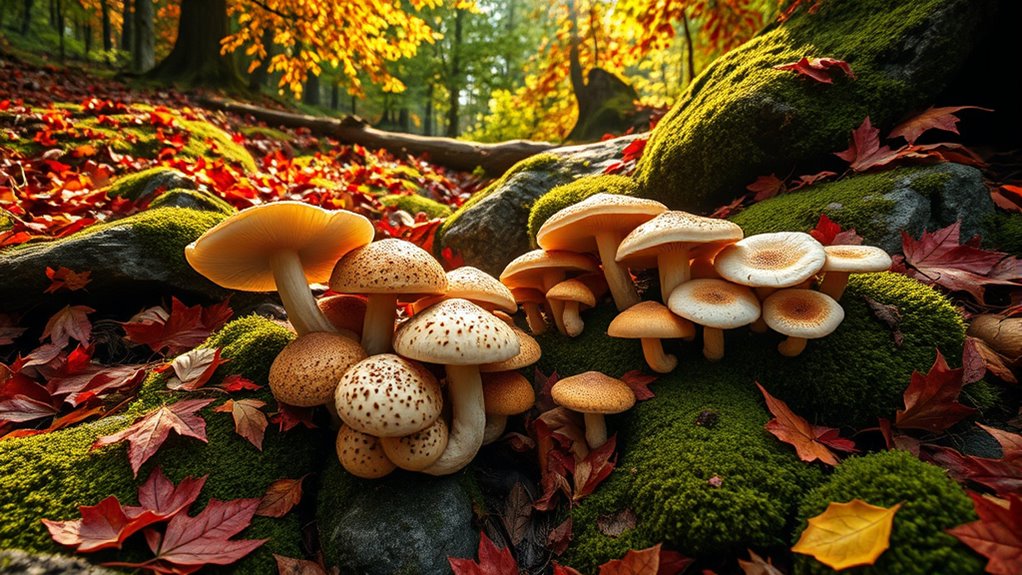
Italy’s diverse landscapes offer some of the best opportunities for mushroom foraging, but it’s vital to know what to look for and how to stay safe. When venturing into forests, fields, and mountain slopes, you’ll discover a wide variety of edible fungi, each with unique culinary uses that can elevate your dishes. Many mushrooms are prized for their flavor and texture, making them a favorite ingredient in traditional Italian recipes like risottos, pasta sauces, and sautés. However, it’s essential to identify edible species accurately, as some toxic varieties closely resemble safe ones. Learning to distinguish between the two ensures you enjoy the culinary benefits without risking your health.
Practicing sustainable harvesting is equally important. When collecting mushrooms, only pick what you can positively identify and avoid over-harvesting in any one area. Leave some behind to allow for natural reproduction, and steer clear of disturbing the surrounding habitat. This approach not only preserves the local ecosystem but also ensures future seasons remain fruitful for foragers like you. Using a small knife to cut mushrooms at the base rather than pulling them out helps protect the mycelium, the underground network that sustains mushroom growth. Respect for nature and adherence to sustainable practices help maintain the balance of these delicate ecosystems for years to come.
Practice sustainable harvesting by only collecting identifiable mushrooms and using a knife to protect the mycelium.
Timing is key when it comes to foraging, as each species has a specific season in which it thrives. Spring and autumn are typically the most fruitful periods, but understanding the local climate and mushroom life cycle can give you an edge. Keep a seasonal foraging calendar handy, and always check recent weather conditions — after rain, mushrooms tend to sprout abundantly. Be cautious about areas that might be contaminated by pollutants or pesticides, as these can pose health risks. Stick to known foraging spots or join local groups and guides who can provide trusted advice and ensure you’re collecting safely and ethically. Recognizing best harvesting practices helps protect both the environment and your safety.
Ultimately, successful mushroom foraging in Italy combines knowledge, respect for nature, and culinary curiosity. When you identify the right species, you can enjoy their rich flavors and incorporate them into authentic Italian dishes. By harvesting responsibly, you contribute to the preservation of Italy’s natural bounty and help sustain this rewarding activity for future generations. Remember, safety always comes first — when in doubt, consult a local expert or mycologist before consuming wild mushrooms. With patience, care, and a bit of expertise, you’ll find mushroom foraging a truly enriching experience that connects you deeply with Italy’s vibrant natural landscape.

VylerSky Foraging Bag – Mushroom Foraging Kit with Bag and Knife, Great for Mushroom Decor Lovers
🍄Great Mushroom Foraging Bag – Incredible collapsible mesh sack with a foraging pouch attached. Use the included mushroom…
As an affiliate, we earn on qualifying purchases.
As an affiliate, we earn on qualifying purchases.
Frequently Asked Questions
Are There Any Poisonous Mushrooms Unique to Italy?
Yes, Italy has regional endemic species of poisonous fungi that are unique to certain areas. You should be cautious, as some of these regional endemic species can be easily confused with edible mushrooms. Always learn to identify these poisonous fungi, avoid foraging without proper knowledge, and consult local experts. Recognizing these regional endemic species helps prevent accidental poisoning and ensures a safe foraging experience across Italy.
How Do I Identify Edible vs. Toxic Mushrooms Accurately?
Think of mushroom identification as a delicate dance—you need keen eyes and careful steps to avoid toxic mushroom prevention mistakes. To distinguish edible from toxic varieties, always consult detailed field guides, observe key features like cap shape and color, and note the habitat. Never rely on folklore or assumptions. When in doubt, it’s safest to leave it be, ensuring your foraging adventure remains enjoyable and safe.
Can I Forage Mushrooms in Protected National Parks?
You should check park regulations before foraging in protected national parks because conservation rules often prohibit mushroom collection to preserve ecosystems. Many parks have strict policies against foraging to prevent environmental damage and protect native species. Always review specific rules beforehand, and if permitted, follow responsible foraging practices. Respect conservation efforts and avoid taking mushrooms unless explicitly allowed, ensuring you contribute to the park’s preservation and safety.
What Tools Are Essential for Safe Mushroom Foraging?
You’ll need essential foraging safety equipment like a sharp knife, basket, and a field guide to assist with mushroom identification. A small brush helps clean specimens without damaging them. Wearing gloves can shield you from toxins and dirt. Always carry a mobile phone for emergencies. These tools ensure you forage safely, accurately identify mushrooms, and protect your health, making your mushroom hunting both enjoyable and secure.
Are There Guided Mushroom Foraging Tours Available in Italy?
Yes, you can find guided mushroom foraging tours in Italy that emphasize foraging ethics and mushroom preservation. These tours are led by experienced experts who teach you how to identify safe species, harvest responsibly, and respect local ecosystems. Participating in such tours helps you enjoy the experience sustainably, ensuring mushroom populations thrive for future foragers while minimizing environmental impact. Always choose reputable guides committed to conservation and ethical foraging practices.

Mushrooms: How to Identify and Gather Wild Mushrooms and Other Fungi
As an affiliate, we earn on qualifying purchases.
As an affiliate, we earn on qualifying purchases.
Conclusion
Now that you know the nuts and nuances of exploring Italy’s abundant mushroom bounty, you’re ready to roam confidently. Remember, patience and precautions protect your foraging pursuits, turning treacherous traps into tasty treats. With wisdom and vigilance, you’ll savor successful, safe, and satisfying mushroom moments. So, step softly, stay savvy, and savor the splendid, seasonal symphony of Italy’s incredible fungi. Happy hunting—your mushroom adventure awaits!

CABUGE Mushroom Harvesting Knife, No Lock Folding Garden Tool for Foraging & Cleaning, Two-Hand Opening Knife with Wood Handle for Men Women
【PERFECT FOR FORAGING & GARDENING】The mushroom harvesting knife is designed to meet the needs of outdoor mushroom picking…
As an affiliate, we earn on qualifying purchases.
As an affiliate, we earn on qualifying purchases.

The Wild Mushroom Basket: Delicious Meals for Mushroom-Lovers
As an affiliate, we earn on qualifying purchases.
As an affiliate, we earn on qualifying purchases.