
Italian food gestures come from a rich tradition of expressing passion and regional identity that’s been passed down through generations. They serve as non-verbal cues to share appreciation, enthusiasm, or disagreement about dishes, often reflecting local customs and history. These movements are deeply embedded in Italy’s social fabric, highlighting its vibrant culinary culture. If you want to discover the fascinating stories behind each gesture, keep exploring how Italy’s history shaped these expressive traditions.
Key Takeaways
- Italian food gestures stem from centuries-old cultural expressions used to communicate beyond words.
- Regional differences influence gesture styles, with Northern Italy favoring subtle movements and the South more animated.
- Historical factors like Roman rhetoric and trade exchanges shaped the expressive nature of these gestures.
- Gestures enhance social interaction, conveying appreciation, disagreement, or enthusiasm during meals.
- They symbolize Italy’s passionate culinary tradition and reinforce cultural identity through non-verbal communication.

Italian food gestures are a vivid and essential part of the country’s culinary culture, conveying meaning beyond words. When you see Italians use their hands to emphasize a point or express a flavor, you’re witnessing a tradition rooted in centuries of cultural expression. These gestures are not random; they are shaped by regional variations and historical influences that have evolved over time. Understanding these gestures offers a window into Italy’s diverse culinary identity, revealing how different regions communicate their unique flavors and customs.
Across Italy, you’ll notice that gestures vary from one area to another, reflecting regional differences in dialects, history, and local cuisine. For example, in the north, where cuisine often emphasizes butter, rice, and hearty meats, gestures tend to be more restrained and deliberate. In contrast, southern regions like Naples or Sicily showcase more animated and expressive hand movements, mirroring their rich, bold flavors and vibrant food traditions. These regional variations are deeply embedded in local culture, making gestures an intuitive way for Italians to connect over food, regardless of language barriers.
Regional food gestures in Italy reflect local dialects, history, and cuisine, revealing diverse cultural expressions across the country.
Historical influences have also played a pivotal role in shaping these gestures. Italy’s long history of city-states, invasions, and trade routes introduced diverse culinary traditions and communication styles. The influence of the Roman Empire, with its emphasis on rhetoric and oratory, contributed to expressive gestures that emphasize points during conversations about food or dining. Over centuries, these gestures became integrated into everyday social interactions, especially around meals, where food is central to community and celebration. The blending of different cultural practices through trade and conquest added layers of meaning and variety to the gestures, making them more nuanced and specific to local customs.
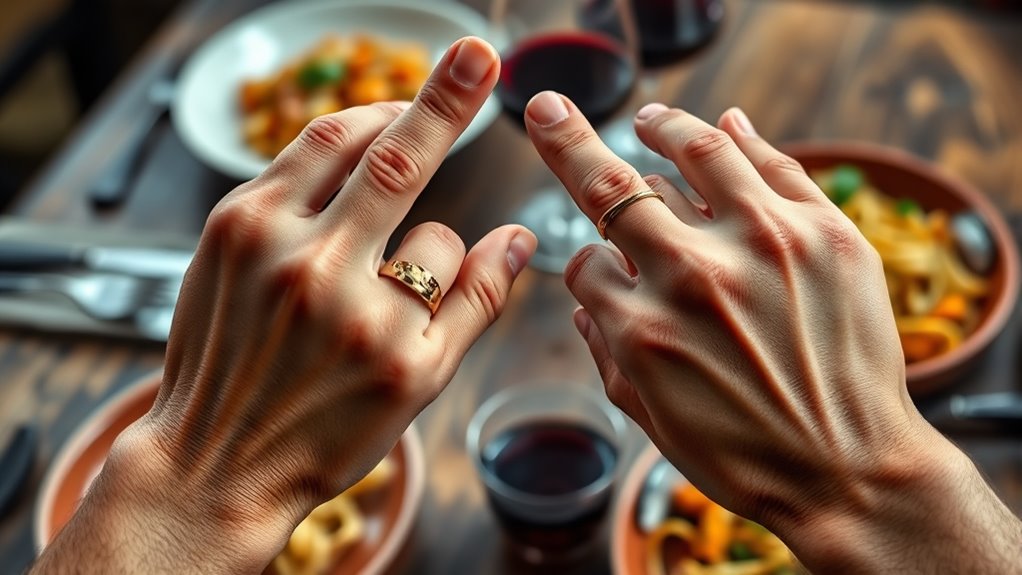
When you observe Italians gesturing around food, you’re witnessing a language that extends beyond words. These movements serve as a way to express appreciation, disagreement, or enthusiasm about a dish, often conveyed with a simple flick of the hand or a pinch of fingers. They’re an instinctive, almost subconscious, part of the conversation — a reflection of Italy’s rich culinary history and regional diversity. By paying attention to these gestures, you gain insight into the deeper cultural stories behind each meal. They remind you that Italian cuisine isn’t just about ingredients; it’s about tradition, identity, and the passionate way Italians share their love for food through every expressive movement.
As an affiliate, we earn on qualifying purchases.
Frequently Asked Questions
How Did Italian Food Gestures Evolve Over Centuries?
You notice that Italian food gestures have evolved through centuries, becoming key to culinary communication. As you observe, these gestures symbolize specific tastes, emotions, and cultural values, making conversations more expressive. Over time, they’ve refined into a rich tradition, allowing you to connect with others beyond words. These gesture symbols help you understand and participate in Italian food culture, highlighting how non-verbal cues shape shared experiences around food.
Are There Regional Differences in Food Gestures Across Italy?
Imagine Italy as a vibrant mosaic, each region adding its own unique tile. Regional variations in food gestures reflect this cultural diversity, with Northern Italy favoring subtle, reserved motions, while the South embraces expressive, lively hand signs. These gestures serve as lively dialogues, expressing local pride and traditions. So, yes, across Italy, food gestures differ beautifully, echoing each area’s rich history and distinct cultural identity.
What Are the Historical Roots of Specific Italian Gestures?
You might wonder about the historical roots of Italian gestures, which serve as powerful forms of symbolic communication. These gestures, deeply rooted in Italy’s rich cultural identity, evolved over centuries, often reflecting regional traditions and social customs. They help convey emotions, humor, or social status without words, making them an integral part of Italian life. Understanding these roots reveals how gestures have shaped Italy’s unique cultural expression and social interactions.
How Do Italian Food Gestures Influence Modern Dining Etiquette?
Did you know Italians use over 250 gestures to enhance communication? These food gestures hold significant gesture significance, shaping how you interpret cultural communication during meals. They influence modern dining etiquette by emphasizing respect, enjoyment, and connection at the table. When you observe or participate, you’re engaging in a tradition that transcends words, making your dining experience richer and more authentic through these expressive, culturally meaningful gestures.
Are These Gestures Understood and Used Outside Italy?
You might notice Italian food gestures are sometimes understood outside Italy, especially in cross-cultural communication, where culinary body language helps convey meaning. While some gestures, like the “chef’s kiss,” are widely recognized, others may not translate well due to cultural differences. You’ll find that in multicultural settings, these gestures can facilitate understanding, but it’s always good to be cautious, as not everyone interprets culinary body language the same way.
Conclusion
As you embrace Italian food gestures, you hold more than just signals—you carry centuries of tradition and passion. Each movement is a thread in a vibrant tapestry woven through history, symbolizing unity, pride, and love for the cuisine. By understanding these gestures, you become part of a living story, where every gesture is a key to Italy’s soul. Let these symbols remind you that food is not just nourishment, but a heartfelt language connecting generations.