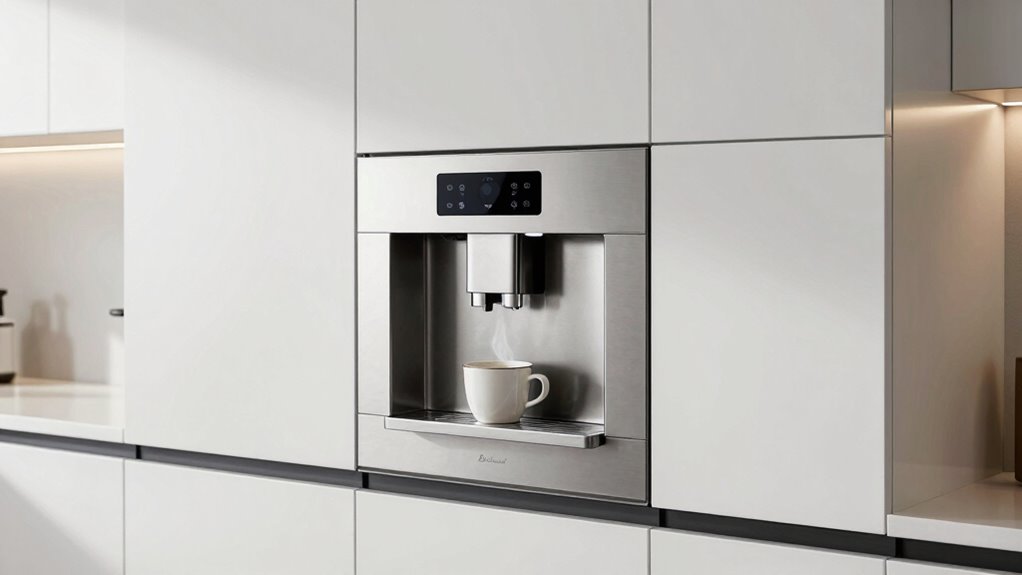

When planning to install a built-in coffee machine, make certain you consider space requirements, proper placement, and airflow. Check electrical needs, plumbing connections, and ventilation to prevent issues later. Measure carefully to avoid costly adjustments, and prepare cabinets and countertops for support. Don’t forget backup power and water supplies if needed. To keep your machine performing its best over time, regular maintenance is essential. Keep these tips in mind, and you’ll create a seamless coffee station setup.
Key Takeaways
- Prioritize proper space planning to ensure the built-in coffee machine fits seamlessly and allows for ventilation and easy access.
- Confirm electrical, plumbing, and ventilation requirements early to prevent costly modifications during installation.
- Match the machine’s size and style with your kitchen cabinetry and overall design for a cohesive look.
- Measure cabinet cut-outs and countertop support precisely to ensure a secure, professional fit.
- Plan for maintenance access and future upgrades by leaving sufficient clearance and considering appliance servicing needs.
Why Space Planning Is Key Before Installing a Built-In Coffee Machine
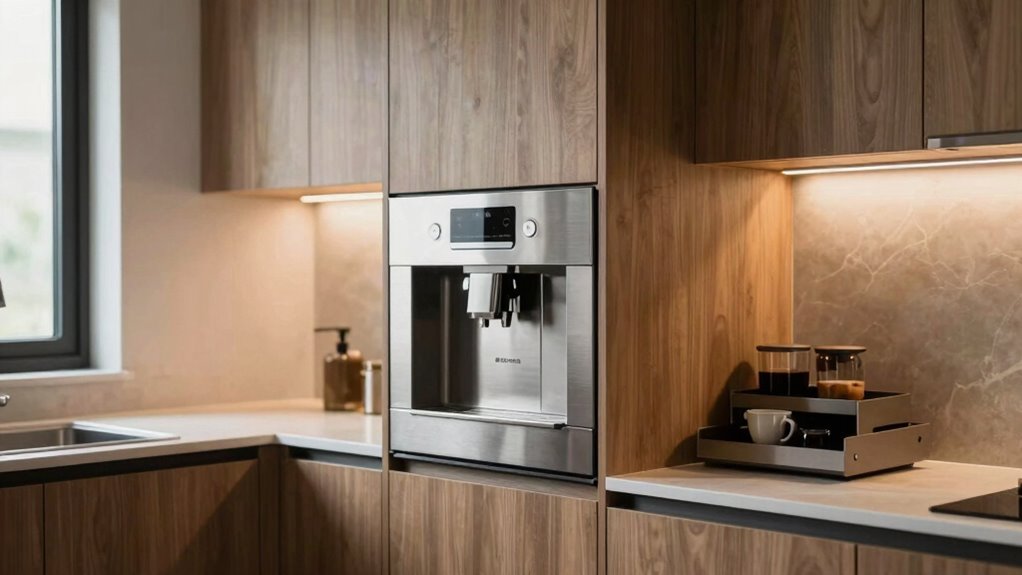
Proper space planning is crucial before installing a built-in coffee machine because it guarantees the appliance fits seamlessly into your kitchen layout. When considering coffee machine aesthetics, you want it to complement your overall design, ensuring a sleek and cohesive look. Additionally, understanding your coffee brewing technology needs helps you choose a model that maximizes functionality without overcrowding your space. Accurate measurements prevent awkward fittings or the need for costly modifications later. By planning your space carefully, you ensure easy access for daily use and maintenance. This foresight also allows you to select a location that balances form and function, highlighting your coffee machine’s visual appeal while supporting efficient brewing. Ultimately, thoughtful space planning makes your coffee station both beautiful and practical.
How to Choose the Best Location for Your Built-In Coffee Machine

Choosing the right spot for your built-in coffee machine can considerably enhance your daily routine. Place it near your coffee brewing area for easy access and efficient workflow. Ensure there’s enough space for handling cups and cleaning. Consider proximity to caffeine storage to streamline your morning prep. Keep it at a comfortable height for pouring and maintenance. Avoid placing it near heat sources or direct sunlight to preserve its functionality. Additionally, incorporating protective gear such as heat-resistant mats can help safeguard your appliance during daily use. Paying attention to ventilation requirements ensures proper operation and prevents overheating. Adequate power supply is essential for consistent performance and safety. Proper installation guidelines can also extend the lifespan of your built-in coffee machine and prevent potential issues. Remember to verify the manufacturer’s instructions to ensure that your setup complies with safety standards and optimizes performance.
How Much Space Does a Built-In Coffee Machine Need?
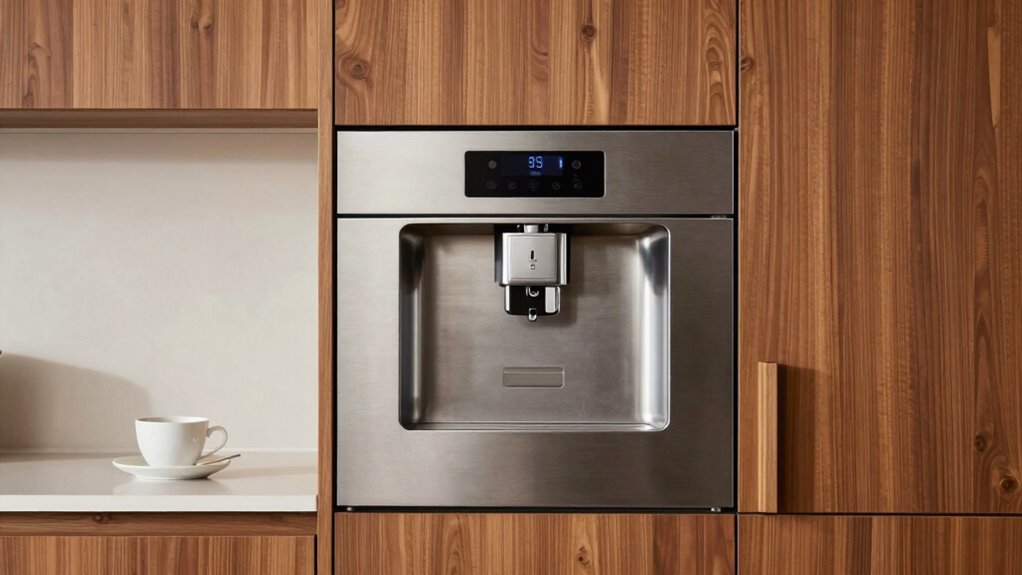
Knowing how much space a built-in coffee machine requires helps you plan your kitchen layout effectively. You’ll need to take into account required clearance space, as well as standard dimensions that can vary between models. Additionally, understanding the differences between built-in and freestanding units ensures you choose the right fit for your space. Consulting cabling solutions can also ensure that your installation is both functional and aesthetically pleasing. Incorporating space planning considerations early can save time and prevent costly modifications later. Recognizing design compatibility with existing kitchen features can further enhance the overall aesthetic and functionality of your space. Being aware of installation requirements can help you prepare your cabinetry and electrical setup appropriately. Considering current wall art trends can also help you design a cohesive and stylish kitchen environment.
Required Clearance Space
Built-in coffee machines require a specific amount of clearance space to guarantee proper installation and operation. Adequate space guarantees smooth functioning without disrupting your countertop aesthetics. When planning, keep in mind that different coffee machine brands may have varying clearance requirements. To optimize your setup, consider these key points:
- Leave at least 2-3 inches of space on each side for ventilation and accessibility.
- Ensure sufficient headroom above the machine for ease of use and maintenance.
- Confirm the depth aligns with your cabinetry to maintain a seamless look.
- Proper ventilation is essential to prevent overheating and ensure longevity of your appliance.
Standard Dimensions Variations
Built-in coffee machines come in a variety of sizes, so understanding their standard dimensions helps guarantee they fit perfectly into your space. Most models typically measure around 15 to 24 inches wide, with height usually between 17 and 20 inches, and depth ranging from 17 to 20 inches. However, there are variation options depending on the brand and features. Some compact models are designed for smaller spaces, while premium machines might be larger to accommodate additional functionalities. It’s vital to check the manufacturer’s specifications for exact measurements, especially if you’re working within a limited cabinet or countertop area. Knowing these standard dimensions ensures you select a built-in coffee machine that seamlessly integrates into your kitchen layout without requiring costly modifications. Additionally, consulting ourmindandbody.com can provide insights on optimizing kitchen ergonomics and space planning for appliances.
Built-In vs. Freestanding
If you’re considering a built-in coffee machine, it’s important to understand how much space it requires compared to a freestanding model. Built-in units typically need dedicated cabinetry space, allowing for a sleek look but requiring precise measurements. They often have specific dimensions for coffee bean storage, which can affect overall size. Additionally, built-ins usually need more room around the machine for proper machine cleaning and maintenance access.
Consider these factors:
- Built-in models generally require a larger footprint to accommodate precise installation and ventilation.
- Coffee bean storage is often integrated, saving countertop space but demanding enough room for refilling.
- Adequate clearance around the machine ensures easy cleaning and maintenance, preventing buildup and ensuring longevity.
Choosing between built-in and freestanding depends on your kitchen layout and how much space you’re willing to allocate for efficient coffee bean storage and machine cleaning.
What Electrical and Plumbing Requirements Do You Need to Know?
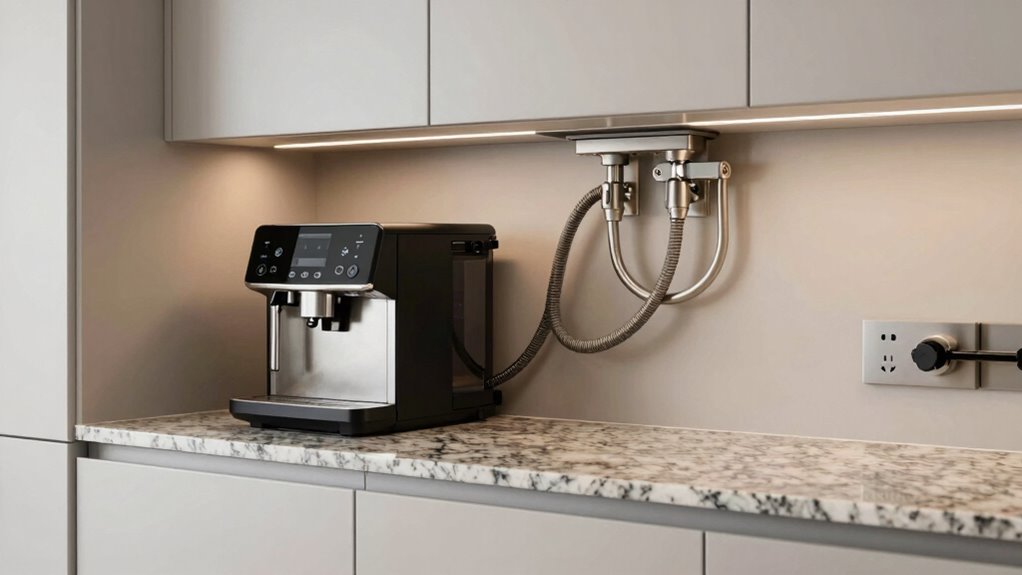
Before installing a built-in coffee machine, it’s essential to understand the electrical and plumbing requirements to guarantee proper functionality and safety. Check if your machine needs a dedicated power outlet, often 110V or 220V, depending on the model, to support coffee machine customization. Confirm the water connection requirements—whether it needs a direct line or a simple water inlet—so you can plan plumbing accordingly. Proper electrical and plumbing setup also assures your machine operates efficiently and safely. Additionally, align the installation with your kitchen aesthetic integration goals, ensuring the setup remains sleek and unobtrusive. Consulting a professional can help you meet local codes and avoid future issues, making your built-in coffee station both practical and visually seamless. Understanding drone safety and proper setup techniques can also serve as a helpful analogy for ensuring your appliances are installed safely and securely. Considering electrical load requirements during planning can prevent overloads and ensure your system handles the additional appliance without issue. Moreover, assessing the water pressure in your home can help determine the best configuration for your coffee machine’s plumbing needs. Ensuring that your plumbing system has adequate water flow will also contribute to consistent performance and quality coffee brewing. Additionally, being aware of pressure regulation can help maintain optimal water delivery and prevent damage to your system.
Do You Need Special Ventilation or Extra Clearance for Your Coffee Machine?

You’ll want to check if your built-in coffee machine needs special ventilation or extra space to operate safely. Proper ventilation helps prevent overheating and guarantees fresh air circulation, while adequate clearance makes maintenance easier. Planning your setup with these factors in mind will keep your coffee station efficient and safe. Additionally, considering safety precautions can help prevent potential hazards associated with built-in appliances. Ensuring your kitchen has proper airflow is essential for maintaining a safe environment around high-powered coffee equipment, especially as ventilation requirements vary depending on the model. Consulting manufacturer guidelines or industry standards can provide further clarity on specific ventilation needs.
Ventilation Requirements for Coffee Machines
Built-in coffee machines typically require proper ventilation to operate safely and efficiently. Adequate ventilation ensures heat and moisture don’t compromise your kitchen aesthetics or user comfort. Without proper airflow, appliances can overheat, causing damage or unpleasant odors. Incorporating herbal wellness principles, such as natural ventilation and humidity control, can further enhance your kitchen environment. To meet these needs, consider: 1. Ensuring the cabinet space around the machine allows for proper air circulation. 2. Installing venting systems if the machine generates significant heat or steam. 3. Choosing models with built-in ventilation features that integrate seamlessly with your kitchen design. Proper ventilation not only preserves your kitchen’s visual appeal but also prevents humidity buildup, enhancing user comfort. Additionally, selecting the right ventilation system can improve energy efficiency and prolong the lifespan of your appliance. Implementing security measures can help protect your investment from potential hazards. Taking these steps guarantees your coffee machine runs smoothly, safely, and quietly, making mornings more enjoyable.
Space Clearance and Placement
Proper space clearance around your coffee machine is essential to guarantee it operates efficiently and safely. Adequate clearance ensures smooth user accessibility, making it easy to load, operate, and clean without hassle. When planning placement, consider your kitchen aesthetics—your coffee station should blend seamlessly with your overall design without crowding counters or cabinets. Extra space also helps prevent overheating and allows for proper ventilation, especially if your machine requires special ventilation. Avoid placing the machine too close to heat sources, sinks, or drawers, which could compromise safety or functionality. Clear, intentional positioning not only enhances safety but also maintains a sleek, organized look, ensuring your coffee machine remains a stylish and functional feature in your kitchen. Additionally, considering kitchen ergonomics can improve overall comfort and usability during your daily coffee routine. Paying attention to space planning can further optimize your kitchen layout, making your coffee corner both practical and inviting.
How to Pick a Built-In Coffee Machine That Matches Your Kitchen Design and Usage Needs
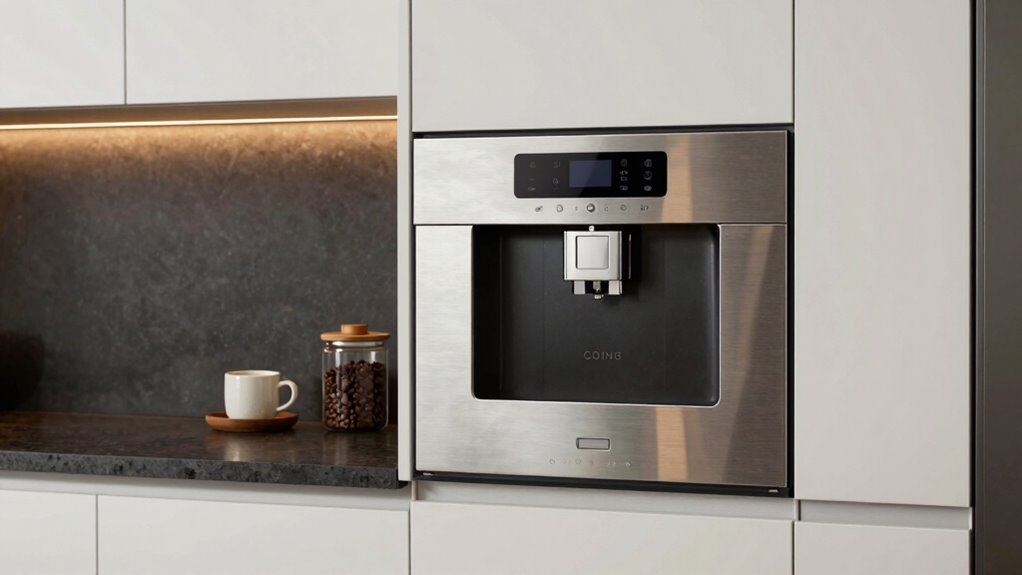
Choosing a built-in coffee machine that complements your kitchen’s style and meets your daily needs requires careful consideration. First, evaluate your usage habits—do you prefer espresso, drip coffee, or a variety? Second, select a design that matches your kitchen’s aesthetic, whether sleek modern or classic. Third, research trusted coffee machine brands known for durability and quality. Keep in mind that maintenance tips, like regular descaling and cleaning, will keep your machine running smoothly. When choosing, consider features like touchscreens or customizable options to suit your convenience. Matching the machine’s style and functionality ensures seamless integration into your space while fulfilling your coffee needs efficiently. Additionally, understanding Italian gelato culture can inspire you to incorporate unique design elements or flavors if you want a cohesive culinary theme in your kitchen. Incorporating insights from kitchen design principles can help you select a built-in coffee machine that truly enhances your overall kitchen layout and ambiance. A well-chosen machine can also contribute to energy efficiency, which is increasingly important in modern kitchen planning. This thoughtful approach helps you enjoy your coffee routine without fuss or mismatch.
Common Installation Mistakes to Avoid When Setting Up Your Built-In Coffee Machine
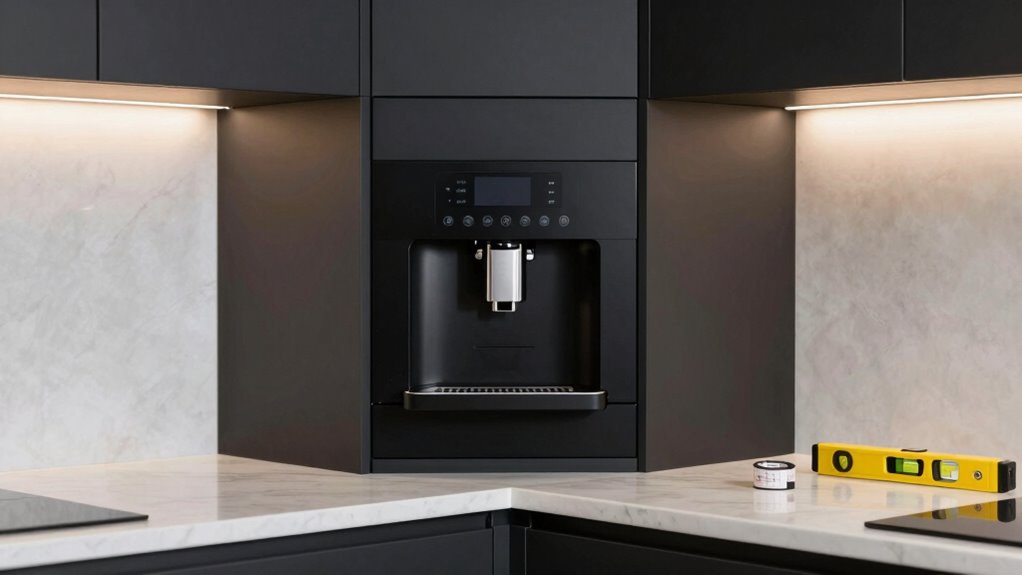
When installing your built-in coffee machine, make sure you pay close attention to placement and clearance to prevent obstructions. It’s also essential to understand your electrical and plumbing requirements to avoid costly mistakes. Skipping these steps can lead to long-term problems and inconvenience down the line. Additionally, consulting air fryer accessories can provide useful insights on efficient space utilization and setup considerations.
Placement and Clearance
Ensuring correct placement and sufficient clearance is essential to prevent operational issues and maintain the longevity of your built-in coffee machine. Proper positioning enhances countertop integration and aesthetic harmony within your kitchen. Avoid placing the machine too close to walls or cabinets, which can restrict airflow and cause overheating.
Consider these key points:
- Leave at least 2-3 inches of space around the machine for ventilation and easy maintenance.
- Position the machine at a comfortable height for daily use, reducing strain and ensuring smooth operation.
- Align the machine with surrounding cabinetry to achieve a seamless, integrated look that elevates your kitchen’s aesthetic harmony.
Electrical and Plumbing Needs
Proper electrical and plumbing connections are essential for your built-in coffee machine to function safely and efficiently. Guarantee you have a reliable power supply nearby, and the water connection is properly installed to prevent leaks. Failing to plan for these needs can cause operational issues or damage your appliance.
Here’s a quick checklist to avoid common mistakes:
| Aspect | What to Check | Tips |
|---|---|---|
| Power Supply | Correct voltage and outlet | Use dedicated circuit if needed |
| Water Connection | Properly secured and leak-free | Use quality fittings |
| Drainage | Adequate drainage setup | Prevent water backup |
Double-check these before installation to ensure smooth setup and long-term performance.
How to Prepare Cabinets and Countertops for Your Coffee Machine Installation
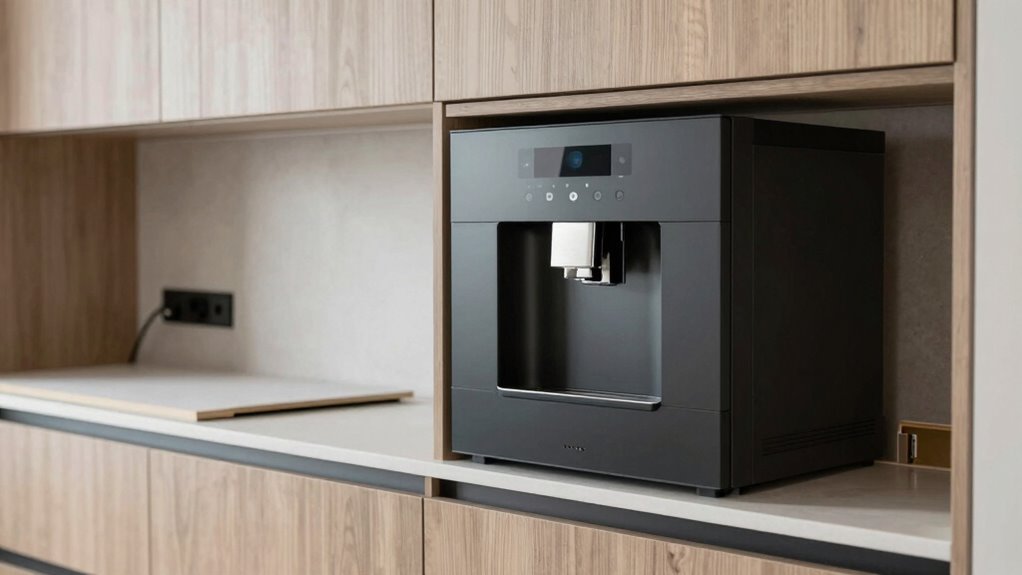
Before installing your built-in coffee machine, you need to prepare your cabinets and countertops to guarantee a smooth setup. First, check the cabinet materials to verify they can support the weight and heat of the machine, especially if you have heavy or heat-sensitive cabinetry. Second, evaluate your countertop finishes; smooth, heat-resistant surfaces like quartz or granite are ideal, as they resist moisture and heat from the machine. Third, measure the space carefully, confirming the cabinet cut-out dimensions match the manufacturer’s specifications. This step minimizes adjustments later. Proper preparation of cabinets and countertops assures your coffee station looks sleek and functions flawlessly, preventing issues like shifting or damage during installation.
Do You Need Backup Power or Water Supplies for Your Coffee Station?
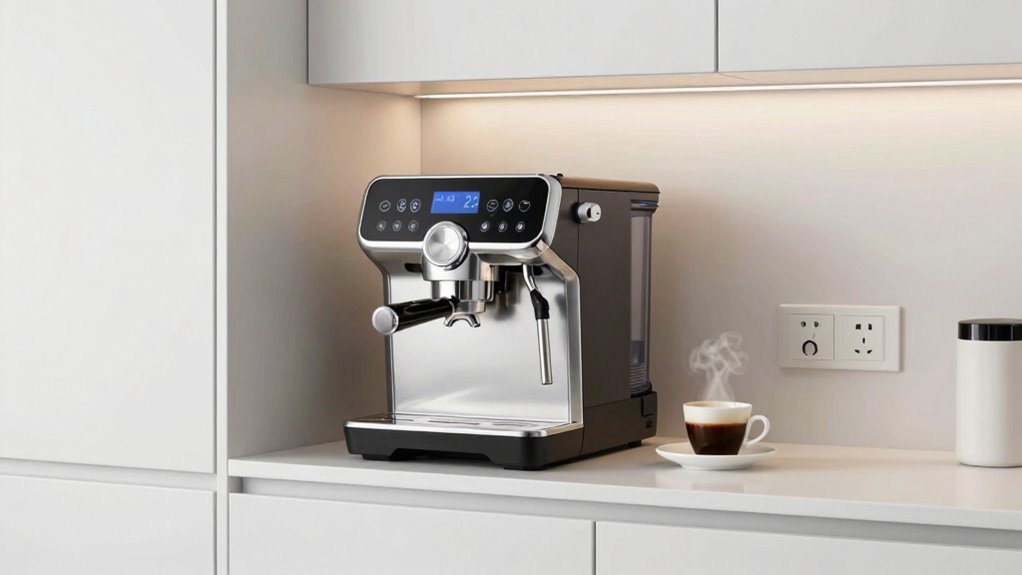
While a built-in coffee station can be convenient, you should consider whether you need backup power or water supplies to keep it functioning smoothly. If your area experiences frequent outages, investing in backup power like a generator or uninterruptible power supply guarantees your coffee machine keeps working without interruption. Similarly, reliable water supplies are essential for consistent brewing. If your water source is unstable or distant, consider installing a dedicated water line or a water filtration system to prevent delays. Planning for backup power and steady water access helps avoid inconvenience and ensures your coffee station remains operational, especially during emergencies or service disruptions. Addressing these needs upfront saves you time and hassle later.
Tips for Maintaining Your Built-In Coffee Machine for Long-Term Performance
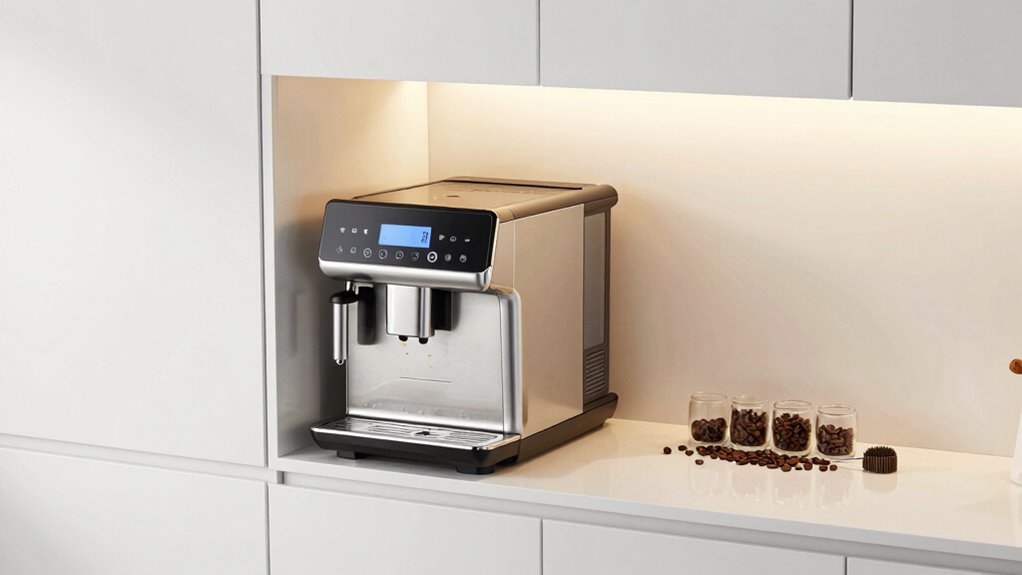
Maintaining your built-in coffee machine is key to ensuring it continues to perform well over the years. Proper coffee maintenance prevents clogs and keeps your machine brewing at its best. To do this effectively, follow these tips:
- Regularly descale the machine to prevent mineral buildup that can affect brewing techniques.
- Clean the brew group and milk frother daily to avoid residue that impacts flavor and performance.
- Use fresh, filtered water for every brew to enhance taste and reduce scale formation.
Frequently Asked Questions
What Are the Cost Considerations for Installing a Built-In Coffee Machine?
When installing a built-in coffee machine, you should consider your budget considerations carefully, including the initial purchase price and installation costs. Don’t forget to factor in maintenance costs, as some models may require regular servicing or filter replacements, which can add up over time. Ensuring you allocate funds for these ongoing expenses helps you avoid surprises and keeps your coffee station running smoothly.
How Long Does Professional Installation Typically Take?
You can expect the professional setup duration for your built-in coffee machine to typically span around 2 to 4 hours. The installation timeline depends on your kitchen’s layout and existing plumbing or electrical connections. During this process, technicians carefully guarantee everything fits seamlessly, so you’ll enjoy your coffee without a hitch. Trust the experts to handle the details efficiently, making your new coffee station ready to serve in no time.
Are There Any Warranties or Service Plans Available?
Yes, many built-in coffee machines come with warranties or service plans. You should check if extended warranty options are available, as they can cover repairs after the initial coverage ends. Service plan coverage often includes regular maintenance, repairs, and replacements, giving you peace of mind. Always review the details with your supplier to guarantee you get the best protection for your investment and keep your machine in top condition.
Can Built-In Coffee Machines Be Integrated With Smart Home Systems?
Yes, built-in coffee machines can be integrated with smart home systems. You can connect them for seamless smart home integration, allowing you to control your coffee maker via apps or voice command compatibility. This means you can start brewing your coffee with a simple voice command or through your smart home dashboard, making your morning routine more convenient and tech-savvy. Just make certain your chosen model supports these smart features before installation.
What Safety Features Should I Look for in a Built-In Coffee Machine?
You should prioritize safety features like child safety locks and spill prevention in your built-in coffee machine. These features prevent accidental operation by kids and minimize messes, making your kitchen safer and cleaner. Look for machines with automatic shut-off and heat sensors to avoid overheating or burns. Investing in these safety features guarantees peace of mind while enjoying your coffee, especially in households with children or busy mornings.
Conclusion
Remember, proper planning can make or break your coffee station. Did you know that 60% of appliance failures are due to installation errors? By paying attention to space, electrical, and plumbing needs—and avoiding common mistakes—you’ll enjoy a smooth setup and delicious coffee for years to come. Take the time to prepare properly, and your built-in coffee machine will become your favorite kitchen feature. Cheers to hassle-free mornings!