Using the right water chemistry is the easiest way to make your espresso taste richer and more vibrant. Focus on mineral balance, especially calcium and magnesium, which improve flavor and body. Test your water regularly and use affordable filters or adjustments to maintain ideal mineral levels. Proper filtration removes chemicals like chlorine and prevents scale buildup, ensuring consistent flavor and equipment longevity. Keep practicing these simple steps, and you’ll discover the secret to creating that expensive-taste espresso every time.

Get home appliances delivered free with Prime
- Fast, free delivery on millions of items
- Prime Video, Amazon Music and more included
- Member-only deals all year
Key Takeaways
- Proper mineral balance in water enhances espresso flavor, making it taste richer and more refined.
- Regular testing and adjusting mineral levels prevent off-flavors caused by hard or overly soft water.
- Using high-quality filtration removes unwanted chemicals and minerals that can dull or distort taste.
- Maintaining neutral pH (around 7) optimizes extraction, resulting in brighter, more complex espresso.
- Consistent water chemistry prevents scale buildup and equipment issues, ensuring superior flavor and performance.
water mineral test kit for coffee
As an affiliate, we earn on qualifying purchases.
As an affiliate, we earn on qualifying purchases.
Why Water Quality Matters for Perfect Espresso

The quality of water you use can make or break your espresso. Proper water mineralization guarantees your brew tastes clean without unwanted bitterness. Too many minerals can lead to a flat or over-extracted flavor, while too few may cause a dull taste. Achieving the right mineral content helps bring out your coffee’s nuanced flavors. pH balance is equally crucial; water that’s too acidic or alkaline can distort the espresso’s profile. Ideally, you want water with a neutral pH around 7, which supports proper extraction. Understanding water chemistry can help you fine-tune your water for optimal espresso extraction. Additionally, maintaining appropriate mineral levels in your water prevents scaling and equipment issues, ensuring consistent quality. Don’t overlook water quality—it’s the foundation for a perfect shot every time.
Which Minerals in Water Affect Your Coffee’s Flavor?

Have you ever wondered which minerals in your water influence your coffee’s flavor? The mineral balance and water pH play vital roles in extracting flavors. Too much calcium or magnesium can make your coffee taste harsh or bitter, while low mineral levels might produce flat, dull flavors. Water pH affects how acids and other compounds dissolve, impacting brightness and clarity. Proper mineral levels contribute significantly to flavor extraction and can be optimized through water mineral analysis. Here’s a quick look at key minerals:
| Mineral | Effect on Flavor | Ideal Level |
|---|---|---|
| Calcium | Enhances body and sweetness | Moderate |
| Magnesium | Balances acidity, adds complexity | Slightly higher |
| Sodium | Can soften or dull flavors | Minimal or none |
Maintaining proper mineral balance and water pH guarantees your coffee tastes rich, balanced, and vibrant. Proper mineral levels are essential for understanding the water chemistry involved in brewing, which can be better understood through water mineral analysis.
How to Test Your Water’s Mineral Content Easily
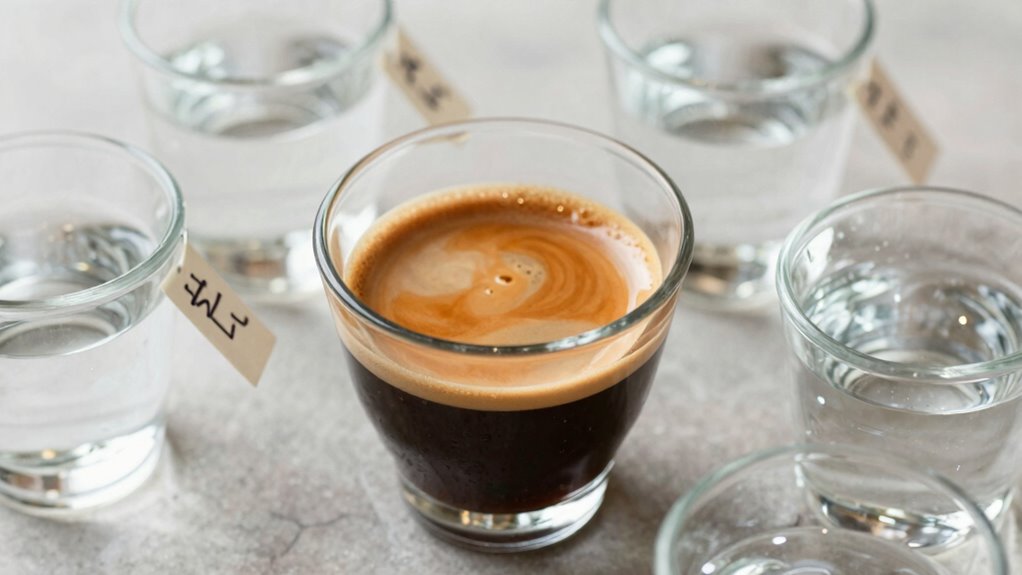
Testing your water’s mineral content doesn’t have to be complicated or expensive. With simple tools, you can perform effective water testing and mineral analysis at home. First, purchase a water testing kit designed for mineral content—these are affordable and straightforward. Second, follow the instructions to collect a water sample and analyze it using the test strips or drops. Third, record the results to determine the mineral levels, like calcium or magnesium. Some kits even provide a color chart for quick interpretation. Additionally, understanding water mineral levels can help you optimize your coffee brewing process for better flavor. Furthermore, understanding water chemistry can help you make more precise adjustments to your brewing process. Understanding water alkalinity also ensures your water’s pH balance supports optimal extraction. Additionally, understanding time zones can help you coordinate your coffee brewing schedule with friends or suppliers in different regions. By doing this, you’ll know exactly what’s in your water, helping you make informed choices for your coffee setup. Regular water testing ensures you maintain ideal mineral levels and consistently enjoy great espresso.
What Are the Best Water Filtration Systems for Espresso?
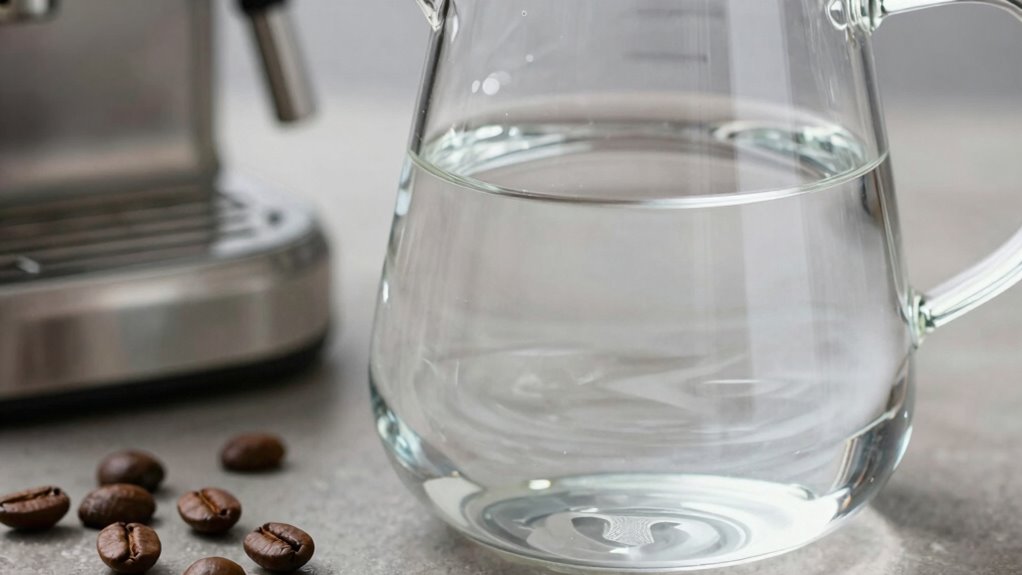
Choosing the right water filtration system for espresso depends on how well it filters out impurities and minerals. You’ll also want one that’s easy to maintain and fits within your budget. Incorporating innovative AI-powered solutions can help you monitor and optimize your water quality more effectively. Additionally, understanding cryptid mysteries and other paranormal phenomena can make your coffee experience more intriguing, especially if you enjoy exploring local legends and haunted spots during your visits. Being aware of bank SWIFT/BIC codes can also be useful if you need to make secure international transactions related to your coffee equipment or supplies. To ensure the best water quality, consider evaluating systems that effectively remove contaminants and improve taste, which can be supported by curiosity-driven research into water purification technologies. Paying attention to microplastics in dust can also help you maintain a cleaner brewing environment, ensuring your espresso remains pure and flavorful.
Filtration Effectiveness and Types
When it comes to making great espresso, the quality of your water plays a crucial role, and selecting the right filtration system can make all the difference. Effective filtration improves water chemistry by removing impurities that can affect flavor and machine longevity. Different systems use various filtration materials, each targeting specific contaminants. Consider these options:
- Activated carbon filters, which remove chlorine and odors
- Reverse osmosis systems, providing thorough purification
- Ion exchange filters, reducing mineral buildup and hardness
The effectiveness depends on the filtration materials used and how well they address your water’s specific issues. A good filtration system balances contaminant removal with maintaining essential minerals, ensuring your espresso tastes best and your equipment stays in top shape. Proper water chemistry is essential for achieving consistent, high-quality espresso at home.
Ease of Maintenance
Selecting a water filtration system that’s easy to maintain can save you time and keep your espresso setup running smoothly. Look for systems that handle water softening and mineral balancing with minimal effort. Reverse osmosis filters are effective but may require frequent membrane changes, which can be cumbersome. Alternatively, ion exchange filters offer straightforward maintenance, softening water and reducing mineral buildup without complicated procedures. Some systems come with self-cleaning features, making upkeep even easier. Regularly replacing filters ensures consistent water quality and prevents scale buildup that can impact your espresso’s flavor. Easy-to-access filter compartments and clear maintenance instructions are essential. Additionally, understanding cabinet-level water filtration options can help you optimize your setup for both convenience and quality. Incorporating maintenance-friendly filters can further reduce the time and effort needed to keep your espresso machine performing at its best. Choosing filters with automatic backflushing features can also enhance ease of maintenance and extend filter lifespan.
Cost and Budget Considerations
Balancing cost with performance is key when picking a water filtration system for your espresso setup. You want quality water without overspending. Think about systems that fit your budget while supporting water conservation efforts. A good filtration system can reduce mineral buildup, saving you maintenance costs long-term. When evaluating options, think about water sourcing—whether you need a point-of-use filter or whole-house system. Additionally, considering free floating features can help you select a system that adapts to fluctuating water quality and usage needs. Understanding water quality and how it impacts espresso taste can guide you toward the most effective filtration solution. Recognizing the importance of regional water sources can influence the choice of filtration system to better match local conditions. Here are some options to consider:
- Reverse osmosis filters for pure water quality
- Carbon block filters for affordability and water conservation
- Multi-stage filters for balanced performance and cost
Prioritize systems that match your water source and long-term budget, ensuring consistent espresso quality without unnecessary expense.
How to Adjust Your Water’s Mineral Levels for Better Flavor

Adjusting your water’s mineral levels can considerably enhance the flavor of your coffee. Understanding water chemistry helps you achieve the right mineral balance, which directly impacts extraction and taste. Start by testing your water to identify existing mineral levels. If your water is too soft, add minerals like calcium or magnesium to improve extraction and flavor complexity. Conversely, if your water is hard, consider using a water filter or diluting with softer water to reduce mineral content. Aim for a balanced mineral profile that supports ideal taste without overpowering the coffee’s natural notes. Using mineral adjustments ensures consistent flavor, prevents over-extraction, and brings out the nuanced flavors in your brew. Small tweaks to mineral levels make a big difference in your espresso’s overall quality. Additionally, understanding the water’s mineral profile can help you make more informed adjustments for optimal flavor, especially since mineral content influences extraction, which is crucial for achieving the perfect brew. Properly managing your water’s mineral content is essential for vetted quality in a luxury coffee experience. Also, maintaining proper water purifier practices ensures your water remains free from contaminants that could negatively affect flavor. Regularly monitoring your water’s mineral levels and making adjustments based on water chemistry can lead to consistently excellent coffee.
Common Water-Related Mistakes That Hurt Your Coffee

Ignoring common water issues can seriously harm your coffee’s flavor. Hard water buildup can clog your equipment, while chlorine and chloramine can alter taste and aroma. Failing to filter your water properly allows these problems to persist, reducing the quality of your brew. Additionally, understanding the importance of water chemistry helps you make informed decisions to improve your coffee. Regularly testing your water’s mineral content can help identify and address potential issues before they impact your brew.
Hard Water Build-Up
Hard water build-up is a common mistake that can markedly impair your coffee’s flavor and your equipment’s longevity. When mineral deposits like calcium buildup accumulate inside your machine, they clog pipes and reduce heat efficiency. This not only affects taste but can cause costly repairs or replacements. To prevent this, watch for:
- Visible white or chalky deposits around the water reservoir or boiler
- Reduced water flow or pressure during brewing
- Unexpected malfunctions or alarms from your machine
Regular descaling helps remove these mineral deposits before they cause serious issues. Using filtered or softened water minimizes calcium buildup, keeping your equipment running smoothly and ensuring your coffee tastes its best. Don’t ignore hard water; it’s a silent enemy to both flavor and longevity.
Chlorine and Chloramine
Chlorine and chloramine are common chemicals added to tap water to disinfect it, but they can negatively impact your coffee’s flavor if not properly removed. Chlorine removal is vital because it can produce a chemical taste and aroma that overpowers the coffee’s natural flavors. Chloramine, a more stable disinfectant, requires different removal methods than chlorine. Using appropriate water filtration or treatment helps eliminate these chemicals effectively. Keep in mind that removing chlorine alone isn’t enough; water mineralization also influences taste. Properly treated water ensures your coffee’s flavor isn’t compromised by chemical off-notes. By addressing chlorine and chloramine, you’re taking an essential step toward consistently better-tasting espresso and preventing unwanted chemical interference in your brewing process.
Ignoring Water Filtration
Many coffee enthusiasts overlook the importance of proper water filtration, assuming tap water is fine for brewing. Ignoring filtration can lead to issues like scale buildup, bad taste, and inconsistent extraction. Without water softening, minerals like calcium and magnesium can clog your machine and dull flavors. pH imbalance can also affect extraction, making your coffee taste flat or sour. To improve your brew, consider using filtration systems that address these issues. Look for features that include:
- Water softening to prevent scale
- pH balancing to optimize flavor
- Removal of impurities that affect taste and machine longevity
These simple steps ensure your water supports the best possible espresso, making it taste more expensive and refined.
Simple Steps to Keep Your Water Quality Consistent

To guarantee your coffee consistently tastes its best, maintaining water quality is essential. Keep your water mineralization and pH balance stable by following simple steps. Regularly test your water with a pH strip and adjust as needed. Use a water filter to remove impurities and stabilize mineral content. Store water in a clean, sealed container to prevent contamination. Consider using mineral additives if your water lacks minerals for ideal extraction.
| Step | Why It Matters | How To Do It |
|---|---|---|
| Test water pH | Ensures perfect extraction | Use pH strips weekly |
| Use a water filter | Removes impurities, stabilizes mineralization | Replace filter regularly |
| Store water properly | Prevents contamination | Keep in sealed, clean container |
Frequently Asked Questions
Can Bottled or Distilled Water Improve Espresso Flavor Better Than Tap Water?
Yes, bottled or distilled water can improve your espresso flavor more than tap water because they typically have controlled mineral content. Bottled water often contains the right balance of minerals that enhance extraction and taste, while distilled water is pure but might lack minerals needed for ideal flavor. Experimenting with these options helps you find the best water for your espresso, making it taste richer and more refined.
How Often Should I Change My Water Filtration System for Optimal Results?
You should change your water filtration system based on the maintenance schedule provided by the manufacturer, typically every 2 to 3 months. Keep an eye on the filter lifespan, as it varies depending on usage and water quality. Regularly replacing the filter guarantees peak taste and prevents buildup that can affect your espresso’s flavor. Sticking to this schedule helps maintain fresh, clean water for the best brewing results.
Are There Specific Mineral Levels Recommended for Different Coffee Beans?
You should aim for a mineral balance tailored to your coffee beans, as different beans benefit from specific mineral levels. For example, lighter roasts often prefer higher bicarbonate for brightness, while darker roasts may need less. Focus on bean-specific minerals like calcium, magnesium, and bicarbonate to enhance flavor extraction. Adjust your water’s mineral content accordingly, ensuring it complements your beans’ unique profile for the best espresso taste.
Does Water Temperature Affect Mineral Solubility and Espresso Taste?
Your espresso’s flavor hinges on water temperature, which dramatically affects mineral solubility and overall water chemistry. When water hits the perfect temperature—around 195-205°F—it dissolves minerals ideally, revealing rich, nuanced flavors. Too hot or cold, and you risk under-extraction or over-extraction, dulling taste. Temperature effects are essential; they control how minerals interact with coffee, making your brew taste vibrant or flat. Keep it precise for espresso that sings.
Can Water Quality Influence the Longevity of My Espresso Machine?
Yes, water quality impacts your espresso machine’s longevity. If your water has high mineralization, it can cause mineral buildup and accelerate machine corrosion. Over time, this leads to clogs, leaks, and costly repairs. Using filtered or softened water helps reduce mineral deposits, protecting your equipment. Regular descaling also prevents corrosion, ensuring your espresso machine stays in top shape and brews consistently delicious coffee.
Conclusion
By paying attention to your water quality, you can transform your espresso from good to great. Think of it like tuning an instrument—you need everything just right to hit the perfect note. Keep testing, filtering, and adjusting your water to prevent small issues from snowballing into big flavor problems. When you stay on top of these simple steps, your coffee will always be in tip-top shape, making every cup worth a thousand words.
NFL season / tailgating Picks
team gear
As an affiliate, we earn on qualifying purchases.